
The Mind Within: Unlocking the Mysteries of Human Psychology
An In-Depth Exploration of How Thoughts, Emotions, and Behavior Shape Our Everyday Lives
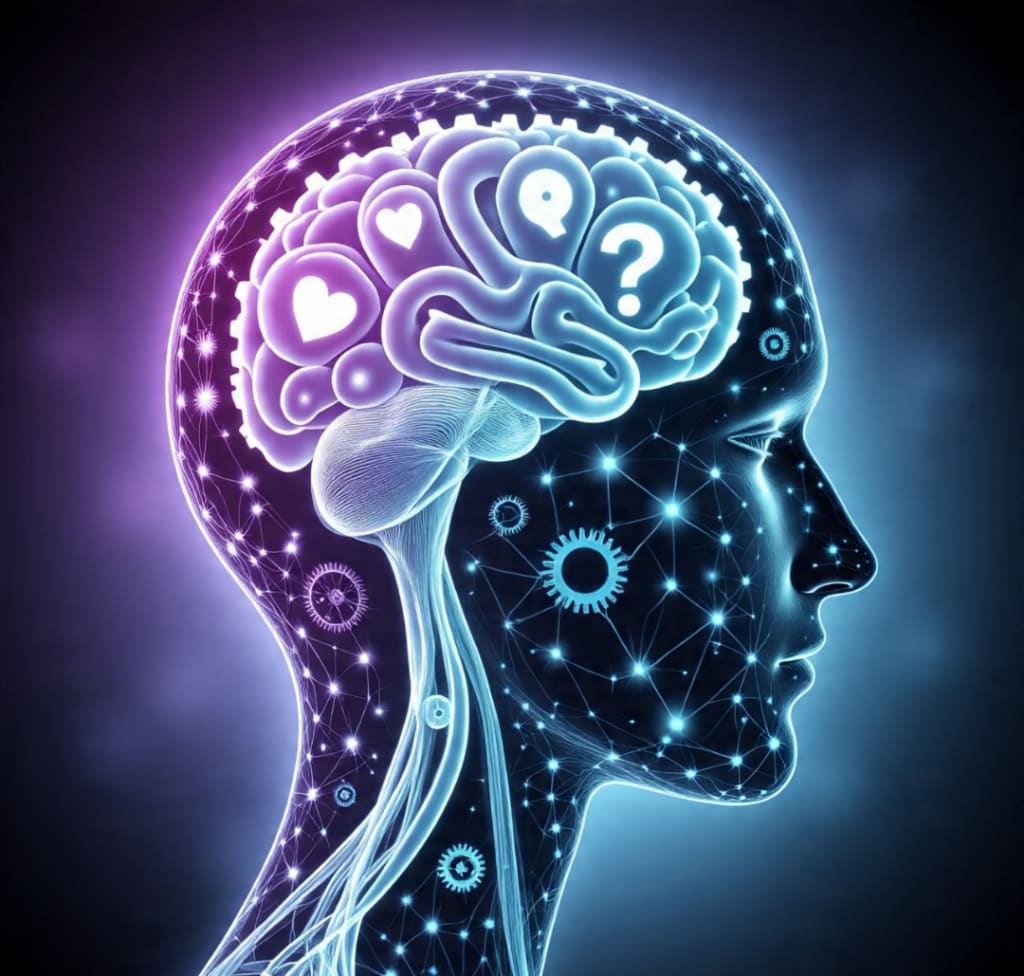
The Mind Within
On a rainy afternoon in a quiet suburban neighborhood, 14-year-old Maya sat by the window, lost in thought. Her school project was due in two days: “Understanding the Human Mind.” At first, the topic seemed vague and overwhelming. But something about it pulled her in. After all, what could be more fascinating than understanding why people think, feel, and act the way they do?
Maya’s curiosity led her to the local library, where she met Mr. Ellis, a retired psychologist who volunteered there. She asked him a simple question: “Why do people behave the way they do?” He smiled and responded, “That’s the big question of psychology, Maya. And the answer is… it depends.”
With his help, Maya began to peel back the layers of the human mind. She learned that psychology isn’t just about mental illness or therapy couches—it’s the scientific study of the human experience. Every decision we make, every emotion we feel, every habit we form—it all ties back to how our minds are wired.
The Foundation: Nature and Nurture
Mr. Ellis explained the concept of nature vs. nurture. Some aspects of who we are—our temperament, intelligence, or even susceptibility to anxiety—are influenced by our genes. But our environment, the people we grow up around, the culture we live in, and the experiences we go through, shape our personalities too.
Maya found it fascinating that two siblings could grow up in the same house, yet turn out completely different—one outgoing and artistic, the other quiet and logical. “It’s because human behavior isn’t just built—it’s sculpted,” Mr. Ellis said. “And psychology helps us understand that sculpture process.”
Emotions and the Brain
Maya dove deeper. Emotions, she learned, are not just feelings—they’re powerful messengers. Fear, for example, isn’t just a reaction to danger; it’s a survival tool developed over thousands of years. The amygdala, a small almond-shaped structure in the brain, plays a big role in processing fear. When Maya once froze during a school presentation, it wasn’t because she lacked confidence—it was because her brain perceived a threat to her social standing.
Happiness, sadness, anger, love—each emotion has roots in brain chemistry. Neurotransmitters like dopamine and serotonin act like messengers between brain cells. A drop in these chemicals can lead to mood disorders like depression, while a boost can bring feelings of joy.
It made Maya think: If our emotions are so deeply tied to biology, why do we sometimes ignore them?
Cognitive Biases: The Mind’s Shortcuts
The more she read, the more Maya realized that the brain, while powerful, isn’t perfect. Humans have cognitive biases—mental shortcuts that help us make decisions quickly, but not always accurately. The confirmation bias, for example, makes us seek out information that supports what we already believe, ignoring evidence to the contrary. The halo effect makes us assume someone is good at everything just because they’re attractive or likable.
These biases shape everything from friendships to politics. Understanding them, Maya thought, could help people make fairer judgments—and maybe even argue less online.
Behavior and Motivation
One night, Maya caught herself procrastinating on her project. She laughed at the irony—“Why do we avoid things we know are important?” The answer, she discovered, lies in motivation. Psychologists like Abraham Maslow proposed that human motivation is built on a hierarchy of needs—starting from basic survival (food, safety) and moving up to emotional fulfillment (love, esteem), and finally to self-actualization—becoming the best version of oneself.
When Maya lacked motivation, it wasn’t laziness—it was her brain prioritizing comfort and avoiding stress. But once she understood this, she could counteract it with intrinsic motivation—doing something because it matters to her, not just for a grade.
Psychology in Everyday Life
As Maya wrapped up her research, she realized that psychology was everywhere—in marketing ads that used emotional appeals, in classrooms shaped by learning theories, in family arguments resolved by better communication. Even her dog’s behavior could be explained by classical conditioning, a concept discovered by Ivan Pavlov over a century ago.
On the day of her presentation, Maya stood confidently in front of her class. She didn’t just present facts—she told a story. About fear and courage, about biases and growth, about how understanding ourselves can lead to compassion for others.
When she finished, her teacher smiled. “You didn’t just study psychology,” she said. “You brought it to life.”
---
Final Thought
Human psychology is more than a subject—it’s a lens through which we can better understand the world. From the silent workings of the brain to the loud chaos of human behavior, the study of the mind reveals that we are not just products of biology or upbringing—we are meaning-makers, constantly interpreting and adapting to our ever-changing world. And in that journey, the more we learn about others, the more we discover about ourselves.
About the Creator
Keep reading
More stories from Muhammad Saad and writers in Humans and other communities.
Wired for Reality: Understanding the Blueprint of the Human Mind
The Last Lightkeeper The lighthouse at Cragmoor Point had stood for over a century, its white tower battered by salt and time, its lens once the brightest along the eastern coast. But now, satellites and automated beacons had made it obsolete. The world had moved on—except for Thomas Grady. Thomas was the last lightkeeper. He had lived alone in the tower for twenty-seven years. Every evening, he polished the Fresnel lens with soft cloths and gentle hands, as if tending to an old friend. He kept the gears oiled, the generator fueled, and the ledgers neatly logged in fine cursive. Tourists sometimes wandered near in the summer months, snapping pictures of the lighthouse against the wild gray sea, but they rarely ventured close enough to meet the man who kept it alive. Then came the letter. It arrived on a windy Tuesday in March, sealed in an envelope that smelled faintly of printer ink and bureaucracy. “The lighthouse at Cragmoor Point will be decommissioned effective April 30,” it read. “Staff will be reassigned or released.” Thomas reread it five times. He placed it back in the envelope and tucked it into the ledger, between two pages dated 1983. Then he went about his work. The letter didn’t change the fact that the lantern room needed cleaning or that the railing outside had begun to rust again. But each night, as he climbed the spiral stairs to light the beacon, a heaviness grew in his chest. One day, a young woman arrived at the lighthouse steps. She had windswept hair, a camera around her neck, and a notebook tucked under one arm. “Are you Mr. Grady?” she asked. Thomas eyed her warily. “Depends who’s asking.” “I’m Lily Harper. I’m writing an article about historic lighthouses. Do you mind if I ask you a few questions?” He nearly turned her away. But something in her eyes—curious, kind, persistent—reminded him of his daughter, now living in some inland city, far from the sea. He nodded. They sat on the bench overlooking the cliffs. Lily asked about storms, shipwrecks, long winters. Thomas spoke slowly, each word like a stone placed carefully into her hands. “You know they’re shutting it down?” he said after a pause. She nodded. “I heard. I’m sorry.” He said nothing for a long time, watching the waves batter the rocks below. “This place isn’t just bricks and iron,” he finally said. “It remembers things. A hundred years of light cutting through fog. It’s saved lives.” Lily looked at him, then scribbled something in her notebook. That evening, she climbed the tower with him. She watched as he lit the lamp for what might have been the ten-thousandth time. The lens rotated slowly, casting golden fingers into the growing dusk. Lily stayed for two more days, listening, photographing, writing. When she left, she promised to send him the article. April arrived with cruel swiftness. On the final night, Thomas climbed the stairs slowly, lantern in hand, knees aching. The sunset bled across the sky, brilliant and defiant. He lit the beacon one last time. And then he sat beside it, watching it sweep the horizon. In the morning, he would pack. The government would come. The light would go dark. But for this one last night, Cragmoor Point would shine. --- Two weeks later, Thomas sat in a small apartment inland, staring out a window that looked onto a parking lot. A letter arrived—this one from Lily. Inside was a copy of the magazine with her article. The title read: “The Heart of the Coast: A Lightkeeper’s Vigil.” Thomas flipped through it slowly, recognizing his own words, his own weathered face in the photographs. The final page held a quote in bold: > “Some lights are meant to be kept burning, even when no one’s looking.” He smiled. That evening, as dusk settled over the city, Thomas lit an old oil lantern on the windowsill. It was small, but it flickered with quiet dignity. And in a way only he could understand, the sea still shimmered in its glow.
By Muhammad Saad 6 months ago in Humans
Verizon Outage: When Silence Replaces the Signal We Trust
The moment your phone stops working, the world feels smaller. Messages do not send. Calls fail. Maps freeze. For many people, a Verizon outage is not just a technical issue. It is a sudden break in daily life. Parents worry they cannot reach their children. Workers panic about missed meetings. Travelers feel stranded, even in familiar places. We trust our phones to be there without thinking about it, until one quiet screen reminds us how fragile that trust is. This article explores what a Verizon outage really means, why it happens, how it affects real people, and what you can do when the signal disappears. Not with hype or panic, but with clarity, calm, and honesty.
By Muqadas khan3 days ago in Humans
Miss Persephone's Manual to a Seemingly Ordinary Life
Miss Persephone was found at the dining table, her blue eyes swollen, her tears arriving and retreating like the tides of the ocean. Earlier that day, her family had visited her in the retirement home where she had lived for eight years. It was her eightieth birthday.
By Imola Tóth3 days ago in Fiction




Comments
There are no comments for this story
Be the first to respond and start the conversation.