Muhammad Saad
Stories (465)
Filter by community
The Power of Sleep: Unlocking Your Body’s Natural Rhythm
Every night, the world dims. City lights twinkle like stars, homes glow softly, and the hustle of life slowly quiets. Behind bedroom doors, something extraordinary happens — a daily miracle that fuels our minds and heals our bodies. It’s sleep. For 28-year-old Maya, sleep used to be a low priority. She worked in marketing, juggling deadlines, social outings, and late-night Netflix binges. Sleep was an afterthought — something she’d “catch up on” over the weekend. But over time, her energy dipped. She started waking up groggy, even after eight hours in bed. Her mood swung like a pendulum, and she struggled to focus. That’s when Maya stumbled on an article about the circadian rhythm — the body’s internal clock. It explained why not just how much, but when we sleep matters. Our bodies are designed to follow a natural 24-hour cycle tied to light and darkness. The circadian rhythm signals our brain when to feel alert and when to feel sleepy. When we stay up too late under artificial light or constantly change our sleep schedule, we confuse this rhythm. It’s like trying to drive a car with the GPS turned off. Maya decided to make a change. She began going to bed at the same time every night — 10:30 PM — and waking at 6:30 AM, even on weekends. At first, it was tough. Her mind itched for late-night scrolling. But after two weeks, something shifted. She started waking up before her alarm, feeling refreshed. Her thoughts became clearer. She had energy to spare — even for morning walks. What Maya experienced was her body syncing back with its natural rhythm. Sleep isn't just rest — it's active repair. During deep sleep, our brain clears out toxins, muscles rebuild, and memories are solidified. In REM (rapid eye movement) sleep, we dream — but it’s also when creativity and emotional healing take place. Studies show that people who sleep 7–9 hours consistently: Make better decisions Have stronger immune systems Experience fewer mood swings Reduce risk of heart disease, obesity, and depression And perhaps most importantly — they feel better. One fascinating discovery about sleep is the role of melatonin, the “sleep hormone.” As night falls and darkness increases, melatonin levels rise, telling the body it’s time to sleep. Bright lights, especially blue light from screens, can delay this signal. That’s why experts recommend reducing screen time an hour before bed and using warm lighting in the evening. Maya created a calming bedtime routine: herbal tea, a book, dimmed lights, and gentle stretches. Her phone stayed outside the bedroom. She treated sleep not as an interruption to life, but as a gift — a form of self-care. It changed everything. Her co-workers noticed her sharper focus. Her skin cleared up. Her creativity bloomed. Even her weekend hikes felt easier. She began to understand what researchers and doctors have emphasized for years — sleep is not a luxury. It’s a foundation. Of course, not everyone can follow a perfect schedule. Shift workers, parents, and students often face real challenges. But even small changes — like keeping a consistent bedtime, reducing caffeine after 2 PM, and making the bedroom cool and dark — can dramatically improve sleep quality. As Maya shared her story with friends, something unexpected happened. They started improving their sleep too. One friend replaced their bedroom bulbs with warmer lighting. Another started meditating before bed. A third began tracking sleep with a smart watch. Little by little, they all began waking up more energized — not because of magic, but because they respected what their bodies had been asking for all along. Today, Maya treats sleep like brushing her teeth — a non-negotiable habit. She no longer feels like she’s racing through life half-awake. Instead, she feels present. Her mind is clearer. Her mood, lighter. Her days, brighter. And it all started with going to bed on time. --- Want Better Sleep? Try These Tips Tonight: ✔ Go to bed and wake up at the same time every day ✔ Dim lights 1–2 hours before bedtime ✔ Avoid caffeine in the afternoon ✔ Keep your room cool, quiet, and dark ✔ Power down devices 30–60 minutes before sleep ✔ Try calming habits like reading, stretching, or journaling --- Sleep isn’t wasted time — it’s healing time. The more we honor our natural rhythm, the more life opens up with clarity, calm, and joy. So tonight, let your body rest. Let your mind dream. Let sleep do its quiet, powerful work.
By Muhammad Saad 6 months ago in Humans
The Mind Behind the Bat: Exploring Ancient Psychology in the Early History of Cricket
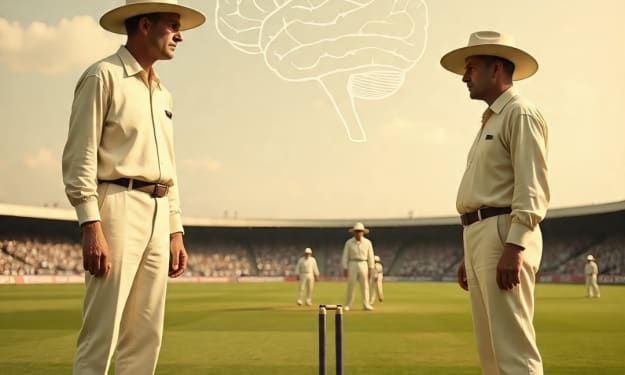
In the rolling green hills of 18th-century England, long before cricket became an organized international sport, it was already a psychological game. The year was 1744. A group of men from neighboring villages gathered on a makeshift pitch in Surrey. Some wore patched waistcoats, others finer linen shirts. They weren’t professionals—just farmers, blacksmiths, and minor gentry seeking diversion. But as the wooden bat met the ball with a satisfying crack, something deeper than sport stirred in their minds: competition, strategy, pride, and community. Cricket, even in its rudimentary form, was more than a physical contest. It was a game of the mind. Historians often focus on cricket’s rules, development, and colonial expansion. Less often do they consider the psychology at play from its earliest days. Yet even in these early rural matches, the sport offered a stage where human instincts—cooperation, rivalry, performance anxiety, and even deception—played out. Take Thomas Rayner, for instance, a middle-order batsman remembered in local journals from Kent. Rayner wasn’t the strongest hitter, but he was known for his patience. While others swung wildly, trying to impress the crowd or assert dominance, Rayner waited. He watched bowlers’ movements, learned their habits, and anticipated their deliveries. He turned cricket into a thinking man’s game. Modern psychologists would recognize Rayner’s skill as "cognitive restraint"—the ability to suppress immediate impulses in favor of long-term goals. This trait, often linked to higher emotional intelligence, gave him a quiet edge. The villagers didn’t use such terms, of course. They simply called him "the shadow," for how he silently turned the tide of matches. There was also an unspoken psychology among bowlers. In an era before standardized pitches, bowlers adapted quickly to inconsistent terrain. Their tactics weren’t just about where to place the ball—it was about reading the batsman’s fear or overconfidence. One village scribe wrote of a bowler who “stared until the batsman trembled, then bowled low and quick.” It was a simple act of intimidation—primitive, but psychologically effective. Crowd dynamics played a role too. Early matches drew spectators from miles around, often fueled by local rivalries. Emotions ran high. Supporters cheered and jeered, placing bets or mocking opponents. This pressure affected players, revealing early examples of what psychologists now call "performance under social evaluation." A missed catch or a duck in front of neighbors could haunt a man for weeks. And then there was the social structure of the game itself. Cricket became one of the first games to bridge the class divide—at least superficially. The term “gentleman versus player” would later formalize the distinction between amateurs and professionals, but even in the 1700s, subtle class psychology played out on the field. Upper-class players often led the teams, expected to be the composed tacticians. Working-class players, though sometimes more skilled, were stereotyped as emotional or impulsive. This dynamic influenced gameplay and roles within teams. Yet paradoxically, cricket also gave the working class a rare opportunity: a chance to outwit and outperform their social superiors in public view. Perhaps the most fascinating psychological layer was the concept of sportsmanship—or its early form. The idea of playing "fairly" wasn’t codified yet, but informal codes existed. Players who bent the rules were remembered and sometimes shunned. This early conscience, a mixture of honor and peer pressure, laid the foundation for the famed "spirit of cricket" centuries later. Stories from the time speak of players who would confess to touching the ball with their hand, even when no one saw. Others would feign injury to manipulate outcomes. The moral tension between honesty and advantage was already embedded in the game. Psychologists would later study this tension in theories of moral development and group dynamics. As cricket spread across the British Empire, these psychological dynamics evolved with it—but they never disappeared. From the dusty fields of colonial India to Caribbean beaches and Australian bushland, the same mental games were played: reading opponents, managing emotion, responding to crowds, and navigating status. Back in Surrey, on that warm afternoon in 1744, the villagers didn’t know they were part of something larger. But when Thomas Rayner calmly blocked yet another fast delivery, forcing a frustrated bowler into error, the locals roared with appreciation—not just for the run, but for the mind behind the bat. Today, centuries later, cricket remains as psychological as ever. Analytics may track performance, and sports psychologists may coach elite players, but the core remains unchanged. From dusty village greens to roaring stadiums, the battle of wits still pulses beneath every match. The game has changed. The minds playing it have not.
By Muhammad Saad 6 months ago in Gamers
The Timeless Mind Game: How Classic Cricket Shaped Human Psychology
The Timeless Mind Game: How Classic Cricket Shaped Human Psychology In the golden light of an early summer afternoon in 1934, a young boy named Hari sat cross-legged on a hill beside his village ground in northern India, watching an old cricket match with quiet reverence. There were no loudspeakers, no painted faces, no flashing scoreboards. Just the hush of anticipation, the rhythmic sound of leather meeting willow, and the occasional cheer breaking through the stillness. To most, the match seemed slow, even uneventful. But for Hari, every delivery was a lesson in human psychology. Cricket in its traditional form was not just a sport—it was a mental discipline. It demanded patience, strategy, emotional control, and an acute awareness of human behavior. A batter might spend hours at the crease, defending more than attacking, waiting not for the perfect shot but for the perfect moment. Bowlers, meanwhile, tested their opponents not just with variations of spin and pace, but with calculated psychological pressure—each over a quiet dialogue in the language of fatigue, temptation, and misjudgment. Hari, though just 11, was fascinated. He’d heard tales from his grandfather about test matches that lasted five full days—where a player’s endurance and mindset mattered as much as their technique. “It’s not about hitting the ball hard,” his grandfather once said. “It’s about knowing when not to hit it.” As Hari grew older, he began to realize that these games had left their imprint on the minds of generations. The old system of cricket, with its long hours, slow tempo, and subtle tactics, nurtured qualities that mirrored life itself. Restraint was as important as ambition. Focus, more powerful than force. One’s greatest opponent was not the person at the other end of the pitch—but the voice inside one’s own head. Modern psychology would later describe this mental state in terms of cognitive endurance and emotional regulation. But long before textbooks labeled it, cricket players had practiced it. They developed a form of “flow,” immersing themselves fully in the moment, maintaining concentration across long periods without external stimulation. Hari remembered a match where a batter named Prakash stood his ground for nearly six hours, scoring just 70 runs. The crowd had grown restless, even bored. But later, a local teacher praised Prakash’s innings as “a masterclass in mindfulness.” He had withstood the pressures of impatience—not only from his opponents but from his own teammates and the crowd. In this way, cricket’s old system quietly reinforced traits that modern society often struggles to teach: delayed gratification, mental resilience, and strategic thinking. A young person who played by these rules learned more than batting or bowling. They learned how to endure criticism without reacting. They learned how to wait, to observe, to adapt. And most of all, they learned how to lose without losing themselves. By the 1980s, cricket began to change. Shorter formats emerged—first One Day Internationals, then Twenty20. The pace quickened, the game became more aggressive, and the spotlight shifted to big hits and fast finishes. The crowd wanted thrill, not tension. Action, not patience. Hari, now a middle-aged schoolteacher, didn’t resent the change. But he saw something fading. He watched his students gravitate toward fast-paced games and digital rewards. Attention spans shortened. The virtue of "waiting for the right ball" disappeared—not just from cricket, but from life. The new players were skilled, energetic, and entertaining, but the old psychological dance—the subtle, almost meditative inner game—was rare. One day, during a school assembly, Hari shared a story of a cricketer who once batted through an entire day without scoring a single boundary. A student raised his hand and asked, “What was the point?” Hari smiled. “The point,” he said gently, “was that the player knew what mattered most wasn’t how much noise he made, but how long he stayed true to his plan. Sometimes, the quietest innings are the strongest.” As he looked at the young faces before him, he realized that while the format of the game had changed, its deeper lessons could still be passed down—if told the right way. Perhaps cricket, in its older form, wasn’t just about a game played on the field. It was about a game played in the mind—timeless, profound, and deeply human.
By Muhammad Saad 6 months ago in Gamers
Echoes of the Mind: Unveiling Ancient Human Psychology
Long before cities rose from the earth and language danced on parchment, early humans gathered under starlit skies, huddled around fires that did more than warm their bodies—they illuminated their minds. In these fireside circles, the seeds of psychology were quietly sown, not in books or laboratories, but in laughter, shared food, grief, and the primal need to belong. Aran was a young hunter in a tribe nestled along the edge of a vast river. His people, the early ancestors of modern humans, had no written language. Their stories were carried in memory, passed down through drumbeats, carvings on stone, and the hush of whispered wisdom. Each member of the tribe had a role, and with each role came a subtle shaping of the mind. This shaping—this hidden psychology—bound the group together. Though Aran was known for his speed and accuracy with a spear, what truly set him apart was something far less visible: empathy. He noticed when a tribe elder sat silently by the fire, eyes dimmed with grief. He sensed when a child wandered too far from safety, drawn by the pull of curiosity. And he understood the unspoken emotions of his fellow hunters when a hunt failed. These instincts weren’t unique to Aran. They were ancient and deeply rooted—evolution’s quiet adaptation to help early humans survive together. Community, after all, was survival. Anthropologists today understand that early human psychology was not shaped in isolation. It was built in groups—tribes, families, clans—where emotions were contagious and cooperation was critical. The human brain evolved not just to hunt or build tools, but to read expressions, to form alliances, to feel guilt, pride, and love. Even before language, emotional signals were shared through posture, eye contact, touch, and voice tone. These early psychological skills gave tribes like Aran’s an incredible advantage. Back in Aran’s world, every member of the tribe contributed to a shared mental world. The shaman, a woman named Elo, used rhythm, ritual, and plant medicine not just to heal bodies, but to guide the mind. She understood, intuitively, what modern psychologists would later prove: that belief and emotion could change how people experienced pain, fear, and even memory. Her chants soothed warriors before battle. Her symbols brought peace to grieving parents. She taught the tribe not just to survive, but to find meaning in their lives. This communal way of thinking created more than physical safety. It created psychological resilience. When the river flooded one spring and food became scarce, it wasn’t just Aran’s strength that carried him through. It was the comfort of shared songs, the hope in elders’ stories, and the knowledge that he was not alone. The tribe had him, and he had the tribe. Over thousands of years, these patterns became embedded in the human psyche. We carry them still. The way we form friendships, the reason we crave connection, the way we suffer in isolation and thrive in belonging—all of it echoes back to communities like Aran’s. What we now call “social bonding” or “emotional intelligence” was once a matter of life and death. In the ancient cave art of regions like Lascaux or Chauvet, we see more than drawings—we see psychology in action. We see hands pressed onto stone, symbols repeated, animals painted with reverence. These were not merely decorations. They were acts of memory, identity, and shared belief. They told stories, kept histories, and offered hope. They connected the living to the dead, the present to the past. This was the mind of the ancient world: deeply communal, spiritually curious, and emotionally alive. Today, as we navigate cities filled with strangers and digital lives that stretch beyond physical contact, we are still wired for the small circle around the fire. We still long for shared meaning, for understanding eyes, for rituals and stories. Ancient human psychology lives on in our need for belonging, in the warmth of a hug, and in the quiet peace we feel when we are truly seen. So when we study early humans, we are not just studying bones or tools. We are looking into a mirror, finding reflections of ourselves in their fears, dreams, and the quiet strength of their togetherness. Because even now, thousands of years later, the fire still burns.
By Muhammad Saad 6 months ago in History
Wheels of Time: The Legacy of Old Transport Systems
Before sleek cars zipped across highways and airplanes soared above the clouds, the world moved at a different pace. People relied on the ingenuity of their time, crafting unique methods of transportation that not only served practical purposes but also shaped culture, trade, and human connection. The story of old transport systems is a journey into the past—a testament to human creativity and resilience. Long before engines roared to life, nature offered the first means of mobility: walking. For thousands of years, humans migrated on foot, forming trails that would later become trade routes and highways. Eventually, necessity gave birth to invention. In Mesopotamia, around 3500 BCE, the wheel was born—arguably the most important innovation in transport history. Initially used for pottery, it soon revolutionized movement when adapted to carts and wagons pulled by oxen or horses. The ancient Egyptians used wooden sleds to transport massive stones to construct the pyramids. In regions like South America, where wheeled vehicles weren't widely adopted, humans built intricate road systems like the Incan trails, stretching thousands of miles through mountains and valleys, used by runners and llamas to carry goods and messages. Meanwhile, in India and China, animal-drawn carts became vital for moving people and goods through growing civilizations. By the time of ancient Rome, roads had become engineering marvels. Roman roads stretched over 250,000 miles at their peak, carefully layered with stone, gravel, and sand. Chariots and carriages sped along these roads, allowing for military dominance, trade, and cultural exchange across Europe, Africa, and Asia. Maritime transport also saw huge developments. Ancient seafarers from the Polynesian islands navigated vast oceans in double-hulled canoes using the stars. Viking longships explored and raided distant lands, and Mediterranean civilizations like the Greeks and Phoenicians used sailboats for commerce and conquest. These vessels laid the foundation for global navigation centuries before steam or diesel. The Middle Ages saw the slow rise of more localized transport. In Europe, horse-drawn carts, canal boats, and early sleds helped support growing towns and feudal economies. Roads were often muddy and impassable in bad weather, so rivers and canals became vital. In China, the Grand Canal—stretching over 1,100 miles—connected cities and helped unify the country economically. Then came the Industrial Revolution, which changed everything. Steam engines redefined transportation. In the early 1800s, steamships and locomotives began to dominate. George Stephenson's "Rocket," built in 1829, could travel at 30 miles per hour—faster than anyone had moved before on land. Railways exploded across Britain, then Europe, Asia, and North America, shrinking distances and fueling industrial economies. They turned weeks of travel into days and sparked the growth of towns and cities along the tracks. Even personal transport evolved. The invention of the bicycle in the early 19th century offered an affordable and accessible way for individuals to travel. The early "penny-farthing" bicycle, with its oversized front wheel, gave way to the safer and more balanced "safety bicycle" that still resembles modern bikes. For many, especially women and working-class people, bicycles represented newfound freedom and independence. At the turn of the 20th century, the first automobiles began to appear, clunky and slow but full of promise. Henry Ford’s assembly line method revolutionized car production, making the Model T affordable to ordinary families. Meanwhile, the last great era of horse-drawn transport faded into memory. Each mode of old transport—whether a humble ox-cart or a grand steam locomotive—tells a story. They reveal how humans adapted to geography, climate, and necessity. In deserts, people rode camels; in snowy lands, they used dog sleds; in Venice, they built canals and used gondolas. Everywhere, people found ways to connect. Today, as we whiz by in electric vehicles or fly across continents in hours, it’s easy to forget the long journey that brought us here. But the legacy of old transport systems lives on—not just in museums or nostalgic photographs, but in the very roads, bridges, and habits that shape our modern world. These systems weren’t just about getting from one place to another. They were lifelines of communication, trade, exploration, and culture. They were how ideas traveled, how families reunited, how empires rose and fell. In every clatter of a horse hoof or whistle of a steam train, there is a story of progress—of how humanity learned to move, together.
By Muhammad Saad 6 months ago in History
Beyond the Boundary: The Benefits of Playing Cricket
There’s a familiar sound that echoes in schoolyards, backstreets, and village fields across the world: the crack of bat on ball, followed by cheers and laughter. That’s the sound of cricket — a game that’s more than a sport. It’s a teacher, a team-builder, and a powerful force for personal growth. Whether you’re playing in an organized league or just with a group of friends in a park, cricket has a unique way of building not just strong athletes, but strong people. Physical Fitness, the Fun Way Let’s face it — not everyone enjoys going to the gym. But cricket offers a natural and exciting way to stay fit. From sprinting between the wickets to diving to stop a boundary, cricket engages your entire body. Batting sharpens reflexes, bowling builds arm and core strength, and fielding improves speed, balance, and coordination. Unlike some high-contact sports, cricket is inclusive of different body types and abilities. Whether you’re a fast bowler charging in or a calm batter holding the fort, there’s a role for everyone. The physical demands are balanced with skill and strategy, making it ideal for people of all ages. Mental Sharpness and Strategy Cricket isn’t just about physical ability — it’s also a thinking game. Every ball delivered and every shot played is a decision made in real time. Players must quickly analyze field placements, anticipate the opponent’s moves, and stay calm under pressure. This builds incredible mental focus, discipline, and decision-making skills. Young players especially benefit from learning how to handle pressure, bounce back from failure, and stay patient for the long game — skills that serve them well beyond the pitch. Teamwork and Social Skills No one wins a cricket match alone. Whether it’s communicating between the wickets, coordinating in the field, or trusting your teammates to back you up, cricket teaches teamwork at its core. Players learn how to support each other, share credit for success, and keep morale high during tough moments. In cricket, there’s a sense of belonging — a team is like a second family. These bonds often last far beyond the game. For kids and teens, this is especially valuable. Cricket offers a structured environment where they learn leadership, cooperation, and mutual respect. Even shy or introverted individuals often find their voice and confidence through the game. A Game of Character and Respect Cricket is famously known as “The Gentleman’s Game,” and with good reason. One of its greatest strengths is how it emphasizes sportsmanship and integrity. Players are taught to respect the umpire’s decision, applaud good performances — even from the opposing team — and play with fairness. These values become habits that shape character. Win or lose, cricket reminds players that how you play the game matters just as much as the outcome. This culture of respect builds strong, humble individuals and creates positive role models in communities. A Game for Life One of the most beautiful things about cricket is that it truly is a game for life. Children can begin learning with a plastic bat in the backyard, and many continue playing well into adulthood — even into their 60s and 70s. There are variations for all levels, from professional Test cricket to casual street games, tape-ball cricket, and short formats like T10 and indoor cricket. This flexibility makes it easier for everyone — regardless of time, space, or resources — to participate. Bridging Cultures and Communities Cricket isn’t just a personal journey — it’s a global connector. In many countries, cricket bridges social divides, brings communities together, and even contributes to national pride. From school teams to city leagues, people of different backgrounds come together to play, learn, and grow. Friendships form across languages, religions, and regions — all united by the love of the game. In recent years, even refugee and underprivileged communities have embraced cricket as a tool for social development, inclusion, and healing. Lifelong Lessons What players take away from cricket goes beyond trophies and titles. They learn resilience — how to come back after getting out early or bowling a bad over. They learn preparation and practice, knowing success is built one session at a time. They learn how to stay grounded in victory and hopeful in defeat. These are the lessons that shape future leaders, compassionate teammates, and better human beings. --- Conclusion: More Than a Game Cricket offers far more than entertainment. It shapes minds, strengthens bodies, and builds bonds that last a lifetime. Whether you dream of playing on the world stage or simply enjoy a sunny weekend match with friends, cricket leaves a positive mark on everyone it touches. So next time you see a game unfolding — whether under stadium lights or on a quiet school ground — remember, it’s more than a sport. It’s a life-shaping experience… one run, one wicket, one friendship at a time.
By Muhammad Saad 6 months ago in Gamers
Cricket Uncovered: The Spirit of the Gentleman’s Game
Cricket. To some, it's just a sport. To millions, it’s a religion, a ritual, and a reflection of life itself. Whether played on the lush green outfields of Lord’s or the dusty gullies of Mumbai, cricket carries a heartbeat that pulses across continents. What makes this game more than just bat and ball? Let’s take a journey into the soul of cricket — where strategy meets sportsmanship, and history meets heart. A Game Born of Simplicity Cricket's roots trace back to 16th-century England, where shepherds reportedly used their crooks to bat stones. By the 18th century, it had transformed into an organized sport with rules, clubs, and passionate players. Over time, cricket evolved — not just in England, but across the globe — becoming a symbol of unity in some places and a field of fierce rivalry in others. The charm of cricket lies in its diversity. There’s the classic Test match, a five-day marathon of patience and tactics. There’s the thrilling One Day International (ODI) — 50 overs of calculated aggression. And then there’s T20 cricket, the rock concert version of the game, fast, loud, and packed with drama. More Than Just a Game What sets cricket apart is its balance of athleticism and artistry. It’s not just about hitting the ball far or bowling fast. It’s about timing, technique, temperament, and teamwork. It’s a game where a single delivery can shift momentum and where a quiet, patient player can become a national hero overnight. Cricket also teaches life lessons. A batsman facing a fiery spell of fast bowling learns resilience. A fielder chasing down the ball learns the value of hustle. A team defending a low total learns belief. The Icons Who Inspired Generations From Sir Don Bradman’s legendary average of 99.94 to Sachin Tendulkar’s mountain of runs, cricket has never lacked heroes. These players are more than athletes; they are storytellers with bats and balls. Muttiah Muralitharan spun magic out of thin air with his wrists. Brian Lara danced down the pitch with elegance and confidence. MS Dhoni, calm as a monk, finished matches with ice in his veins. Each country has its icons. For every young Australian, there’s Shane Warne. For every Pakistani child, there’s Wasim Akram. For every Indian street cricketer, there's Virat Kohli. They don’t just play the game — they shape its future. Cricket’s Global Stage Cricket’s popularity spans continents. India, England, Australia, Pakistan, South Africa, and New Zealand lead the charge in international cricket. But the game has also found passionate followings in Afghanistan, Bangladesh, Ireland, the West Indies, and even the USA. The Cricket World Cup is more than a tournament. It’s a cultural event. Streets empty, television ratings soar, and emotions run high. And who can forget the classic encounters? The 1999 semi-final tie between Australia and South Africa. The 2011 final in Mumbai when India lifted the cup at home. The 2019 final at Lord’s, decided by the slimmest of margins — a boundary count. A Game for All Ages One of cricket's most beautiful aspects is its accessibility. You don’t need a stadium. You don’t need expensive gear. A stick, a ball, and a few friends are all it takes. From beaches in the Caribbean to backyards in New Zealand, cricket adapts and thrives. It brings people together — families, neighbors, even strangers. Children play it with plastic bats; veterans play it on slow Sunday afternoons. There’s always a place for someone who loves the game — regardless of skill, age, or background. The Future of the Game As technology grows, so does cricket. High-definition replays, ball-tracking, and even smart wearables have changed how players train and fans engage. Leagues like the IPL, Big Bash, and The Hundred have brought fresh excitement, innovation, and new audiences. Women’s cricket, too, is on the rise, inspiring girls worldwide. Stars like Ellyse Perry, Smriti Mandhana, and Heather Knight are showing that the future of cricket is not just bright — it's inclusive. The Heartbeat of the People What ultimately keeps cricket alive is not just money or media. It’s the people. The fans who skip meals to catch a match. The kids who copy their idols' batting stance. The groundsmen who wake before dawn to prepare pitches. The commentators who make every ball feel like history. Cricket is more than sport. It’s a connection — between past and present, player and fan, country and culture. As long as there’s a ball to bowl and a bat to swing, cricket will remain not just a game — but a story, a legacy, and a celebration of the human spirit.
By Muhammad Saad 6 months ago in Gamers
Bright Horizons: The Power of Staying Informed
Every morning, just after sunrise, the town square of Willowbrook came alive. Coffee carts opened their shutters, birds chirped above the clocktower, and people began to gather—not just for their morning brews, but for something just as energizing: the daily news. At the center of the square stood a large, digital screen called the Community Board. Installed only a year ago, it had quickly become the heart of the town. Unlike traditional news outlets, this screen didn’t flash fear-inducing headlines or exaggerated drama. Instead, it featured positive, constructive journalism—stories that inspired, informed, and united. The idea came from 16-year-old Maya Patel, a high school student with a passion for media and community service. After noticing how the adults around her seemed stressed and anxious from the constant stream of negative news, she asked herself a simple question: What if news could actually make people feel hopeful? With the help of her school’s journalism club and a grant from the town council, Maya launched the “Bright Horizons” initiative—a local project focused on collecting and sharing good news from the community. From small acts of kindness to groundbreaking sustainability efforts, Maya and her team reported on stories that often went unnoticed. “We’re not ignoring the hard stuff,” Maya explained during a town meeting. “But we’re choosing to balance the picture. People deserve to see what’s working in the world, not just what’s broken.” And it worked. The Community Board displayed daily headlines like “Local Farmer Donates Surplus Crops to Food Bank”, “High School Robotics Team Wins National Award”, and “Neighborhood Cleans Up Riverbank, Discovers Rare Wildlife.” Each article was short, well-researched, and accompanied by vivid photos taken by student photographers. Elderly residents, who once felt isolated, began gathering in the square just to read the latest updates. Children stopped by with their parents on the way to school, pointing excitedly at pictures of classmates who had made a difference. Even the local mayor, Anita Gomez, started each of her press briefings by referencing a positive story from the board. “What’s remarkable,” Mayor Gomez said in a local interview, “is that this isn’t just feel-good fluff. These stories are grounded in real reporting, but they uplift. They show us solutions. They remind us that we’re capable of amazing things, especially when we work together.” The news project eventually caught the attention of a regional journalism network. Reporters visited Willowbrook to study the model, curious about how a small town was changing the way people consumed information. They found more than just a digital screen—they found a community transformed by optimism. Teachers began incorporating the daily headlines into their lesson plans, encouraging students to write their own reports or interview local changemakers. The town’s social media accounts shifted tone, sharing more community-driven achievements. Mental health counselors even noted a boost in the well-being of patients who engaged with the “Bright Horizons” news, citing feelings of connection and purpose. One of the most powerful moments came during a spring storm that knocked out power across several neighborhoods. Despite the chaos, residents gathered at the square, where the Community Board—powered by solar backup—still glowed brightly. It displayed one simple message: “We’re in this together. Help is on the way. Stay kind, stay safe.” Volunteers immediately organized food deliveries, checked on elderly neighbors, and offered free charging stations. Maya, now in her final year of high school, smiled as she watched the scene unfold. She had always believed that news wasn’t just about reporting facts—it was about empowering people to act on them. “I think we forgot that news is supposed to serve the public,” she said during her graduation speech. “It’s supposed to remind us of who we are and who we can become. I just wanted to remind people that hope is also newsworthy.” As the sun rose over Willowbrook the next day, the Community Board lit up once more, displaying its signature greeting: Good Morning, Willowbrook. Here’s what’s good today. A crowd began to form, coffee cups in hand, eyes bright with curiosity. And in that simple daily ritual—gathering not to be alarmed, but to be informed—an entire town found its brightest horizon.
By Muhammad Saad 6 months ago in History
"Mindful Midday: How Lunch Shapes Our Mood and Mind"
At exactly 12:07 p.m., the rumble started. Alex glanced at the clock in the corner of her laptop screen and sighed. She had been deep in a spreadsheet when the familiar pang of hunger crept up. It wasn’t just about needing food—it felt like her brain had begun to slow, like someone had taken the edge off her mental sharpness. Her eyes wandered to her desk drawer where a granola bar waited patiently, but she resisted. Today, she was trying something different. For the past few months, lunch had become more of a reflex than a ritual—usually whatever was closest and quickest. A soggy sandwich, a drive-thru burger, or worse, just coffee and a cookie. She’d noticed the pattern: the 2 p.m. crash, the grumpy responses to emails, the way her mind wandered in meetings. And so, inspired by a podcast on mindful eating, she’d decided to treat lunch like a meeting with her mind. She stood, stretched, and walked to the kitchen. --- In the world of psychology, meals—especially midday ones—carry more weight than we often realize. A growing body of research shows that what we eat at lunch can influence not just energy levels, but focus, emotional stability, and even the way we process information. “There’s a feedback loop between food and mood,” explains Dr. Serena Malloy, a behavioral nutritionist. “When we skip meals or eat high-sugar, low-nutrient foods, our blood sugar spikes and crashes, which affects neurotransmitters like serotonin and dopamine. Those swings can mimic stress and anxiety. Over time, this can really mess with mental clarity and emotional balance.” But the science goes deeper than just carbs and calories. Our cravings, especially at noon, are often emotional. Stressful meetings in the morning? You might want something salty or crunchy—your brain’s way of seeking control or stimulation. Feeling low or lonely? The brain craves fat and sugar, comfort foods that simulate emotional warmth. And yet, food can also be a tool—one that, if used mindfully, can regulate mood, sharpen focus, and even enhance creativity. --- Alex chopped a few vegetables: bell peppers, cherry tomatoes, and cucumber. She added some leftover quinoa and tossed everything with a bit of olive oil and lemon juice. A hard-boiled egg, a few cubes of feta. She sat at the kitchen table, away from her screens, and ate slowly. For once, she wasn’t scrolling. She was tasting. She realized something strange: she felt calmer. More centered. The racing thoughts that had buzzed in her head all morning had softened. Mindful eating, a concept rooted in both Eastern traditions and modern behavioral science, encourages people to engage all senses while eating—sight, smell, taste, texture. It’s not just about nutrition; it’s about presence. In a 2022 study published in the Journal of Behavioral Health, participants who practiced mindful eating for just two weeks reported a 25% increase in focus and a 32% reduction in afternoon fatigue. Interestingly, those same participants also made better food choices—opting more often for whole grains, lean proteins, and colorful vegetables. --- By 12:45, Alex was back at her desk. But something was different. Her brain felt... clean. Like someone had tidied up the clutter. She opened her afternoon agenda with a surprising sense of clarity. Emails that would usually annoy her seemed manageable. A report she had been dreading felt doable. She even cracked a joke in a Zoom call—something she hadn’t done in weeks. Of course, it wasn’t magic. It was food. But it was also the intention behind it. By pausing, choosing thoughtfully, and giving herself space to eat, Alex had reset the trajectory of her day. --- The truth is, lunch is more than just a break in the workday. It’s a psychological hinge—a point where we can either slump into fatigue or pivot into focus. Our bodies are rhythmic machines, and the post-lunch hours are often when they need the most support. So what should we reach for? “Balance is key,” says Dr. Malloy. “Include protein to sustain energy, fiber to stabilize blood sugar, and healthy fats to support brain function. But also listen. Your cravings might be telling you something. Sometimes the best thing you can feed yourself isn’t just a salad—it’s a moment of attention.” --- By the end of the day, Alex wasn’t exhausted. She wasn’t snacking mindlessly or snapping at Slack messages. She felt… well. Not euphoric, not hyper-productive. Just steady. That night, she slept better too. Lunch had done more than just fill her stomach. It had nourished her mind. --- Mindful Midday isn’t about perfection—it’s about presence. The next time your stomach growls, don’t just reach for convenience. Take a moment. Listen. Choose. Because your mood, your mind, and your afternoon might just depend on it.
By Muhammad Saad 6 months ago in Humans
The Poetic Mind: How Modern Poetry Shapes and Reflects Human Psychology
In a quiet café tucked away from the city noise, Maya sat by the window, flipping through the pages of a small, linen-covered poetry book. The words weren’t old-fashioned or hard to grasp. They spoke directly to her — raw, rhythmic, and real. A poem about anxiety hit her like a mirror; another, about hope, wrapped her like a soft scarf. For Maya, and millions like her, modern poetry has become more than literature — it's a psychological lifeline. In recent years, poetry has undergone a vibrant renaissance, not just in form, but in function. Short, impactful verses now flood social media feeds. From Instagram’s square images to TikTok’s spoken-word snippets, poetry has found a digital pulse. But why has it become so magnetic — especially now? Psychologists say it’s because poetry speaks directly to how the human brain processes emotion. Unlike long prose, poetry distills feeling into fragments — a format perfectly tailored to how we actually experience thoughts. According to Dr. Lena Hirsch, a cognitive psychologist and poetry researcher, "Our minds work in snapshots. We remember moments, not monologues. Poetry matches this memory style — it compresses insight into something instantly felt." Recent neuroscience backs this up. In a 2022 study from the University of Exeter, participants reading emotionally powerful poetry showed increased activity in brain regions linked to introspection, empathy, and self-awareness. Intriguingly, some of the strongest reactions came from reading modern, confessional poetry — the kind that speaks of mental health, identity, and everyday vulnerability. Poetry’s effect is also physical. Reading or listening to a resonant poem can trigger a physiological response: goosebumps, tears, even slowed heart rates. "It’s not magic, it’s resonance," says Dr. Hirsch. "When someone puts your emotion into words you couldn’t find yourself, it creates a psychological release — a form of emotional validation that’s deeply soothing." That’s part of why poetry has found new life among younger generations. The rise of poet-influencers like Rupi Kaur, Nikita Gill, and Atticus has shown that minimalist, emotionally direct poetry has power — not just on pages, but in pixels. These poets strip away the grandiose to make space for real feelings: heartbreak, anxiety, resilience. They're not trying to be mysterious; they’re trying to be human. Maya, a 24-year-old art student, explains: "I used to think poetry was something only academics understood. But reading a poem on Instagram about feeling lost — that hit home. It made me feel seen." Her experience isn’t unique. Mental health professionals are now integrating poetry into therapy, a growing field called poetry therapy. Clients are encouraged to write or reflect on poems as a way to process trauma, clarify emotion, and build self-compassion. Beyond therapy, poetry helps people connect. In a world that often moves too fast for reflection, poetry slows us down. It invites stillness, something psychology increasingly links to mental well-being. Reading a poem forces the mind to pause, focus, and interpret — gently engaging both the emotional and logical centers of the brain. It also boosts empathy. In 2023, a Yale study found that regular poetry readers scored significantly higher in empathic reasoning tests. Why? Because poetry, by design, places the reader in someone else’s shoes. It collapses distance — between writer and reader, emotion and understanding. "It makes the abstract personal," explains Dr. Hirsch. "And that, psychologically, is one of the fastest ways to build empathy." What’s most exciting, though, is poetry’s expanding accessibility. It’s not locked in ivory towers anymore. Workshops happen online. Open mic nights stream live on YouTube. AI-generated poetry even sparks discussion about what makes expression human. This democratization means more people are reading, writing, and sharing poetry than ever before — often without even labeling it as such. Poetry is no longer just an art form. It’s becoming a psychological tool — one that’s both ancient and newly vital. Whether in quiet cafés or scrolling before bed, people are turning to it for understanding, healing, and hope. Maya closes her poetry book and looks out the window. The city moves as it always has, fast and loud. But in her mind, there’s a new kind of quiet — the calm that comes when someone else’s words help you find your own.
By Muhammad Saad 6 months ago in Poets
"From Quills to Hashtags: The Ever-Evolving Voice of Poetry"
In a dimly lit cave, long before paper or ink, a human dipped fingers into ochre and scrawled the first marks of thought onto stone. Some of those symbols would evolve into language, and from that language, eventually, poetry—humanity’s earliest way of capturing the soul’s voice. Thousands of years later, in the bustling agora of Athens or the quiet groves of ancient India, poetry found its form in spoken verse, passed from mouth to mouth, heart to heart. Poets were keepers of memory and myth, their verses carrying the weight of gods, love, war, and the mysteries of existence. They sang to lyres and recited by firelight, their words stitched into the collective consciousness of civilizations. With the invention of writing came the first great transformation. The Epic of Gilgamesh, the Rigveda, Homer’s Iliad—these were no longer fleeting sounds but ink-bound voices, preserved through time. Poetry entered scrolls and codices, transforming from a transient song to something more permanent. The quill replaced the lyre, and the poet became a scribe of the soul. During the medieval and Renaissance eras, poetry flourished behind monastery walls and in royal courts. Sonnets bloomed like pressed flowers in the hands of Petrarch and Shakespeare, capturing the nuance of human emotion in fourteen measured lines. The printed press exploded poetry into public reach, and suddenly, the voice of the poet belonged not only to the elite but to the common reader. By the 19th century, Romantic poets walked into wild landscapes and inner storms. Blake, Wordsworth, Dickinson—they gave voice to the individual, the mystical, the deeply personal. Poetry was now a mirror to the inner self, not just a hymn to gods or kings. The quill gave way to the steel nib, and with it, the poet’s role shifted from bard to rebel, from scholar to seer. The 20th century shattered forms once thought sacred. Free verse broke loose from meter and rhyme. The horrors of war, the grit of city life, the rise of new identities—these found their place in the stark lines of T.S. Eliot, the jazz-infused rhythm of Langston Hughes, and the raw intimacy of Sylvia Plath. The typewriter ticked a new tempo. Poetry became a battleground of voices, and with that chaos came liberation. Then, quietly but insistently, a new age crept in. At first, the internet seemed like the poet’s death knell. Attention spans shrank; books gathered dust. But poetry, ever resilient, found its next breath not in silence, but in the scroll. On blogs and forums, young poets began to share verses anonymously, shyly, freely. The spoken word movement surged alongside, bringing poetry back to its roots—performance. From underground slams in New York basements to viral videos from South African schoolyards, poetry was suddenly loud again. It shouted, wept, whispered—and people listened. Then came social media, and with it, a renaissance like none before. Instagram became a canvas for minimalist poems—bite-sized truths dressed in Helvetica. TikTok birthed a new generation of poet-performers, where metaphors were paired with music and movement. Hashtags like #poetsofinstagram and #micropoetry connected global communities, unbound by geography or gatekeeping. In 280 characters or less, Twitter poets distilled heartbreak, justice, joy, and rage into modern haikus of the soul. Purists balked. “Is this real poetry?” they asked. But history had heard the same question before. When the printing press democratized literature. When free verse broke the sonnet’s stranglehold. When slam poets filled stadiums. Each time, the answer remained the same: Poetry evolves because it must. Today, a teen in Manila can share a verse that reaches someone in Nairobi within seconds. A spoken word artist in Toronto might ignite a movement in São Paulo. A queer poet in Tehran can find kinship in the words of a stranger oceans away. Technology, once feared as poetry’s rival, became its amplifier. But amid the new, the old still breathes. Poets still scribble lines into notebooks at midnight. They still gather under trees, in cafés, in classrooms. The quill may be gone, but the spirit of the craft—its ability to distill human experience into rhythm and resonance—remains unchanged. From cave walls to screens, from epics to hashtags, poetry continues its metamorphosis. It remembers its roots while blooming toward the light of the future. It has always been our voice when no other voice would do. And it always will be.
By Muhammad Saad 6 months ago in Poets
"Whispers of Elderglen: Stories from a Village That Lives by the Heart"
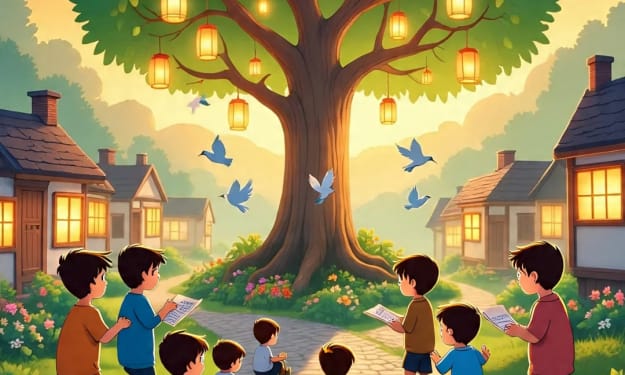
Tucked between two misty hills and hidden from most maps lies the village of Elderglen—a place few outsiders visit, yet many dream about. To some, it’s only a whisper in old travel journals or a scribbled note in the margins of forgotten books. But to those who live there, Elderglen is more than a village. It is a living, breathing story. Elderglen is known for three things: its tree of light, its tradition of storykeeping, and the gentle way time seems to pass. While the rest of the world races forward, Elderglen moves like a poem—measured, intentional, and full of meaning. The heart of the village is the Great Elder Tree, believed to be over 700 years old. Lanterns hang from its branches, one for each family. Every lantern glows faintly at night, but when someone in the village tells a story from the heart—whether around a fire, in the bakery, or during the morning market—their lantern pulses brighter for a moment. No one knows how or why. The villagers don’t question it. They simply say, “The tree remembers what we do with love.” The storykeepers of Elderglen are not scholars or officials. They are bakers, weavers, teachers, and carpenters—anyone who chooses to listen deeply and pass on the stories of others. Every year, the village holds a “Day of Whispers,” when everyone from elders to children gathers to share one story they’ve carried but never spoken aloud. Marin, the village baker, once told the tale of how she’d learned to make cinnamon loaves from her grandmother, who had burned every batch until one rainy morning she got it right—and cried. Her story wasn’t grand, but everyone remembered it. That year, Marin’s lantern shone for hours. Children grow up in Elderglen learning that a good story isn’t measured by excitement or danger, but by the truth it carries. Even simple tales—of a lost scarf found by a stranger, or a letter written but never sent—are honored here. Elderglen teaches that no emotion is too small to matter, no voice too quiet to be heard. The village also values slow learning. There are no strict schools or exams. Instead, children apprentice with those they admire. Some learn woodworking under the patient eyes of Toma, a man who once built a bridge entirely from fallen trees. Others follow the village herbalist, Eliya, who claims that plants “only speak to those who greet them with gratitude.” One of Elderglen’s most cherished customs is the Story Box. Every home keeps a carved wooden box where family members place written memories—some joyful, some painful, all personal. On the first frost of winter, families gather to read a few of them aloud. It's not always easy. Tears are common. But so is laughter. And hugs. And healing. While Elderglen values tradition, it isn’t stuck in the past. Visitors from nearby towns are sometimes invited during festivals, and new ideas are welcomed—as long as they are brought with respect. In fact, the village’s best windmill was designed by a visiting artist who stayed for a summer and never left. “I came for quiet,” she said, “but I stayed for the kindness.” In recent years, some villagers have begun recording their stories with small crystal recorders gifted by travelers. The recordings are stored in the Whispering Room, a hollow beneath the Elder Tree. People can sit inside and listen to voices from the past and present, hearing the courage, laughter, and love passed down through generations. Despite its wonders, life in Elderglen isn’t perfect. There are disagreements, heartbreaks, illnesses, and change. But what makes the village different is its commitment to facing these things together. When someone is grieving, neighbors leave food by the door and poems on the windowsill. When someone succeeds, the village bell rings not once, but three times—once for the person, once for their story, and once for the community that helped shape them. Elderglen is fictional, yes. But perhaps not entirely. In every real community, there are echoes of it—places where people still pause to listen, to tell, to care. Because in the end, the villagers of Elderglen believe one simple thing: The heart of any place is not made of stone or wood or laws. It is made of the stories we dare to share—and the love with which we listen.
By Muhammad Saad 6 months ago in Fiction