
The Power of Poetry: Finding Light in Every Line
How Words Weave Hope, Healing, and a Fresh Perspective on Life
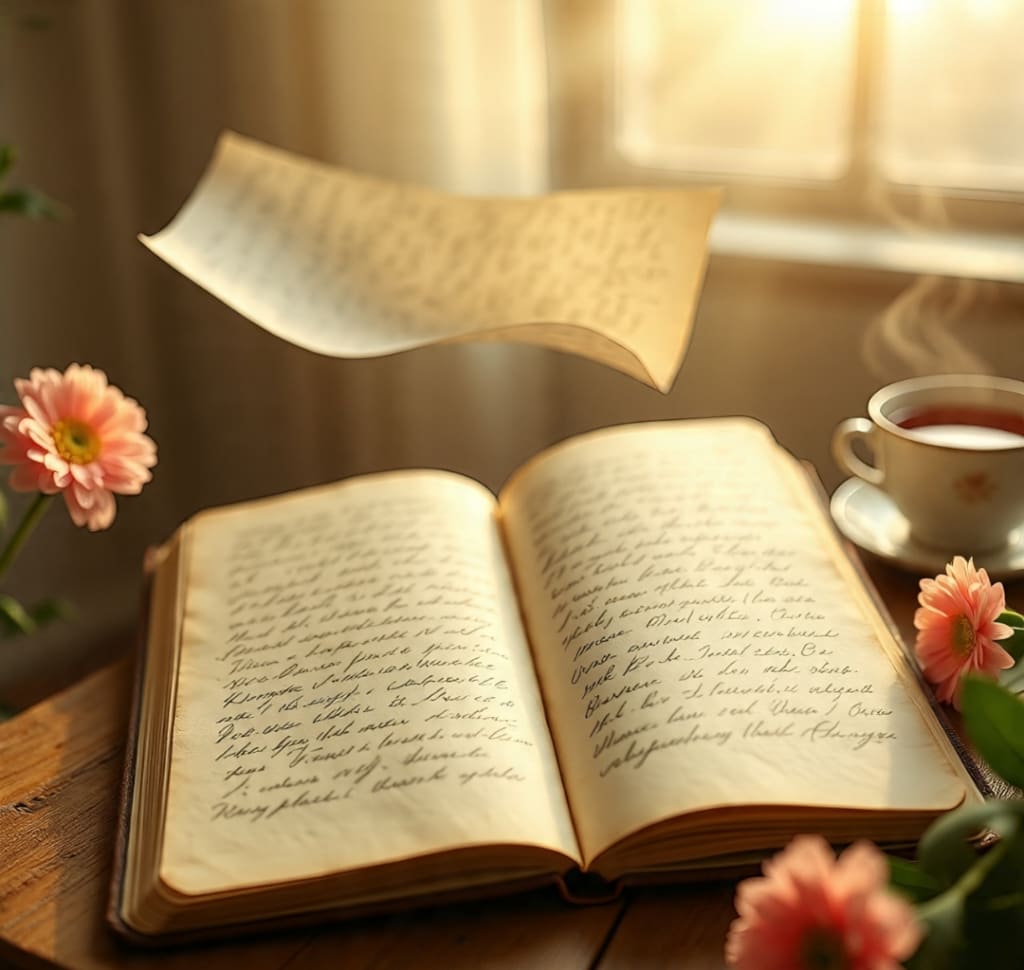
When Maya discovered poetry, it wasn’t in a classroom or on a stage—it was in a quiet moment, alone on her back porch after one of the hardest weeks of her life. She had been laid off from a job she loved, was going through a breakup, and felt like the weight of everything was closing in on her. One evening, she picked up a dusty journal from a drawer and, almost instinctively, began writing. The words came out like a whisper from within:
“Today is heavy / but the sky still holds light / even when clouds won’t move.”
She stared at the lines. They were simple, maybe even clumsy—but they were hers. In that moment, something shifted. Poetry, it turned out, didn’t need to rhyme or be perfect. It just needed to be honest.
Over the next few weeks, Maya began writing daily. What started as a form of self-soothing slowly turned into a way of understanding. Each poem gave shape to feelings she couldn’t quite say out loud. Some were hopeful, others raw. Some were only a few words long, while others filled whole pages. The practice of writing became a ritual, a kind of emotional check-in, and to her surprise, it helped her start healing.
She began reading poetry, too—discovering voices like Mary Oliver, Ocean Vuong, Rupi Kaur, and Langston Hughes. Their words reminded her that poetry had always been a way humans processed joy, pain, love, and everything in between. Across centuries and cultures, poems had been both battle cries and lullabies. They were stories told in distilled form—quick enough to read in a moment, but deep enough to sit with for hours.
Maya wasn’t alone in this discovery. Around the world, more people are turning to poetry as a tool for mindfulness, healing, and connection. In schools, teachers are encouraging students to express themselves through verse. In hospitals, poetry therapy programs are helping patients process trauma. On social media, short-form poems are resonating with millions, offering comfort and clarity in the chaos of daily life.
Why does poetry matter so much, especially in hard times?
Experts say poetry activates both the emotional and cognitive parts of the brain. It allows the writer to release feelings in a structured way and invites the reader to empathize and reflect. Poetry doesn’t demand a solution—it offers space to feel and imagine. It slows us down in a world that constantly demands we keep moving.
In Maya’s case, poetry became more than a private practice. She started sharing her work on a small blog, and to her surprise, people responded. Strangers messaged her, saying her words made them feel seen. One wrote, “I didn’t know how to explain my sadness until I read your poem.” Another said, “Your lines reminded me that there’s beauty in small things, even on bad days.”
These responses weren’t about being “good” at poetry—they were about connection. That’s the beauty of it: poetry isn’t reserved for the elite or the academic. It belongs to everyone. Whether it’s a haiku scribbled on a napkin or a free verse posted online, poetry is one of the most democratic art forms we have.
Today, Maya leads a weekly writing circle in her community. People come with all kinds of stories—grief, hope, loneliness, excitement. They read, write, and share without judgment. The room is full of laughter, sometimes tears, and always a deep sense of togetherness.
“Poetry didn’t fix everything,” Maya says. “But it gave me a language for my life. It helped me see that even in darkness, there’s light to be found—one line at a time.”
And maybe that’s the greatest gift of poetry: it reminds us that we are not alone. That our voices matter. That beauty can be born out of struggle. And that sometimes, the simplest words can hold the most truth.
About the Creator
Keep reading
More stories from Muhammad Saad and writers in Poets and other communities.
The Power of Poetry: Exploring the Art That Speaks to the Soul
On a quiet morning in the village of Alora, an elderly man sat under a blooming jacaranda tree with a small leather-bound notebook. He dipped his pen into a jar of ink and began to write. The poem was not for an audience or for fame—it was simply his way of greeting the day, of making sense of his memories and emotions. Poetry has always had this power: to capture the fleeting, the profound, and the deeply personal in just a few lines. Unlike any other form of expression, poetry distills thoughts and feelings into rhythm and imagery, creating a unique space where language transcends its ordinary function. Long before printing presses or smartphones, people turned to poetry to preserve history, pass down wisdom, and celebrate life’s moments. From the epic chants of Homer’s Odyssey to the delicate haiku of Matsuo Bashō, poetry has existed in every known culture. Why? Because humans are emotional beings, and poetry offers a bridge between the mind and the heart. In ancient Egypt, love poems were inscribed on papyrus and tomb walls, testaments to both passion and permanence. In the Islamic Golden Age, poets like Rumi blended mysticism and emotion, using verse to explore spirituality and divine love. Across continents, African griots memorized oral histories and genealogies in poetic form, keeping tradition alive. Whether chanted around fires or whispered in solitude, poetry served as a lifeline to something deeper—something timeless. Poetry also plays a crucial role in education and literacy. In many societies, children first encounter language through rhyme. Nursery rhymes and songs use rhythm and repetition to teach phonics, vocabulary, and memory skills. As students grow older, poetry becomes a window into literature, history, and cultural identity. Studying Langston Hughes or Maya Angelou, for example, offers not only literary insight but also a powerful understanding of the African American experience in the 20th century. Yet poetry is not only a tool for learning or storytelling. It is often a means of healing. In times of grief, political unrest, or personal struggle, people have always turned to poems for comfort and clarity. The COVID-19 pandemic sparked a global rise in poetry writing and reading. People sought poems that expressed what they could not: anxiety, hope, gratitude, loneliness. Poets like Amanda Gorman, whose performance at the 2021 U.S. presidential inauguration captivated millions, reminded the world of poetry’s role as a voice of unity and resilience. The beauty of poetry lies in its flexibility. It can be formal or free, lyrical or raw. A sonnet may follow strict rules of meter and rhyme, while a spoken-word poem may pulse with emotion and modern slang. This adaptability makes poetry accessible to everyone, regardless of age, background, or education. Today, poetry is experiencing a quiet renaissance. Social media platforms like Instagram and TikTok have given rise to a new wave of “Instapoets”—writers who share short, punchy poems that resonate with followers worldwide. Though some critics question the literary merit of these bite-sized verses, others see them as a democratization of the art form—proof that poetry is not just for scholars, but for anyone with something to say. One such poet is Zara, a 19-year-old university student who began posting her poems online during lockdown. Her verse, often centered around themes of identity and mental health, quickly gained a following. “I never thought my words mattered,” she said. “But people from all over started messaging me, saying my poems helped them feel less alone. That’s when I realized poetry is more than self-expression. It’s connection.” Connection—that is the heart of poetry. Whether written with quill or keyboard, poetry connects individuals to themselves, to others, and to the world around them. It encourages empathy by inviting readers into someone else’s perspective. It builds community by sparking conversation. And it endures, because it captures not just what happened, but how it felt. Back under the jacaranda tree in Alora, the elderly man closes his notebook. A breeze lifts the fallen blossoms at his feet, scattering them like stanzas on the wind. He smiles—not because he expects anyone to read what he’s written, but because he has given shape to a thought, a memory, a moment. That, in itself, is enough. In a world that often feels chaotic and disconnected, poetry offers stillness and meaning. It teaches us that even in just a few lines, we can find truth, beauty, and belonging. Poetry speaks when words fail—and somehow, in its quiet way, it helps us listen more deeply to ourselves and to one another.
By Muhammad Saad 8 months ago in Poets
Thief In The Night
To the thief in the night that took and replicated what once was mine: Honestly, I feel kind of bad for you. It’s funny, because we hardly know each other. I only know of you through the magazines you’ve written and the broadcasts you have televised in the past — as well as through the public mentions of you from your show business connections there.
By Snarky Lisa7 days ago in Humans


Comments
There are no comments for this story
Be the first to respond and start the conversation.