Horace Wasland
Bio
Research analyst, writer & mystical healer. Exploring the edge where science meets mystery. From mystery/the mystical, to facts, news & psychology. Follow for weekly insights on all four and please leave a tip if you like what you read :)
Stories (251)
Filter by community
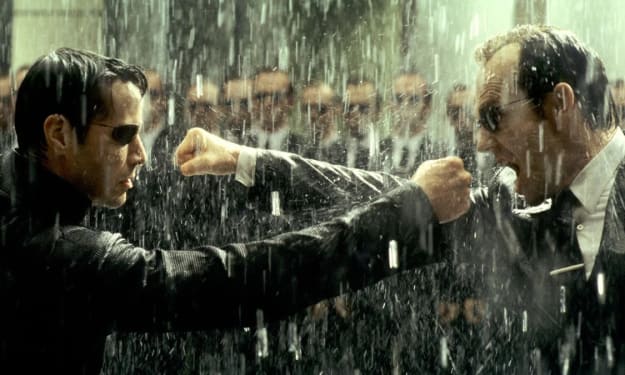
The Matrix Ending Explained
Released in 1999, The Matrix is celebrated not just for its groundbreaking special effects but for its deep philosophical undertones. The film’s ending, in particular, serves as a powerful commentary on the nature of reality and the possibility of transcending societal illusions. In this blog post, we’ll delve into the film’s ending and explore how its themes offer insights into freeing your mind from the constraints imposed by society.
By Horace Waslandabout a year ago in Lifehack
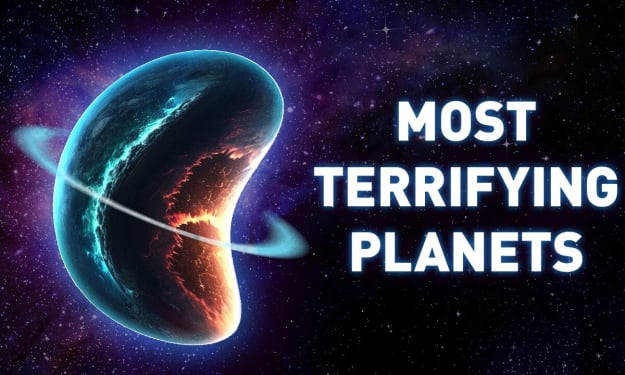
Astonishing Discoveries
Did you know there are an estimated 40 billion planets in the Milky Way galaxy that could support alien life? That means for every one in five stars, there is an Earth-like planet currently in orbit, with the nearest being only 12 light years away from us. In space terms, that's essentially around the corner. Therefore, it's possible that far closer than you'd think, on another world very similar to ours, is another life form very similar to you, watching a video very similar to this one.
By Horace Waslandabout a year ago in Proof
The Real Reason for the Creation of the FBI
A Shocking Crime and the Need for Justice In 1955, a devastating midair explosion over Colorado claimed 44 lives, sparking an FBI investigation that led to the shocking arrest of John Gilbert Graham. His crime? Blowing up a plane to collect his mother’s life insurance. The FBI’s relentless pursuit of justice in this case, like many others, demonstrates its commitment to protecting the public. But where did this iconic agency begin?
By Horace Waslandabout a year ago in Criminal
The Greatest Scientific Misconception of Our Time
What if I told you that right now, you're only using a tiny fraction of your true mental ability? That beneath the surface of your consciousness lies a well of untapped brain power, waiting to be unleashed? This idea, popularized in films, books, and countless conversations, suggests that we humans only use about 10% of our total brain capacity. But is this actually true?
By Horace Waslandabout a year ago in Proof
I Don't Know What to Do
Chasing the Right Formula For as long as I can remember, I’ve been obsessed with finding the perfect formula for success and happiness. Whether it was in my career, relationships, or personal growth, I sought out rules and guidelines to follow. I spent hours reading self-help books, attending seminars, and trying to implement strategies that promised to lead me to the "right" path. For example, I once meticulously planned my career trajectory based on a set of rules that seemed foolproof. But despite my best efforts, I found myself often disillusioned when things didn’t go as planned. The constant pursuit of this idealized formula left me feeling more stressed than satisfied.
By Horace Waslandabout a year ago in Psyche
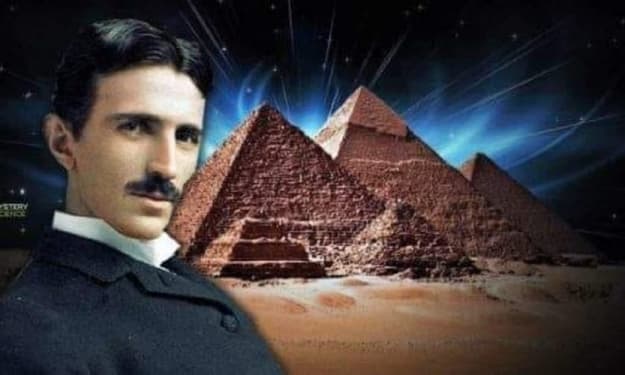
Tesla’s Energy Revolution
The Great Pyramid’s Mystique: Unveiling Ancient Secrets The Great Pyramid of Giza, one of the Seven Wonders of the Ancient World, continues to captivate the imagination of people worldwide. Constructed during the Fourth Dynasty of the Old Kingdom of Egypt, it originally stood at 146.6 meters (481 feet) tall, though today it measures 138.8 meters (455 feet) due to the loss of the outer casing stones. Its massive scale, precise alignment with the cardinal points, and intricate design have sparked debates about its purpose and construction methods. For over 3,000 years, the pyramid was the tallest man-made structure on Earth, showcasing the remarkable engineering skills of the ancient Egyptians. The pyramid’s enduring mystery is further compounded by its sophisticated construction techniques and the fact that its exact purpose remains a subject of scholarly debate.
By Horace Waslandabout a year ago in History
The Dangerous Spread of False Information
In recent events, the tranquil town of Southport in the north of England was rocked by violent riots sparked by misinformation spread through social media. Hundreds of individuals, incited by false claims, went on a rampage, torching vehicles, and attacking police officers. This unrest was a direct result of inflammatory posts and false narratives propagated by right-wing figures and platforms.
By Horace Waslandabout a year ago in Humans
Understanding the Chaos
The UK has been engulfed in widespread riots, prompting heated discussions and various theories about the underlying causes. In a recent interview, bestselling author Douglas Murray shared his insights on the unrest, touching on topics ranging from media and police responses to the deeper societal issues at play. Here’s a breakdown of his key points and their implications.
By Horace Waslandabout a year ago in Humans
Is Humanity Prepared?
In the realm of science fiction, few images are as iconic as the Death Star from Star Wars. This moon-sized weapon, capable of obliterating entire planets with a single blast, has captivated imaginations for decades. But beyond its cinematic splendor, the concept of a planet-destroying weapon prompts a deeper inquiry: Could such a device ever be a reality? And if so, are we prepared for the potentially catastrophic risks?
By Horace Waslandabout a year ago in Humans
Aerial Espionage
On May 1, 1960, a dramatic event unfolded in the skies over Sverdlovsk, Soviet Union. A Soviet S-75 Dvina surface-to-air missile struck an American U-2 spy plane, exposing a series of high-stakes deceptions and geopolitical blunders. In an attempt to save face, the US government concocted an elaborate cover story, claiming the downed aircraft was a NASA research plane that had suffered an in-flight emergency. This ruse included fabricated details about the pilot, Gary Powers, experiencing oxygen system problems. The deception was meticulously planned, with the entire U-2 fleet grounded for a supposed review of its oxygen systems.
By Horace Waslandabout a year ago in Geeks
Speed vs. Safety
The Technological Marvel Benjamin Franklin once famously said, “In this world, nothing can be said to be certain, except death and taxes.” If Franklin had lived to see the era of supersonic flight, he might have added “the relentless advance of technology” to his list. Our modern gadgets evolve rapidly: phones gain pixels, laptops get faster, and cars become more efficient. Yet, when we look back at aviation history, one aircraft stands out as a technological marvel with a controversial legacy. Enter Concorde—the supersonic jet that, despite its revolutionary technology, faced numerous challenges that ultimately led to its retirement.
By Horace Waslandabout a year ago in Geeks
Why We Lie
Lying is as ancient as humanity itself, deeply embedded in our social interactions and survival strategies. One famous experiment by behavioral economist Dan Ariely sheds light on the mechanics of dishonesty. Participants in his study were given a set of math problems and promised a dollar for each correct answer. They were instructed to shred their answers after the time was up, but the shredder was fake, allowing researchers to compare reported answers with actual performance. Surprisingly, about 70% of people cheated, inflating their results. The average participant claimed to have solved six problems correctly, though they had only solved four. This discrepancy highlights a fundamental truth: people are more willing to lie when the stakes are low, but they do so with a calculated precision to avoid suspicion.
By Horace Waslandabout a year ago in Psyche