

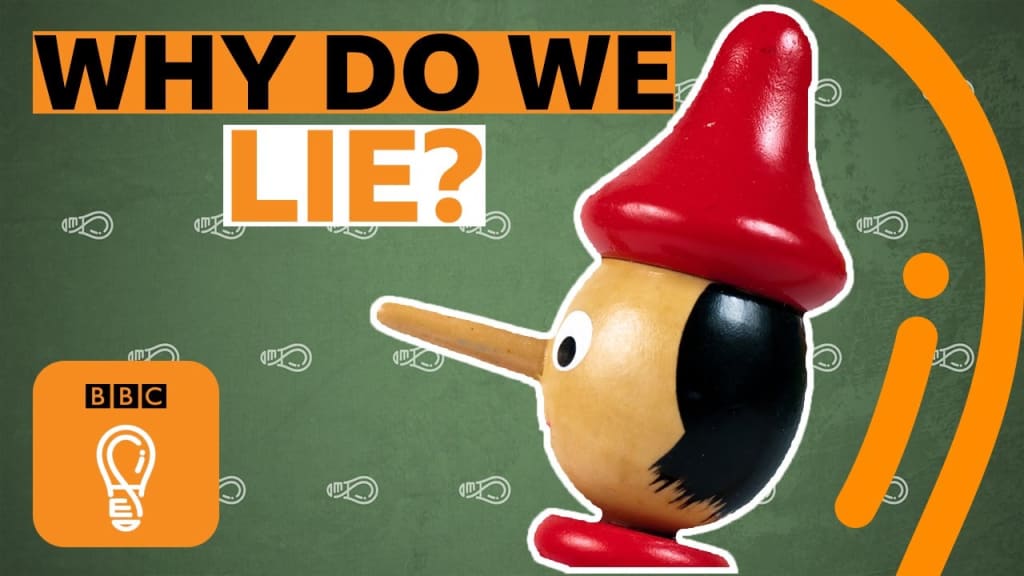
Lying is as ancient as humanity itself, deeply embedded in our social interactions and survival strategies. One famous experiment by behavioral economist Dan Ariely sheds light on the mechanics of dishonesty. Participants in his study were given a set of math problems and promised a dollar for each correct answer. They were instructed to shred their answers after the time was up, but the shredder was fake, allowing researchers to compare reported answers with actual performance. Surprisingly, about 70% of people cheated, inflating their results. The average participant claimed to have solved six problems correctly, though they had only solved four. This discrepancy highlights a fundamental truth: people are more willing to lie when the stakes are low, but they do so with a calculated precision to avoid suspicion.
Defining a Lie
A lie is fundamentally an act aimed at creating a false belief, whether towards others or ourselves. This deception can take various forms: stating something untrue, omitting relevant facts, exaggerating details, or casting doubt on the truth. Lies can also be actions taken or avoided, all of which contribute to the complex tapestry of human dishonesty. The prevalence of lying is not an isolated phenomenon but a reflection of our evolutionary and psychological development.
The Evolutionary Perspective on Lying
The human capacity for deception is deeply rooted in our evolutionary history. The saying, “Nothing in biology makes sense except in the light of evolution,” rings true here. Lying, while often perceived negatively, is a trait that has persisted because it offers adaptive advantages. In our evolutionary past, the ability to deceive others could have been crucial for survival. It allowed individuals to gain resources, avoid conflict, and secure social advantages. This survival mechanism is so ingrained that it has shaped our cognitive functions and social behaviors over millennia.
The Prevalence of Lies
Research reveals that lying is a common behavior across various social contexts. College students, for instance, lie in a quarter of conversations with their best friends, half with acquaintances, and nearly 80% of the time with strangers. Even intimate relationships are not immune, with lies being told to romantic partners and family members. This prevalence suggests that lying is a routine part of human interaction, reflecting its deep-rooted nature in our social fabric.

Lying Across Species
Lying is not unique to humans; it occurs throughout the animal kingdom. For example, viruses deceive the immune system with molecular mimicry, parasites manipulate their hosts to facilitate their own survival, and flowers use deceptive appearances to attract pollinators. Camouflage and mimicry in animals are forms of lying with physical traits. The complexity of these deceptions underscores that dishonesty is a widespread strategy in nature, though humans exhibit a unique range of verbal and cognitive deceptions.
The Psychology of Lying
Psychologically, lying serves various functions. Most people lie to protect themselves or others, a concept that can be categorized into self-centered and other-oriented lies. Self-centered lies aim to shield the liar from embarrassment, disapproval, or conflict. For instance, exaggerating one's achievements or making excuses for tardiness are self-serving deceptions. On the other hand, other-oriented lies are intended to protect the feelings or well-being of others, such as complimenting a friend's appearance to avoid hurting their feelings.
Interestingly, people are more likely to tell self-serving lies to acquaintances and strangers, while protective lies are more common with close friends and family. This pattern indicates that while lying can be a strategy for self-preservation, it also plays a role in maintaining and nurturing social bonds.
Rationalizing Lies
People often justify lying by believing it serves a greater good. They may rationalize that their dishonesty is a form of prosocial behavior, aimed at protecting others from harm or discomfort. This rationalization can be a way to reconcile the act of lying with personal ethical standards. Furthermore, social cues influence our propensity to lie. If we observe someone in our “in-group” lying and getting away with it, we might be more inclined to lie ourselves, perceiving it as socially acceptable behavior.
Lying in the Digital Age
The rise of digital communication has transformed the landscape of lying. Experiments have shown that physical separation between the liar and the victim, such as through online interactions, increases the likelihood of dishonest behavior. The anonymity and distance provided by the internet create an environment where lying becomes easier and more frequent. This shift raises concerns about the impact of digital communication on social trust and honesty.
Addressing the Lying Problem
Despite the pervasive nature of lying, there are ways to mitigate its impact. One effective strategy is increasing awareness and commitment to honesty. Research has shown that simply making a promise not to lie can reduce dishonesty. By engaging the conscious mind in ethical decision-making, individuals can counteract the automatic tendencies towards deceit. This approach suggests that our capacity for self-reflection and moral reasoning can help curb dishonest behavior.
Closing
Lying is a complex and multifaceted behavior deeply ingrained in human nature. It serves various functions, from protecting self-esteem to maintaining social bonds. While lying is prevalent across species and has evolutionary roots, our unique capacity for verbal deception and rationalization distinguishes human dishonesty. Understanding why we lie and recognizing the psychological and social factors involved can help us navigate our interactions more thoughtfully. By leveraging our conscious minds and striving for honesty, we can work towards reducing the frequency and impact of lying in our lives and relationships.
Why We Lie: A Survival Mechanism in Human History
Lying is as ancient as humanity itself, deeply embedded in our social interactions and survival strategies. One famous experiment by behavioral economist Dan Ariely sheds light on the mechanics of dishonesty. Participants in his study were given a set of math problems and promised a dollar for each correct answer. They were instructed to shred their answers after the time was up, but the shredder was fake, allowing researchers to compare reported answers with actual performance. Surprisingly, about 70% of people cheated, inflating their results. The average participant claimed to have solved six problems correctly, though they had only solved four. This discrepancy highlights a fundamental truth: people are more willing to lie when the stakes are low, but they do so with a calculated precision to avoid suspicion.
Defining a Lie
A lie is fundamentally an act aimed at creating a false belief, whether towards others or ourselves. This deception can take various forms: stating something untrue, omitting relevant facts, exaggerating details, or casting doubt on the truth. Lies can also be actions taken or avoided, all of which contribute to the complex tapestry of human dishonesty. The prevalence of lying is not an isolated phenomenon but a reflection of our evolutionary and psychological development.
The Evolutionary Perspective on Lying
The human capacity for deception is deeply rooted in our evolutionary history. The saying, “Nothing in biology makes sense except in the light of evolution,” rings true here. Lying, while often perceived negatively, is a trait that has persisted because it offers adaptive advantages. In our evolutionary past, the ability to deceive others could have been crucial for survival. It allowed individuals to gain resources, avoid conflict, and secure social advantages. This survival mechanism is so ingrained that it has shaped our cognitive functions and social behaviors over millennia.
The Prevalence of Lies
Research reveals that lying is a common behavior across various social contexts. College students, for instance, lie in a quarter of conversations with their best friends, half with acquaintances, and nearly 80% of the time with strangers. Even intimate relationships are not immune, with lies being told to romantic partners and family members. This prevalence suggests that lying is a routine part of human interaction, reflecting its deep-rooted nature in our social fabric.
Lying Across Species
Lying is not unique to humans; it occurs throughout the animal kingdom. For example, viruses deceive the immune system with molecular mimicry, parasites manipulate their hosts to facilitate their own survival, and flowers use deceptive appearances to attract pollinators. Camouflage and mimicry in animals are forms of lying with physical traits. The complexity of these deceptions underscores that dishonesty is a widespread strategy in nature, though humans exhibit a unique range of verbal and cognitive deceptions.
The Psychology of Lying
Psychologically, lying serves various functions. Most people lie to protect themselves or others, a concept that can be categorized into self-centered and other-oriented lies. Self-centered lies aim to shield the liar from embarrassment, disapproval, or conflict. For instance, exaggerating one's achievements or making excuses for tardiness are self-serving deceptions. On the other hand, other-oriented lies are intended to protect the feelings or well-being of others, such as complimenting a friend's appearance to avoid hurting their feelings.
Interestingly, people are more likely to tell self-serving lies to acquaintances and strangers, while protective lies are more common with close friends and family. This pattern indicates that while lying can be a strategy for self-preservation, it also plays a role in maintaining and nurturing social bonds.
Rationalizing Lies
People often justify lying by believing it serves a greater good. They may rationalize that their dishonesty is a form of prosocial behavior, aimed at protecting others from harm or discomfort. This rationalization can be a way to reconcile the act of lying with personal ethical standards. Furthermore, social cues influence our propensity to lie. If we observe someone in our “in-group” lying and getting away with it, we might be more inclined to lie ourselves, perceiving it as socially acceptable behavior.
Lying in the Digital Age
The rise of digital communication has transformed the landscape of lying. Experiments have shown that physical separation between the liar and the victim, such as through online interactions, increases the likelihood of dishonest behavior. The anonymity and distance provided by the internet create an environment where lying becomes easier and more frequent. This shift raises concerns about the impact of digital communication on social trust and honesty.
Addressing the Lying Problem
Despite the pervasive nature of lying, there are ways to mitigate its impact. One effective strategy is increasing awareness and commitment to honesty. Research has shown that simply making a promise not to lie can reduce dishonesty. By engaging the conscious mind in ethical decision-making, individuals can counteract the automatic tendencies towards deceit. This approach suggests that our capacity for self-reflection and moral reasoning can help curb dishonest behavior.
Closing
Lying is a complex and multifaceted behavior deeply ingrained in human nature. It serves various functions, from protecting self-esteem to maintaining social bonds. While lying is prevalent across species and has evolutionary roots, our unique capacity for verbal deception and rationalization distinguishes human dishonesty. Understanding why we lie and recognizing the psychological and social factors involved can help us navigate our interactions more thoughtfully. By leveraging our conscious minds and striving for honesty, we can work towards reducing the frequency and impact of lying in our lives and relationships.
About the Creator
Horace Wasland
Research analyst, writer & mystical healer. Exploring the edge where science meets mystery. From mystery/the mystical, to facts, news & psychology. Follow for weekly insights on all four and please leave a tip if you like what you read :)
Keep reading
More stories from Horace Wasland and writers in Psyche and other communities.
Internal Turmoil
I've always heard that our thoughts shape our reality. Yet, I often found myself grappling with feelings of fear, anger, and anxiety, despite knowing they were just products of my mind. I realized that to truly transform my life, I needed to understand the nature of my thoughts and how to master them. Here's a glimpse into my journey of overcoming inner turmoil and finding peace.
By Horace Wasland2 years ago in Psyche
Top tipple tricks
Been thinking a lot about drinking, lately. Not least because of a recent episode of over-indulgence and the inevitable after effects. Some readers may recall the earlier articles I wrote about beating the booze. Here I set out an experiment in techniques for cutting down on my alcohol intake. The experiment was successful, the techniques worked, and I have armed myself with an arsenal of weapons in the war against the demon drink. I have yet to fire the first round however. It's all a question of timing (perhaps procrastination).
By Raymond G. Taylor7 days ago in Psyche
Why Didn't Anyone Tell Us
Men, move along. This is not for you. This is for the women. I was forty-five when I began menopause. It is pretty young for that to be going on in a woman’s life, but I had undiagnosed PCOS, my entire life. Thank you to all the gynecologists I had seen my entire life. That in itself should encourage women to keep seeking second opinions, especially when you are not getting correct answers or any at all.
By Alexandra Grant5 days ago in Humans




Comments
There are no comments for this story
Be the first to respond and start the conversation.