
Aerial Espionage
The Story Behind America's Fastest Spy Plane


On May 1, 1960, a dramatic event unfolded in the skies over Sverdlovsk, Soviet Union. A Soviet S-75 Dvina surface-to-air missile struck an American U-2 spy plane, exposing a series of high-stakes deceptions and geopolitical blunders. In an attempt to save face, the US government concocted an elaborate cover story, claiming the downed aircraft was a NASA research plane that had suffered an in-flight emergency. This ruse included fabricated details about the pilot, Gary Powers, experiencing oxygen system problems. The deception was meticulously planned, with the entire U-2 fleet grounded for a supposed review of its oxygen systems.
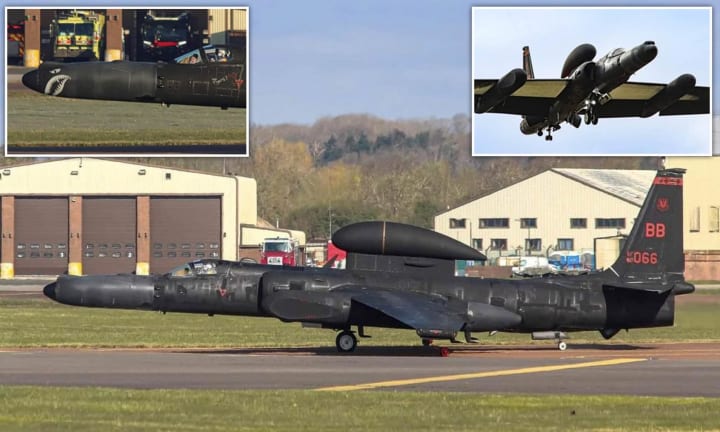
However, the cover-up was soon unraveled by the Soviets. Gary Powers had ejected safely and was in Soviet custody. Moreover, the U-2’s advanced reconnaissance equipment made it clear that the aircraft was no ordinary research plane. The Soviets seized the opportunity to embarrass their Cold War adversaries by parading both the pilot and wreckage of the U-2, severely undermining the credibility of the American government. This public humiliation derailed the upcoming Paris summit, scheduled to discuss peace talks between the superpowers, and prolonged the Cold War by decades. Yet, from this geopolitical debacle emerged an extraordinary technological achievement: the Lockheed SR-71 Blackbird.
The Genesis of the SR-71
The U-2 incident revealed critical vulnerabilities in American reconnaissance capabilities. Despite its impressive operational altitude of 70,000 feet, the U-2 was not as invulnerable as believed. Soviet radar systems had outpaced American expectations, making the U-2 an increasingly risky asset. Its large radar cross-section and relatively slow speed rendered it susceptible to detection and interception.
Faced with these challenges, the CIA recognized the need for a new kind of aircraft—one that would be virtually untouchable by enemy defenses. Enter Kelly Johnson, the legendary aeronautical engineer and head of Lockheed’s Advanced Development Projects, affectionately known as Skunk Works. Johnson’s illustrious career included pioneering designs for the US’s first jet fighter, the first aircraft to exceed Mach 3, and several groundbreaking military aircraft. His expertise and visionary approach were critical in developing an aircraft that could outpace and outmaneuver any threat.
Johnson and his team embarked on creating an aircraft that defied conventional engineering limits. The result was the SR-71 Blackbird, a marvel of aviation technology.
Design and Engineering
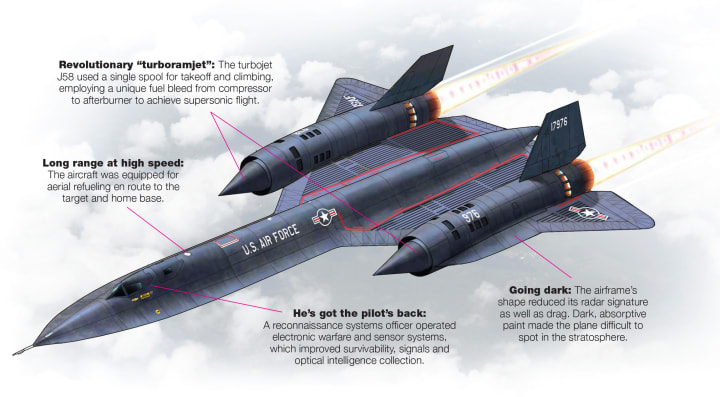
The SR-71 was not just a new aircraft; it was a revolutionary leap in design and technology. With its sleek, stealthy profile and dark paint, the Blackbird was built to be the ultimate reconnaissance machine. It could cruise at an altitude of 85,000 feet and speeds exceeding Mach 3, making it nearly impossible for enemy missiles to catch.
One of the most significant challenges was the extreme temperatures encountered during high-speed flight. At cruising altitudes, temperatures plummeted to -85 degrees Celsius, while friction from speeds of Mach 3+ caused the aircraft’s surface to heat up to over 300 degrees Celsius. To withstand these conditions, the SR-71 was constructed primarily from titanium, a material that could endure high temperatures without losing strength. This choice of material required entirely new fabrication techniques, as traditional methods and tools were insufficient for working with titanium.
The aircraft’s design also had to accommodate the thermal expansion experienced during flight. As the SR-71 sped through the atmosphere, its frame expanded by nearly a foot. To account for this, the plane’s panels were designed with extra clearance, causing fuel to leak while the aircraft was on the ground—a quirk of its high-speed engineering.
Operational Excellence
The SR-71’s operational capabilities were as impressive as its design. It was equipped with sophisticated cameras and sensors, allowing it to gather intelligence from an altitude and speed that rendered it nearly impervious to enemy defenses. The Blackbird’s side-facing cameras could cover up to 100,000 square miles of territory in just one hour, making it an unparalleled tool for aerial reconnaissance.
During its 30 years of service, the SR-71’s performance was nothing short of extraordinary. Despite numerous attempts, not a single surface-to-air missile ever hit the aircraft. Its ability to evade enemy fire and gather critical intelligence made it a prized asset for the US Air Force. The SR-71 flew missions around the globe, often in conflict zones, gathering vital information while maintaining its elusive reputation.
End of an Era
By the 1990s, the SR-71 faced new challenges. Emerging technologies, including satellite surveillance and unmanned drones, began to offer more efficient and cost-effective solutions for intelligence gathering. Despite the SR-71’s unmatched speed and capability, these new technologies and the high costs associated with maintaining the Blackbird led to its retirement.
In 1999, the SR-71 was briefly reactivated but was soon mothballed for good. The decision to retire the aircraft was influenced by the advancements in satellite technology and the increasing capabilities of unmanned drones. Nevertheless, many in the military considered the move a mistake, given the SR-71’s unparalleled performance and the emerging threats it could still address.
Legacy and Future
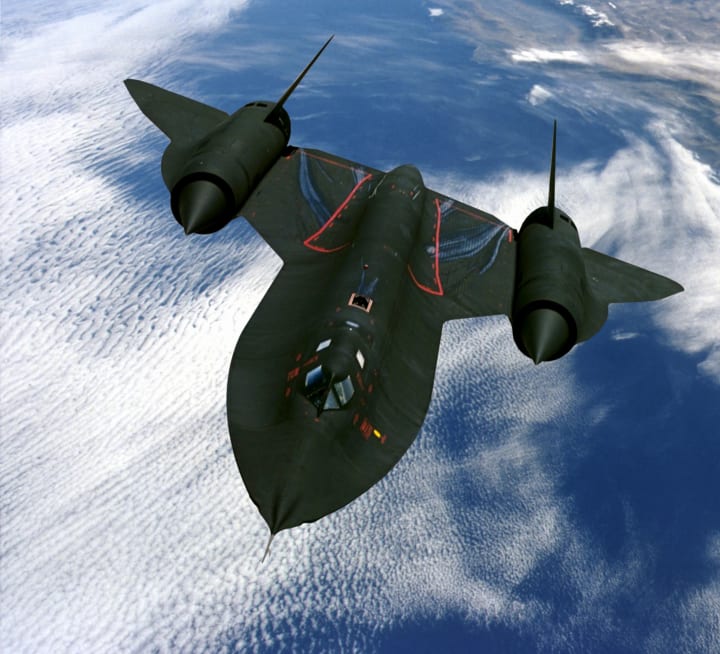
Today, the SR-71 remains a symbol of aviation prowess and ingenuity. Its records for speed and altitude stand unchallenged, and it holds the record for the fastest flight between New York and London—a journey completed in 1 hour and 54 minutes in 1974, an hour faster than the supersonic Concorde.
The Blackbird’s legacy is immortalized in museums around the world, where it is celebrated as one of the greatest aircraft ever built. Its influence extends to future developments, with the SR-72, often referred to as the "Son of Blackbird," currently in development. The SR-72 aims to build upon the Blackbird’s legacy with advanced technologies that could make it even more formidable.
Closing
The story of the SR-71 Blackbird is one of triumph over adversity, innovation against the odds, and a testament to human ingenuity. From its dramatic inception following the U-2 incident to its unmatched performance and enduring legacy, the Blackbird remains an iconic piece of aviation history. As we look forward to the next generation of high-speed aircraft, the SR-71’s remarkable achievements continue to inspire and captivate.
About the Creator
Horace Wasland
Research analyst, writer & mystical healer. Exploring the edge where science meets mystery. From mystery/the mystical, to facts, news & psychology. Follow for weekly insights on all four and please leave a tip if you like what you read :)
Keep reading
More stories from Horace Wasland and writers in Geeks and other communities.
Speed vs. Safety
The Technological Marvel Benjamin Franklin once famously said, “In this world, nothing can be said to be certain, except death and taxes.” If Franklin had lived to see the era of supersonic flight, he might have added “the relentless advance of technology” to his list. Our modern gadgets evolve rapidly: phones gain pixels, laptops get faster, and cars become more efficient. Yet, when we look back at aviation history, one aircraft stands out as a technological marvel with a controversial legacy. Enter Concorde—the supersonic jet that, despite its revolutionary technology, faced numerous challenges that ultimately led to its retirement.
By Horace Waslandabout a year ago in Geeks
The Rachels - 2025
Much to my surprise, I have kept a list of the films I‘ve seen this year. I daresay it isn’t complete. There will be films that snuck in on a late night in front of the TV that I would’ve forgotten to note. Or others, that I went to watch at the cinema, but then had a red wine and promptly forgotten about. But it’s not a bad approximation of the films I’ve seen this year. In total, there are 53 films listed, so an average of one a week and one for good luck.
By Rachel Robbins18 days ago in Geeks
Allu Arjun teams up with Lokesh Kanagaraj for mega-budget film starting in 2026
Allu Arjun has reportedly joined forces with director Lokesh Kanagaraj for a new mega-budget film, which will begin production in Hyderabad in October 2026. This collaboration comes after Lokesh Kanagaraj's Coolie and follows detailed discussions between the actor and the director in Hyderabad, where the script was finalised.
By Dena Falken Esq6 days ago in Geeks




Comments
There are no comments for this story
Be the first to respond and start the conversation.