
Is Humanity Prepared?
The Risks of the Super Weapon That Could End Life on Earth


In the realm of science fiction, few images are as iconic as the Death Star from Star Wars. This moon-sized weapon, capable of obliterating entire planets with a single blast, has captivated imaginations for decades. But beyond its cinematic splendor, the concept of a planet-destroying weapon prompts a deeper inquiry: Could such a device ever be a reality? And if so, are we prepared for the potentially catastrophic risks?
The Immense Scale of Planetary Destruction
To comprehend the enormity of destroying a planet like Earth, consider this: Earth weighs about 6 septillion kilograms (6 followed by 24 zeros). Over its 4.5 billion-year history, Earth has endured numerous colossal impacts, including one around 66 million years ago that contributed to the extinction of the non-avian dinosaurs. This impact released energy equivalent to approximately 10 billion nuclear bombs, yet the planet itself remained largely intact.
The scale of destruction required to completely obliterate Earth is staggering. The notion that detonating all the nuclear weapons on Earth could cause planetary destruction is a misconception. The combined explosive yield of every nuclear weapon on Earth is insignificant compared to the energy required to dismantle a planet.
Laser Technology: A Far-Fetched Solution
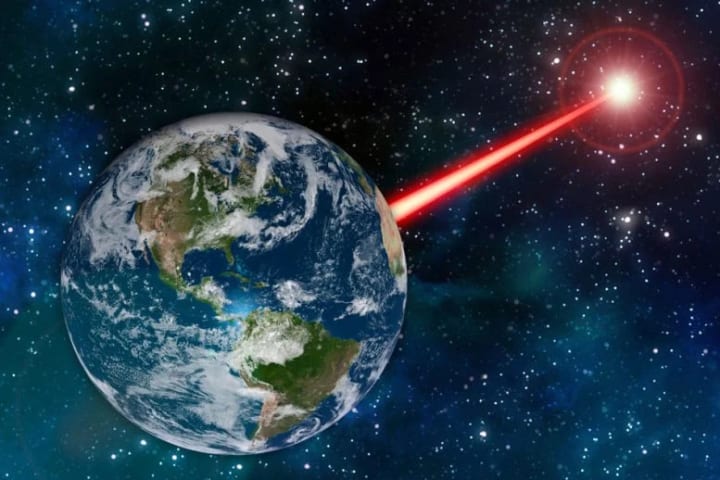
One theoretical approach to creating a planet-destroying weapon involves scaling up current laser technology. Military-grade lasers today are powerful enough to target and destroy aircraft and satellites, but the energy required to obliterate a planet would be orders of magnitude greater. To put it in perspective, we would need to create a laser with about a billion trillion times more power than what we currently possess.
The technical challenges of building such a weapon are immense. For instance, no known lasing material could withstand the extreme heat generated by such a device. Furthermore, the economic costs of developing and maintaining a laser of that magnitude would be astronomical. In 2012, a petition was submitted to the U.S. government proposing the construction of a real Death Star. The response highlighted the estimated cost of around 850 quadrillion dollars, far exceeding the combined GDP of all nations on Earth.
Antimatter: Theoretical Potential vs. Practical Constraints
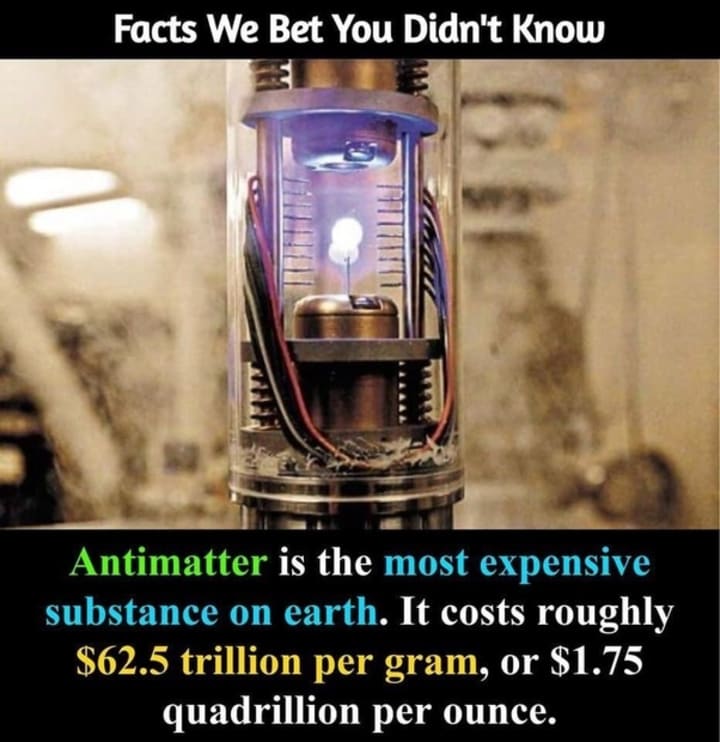
Antimatter presents another intriguing possibility. When antimatter and regular matter meet, they annihilate each other, releasing energy equivalent to the most powerful nuclear explosions. Just one gram of antimatter could produce an explosion comparable to a nuclear bomb. However, the practical challenges of using antimatter as a weapon are staggering.
Antimatter is extremely difficult and costly to produce. The Large Hadron Collider at CERN, one of the most advanced particle accelerators, generates only a billionth of a gram of antimatter annually. With production costs estimated at around $63 trillion per gram, creating enough antimatter to destroy a planet remains beyond our current capabilities. Additionally, handling antimatter presents significant technical hurdles, as it requires containment within powerful magnetic fields to prevent it from coming into contact with regular matter.
Self-Replicating Robots: A Potential Pathway

An alternative concept involves self-replicating robots, a notion explored by scientists like Freeman Dyson and John von Neumann. These robots would be designed to harvest materials from a planet, replicate themselves, and continue this process exponentially. Theoretically, a single robot could start the process, creating copies of itself, which would then multiply rapidly.
In this scenario, the number of robots would grow exponentially, leading to a massive fleet capable of dismantling a planet piece by piece. This approach circumvents some of the scale issues associated with conventional weapons. However, significant challenges remain, such as ensuring the robots can function in extreme conditions, like the high temperatures found within a planet’s core.
Cosmic Solutions: Stars and Black Holes

Considering the vastness of the universe, natural phenomena like stars and black holes already possess the capability to destroy planets. A star or black hole could potentially consume Earth with relative ease. While moving a planet to one of these cosmic entities poses its own set of challenges, such an approach might be less technologically demanding than developing a human-made weapon of planetary destruction.
Humanity’s Preparedness and Focus
Given the current state of technology and the associated costs, humanity is far from prepared to develop or deploy a planet-destroying weapon. Theoretical discussions about such weapons highlight our technological limits and the need for focusing on more immediate and practical challenges.
While imagining the possibilities of superweapons can be fascinating, it's crucial to recognize that our technological capabilities are not yet advanced enough to make these concepts a reality. Instead, our focus should be on addressing pressing issues that affect our planet’s habitability and well-being, such as climate change, resource management, and environmental sustainability.
In conclusion, while the idea of a planet-killing weapon is a captivating subject for speculative fiction, the reality remains that humanity's current technological limits and economic constraints render such weapons far beyond our reach. As we explore the boundaries of science and technology, let’s remain grounded in addressing the more immediate challenges we face and work toward a future where our technological advancements serve to enhance life on Earth rather than endanger it.
About the Creator
Horace Wasland
Research analyst, writer & mystical healer. Exploring the edge where science meets mystery. From mystery/the mystical, to facts, news & psychology. Follow for weekly insights on all four and please leave a tip if you like what you read :)
Keep reading
More stories from Horace Wasland and writers in Humans and other communities.
Unveiling the Underground
London's Underground, commonly known as the Tube, is an iconic symbol of the city's resilience and innovation. Established in 1863, it not only revolutionized urban transport but also set a global blueprint for subways worldwide. But behind its familiar logos and schedules lies a trove of fascinating and lesser-known facts that underscore its unique place in both history and modern life.
By Horace Waslandabout a year ago in Humans
Signs You Already Met Your Soul Tribe Without Noticing.
We often search far and wide for our soul tribe, the group of people who resonate deeply with our energy, values, and purpose. Yet sometimes, they are already around us, unnoticed in the midst of everyday interactions. Your soul tribe is not necessarily your closest friends or family, but those who uplift, challenge, and support your growth at a soul level. Recognizing them requires awareness, intuition, and understanding subtle signs that go beyond ordinary connection.
By Wilson Igbasi5 days ago in Humans


Comments
There are no comments for this story
Be the first to respond and start the conversation.