
The Real Reason for the Creation of the FBI
The True Purpose of the FBI's Establishment

A Shocking Crime and the Need for Justice
In 1955, a devastating midair explosion over Colorado claimed 44 lives, sparking an FBI investigation that led to the shocking arrest of John Gilbert Graham. His crime? Blowing up a plane to collect his mother’s life insurance. The FBI’s relentless pursuit of justice in this case, like many others, demonstrates its commitment to protecting the public. But where did this iconic agency begin?
The Birth of the Bureau of Investigation
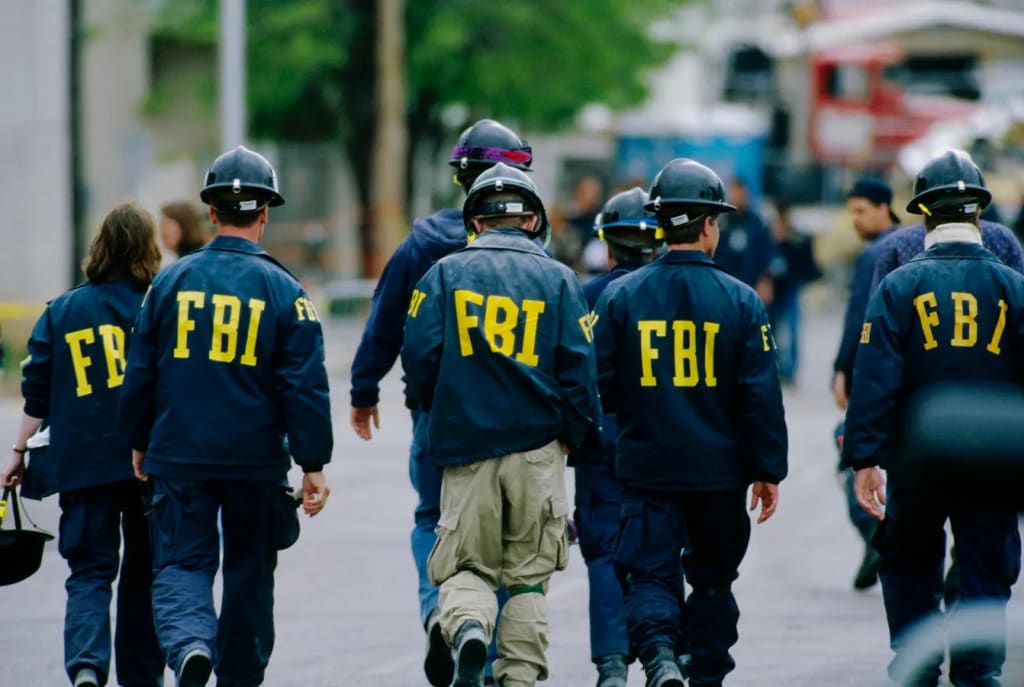
The Federal Bureau of Investigation, better known as the FBI, is today one of the most recognizable law enforcement agencies in the world. It employs roughly 35,000 people across 55 field offices in the United States and one in Puerto Rico. From Special Agents to scientists, intelligence analysts, and information technology experts, the FBI’s workforce is a well-oiled machine focused on one mission: to hunt down criminals and bring them to justice.
But impressive as this 35,000-strong army of seasoned manhunters is today, there was a time not so long ago when nothing like the FBI even existed.
The Meeting That Changed American Law Enforcement
In 1908, Attorney General Charles Bonaparte met President Theodore Roosevelt at a Civil Service reform meeting in Baltimore. The USA of that era was vastly different from the one we know today. Innovations like the railroad had helped the rapid spread of people throughout the country during the nineteenth century, supporting a population explosion. And it wasn’t only the nation’s cities that were mushrooming—the crime rate was, too. At the time, there was almost no way to enforce the law on a grand scale, with most police forces focusing at the community or state level.
At that meeting in Baltimore, President Roosevelt instructed Charles Bonaparte—who, interestingly enough, was the great-nephew of French general and emperor Napoleon Bonaparte—to change all that. As progressives, both men were united by their politics and their belief that ability, rather than political connections, should be the deciding factor in the recruitment of law enforcement personnel. Their dedication to the ideal of a true meritocracy was evident. Roosevelt famously boasted that he had appointed border patrol agents based on marksmanship rather than political influence, and Bonaparte jokingly suggested that Roosevelt should have had the candidates shoot at each other and given the jobs to the survivors.
The Controversial Formation of the Bureau
Under Roosevelt’s authority, on July 26, 1908, Bonaparte formed a corps of special agents that would soon be known as the Bureau of Investigation. Led by Chief Examiner Stanley Finch, the Bureau’s first director, this team of just 34 people were the pioneers of what would eventually become the FBI.
This might not sound like much, but back in 1908, creating an operation like this in America was controversial. Much like today, the US was big on its freedoms, and many people didn’t like the idea of an oppressive government ruling across state lines. Introducing an agency of law enforcement experts with a remit to do exactly that wasn’t met with cheers and applause—many citizens were uncooperative with investigations.
Early Days and Initial Focus
In its early days, the Bureau of Investigation primarily dealt with civil rights cases, including antitrust, land fraud, banking fraud, copyright violations, and forced labor. But when it was asked to take the investigative lead on the newly-passed Mann Act, also known as the White Slave Traffic Act, its power and influence began to grow. This was fortuitous, as the coming years would present the young agency with significant challenges.
The Rise of Crime and the Bureau's Response
The Bureau was formed at just the right time. In 1908, a nine-year-old kid by the name of Alphonso Capone was already making a name for himself on the streets of Brooklyn; John Dillinger, just five at the time, was living his best life on his parents’ farm in Indiana, and Dillinger’s future partner in crime—literally—Lester Joseph Gillis, better known by his nickname Baby Face Nelson, would be born within the year.
Thanks in no small part to that motley crew, the years 1921 to 1933 became so rife with gangsters and flagrant disregard for Prohibition that they’re often called the “Lawless Years.” Although the Bureau had grown to some 300 agents and an additional 300 support agents, they would have to get creative if they were going to prevail in the war on crime.
Creative Tactics and High-Profile Victories
And get creative they did. Al Capone, now sporting the nickname ‘Scarface,’ had reigned supreme at the head of the “Chicago outfit” for seven years when he ordered the infamous St. Valentine’s Day Massacre in 1929, having seven members of a rival gang executed by firing squad. Despite widespread knowledge that Capone was behind the hit, there was little evidence on which to indict him. It wasn’t until the Bureau pursued him for tax evasion that Capone was finally taken down. The message was clear: you can commit heinous crimes, but don’t you dare cheat the IRS.
Another big victory for the Bureau came when they took on the Ku Klux Klan. The Klan had enjoyed a resurgence in the 1920s under the leadership of Edward Young Clarke, who was raking in profits from new membership fees. The Bureau couldn’t investigate Clarke for his violent crimes due to jurisdictional limitations, but they found a way to charge him under the Mann Act after discovering he had taken a mistress across state lines.
The Hoover Era and the FBI's Transformation
In 1924, the Bureau appointed a new head, John Edgar Hoover, who would go on to become one of the most influential figures in the agency’s history. Hoover was dedicated to making the Bureau a shining example of meritocracy, immediately firing underqualified agents and only promoting the most effective to senior positions. He established the Bureau’s identification division, centralizing fingerprint records that had previously been scattered across various local agencies.
The Great Depression of the 1930s provided fertile ground for criminals like John Dillinger, who turned bank robbery into an art form and became a folk hero to some. When Dillinger was killed by Bureau agents, the organization became a household name, and Hoover rebranded it as the Federal Bureau of Investigation (FBI) in 1935.
The FBI Today: A Legacy of Adaptation and Innovation
As the years went on, the FBI’s role expanded to include counterterrorism, organized crime, and foreign counterintelligence. It gained new capabilities with advances in forensic technology, including DNA analysis, which helped solve some of the most complex cases. Today, the FBI continues to adapt to new challenges, from cybercrime to international terrorism.
From its controversial beginnings as a small corps of special agents to its current status as a global law enforcement powerhouse, the FBI’s journey has been marked by relentless innovation and a steadfast commitment to justice.
About the Creator
Horace Wasland
Research analyst, writer & mystical healer. Exploring the edge where science meets mystery. From mystery/the mystical, to facts, news & psychology. Follow for weekly insights on all four and please leave a tip if you like what you read :)
Reader insights
Nice work
Very well written. Keep up the good work!
Top insights
Excellent storytelling
Original narrative & well developed characters
Eye opening
Niche topic & fresh perspectives
On-point and relevant
Writing reflected the title & theme
Keep reading
More stories from Horace Wasland and writers in Criminal and other communities.
The Ephrata Man Who Collected Death: A Profile of Jonathan Gerlach
The Mask of Normalcy To the residents of Ephrata Borough, Jonathan Christ Gerlach was just the guy at 100 Washington Avenue. He was 34 years old. He drove a silver Toyota RAV4. He paid his taxes. There were no red flags on the exterior of his property. The lawn was cut. The siding was clean. In a town obsessed with "curb appeal," Gerlach was a model citizen.
By Sunshine Firecracker3 days ago in Criminal
For Survivors of Assault and Battery: When to Call the Police and Why It Matters
Calling the police in a moment of danger can be one of the most important decisions a person makes. Although it doesn't solve every problem and may not be the right choice in every situation, when safety is at risk, involving law enforcement can be the most effective way to prevent further harm and create the legal foundation needed for restraining orders, criminal charges, and civil claims.
By jason escotoabout 7 hours ago in Criminal


Comments (2)
Oh really a good one.
Well detailed analysis