Holianyk Ihor
Bio
Stories (419)
Filter by community
Japan’s Wooden Satellites: How Engineers Are Reinventing Space Technology With Timber
When you picture a satellite orbiting Earth, you probably imagine something metallic and high-tech—aluminum panels, titanium frames, maybe a few carbon-fiber components. The very last material you’d expect to see floating 400 kilometers above Earth is… wood.
By Holianyk Ihor2 months ago in Futurism
Worlds With Three Suns: The Strange and Stunning Reality of Triple-Star Planets
Most of us grow up imagining a solar system as something simple and orderly: a single star with a neat family of planets circling around it. Our own Sun reinforces that picture. But the universe rarely sticks to simple patterns. Among the billions of stars in the Milky Way, there exist far more complex arrangements — including triple-star systems. And what’s even more astonishing is that some of these systems are home to planets that orbit all three stars at once.
By Holianyk Ihor2 months ago in Futurism
NASA’s Psyche Mission Is Headed Toward a Metal World Worth $10,000 Quadrillion
In October 2023, NASA launched one of its most intriguing deep-space missions yet — Psyche, a robotic explorer on a years-long journey to a mysterious metallic asteroid unlike anything humanity has ever visited. This strange object, named 16 Psyche, isn’t valuable because it hides alien technology or secret energy sources, but because it appears to be made largely of metal. Not just any metal — we’re talking about iron, nickel, and potentially precious metals that, on Earth, form the backbone of modern industry.
By Holianyk Ihor2 months ago in Futurism
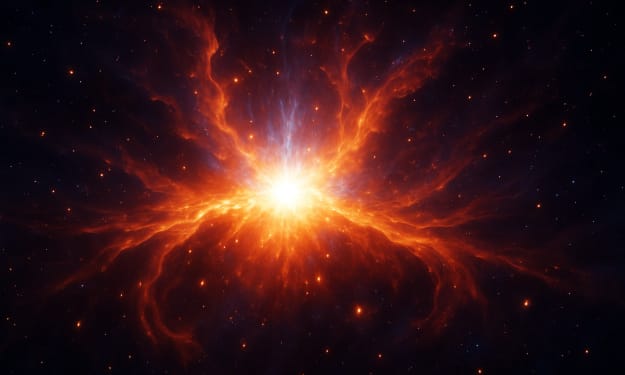
When the Universe was one second Old: The Birth of the First Hydrogen Atoms
Imagine a cosmic stopwatch starting at the very instant the Universe burst into existence. It clicks once—one second has passed. Just a single heartbeat. That moment is so short that most of us wouldn’t even notice it. But on the scale of the cosmos, one second after the Big Bang marks a profound turning point. It’s the moment when the foundations of all future matter—including stars, planets, and eventually us—began to solidify.
By Holianyk Ihor2 months ago in Futurism
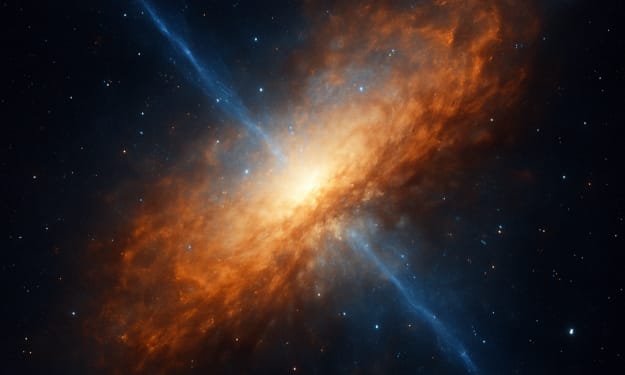
Phoenix A: The Brightest Known Galaxy — A Cosmic Beacon Shining Trillions of Suns
In the vast, silent darkness of the universe, brilliance is rare. Stars flicker, nebulae glow, quasars blaze — yet only a handful of cosmic giants truly challenge our imagination. Among them stands Phoenix A, the brightest galaxy humans have ever discovered. Its light outshines the Sun not by millions or billions, but by trillions of times. It is a cosmic lighthouse whose glow reaches across billions of years of space and time.
By Holianyk Ihor2 months ago in Futurism
When the Universe Was One Second Old: The Birth of the First Hydrogen Atoms
Imagine a cosmic stopwatch starting at the very instant the Universe burst into existence. It clicks once—one second has passed. Just a single heartbeat. That moment is so short that most of us wouldn’t even notice it. But on the scale of the cosmos, one second after the Big Bang marks a profound turning point. It’s the moment when the foundations of all future matter—including stars, planets, and eventually us—began to solidify.
By Holianyk Ihor2 months ago in Futurism
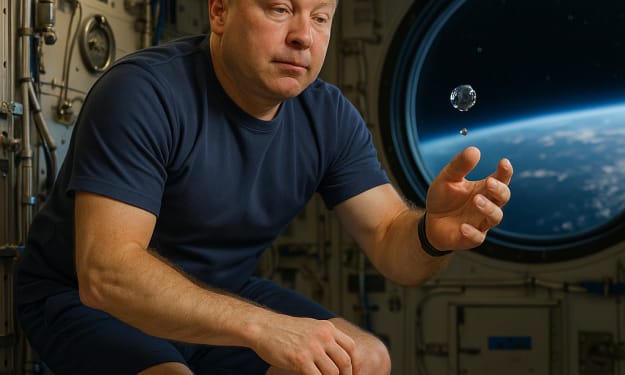
Why Astronauts Lose Up to One Liter of Fluid Per Day in Orbit
When astronauts leave Earth, their bodies begin to change almost immediately. Bones weaken, muscles shrink, and even the sense of taste can shift. But one of the most surprising effects of spaceflight happens within the first few days in orbit: astronauts start losing up to one liter of bodily fluid per day.
By Holianyk Ihor2 months ago in Futurism
Why Astronauts Lose Up to One Liter of Fluid per Day in Orbit — And What It Means for the Future of Space Travel
When humans leave Earth, they don’t just float — their bodies fundamentally change. Bones weaken, muscles shrink, vision shifts, tastes change… but one of the most dramatic transformations happens almost immediately: astronauts start losing up to one liter of bodily fluid per day. Not because they sweat more or because the spacecraft is too dry, but because microgravity tricks the body into believing it has too much liquid.
By Holianyk Ihor2 months ago in Education
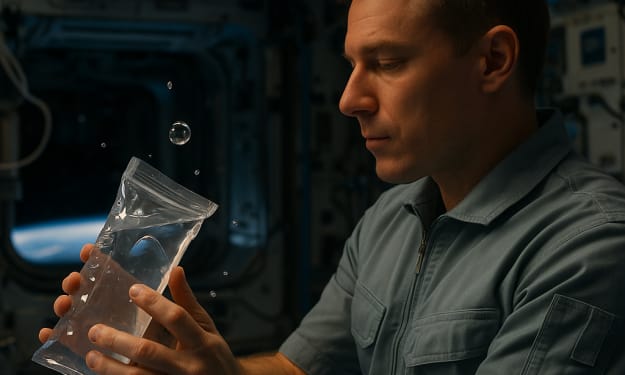
Astronauts Drink Water Recycled from Sweat and Breath — And It’s Not as Weird as You Think
When most people imagine life in space, they picture astronauts floating gracefully in zero gravity, conducting futuristic experiments, or gazing out at the blue curve of Earth. What rarely comes to mind is one of the most vital — and surprisingly complicated — aspects of living beyond our planet: water.
By Holianyk Ihor2 months ago in Futurism
The Milky Way Has Already “Devoured” Several Smaller Satellite Galaxies
When we look up at the night sky, the Milky Way appears calm and ethereal—an elegant misty band stretching across the darkness. But behind this peaceful appearance lies a dramatic and sometimes violent cosmic history. Our galaxy is not a quiet spectator of the universe. In reality, the Milky Way has spent billions of years growing by tearing apart and absorbing smaller galaxies that stray too close.
By Holianyk Ihor2 months ago in Futurism
Binary Asteroids: The Cosmic Dance of Twin Worlds
When most people think of an asteroid, they picture a lonely, rugged rock drifting through the solar system—silent, solitary, and self-contained. But space, as it often does, surprises us. Not all asteroids travel alone. Some of them form remarkable partnerships: binary asteroid systems, or what you might call asteroid twins, orbiting around a shared center of mass. These systems behave like miniature versions of binary stars, engaging in an endless gravitational dance that can last billions of years.
By Holianyk Ihor2 months ago in Futurism
Where Space Really Begins: The Kármán Line at 100 Kilometers
If you ask a child where space begins, you’ll probably get an answer like “above the clouds” or “where the stars are.” Adults may point vaguely upward and say something about satellites or rockets. But in reality, there is no physical border where Earth suddenly ends and space begins. Our atmosphere slowly fades into darkness, thinning layer by layer until it becomes indistinguishable from the vacuum of space.
By Holianyk Ihor2 months ago in Education