
Why Astronauts Lose Up to One Liter of Fluid Per Day in Orbit
Space

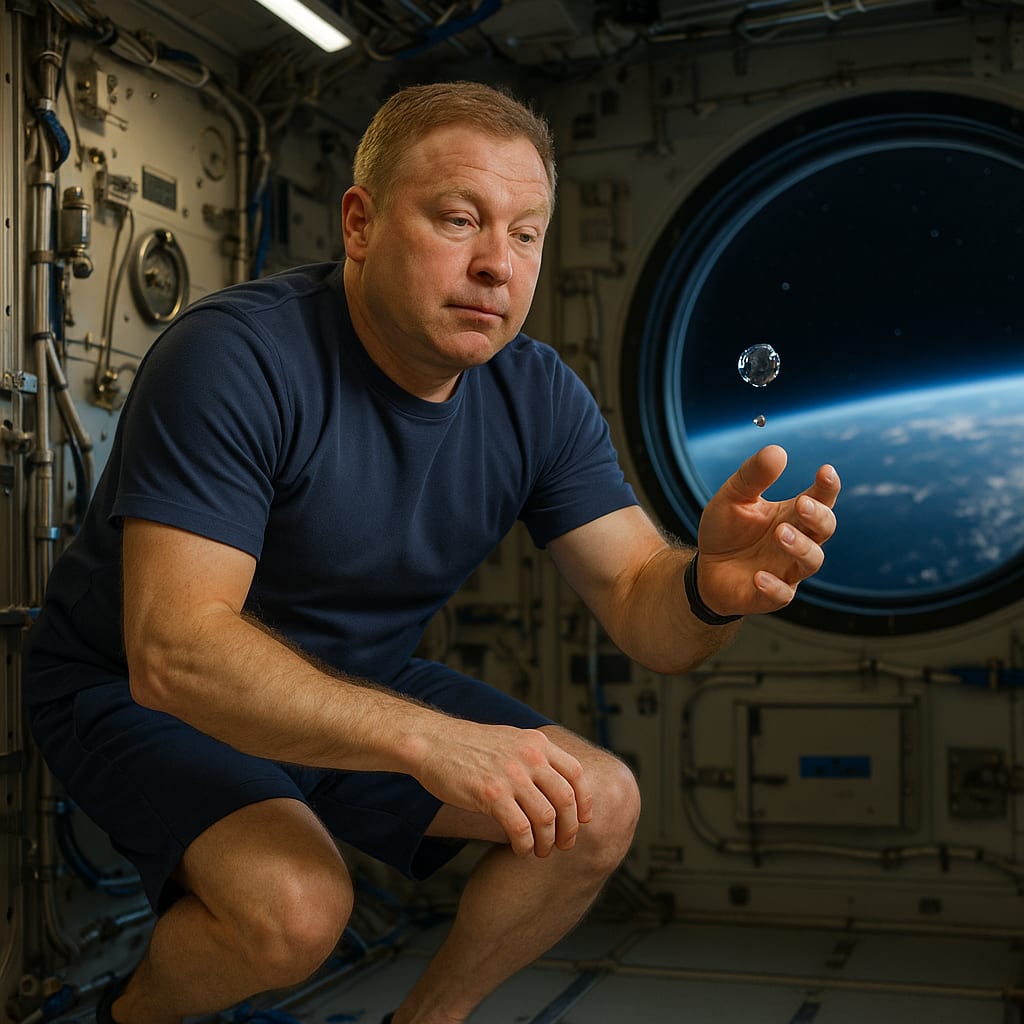
When astronauts leave Earth, their bodies begin to change almost immediately. Bones weaken, muscles shrink, and even the sense of taste can shift. But one of the most surprising effects of spaceflight happens within the first few days in orbit: astronauts start losing up to one liter of bodily fluid per day.
This fluid loss is not caused by sweating or dehydration. It happens because microgravity tricks the body into thinking it has more liquid than it actually needs. Understanding this effect is important for the future of long space missions to the Moon, Mars, and beyond.
What Microgravity Does to the Human Body
On Earth, gravity constantly pulls fluids downward. More blood naturally stays in the legs and abdomen, and the heart must work against gravity to send enough blood to the brain.
In orbit, gravity is nearly absent. Without that downward pull, fluids begin to shift upward toward the chest and head. As a result:
- The face becomes puffy.
- The legs become thinner.
- The head feels full and congested.
- The body feels different from anything we experience on Earth.
Astronauts sometimes compare it to doing a handstand for several hours. Your head feels swollen, your nose is stuffy, and your face looks rounder. Now imagine feeling that way all day, every day. That is what microgravity does.
Why Astronauts Lose a Liter of Fluid
When more fluid collects in the upper body, the heart and neck sensors detect this sudden increase in pressure. They interpret it as having too much fluid overall.
The body reacts quickly:
- It reduces the release of antidiuretic hormone, which normally helps keep water in the body.
- It increases urine production to remove what it sees as extra fluid.
- It lowers the amount of plasma in the blood so the body can maintain balance in microgravity.
Within one or two days, an astronaut can lose up to one liter of fluid. The body is trying to reset itself, but it is resetting based on conditions that exist only in space, not on Earth.
What Astronauts Feel During This Process
Astronauts often describe the first days in orbit as a mix of discomfort and fascination. Some common experiences include:
- A heavy or pressurized feeling in the head
- Constant nasal congestion
- More frequent trips to the bathroom
- A tighter feeling inside their helmet or headset due to swelling
Some astronauts joke that they look like they have been hanging upside down for a week. Many also say that food tastes different until their body adjusts, partly because their nose is congested.
What Happens After Returning to Earth
The real challenge comes when astronauts return home. After living in microgravity, their bodies have adapted to a lower blood volume. But back on Earth, gravity returns instantly. Blood rushes back into the legs, and the cardiovascular system suddenly needs more fluid than it has.
This can lead to several problems:
1. Difficulty standing up
Many astronauts feel dizzy or even faint when trying to stand. This is known as orthostatic intolerance.
2. Heart strain
The heart has to work harder again, but the reduced plasma volume makes that difficult.
3. Lower physical endurance
Even simple actions like walking or standing can feel exhausting. Some astronauts need help getting out of the spacecraft after landing.
How Space Agencies Solve This Problem
To reduce the risks, astronauts follow specific procedures before returning to Earth:
- They drink electrolyte-rich beverages to rebuild blood volume.
- They wear compression suits that create pressure in the legs and pull fluids downward.
- They exercise daily on special equipment to keep the cardiovascular system strong.
These strategies do not completely prevent fluid loss, but they help manage its effects.
Why This Is Important for Future Missions
On the International Space Station, astronauts can return to Earth within hours. But future missions will be much longer. For example:
- Traveling to Mars takes six months.
- Staying on Mars could take more than a year.
- Returning to Earth would require another long journey.
If astronauts cannot stand, walk, or maintain stable blood pressure after landing on another planet, it could be dangerous for both the mission and the crew.
This is why NASA, ESA, SpaceX, and other organizations are studying fluid shifts in detail. Understanding how the human body reacts to microgravity is essential for keeping astronauts safe during long-distance space travel.
About the Creator
Keep reading
More stories from Holianyk Ihor and writers in Futurism and other communities.
Astronauts Drink Water Recycled from Sweat and Breath — And It’s Not as Weird as You Think
When most people imagine life in space, they picture astronauts floating gracefully in zero gravity, conducting futuristic experiments, or gazing out at the blue curve of Earth. What rarely comes to mind is one of the most vital — and surprisingly complicated — aspects of living beyond our planet: water.
By Holianyk Ihor2 months ago in Futurism
About Binding Prometheus
I want to start actively advocating on behalf of my own work, and the most valuable part of my canon is, without a doubt, Binding Prometheus, the play I have been working on since 2019 and only finished in 2023 as part of my MA. The play itself is an amalgamation of a million different inspirations. On one end, it evokes the Ancient Greek myth-play, deriving its own title from the earliest extant work of Western drama we have, Aeschylus’s Prometheus Bound. On the other end, it borrows significantly from the sci-fi bulwarks from over the years, namely Mary Shelley’s Frankenstein and Karel Capek’s Rossum’s Universal Robots. The play could be an episode of Black Mirror, I fear. I don’t know. I’ve only ever seen one episode of Black Mirror.
By Steven Christopher McKnight17 days ago in Futurism
UAE Board Games Market: Board Game Cafés, Imported Titles & Rising Popularity
According to IMARC Group's latest research publication, The UAE board games market size was valued at USD 101.66 Million in 2025 and is projected to reach USD 227.1 Million by 2034, growing at a compound annual growth rate of 9.34% from 2026-2034.
By Abhay Rajput3 days ago in Futurism



Comments
There are no comments for this story
Be the first to respond and start the conversation.