
Phoenix A: The Brightest Known Galaxy — A Cosmic Beacon Shining Trillions of Suns
Space

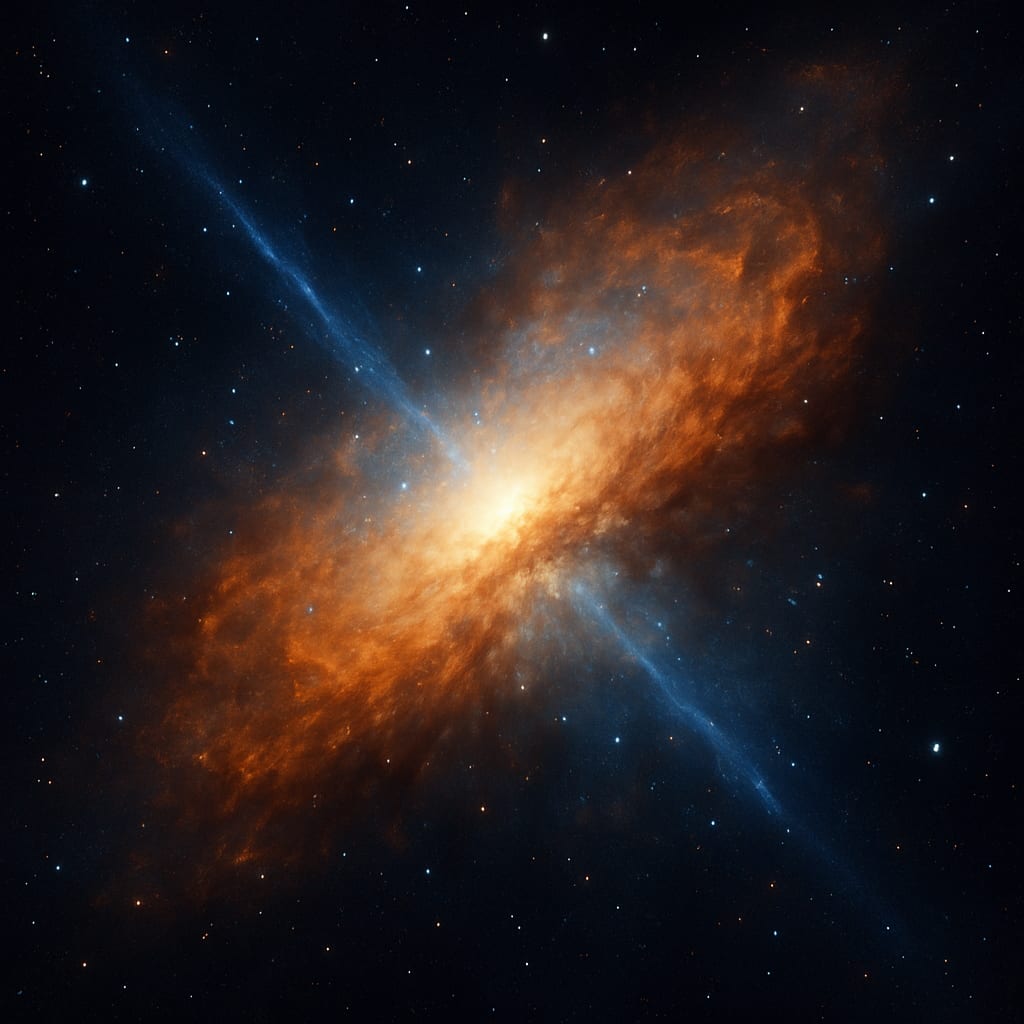
In the vast, silent darkness of the universe, brilliance is rare. Stars flicker, nebulae glow, quasars blaze — yet only a handful of cosmic giants truly challenge our imagination. Among them stands Phoenix A, the brightest galaxy humans have ever discovered. Its light outshines the Sun not by millions or billions, but by trillions of times. It is a cosmic lighthouse whose glow reaches across billions of years of space and time.
But what makes Phoenix A so extraordinary? And why does this single galaxy shine with the power of an entire universe? The answers lie in a strange combination of cosmic violence, intense creation, and the gravity of a monster hiding at its heart.
A Galaxy Born in Fire
Phoenix A is located in the center of the Phoenix Cluster, a massive assembly of galaxies drifting roughly 5.7 billion light-years away from Earth. At first glance, Phoenix A seems like a typical giant elliptical galaxy — enormous, round, quiet. But appearances are deceiving. Inside, it is anything but calm.
Unlike most elliptical galaxies, which have “retired” from star formation, Phoenix A is bustling with activity. It is a star factory running at full speed. While our Milky Way forms one or two stars per year — a leisurely pace by galactic standards — Phoenix A is producing hundreds annually. Imagine dozens of star nurseries erupting at once, each birthing massive, bright, short-lived suns that illuminate their surroundings with incredible intensity.
Scientists estimate that the galaxy forms new stars up to 20 times faster than expected for a galaxy of its type. This alone makes Phoenix A exceptional. But it is only part of the story.
Why So Bright? Two Engines of Cosmic Power
Phoenix A’s stunning brightness comes from two main sources working together like twin engines:
1. Unstoppable Star Formation
Massive newborn stars shine fiercely, burning their fuel in just a few million years before exploding as supernovae. Because Phoenix A forms so many of these stars at once, the galaxy becomes an overwhelming source of light. Imagine a fireworks finale where every blast goes off at the same time — but on a cosmic scale.
These stars form as cold gas collapses under gravity. Normally, in large galaxy clusters, intense radiation from the central black hole heats this gas, preventing star formation. But in Phoenix A, the gas cools unusually quickly. This rare and delicate condition creates a torrential flow of new stars, lighting up the galaxy like a cosmic inferno.
2. A Hyperactive Central Black Hole
At the center of Phoenix A sits a supermassive black hole weighing billions of times more than the Sun. But this black hole is far from quiet. As it devours matter — gas, dust, even disrupted stars — the infalling material forms a blazing accretion disk. Friction within this disk heats it to extreme temperatures, causing it to shine brilliantly across the electromagnetic spectrum.
In addition to light, the black hole launches titanic jets of energy, stretching thousands of light-years. These jets accelerate particles nearly to the speed of light, producing powerful radio waves and X-rays that contribute to the galaxy’s overwhelming brightness.
Together, the starburst activity and black hole radiation create one of the most luminous environments ever observed.
A Record-Breaking Cosmic Beacon
When astronomers first studied Phoenix A in detail using space- and ground-based telescopes, they were stunned. Its brightness exceeded expectations for both a star-forming galaxy and an active galactic nucleus. If Phoenix A were placed near the Milky Way, it would wash out the night sky and dominate every astronomical photograph.
To appreciate its scale, imagine replacing our Sun with Phoenix A. Its luminosity would be so intense that Earth would vaporize instantly—and even the outer planets could be scorched beyond recognition. Thankfully, Phoenix A lives safely across the universe, a distant marvel rather than a local threat.
The Meaning Behind the Name “Phoenix”
The galaxy’s name is poetic. Like the mythical phoenix rising from ashes, Phoenix A is constantly regenerating itself, turning collapsing clouds of gas into brilliant newborn stars. At the same time, the central black hole — a symbol of destruction — fuels new creation by triggering cycles of cooling and heating within the cluster.
In Phoenix A, death and rebirth coexist. Massive stars explode as supernovae, enriching the surrounding gas, which then cools and forms new stars. This cycle makes Phoenix A a spectacular example of how the universe builds beauty from chaos.
A Glimpse Into the Universe’s Wildest Side
Phoenix A is more than a record-breaker. It is a laboratory for understanding extreme cosmic environments — places where gravity, energy, and matter interact in ways rarely seen elsewhere. Studying it helps astronomers unravel questions about galaxy evolution, black hole behavior, and the delicate balance between creation and destruction in the universe.
Its brilliance reminds us that even in a universe filled with billions of galaxies, some stand out as extraordinary. Phoenix A is one of them: a glowing titan burning with the light of trillions of suns, a cosmic beacon shining across time itself.
About the Creator
Keep reading
More stories from Holianyk Ihor and writers in Futurism and other communities.
When the Universe Was One Second Old: The Birth of the First Hydrogen Atoms
Imagine a cosmic stopwatch starting at the very instant the Universe burst into existence. It clicks once—one second has passed. Just a single heartbeat. That moment is so short that most of us wouldn’t even notice it. But on the scale of the cosmos, one second after the Big Bang marks a profound turning point. It’s the moment when the foundations of all future matter—including stars, planets, and eventually us—began to solidify.
By Holianyk Ihor2 months ago in Futurism
About Binding Prometheus
I want to start actively advocating on behalf of my own work, and the most valuable part of my canon is, without a doubt, Binding Prometheus, the play I have been working on since 2019 and only finished in 2023 as part of my MA. The play itself is an amalgamation of a million different inspirations. On one end, it evokes the Ancient Greek myth-play, deriving its own title from the earliest extant work of Western drama we have, Aeschylus’s Prometheus Bound. On the other end, it borrows significantly from the sci-fi bulwarks from over the years, namely Mary Shelley’s Frankenstein and Karel Capek’s Rossum’s Universal Robots. The play could be an episode of Black Mirror, I fear. I don’t know. I’ve only ever seen one episode of Black Mirror.
By Steven Christopher McKnight17 days ago in Futurism
UAE Mental Health Market: Rising Awareness, Service Expansion & Growth Outlook
According to IMARC Group's latest research publication, UAE Mental Health Market size reached USD 13.10 Billion in 2024. Looking forward, IMARC Group expects the market to reach USD 28.26 Billion by 2033, exhibiting a growth rate (CAGR) of 8.92% during 2025-2033.
By Abhay Rajput6 days ago in Futurism


Comments
There are no comments for this story
Be the first to respond and start the conversation.