
Where Space Really Begins: The Kármán Line at 100 Kilometers
Space

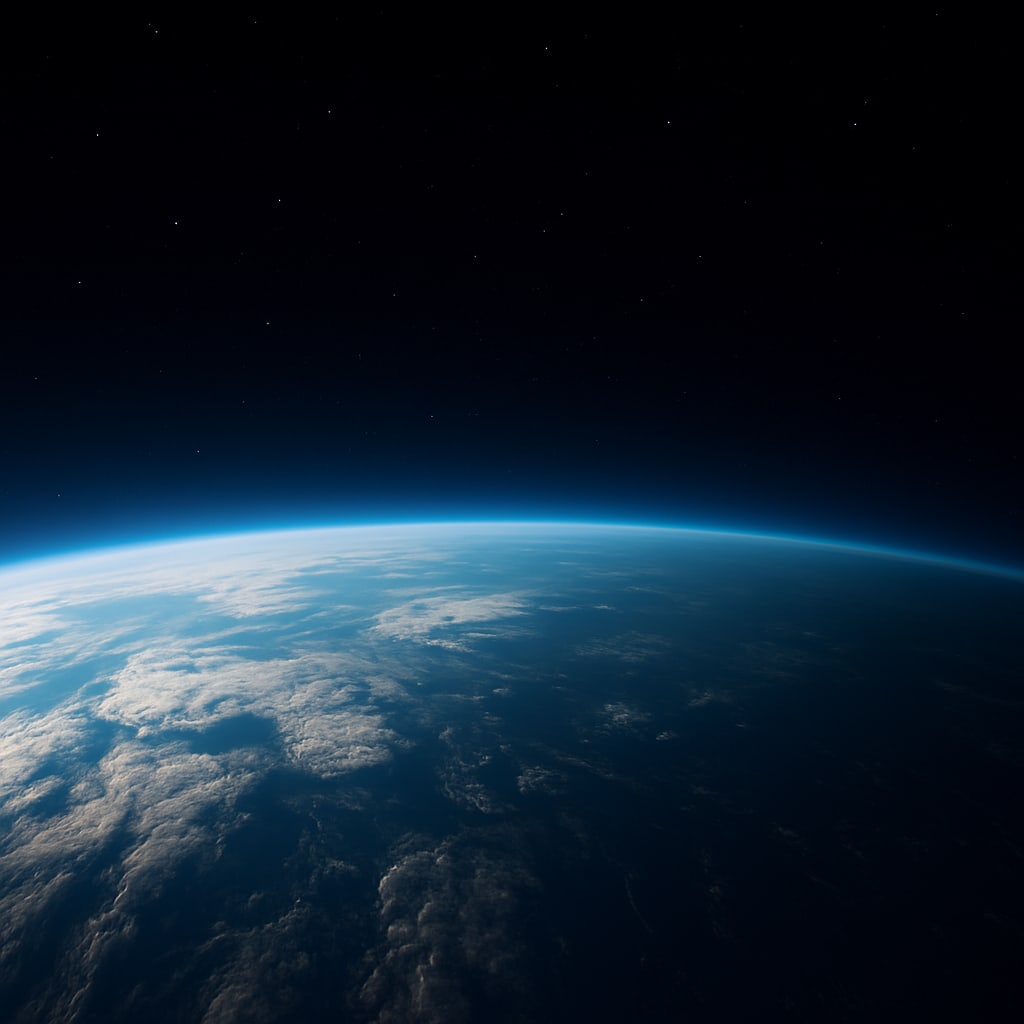
If you ask a child where space begins, you’ll probably get an answer like “above the clouds” or “where the stars are.” Adults may point vaguely upward and say something about satellites or rockets. But in reality, there is no physical border where Earth suddenly ends and space begins. Our atmosphere slowly fades into darkness, thinning layer by layer until it becomes indistinguishable from the vacuum of space.
Still, humanity loves clarity. We want borders, names, lines on maps—so scientists drew one in the sky. Today, many organizations officially recognize 100 kilometers (62 miles) above sea level as the beginning of outer space. This boundary is known as the Kármán line, and its story is as fascinating as the science behind it.
Why 100 Kilometers?
The Earth’s atmosphere is not a neat bubble. It stretches far beyond what our eyes can see. Even at 400 km—the altitude where the International Space Station orbits—there are still traces of atmospheric particles bumping into its solar panels. Likewise, at 100 km, you can still detect molecules of nitrogen, oxygen, and even water vapor. So why draw the line there?
The reason goes back to the work of Theodore von Kármán, a Hungarian-American engineer and one of the most influential aerodynamicists of the 20th century. Kármán asked a deceptively simple question:
At what altitude does the air become too thin for a plane to stay airborne?
To fly, an aircraft needs lift, which comes from air flowing over its wings. But as air thins with altitude, wings stop working effectively. Kármán calculated that around 100 kilometers up, the atmosphere becomes so thin that an airplane would have to fly faster than orbital velocity to produce enough lift to stay aloft.
In other words:
- Below 100 km, aerodynamics (wings, air pressure, lift) still matter.
- Above 100 km, aerodynamics fail—and only orbital mechanics can keep you up there.
That’s why this altitude is considered the boundary where aviation ends and astronautics begins.
Not Everyone Agrees
Even though 100 km is widely recognized, not all institutions use the same definition:
- The Fédération Aéronautique Internationale (FAI), which tracks world aviation and spaceflight records, officially uses the 100-km line.
- The United States Air Force and NASA often use 80 km (50 miles) instead.
- Some scientists suggest the boundary shifts depending on solar activity and atmospheric conditions.
But the number 100 is clean, symbolic, and easy to remember—so it remains the most popular choice worldwide.
What It’s Like at the Kármán Line
Imagine you could visit the Kármán line—not in a roaring rocket, but standing at a transparent platform floating 100 km above Earth. What would you see?
- The sky above you would be deep black, even at noon.
- The Earth below would appear curved, glowing blue along the horizon.
- The air around you would be nearly nonexistent, about one-millionth as dense as sea level air.
- Sound wouldn’t travel. Your voice wouldn’t carry.
- You’d start to float—but only if you had forward velocity. Without it, you would simply fall.
You would also transition into the thermosphere, where temperatures swing from freezing to scorching depending on whether you’re in sunlight.
At this altitude, satellites don’t orbit comfortably, but rockets, space capsules, and some suborbital spacecraft pass through regularly.
A great example is Blue Origin’s New Shepard, which takes passengers just past the 100-km mark for a few minutes of microgravity before returning to Earth. These flyers officially qualify as astronauts under the FAI definition.
Why This Boundary Matters
Drawing a line in the sky isn’t just symbolic—it simplifies important questions:
1. Who counts as an astronaut?
If you cross 100 km during a mission, many organizations award astronaut status.
2. What laws apply?
Airspace belongs to countries. Space does not. The Kármán line helps separate aviation law from space law, which treats orbit as a global commons.
3. How are records kept?
Speed and altitude records for aircraft end at 100 km. Above that, they’re counted as spaceflight achievements.
4. What technologies are needed?
Below the line, wings work. Above it, rockets rule.
A Thin Blue Line Protecting Us All
Perhaps the most important lesson from the Kármán line is philosophical. The fact that “space” begins only 100 kilometers away—less than the drive between many nearby cities—reminds us how thin Earth’s protective atmosphere truly is. In just a short upward journey, the breathable sky disappears, leaving only the harsh vacuum of space.
It’s a powerful reminder that our planet is fragile, and that the boundary between life and the emptiness of the universe is astonishingly thin.
About the Creator
Keep reading
More stories from Holianyk Ihor and writers in Education and other communities.
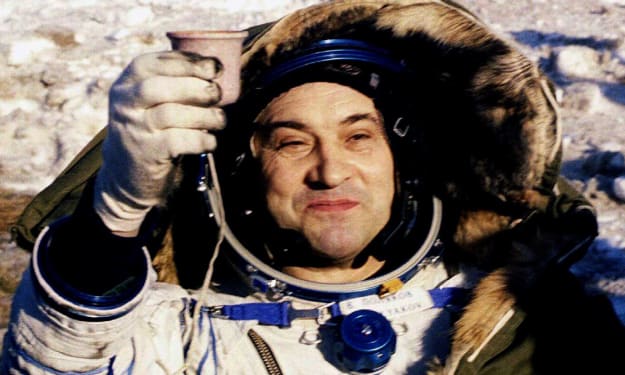
The Longest Human Spaceflight: Valeri Polyakov’s 437 Days Among the Stars
A Journey Beyond Limits In the vast history of human space exploration, few stories embody courage, endurance, and sheer willpower like that of Valeri Polyakov — the man who lived in space longer than anyone else. On January 8, 1994, the Russian cosmonaut launched aboard Soyuz TM-18 with one goal that sounded almost impossible: to stay in orbit long enough to test the true limits of human life beyond Earth.
By Holianyk Ihor2 months ago in Education
Python vs Rust Performance: Speed, Memory Usage, and Scalability Explained
When developers compare programming languages, performance is often one of the most debated factors. Two languages that frequently come up in these discussions are Python and Rust. While both are powerful in their own ways, they approach performance, memory management, and scalability very differently. This makes the Python vs Rust comparison especially relevant for teams choosing the right technology for their next project.
By Lennox Grayabout 6 hours ago in Education
How GPS Tracking for Tools and Equipment Can Save Your Business
Tool theft is a growing problem for construction companies, contractors and tradespeople. At kynekt.id we provide best GPS tracking for tools and equipment, Whether it’s a jobsite break-in or equipment walking off during work hours, losing tools can cost thousands of dollars and delay projects. Fortunately, We offer a practical solution that’s becoming more affordable and easier to use every day.
By Kynekt Limited2 days ago in Education



Comments
There are no comments for this story
Be the first to respond and start the conversation.