
Exoskeletons for Astronauts: How the Spacesuits of the Future Could Transform Space Exploration
Space

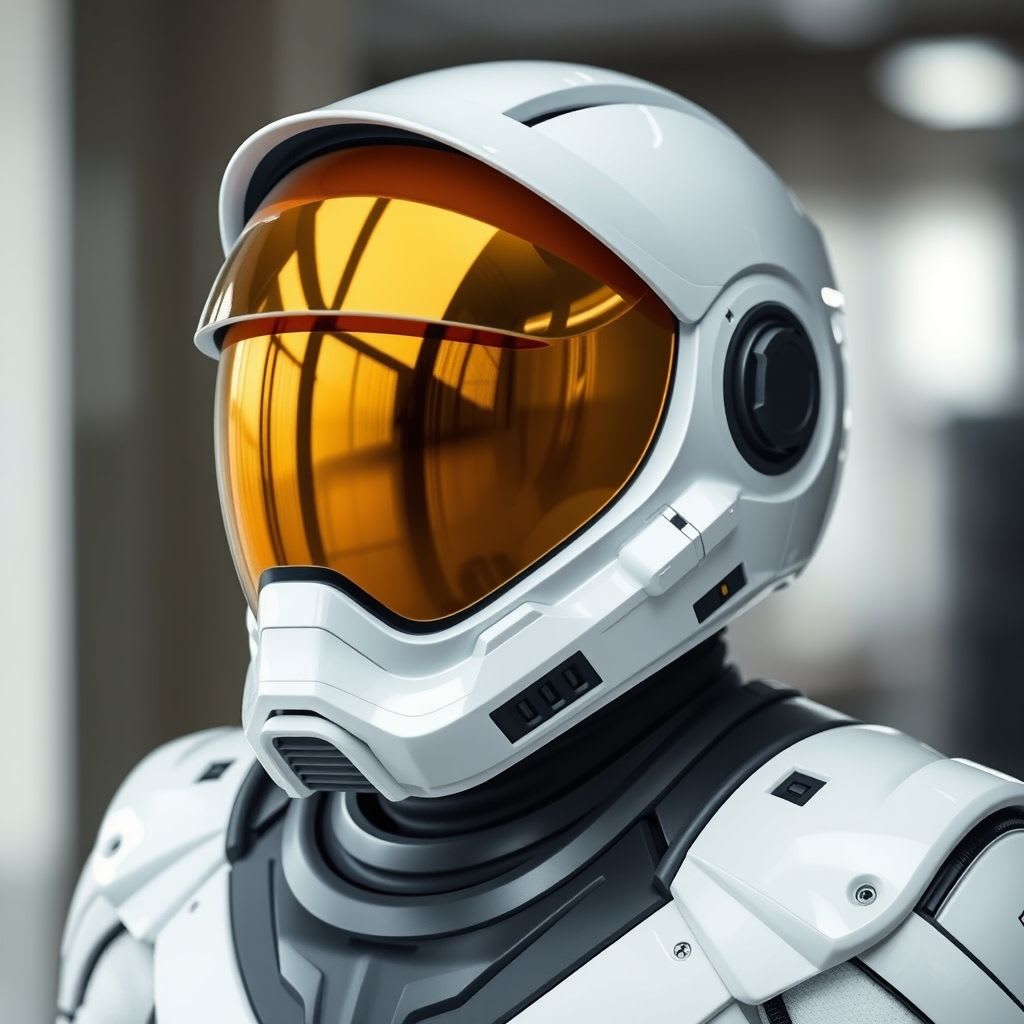
Picture this: an astronaut strides across the rocky plains of Mars. Their movements are smooth and confident, like a seasoned mountaineer on Earth. They lift heavy equipment with ease, react quickly to unexpected challenges, and can even run across uneven terrain in thin, alien air. This isn’t a superhero scene from a sci-fi movie it’s the promise of exoskeleton technology.
An exoskeleton is no longer just a piece of science fiction armor. It’s a real, advanced piece of engineering being developed for space missions right now. In essence, it’s a wearable mechanical frame that boosts human strength, endurance, and mobility, while protecting the body from the harsh realities of space and other worlds.
Why Astronauts Need Exoskeletons
Space missions are anything but a walk in the park. Even aboard the International Space Station, in microgravity, the human body begins to change in ways that aren’t always beneficial. Over months in space, muscles weaken, bones lose density, and astronauts can struggle to even stand once they return to Earth let alone perform heavy labor on a planet with gravity.
An exoskeleton could solve multiple problems at once:
- Muscle and bone support – Mechanical assistance can counteract muscle loss and protect bones, reducing the risk of fractures and injuries.
- Heavy-duty work – Carrying equipment, drilling into rock, or assembling structures becomes less exhausting and more efficient.
- Injury prevention – The exoskeleton can stabilize joints and absorb shocks from falls or impacts.
- Enhanced mobility in bulky suits – Space suits are notoriously restrictive, but an exoskeleton can restore agility and range of motion.
How They Work
Modern exoskeletons are a marriage of lightweight frames often made from advanced composites or titanium alloys with electric motors, hydraulic or pneumatic systems, and intelligent electronics.
Sensors built into the frame detect the wearer’s movements and instantly amplify them. For example, if an astronaut bends a knee, the exoskeleton senses the motion and powers the joint to make the movement easier and stronger.
Some cutting-edge prototypes are equipped with AI algorithms that “learn” a user’s habits, predicting their next move to provide seamless, natural assistance. This makes the system feel less like a machine and more like an extension of the body.
Where They Could Be Used
On Mars or the Moon Although gravity is weaker than on Earth, it’s still enough to cause fatigue when working for hours in a heavy suit. An exoskeleton would make climbing slopes, lifting tools, and moving over rocky ground much easier.
In building space habitats From installing solar panels to erecting protective walls around a base, construction in space will demand both precision and power. Exoskeletons can reduce the strain on astronauts, making it possible to complete complex tasks more quickly.
During long surface expeditions Extended exploration missions on planetary surfaces will require astronauts to carry supplies, operate machinery, and navigate dangerous terrain. The right exoskeleton could extend work time and reduce exhaustion dramatically.
The Future of Space Exoskeletons
Right now, prototypes for space-ready exoskeletons are being tested in NASA and ESA labs, as well as by private aerospace companies. The technology is becoming lighter, smarter, and more energy-efficient every year.
One exciting possibility is integrated “smart exoskeletons” systems built directly into next-generation space suits. These could link with biometric sensors to monitor the astronaut’s health in real time. If the suit detects muscle fatigue or a potential injury, it could automatically adjust the level of assistance or restrict movements to prevent harm.
Imagine a suit that not only protects you from radiation and micrometeorites but also helps you lift a 200-pound tool crate effortlessly in low gravity.
From Science Fiction to Everyday Space Gear
For decades, exoskeletons were the stuff of comic books and blockbuster movies. But now they’re on the cusp of becoming standard equipment for future explorers. In the coming decades, the first lunar or Martian colonies may not be built by astronauts struggling in stiff suits but by crews in lightweight, powered frames that make them stronger, faster, and more resilient.
Space is unforgiving. Every task is harder, every mistake more dangerous. But with exoskeletons, humanity will be able to push the boundaries of exploration further than ever before bridging the gap between human ambition and the physical limits of our bodies.
When we picture the future of space exploration, we may not see fragile humans battling the elements we’ll see agile, enhanced pioneers walking confidently into the unknown, armored not in steel but in innovation.
About the Creator
Keep reading
More stories from Holianyk Ihor and writers in Futurism and other communities.
How the Universe Can “Regenerate” Galaxies
When we think about galaxies, we imagine grand, seemingly eternal structures made up of billions of stars, planets, gas clouds, and dark matter. They appear timeless cosmic cities that simply age until their stars burn out, leaving only cold, silent darkness.
By Holianyk Ihor5 months ago in Futurism
About Binding Prometheus
I want to start actively advocating on behalf of my own work, and the most valuable part of my canon is, without a doubt, Binding Prometheus, the play I have been working on since 2019 and only finished in 2023 as part of my MA. The play itself is an amalgamation of a million different inspirations. On one end, it evokes the Ancient Greek myth-play, deriving its own title from the earliest extant work of Western drama we have, Aeschylus’s Prometheus Bound. On the other end, it borrows significantly from the sci-fi bulwarks from over the years, namely Mary Shelley’s Frankenstein and Karel Capek’s Rossum’s Universal Robots. The play could be an episode of Black Mirror, I fear. I don’t know. I’ve only ever seen one episode of Black Mirror.
By Steven Christopher McKnight16 days ago in Futurism
Miss Persephone's Manual to a Seemingly Ordinary Life
Miss Persephone was found at the dining table, her blue eyes swollen, her tears arriving and retreating like the tides of the ocean. Earlier that day, her family had visited her in the retirement home where she had lived for eight years. It was her eightieth birthday.
By Imola Tótha day ago in Fiction



Comments
There are no comments for this story
Be the first to respond and start the conversation.