
The Myths of Planet Nibiru – and Why They’re Not True
Space

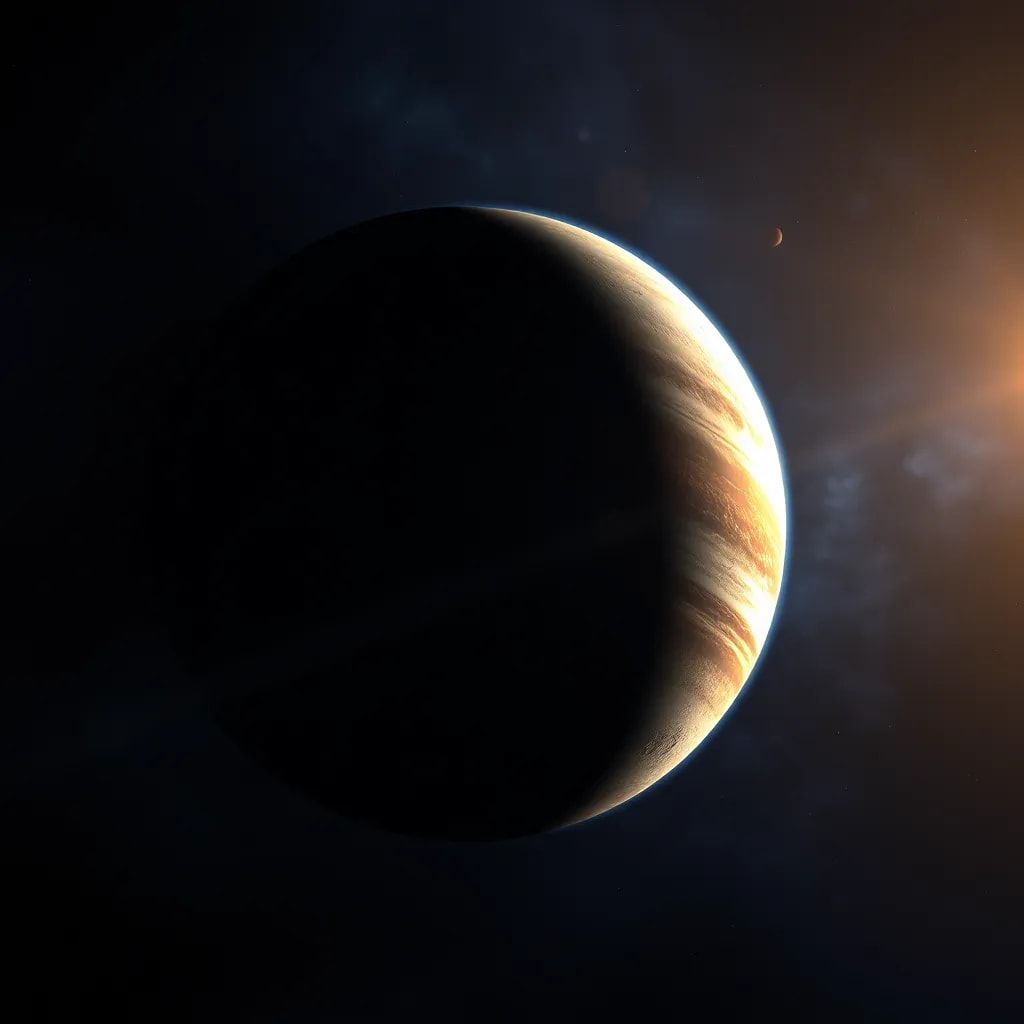
Throughout human history, mysterious legends have always found a place in our collective imagination. In recent decades, one of the most persistent modern space myths has been the tale of the mysterious planet Nibiru the so-called “planet of doom” that some claim is destined to collide with Earth and wipe out all life.
Despite repeated scientific debunking, the story of Nibiru continues to resurface in news articles, YouTube videos, and conspiracy forums. But where did this myth originate, and why should we be confident it’s pure fiction? Let’s take a closer look.
Where the Nibiru Legend Came From
The Nibiru story began in the late 20th century with author Zecharia Sitchin. In his books, Sitchin claimed to have decoded ancient Sumerian texts, revealing knowledge of a hidden planet with a highly elongated orbit. According to him, this planet Nibiru passed near Earth roughly every 3,600 years. Its inhabitants, known as the Anunnaki, allegedly visited Earth in the distant past and influenced human civilization.
Sitchin identified Nibiru as a “12th planet” in the Solar System (counting the Sun and Moon as separate bodies). He claimed its extreme orbit kept it hidden far beyond Pluto for most of its cycle, only appearing when it swooped inward toward the inner planets.
Although Sitchin’s ideas had no solid scientific backing, they quickly gained traction among fans of alternative history, UFO enthusiasts, and conspiracy theorists.
The 2012 Doomsday Hype
In the early 2000s, the Nibiru myth collided with another popular apocalyptic prediction the so-called “end of the Mayan calendar” in December 2012. Online videos, blogs, and even a few TV programs claimed Nibiru would either crash into Earth or pass so close that it would trigger massive earthquakes, tsunamis, and volcanic eruptions.
Of course, December 2012 came and went without any sign of a rogue planet. The theory didn’t vanish, though its proponents simply rescheduled the doomsday to 2017… and then to later dates, each of which passed without incident.
Why Nibiru Couldn’t Possibly Be Hidden
From a scientific standpoint, the existence of such a planet is extremely unlikely and it’s absolutely impossible for it to “sneak up” on us. Modern telescopes can detect objects far smaller than a planet, located billions of kilometers away in the Kuiper Belt. A planet the size of Nibiru would have been spotted decades in advance, long before any supposed “close pass.”
Moreover, any large object moving through the Solar System would have a measurable gravitational effect on the orbits of known planets and moons. Astronomers would notice those changes immediately. No such evidence exists.
The Real “Planet Nine” Hypothesis
Some believers in Nibiru point to unusual orbital patterns in distant icy objects beyond Pluto as “proof” of its existence. However, astronomers explain these anomalies through a completely different idea: the hypothetical Planet Nine.
Planet Nine, if it exists, is thought to be a massive but stable world orbiting hundreds of times farther from the Sun than Earth. Unlike the apocalyptic Nibiru, Planet Nine would never come anywhere near Earth and there is still no direct observation confirming it’s real.
Why Myths Like This Persist
The Nibiru story has all the ingredients of a viral modern myth: ancient legends, mysterious astronomy, the possibility of alien life, and a looming doomsday prediction. It plays on deep-rooted human fears and our fascination with the unknown.
The internet has amplified these kinds of stories dramatically. Striking videos, dramatic “eyewitness” photos (often faked), and attention-grabbing headlines spread rapidly especially when they seem to reveal a “truth” hidden from the public.
Debunking the Claims
NASA and other scientific institutions have repeatedly stated that Nibiru does not exist. Photographs showing “two suns” in the sky are usually lens flares or reflections inside the camera. Other supposed sightings are blatant photoshops.
If a massive planet were truly on a collision course with Earth, amateur astronomers all over the world would be sounding the alarm not just a handful of conspiracy websites. Science relies on open observation, and space is monitored by thousands of professionals and hobbyists alike.
The Real Lesson of the Nibiru Myth
The enduring popularity of Nibiru teaches us two valuable lessons:
- Always check your sources — Sensational claims without solid evidence often fall apart under scrutiny.
- Don’t confuse myth with science — The real universe is filled with mysteries far more fascinating than fabricated doomsday scenarios.
From exoplanets that rain molten glass sideways to stars spinning near the speed of light, reality offers more than enough wonder without the need for imaginary planetary assassins.
Final Thoughts
Nibiru exists only in the realm of modern folklore, blending ancient myth with science fiction and a dash of internet-age paranoia. While there’s no hidden planet hurtling toward us, the story itself shows how powerfully we are drawn to cosmic mysteries and how important it is to separate fact from fantasy.
Astronomy invites us to explore the universe with curiosity, not fear. And in doing so, we’ll discover that the real wonders of space are stranger, more beautiful, and more awe-inspiring than any myth could ever be.
About the Creator
Keep reading
More stories from Holianyk Ihor and writers in Futurism and other communities.
Mining Water on the Moon: Unlocking the Key to Future Space Colonies
When we picture the Moon, most of us imagine a barren, silent world: endless gray plains, craters stretching to the horizon, and a pitch-black sky untouched by clouds. Water seems like the last thing you’d expect to find there. For decades, that was the assumption confirmed, it seemed, by the first lunar missions, which found no obvious signs of liquid water.
By Holianyk Ihor5 months ago in Futurism
About Binding Prometheus
I want to start actively advocating on behalf of my own work, and the most valuable part of my canon is, without a doubt, Binding Prometheus, the play I have been working on since 2019 and only finished in 2023 as part of my MA. The play itself is an amalgamation of a million different inspirations. On one end, it evokes the Ancient Greek myth-play, deriving its own title from the earliest extant work of Western drama we have, Aeschylus’s Prometheus Bound. On the other end, it borrows significantly from the sci-fi bulwarks from over the years, namely Mary Shelley’s Frankenstein and Karel Capek’s Rossum’s Universal Robots. The play could be an episode of Black Mirror, I fear. I don’t know. I’ve only ever seen one episode of Black Mirror.
By Steven Christopher McKnight18 days ago in Futurism
7 eCommerce App Development Companies Supporting Digital Retail Transformation in Dubai
Dubai’s retail landscape is rapidly evolving as businesses embrace digital-first and mobile-first strategies. From fashion and electronics to groceries and on-demand services, eCommerce applications now play a central role in how retailers engage customers, manage operations, and scale efficiently.
By Apptunix usa4 days ago in Futurism
Ludacris and Nelly draw backlash over bookings at MAGA-coded music festival
Ludacris and Nelly headlining a mostly right-wing event is good for them. It’s also great for the genre of hip hop. The two rap veterans have showcased their talents on other stages. Why can’t they perform for mostly MAGA folks and grab that bag?
By Skyler Saunders4 days ago in Beat


Comments
There are no comments for this story
Be the first to respond and start the conversation.