
Hot Jupiters — The Planets That Shouldn’t Exist
Space

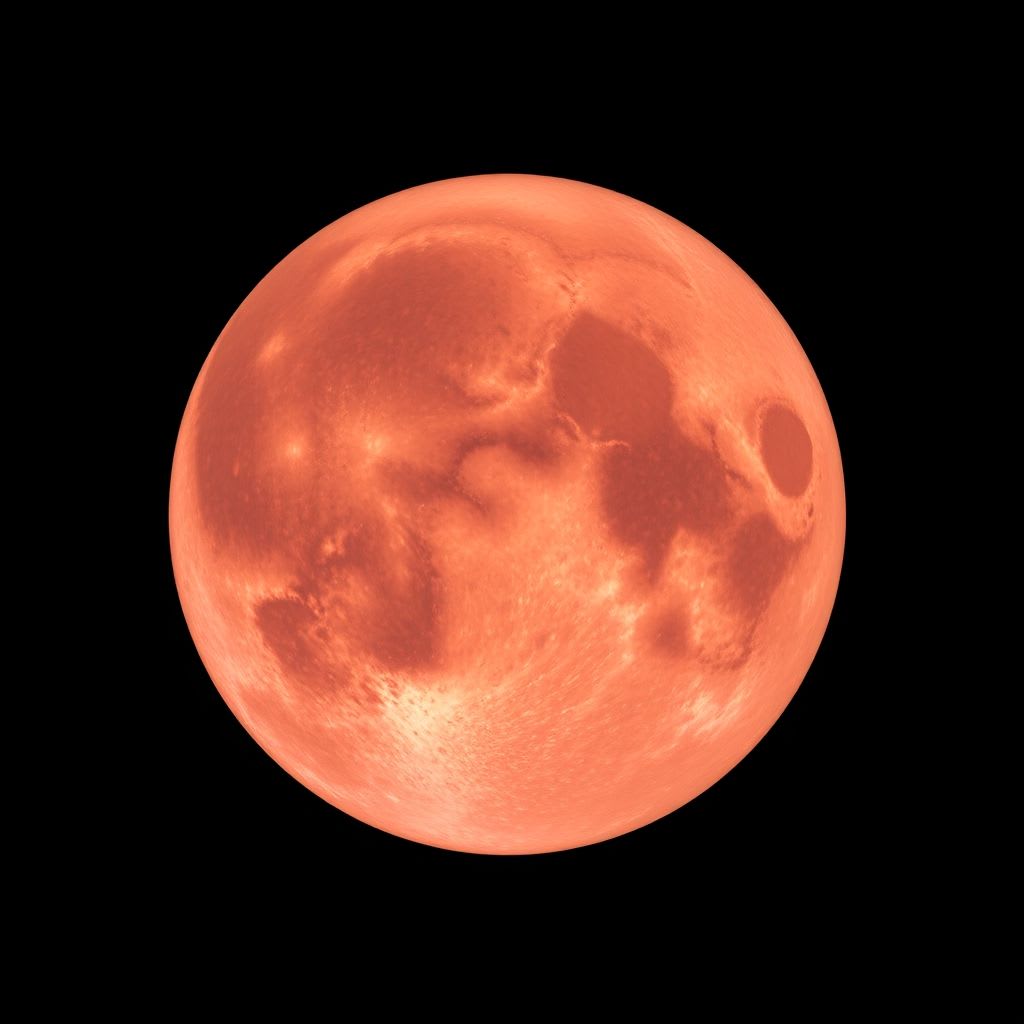
In astronomy, there’s a strange breed of worlds that seem to defy common sense. They’re enormous, like Jupiter, yet they orbit so close to their stars that a “year” on them lasts only a few Earth days. Their scorching atmospheres can reach temperatures hot enough to melt metal. Astronomers call them Hot Jupiters and, by all known laws of planetary science, they shouldn’t exist at all.
Why Are They a Mystery?
Our own Jupiter is the textbook example of a gas giant. It resides far beyond Earth’s orbit, where the Sun’s warmth is already weak. That’s exactly where theory says a gas giant should be. Such planets are made mostly of lightweight elements hydrogen and helium which can only condense and remain stable in the colder regions of a planetary system.
Move too close to the star, and heat drives these gases away. In those inner regions, the materials needed for a gas giant’s massive atmosphere simply can’t stick around. And yet, telescopes keep finding Jupiter-sized planets hugging their stars so tightly that they’re 10 to 20 times closer than Earth is to the Sun.
On these worlds, surface temperatures soar to 2,000°C (3,600°F) or more, the atmosphere literally boils, and the planet completes an orbit in as little as two or three Earth days. According to classic models of planet formation, this is like finding an iceberg floating in the crater of an active volcano.
How Did They Get There?
Most scientists believe Hot Jupiters are not born in these extreme orbits. Instead, they likely form far away from their star, beyond what astronomers call the “snow line” a region where ice and gases can survive in solid form and then somehow migrate inward.
There are a few leading theories for how this migration happens:
- Disk Migration — In their youth, planets interact with the gas in the protoplanetary disk. This friction causes them to lose angular momentum, spiraling inward over time like a marble rolling down a funnel.
- Gravitational Dancing — Close encounters with other giant planets can fling one inward and send the others outward. The unlucky one ends up locked in a dangerously tight orbit around the star.
- Stellar Influence — In systems with multiple stars, the gravity of a companion star can destabilize a planet’s orbit, forcing it into a close pass around its main star.
Once a Hot Jupiter reaches this position, it’s trapped. The star’s tidal forces stretch the planet’s atmosphere, while intense radiation blasts it with energy, slowly peeling away its gaseous layers.
A Hellish Environment
If anyone could “stand” on a Hot Jupiter (though there’s no solid surface), the experience would be unimaginable:
- Temperatures hotter than molten iron.
- Winds up to 5,000–8,000 km/h (3,100–5,000 mph), carrying heat from the blistering day side to the darker night side.
- An atmosphere enriched with exotic vapors everything from evaporated metals to molecules of titanium and vanadium.
Some Hot Jupiters are so superheated that they appear inflated. Their atmospheres swell like overfilled balloons, making them larger in diameter than expected for their mass.
Why They Matter to Science
The paradox of Hot Jupiters has forced astronomers to rethink how planets form and evolve. Before their discovery in the 1990s, we assumed our Solar System’s layout was a universal template. The existence of these close-orbiting giants proved that planetary systems can be far stranger and more varied than we imagined.
Hot Jupiters also serve as perfect laboratories for atmospheric studies. They’re huge, orbit quickly, and produce strong signals when they pass in front of their stars (a phenomenon called transit). This makes it easier for scientists to:
- Measure their chemical composition
- Detect cloud layers and haze
- Even estimate wind speeds on alien worlds
Such insights help refine our understanding not just of gas giants, but of exoplanets in general including potentially habitable ones.
The Cosmic Rule-Breakers
Hot Jupiters are the rebels of the cosmos. They refuse to play by the rules, shattering expectations and showing us that the universe thrives on surprises. Some may endure for billions of years in their fiery embrace with their star, while others might eventually be consumed entirely a slow, spectacular end in which the star swallows its planet.
One thing is certain: the more we study these hellish giants, the more we realize that in space, there’s no such thing as “impossible.” There’s only what we haven’t yet learned how to explain.
About the Creator
Keep reading
More stories from Holianyk Ihor and writers in Futurism and other communities.
Super-Dense Worlds: Where a Kilogram Weighs Tons
When we think about weight, we usually picture familiar things: a kilogram of apples, a ton of bricks, a liter of water. Our measurements feel intuitive because we live on Earth, with Earth’s gravity. But step beyond our planet, and the entire system begins to break down. Imagine a world where a simple kilogram feels as heavy as a small car. Welcome to the realm of super-dense objects places where gravity bends reality, from neutron stars and exotic exoplanets to hypothetical "hell worlds" that challenge our understanding of physics.
By Holianyk Ihor5 months ago in Futurism
About Binding Prometheus
I want to start actively advocating on behalf of my own work, and the most valuable part of my canon is, without a doubt, Binding Prometheus, the play I have been working on since 2019 and only finished in 2023 as part of my MA. The play itself is an amalgamation of a million different inspirations. On one end, it evokes the Ancient Greek myth-play, deriving its own title from the earliest extant work of Western drama we have, Aeschylus’s Prometheus Bound. On the other end, it borrows significantly from the sci-fi bulwarks from over the years, namely Mary Shelley’s Frankenstein and Karel Capek’s Rossum’s Universal Robots. The play could be an episode of Black Mirror, I fear. I don’t know. I’ve only ever seen one episode of Black Mirror.
By Steven Christopher McKnight14 days ago in Futurism
United States Edible Offal Market Size and Forecast 2025–2033
United States Edible Offal Market The United States Edible Offal Market is expected to reach US$ 17 billion by 2033, rising from US$ 11.9 billion in 2024, registering a CAGR of 4.04% from 2025 to 2033. Supported by the development of value-added products and expanding retail availability, the market is being driven by rising demand for protein-rich foods, increasing consumer awareness of the nutritional benefits of organ meats, the sustainability and zero-waste movement, and the growing popularity of ethnic and traditional cuisines across the country.
By jaiklin Fanandish5 days ago in Futurism


Comments
There are no comments for this story
Be the first to respond and start the conversation.