Fatima Jamil
Bio
In a world where you can be anyone, be yourself.
Stories (52)
Filter by community
Wastewater Treatment Practices in Pakistan (Part 3)
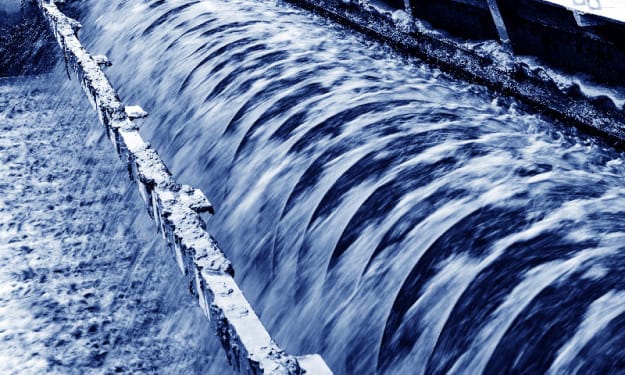
1.1-Secondary Treatment In this method we remove dissolved and suspended particles. This method is specially designed to remove biological content, derived from human waste, organic and industrial waste. Massive types of wastewater treatment plants use biological techniques for the settled sludge liquid. For this purpose we should have proper information about the oxygen and substrate content of the main source. For example, bacteria and several species of Protozoa used for the biodegradable process of soluble organic waste like fats, nucleic acids, vitamins, etc. We should require a separation process for the removal of biological microorganisms before it passes to the tertiary level. The secondary treatment are further has two parts on the basic of biomass that are present in the wastewater.
By Fatima Jamil3 years ago in Earth
Wastewater Treatment Practices in Pakistan (Part 1)
1-Wastewater treatment practices in Pakistan 1.1-Introduction Pakistan has expected current population of 170 million. This daily increase in population has direct impacts on water bodies that used to meet domestic, agriculture and industrial needs. Pakistan now runs out of its water resources and standing on the edge of water shortage countries. Similarly, the water quality has also been reduced and further decline due to unchecked waste management system. A large number of industries, agriculture and domestic waste directly disposed and contaminate water bodies. Similarly lack of interest in regular visit to check and monitor water bodies extents the number of water-borne diseases which ultimately have adverse effect on the environment and the living creatures. Even though it is mandatory to check and monitor water bodies and provides useful information, but still it lacks such kind of management. We clearly notice the wastewater impact on areas most closed to contaminated sources.
By Fatima Jamil3 years ago in Earth
Environmental Chemistry and Its course Contents (2/4)
1.2.Introduction: Beside solid waste, wastewater pollution is also a major problem of the country. Untreated water from industries, agriculture, domestic, and textile directly discharged into the water bodies. This discharge pollutes the natural water bodies and cause water diseases to human. We can say that a large number of local industries that work on larger scale discharge tons of gallons of polluted water every day. This water contains heavy metals and other toxic chemicals that directly affect the living organism. Marine animals are also affected by this pollution. The presence of heavy metals in the polluted water may clog the gills of the fish and lead them their death.
By Fatima Jamil3 years ago in Earth
Environmental Chemistry and its Course Contents (1/4)
1.1-Solid Waste Management A)-Solid Waste: Unfortunately there is no proper management system for solid waste in Pakistan. People directly throw waste without proper treatment. This inadequate system ends into a large number of dumping grounds, open pits, and sewage canals. For better livings, people starts moving to urban areas, this is another cause of pollution. This migration overburdens the urban infrastructure and public services.
By Fatima Jamil3 years ago in Earth
Desertification
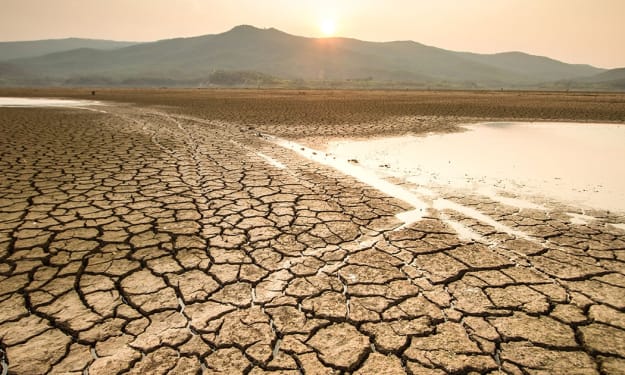
Introduction: About one-forth of the Earth's land is covered with deserted area and to a surprise, it is increasing on a alarming rate. Thus, the expansion of an area where no vegetation occurs or have a dry conditions that were not before present there are known as desertification. Some people are assuming that the other one-forth part of the land is is also converting into a deserted area.
By Fatima Jamil3 years ago in Earth
Timberline Vegetation on Mountains
Introduction of transition of forest into treeless tundra: Sometimes you observe a forest suddenly turns into a treeless tundra on the top of the mountain slope. This change seems a totally unrealistic. But it happens. About a ten meters distance from the normal forest, the tress starts disappearing and converts into a small herbs, grasses and stemless plants. This action of typical transition is known as upper timberline or a tree line. That separates a tree area from the rest of the treeless area. Sometimes we notice another area called lower timberline. This is the area where the forest turns into a desert. No traces of tree life. This happens due to the lack of moisture in that area.
By Fatima Jamil3 years ago in Earth
The origin of Theater
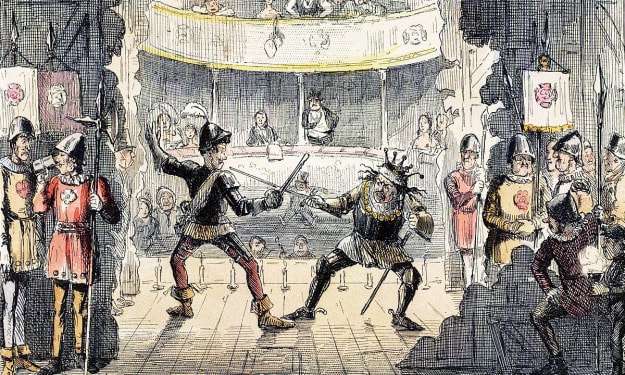
In order to draw the sketch about the origin of theater, we somehow believe on speculation because there are very less written evidence are found about this. The most common accepted theory that was drawn by anthropologist was found in late nineteen century and in the early twentieth century, is that the theater was emerged out of myth and rituals. The anthropologist describe their sketch and comes to a certain conclusion. It relates to the people desire to live a sophisticated lives. People become aware of the forces that influence the growth of their society and their well being.
By Fatima Jamil3 years ago in Education
Groundwater
Meteoric Groundwater: Groundwater can be describe as the amount of water that is used to saturate the parts of Earth and helps to fill all the available spaces. Set behind the others,the most common type of ground water is meteoric water. This is the type of groundwater that freely circulates as an important portion of the water cycle. This meteoric water is generally soaked deep down into the ground by the process of precipitation (rain water or droplets) or through streams and lakes. There it remains for sometimes and then comes up to the surface of the ground. At first, it was thought that the hard and porous ground have enough space to hold up all the meteoric water.
By Fatima Jamil3 years ago in Earth
Glycolysis and Gluconeogenesis
Pathways like Glycolysis and Gluconeogenesis interact in the cell in such a way, if one is comparatively active the other pathway would be inactive at the same time. If both pathways would be active at the same time, it results in the hydrolysis of four energy intermediates like ATP and GTP per each pathway. Both pathways are thermodynamically exergonic under same cellular conditions. This provides none of the thermodynamic barrier to these cellular processes. Therefore, the amount and the relative activities of specific enzymes for each pathway can be controlled by the cell. In this way, both cellular processes can never be active at the same time. We can determine the rate of “Glycolysis” by determining the concentration of glucose. And the rate for “Gluconeogenesis” can be determined by measuring the concentration of lactate.
By Fatima Jamil3 years ago in Education
Environmental Pollution Impact due to Metro and Orange line train in Lahore, Pakistan
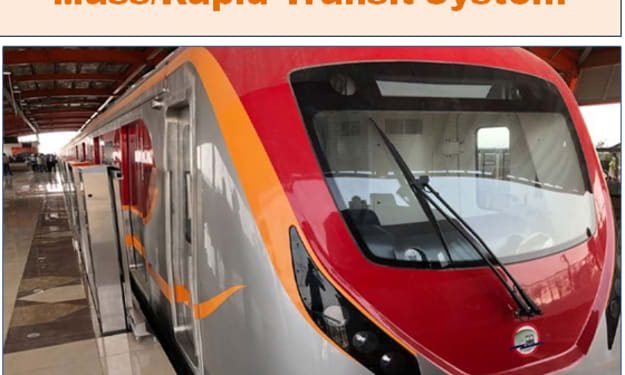
Introduction Humans and the environment have a close relationship for centuries; a small move by humans puts a long-lasting effect on the environment. Environmental pollution could be a major problem we are facing within the past 20 years because it directly or indirectly affects human health and other species. The carcinogens present in the air cause serious respiratory disorders. It also affects the physical and biological components of the ecosystem which can cause drastic changes within the atmosphere. Any environmental state of a city is best described by its water and air quality.
By Fatima Jamil3 years ago in Education