
Wastewater Treatment Practices in Pakistan (Part 1)
"Wastewater Production and its Standard Treatment Systems"


1-Wastewater treatment practices in Pakistan
1.1-Introduction
Pakistan has expected current population of 170 million. This daily increase in population has direct impacts on water bodies that used to meet domestic, agriculture and industrial needs. Pakistan now runs out of its water resources and standing on the edge of water shortage countries. Similarly, the water quality has also been reduced and further decline due to unchecked waste management system. A large number of industries, agriculture and domestic waste directly disposed and contaminate water bodies. Similarly lack of interest in regular visit to check and monitor water bodies extents the number of water-borne diseases which ultimately have adverse effect on the environment and the living creatures. Even though it is mandatory to check and monitor water bodies and provides useful information, but still it lacks such kind of management. We clearly notice the wastewater impact on areas most closed to contaminated sources.
1.1.1-Current situation in Pakistan
Various research surveys indicate that the water pollution has been remarkably increased in past few decades. This is due to the increase in urbanization and industrialization. In this way the public demands for purified water for their daily uses. This colonization continuously increases the amount of wastewater. The pollution graph is high in metropolitan cities where large set of industries is established. Untreated hazardous material, toxic metals, fertilizers waste, municipal waste and other toxic pollutants adds up the pollution in water and cause water borne diseases. These facts forced and pressurize the water controlling managers to maintain the quality of fresh water bodies and preserve natural resources for future use.
1.1.2-Environmental profile of Pakistan
A recent study shows that about 80 percent population of Pakistan has lack access for clean and portable water, especially those lives in major cities of Pakistan. Similarly the profile diagram shows the 40 percent death cases are related to waterborne diseases. This is mainly due to excessive water pollution which occur from industrial, domestic and sewage wastewater distribution system.
1.1.3-World Estimation
We observe the graphical data and related surveys we comes to the conclusion that almost 27 percent of the world population has lack of access to clean water for drinking purposes. This condition has been going more severe in developing countries in the near future. When we become deteriorate of natural water resources and least priorities are given to the water protection schemes.
1.1.4-Purpose Conventional Systems
Some conventional means to treat municipal waste water were proposed in the past, but it has some disadvantages. There is no manageable and separate drainage system for industrial and domestic waste. All kind of discharge, weather it from industries or local plants falls into the single drain. So, this demands an economical treatment system for the well treatment of wastewater. Some simple means include direct treatment with various chemicals like Chlorine or hydrogen peroxide. Another way includes the spate installation of municipal treatment plants but these are not much feasible to eradicate this rising problem.
1.3-Standard Wastewater Treatment Systems
It is not an easy task to propose standard means of waste water treatment in Pakistan, because it is difficult to treat domestic and industrial waste separately. Wastewater from all these kinds of sources moves to the single drain system. This ensures a need to simultaneously act on the most economical ways of treatment that treats all kinds of wastewater, whether it from industries or agricultural waste.
1.3.1-Low Cost Wastewater Treatment Options
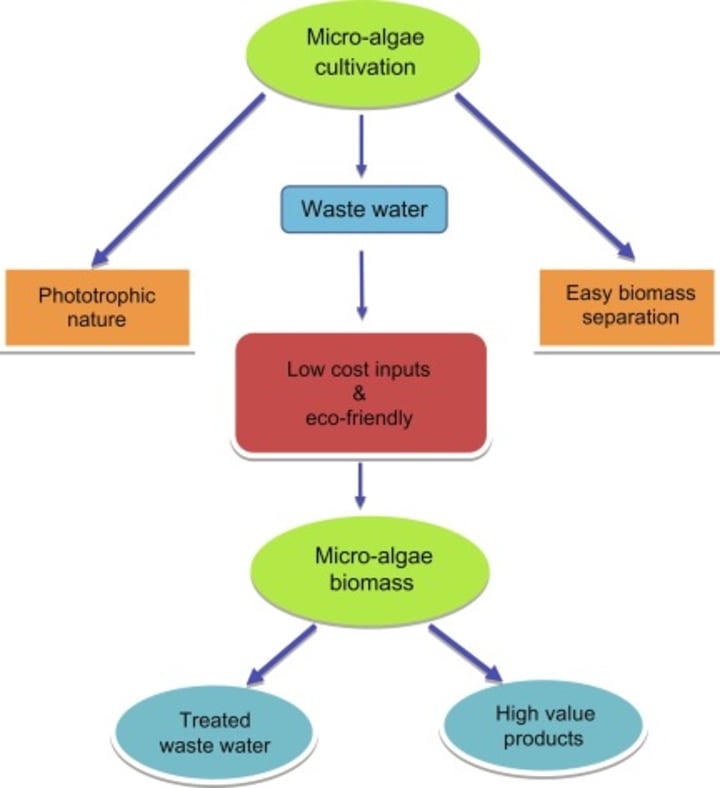
Wastewater treatment is a network of technique designed to treat water for the process of removing contamination from domestic and industrial waste. It includes different means of treatment like, Physical, Biological and Chemical. It main purpose is to produce a well-treated stream of waste from where solid sludge settled down and then eventually discharged to landfills or reuse by the environment.
About the Creator
Fatima Jamil
In a world where you can be anyone, be yourself.
Keep reading
More stories from Fatima Jamil and writers in Earth and other communities.
Environmental Chemistry and Its course Contents (2/4)
1.2.Introduction: Beside solid waste, wastewater pollution is also a major problem of the country. Untreated water from industries, agriculture, domestic, and textile directly discharged into the water bodies. This discharge pollutes the natural water bodies and cause water diseases to human. We can say that a large number of local industries that work on larger scale discharge tons of gallons of polluted water every day. This water contains heavy metals and other toxic chemicals that directly affect the living organism. Marine animals are also affected by this pollution. The presence of heavy metals in the polluted water may clog the gills of the fish and lead them their death.
By Fatima Jamil3 years ago in Earth
China Sets a New Benchmark: 22.13-Kilometer Highway Tunnel Breaks World Record
China has once again captured global attention by pushing the limits of civil engineering with the completion of a 22.13-kilometer highway tunnel. This extraordinary feat has not only set a new world record but also highlights China’s relentless drive to expand and modernize its transportation network. The tunnel, which threads through challenging mountainous terrain, promises to revolutionize travel efficiency, boost regional connectivity, and further cement China’s reputation as a global leader in mega infrastructure projects.
By Muhammad Hassan7 days ago in Earth
Is the Ukraine–Russia War Pushing the World Toward World War III?
Is the Ukraine–Russia War Pushing the World Toward World War III? The war between Ukraine and Russia began as a regional conflict, but over time it has grown into something much larger. While it is not officially World War III, many experts, analysts, and ordinary citizens are asking the same question: is the world moving dangerously close to a global war?
By Wings of Time 6 days ago in Earth
TUS NUA - ch 49
TUS NUA – ch 49 New Beginnings – Mia and Midnight (*)(*)(*) As Mia spoke on the phone to Ali’s sister, Ellen, Finola slipped quietly away and walked to the stream behind Tus Nua. Carefully, she put a block on her family so no one could know what she was about to do.
By Margaret Brennan3 days ago in Fiction



Comments
There are no comments for this story
Be the first to respond and start the conversation.