
Desertification
How an area of land turns into a desert


Introduction:
About one-forth of the Earth's land is covered with deserted area and to a surprise, it is increasing on a alarming rate. Thus, the expansion of an area where no vegetation occurs or have a dry conditions that were not before present there are known as desertification. Some people are assuming that the other one-forth part of the land is is also converting into a deserted area.
Explain the phenomena of desertification:
Desertification can be achieved when growing conditions are not in favor of vegetation growth and the soil had been eroded due to harsh wind conditions. In some cases, the eroded soil completely washed away from the Earth surface leaving behind the rocky surface. In such cases the fine particles can be separated from the rest of the sand sized particles. These particles can be used to form mobile hills. or rigid of sand. Those areas that retain most of the soil cover, the lose of vegetation typically results in the reduction of the soil ability to holds the water that was used to irrigate plants and vegetation.
Furthermore, the raindrops also makes major changes in the soil. When it happens in the soil eroded area, wash away the fine particles of sand and penetrate them into the empty spaces of soil. This decrease the soil capacity to hold water after rain. So, most of the rain water drains out in a minute without surface absorption. This reduction in absorption, accelerate the drying process of the soil and begins a process of the surface deterioration. While in some regions of the World the desert formation occurs due to the drying conditions of the climate over that area. Increase in global warming accelerate the aridity of that area over a past few thousand years. This may continuous if the conditions becomes harsh day by day.
To no doubt, we may assume that the desertification in some areas may occurs due to some human activities rather than natural processes. Increase in human population is one of the leading factor towards desertification. There is an increasing demand of the growing population to provide them with more food and wood to build them houses. This may results in the clearing of some land areas.
Major factors that contribute to desertification:
Other than these, there are four major activities are considering the main reasons behind desertification. These are, over cultivation (for growing more food), over grazing (People have grazers that feeds over the vegetation), firewood gathering and over cultivation. Over cultivation goes on increasing to satisfy the growing population. This has many disadvantages over the land and results into a desertification. People want different types of food with more nutritious value and also searching for land for their habitat.
Raising livestock is major activity and have a huge impact on human economic growth in dry land areas. As this is the main source of the survival other than cultivation. In such dry areas, grasses are the most common and dominant type of vegetation and limit the growth of other crop like wheat, corn and cereals. These regions have extensive period of dryness results in crop failure.
The third main reason is firewood, which is considered a major source of fuel for cooking and domestic uses in these areas. The increased pressure of the growing populations cause the removal of trees for fire purposes. So, that a large number of cities and town areas are become deprived of proper vegetation.
The last and final most cause of desertification through human activities is over irrigation. Due to poor drainage system most of the water sinks in the water table, ultimately cause the increase in level of water table. This water have a high amount of salt, when this water evaporates leaving behind the salt it directly affects the growth of plants.
About the Creator
Fatima Jamil
In a world where you can be anyone, be yourself.
Keep reading
More stories from Fatima Jamil and writers in Earth and other communities.
Timberline Vegetation on Mountains
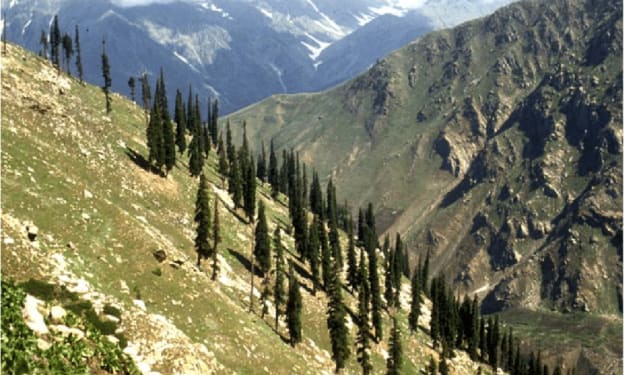
Introduction of transition of forest into treeless tundra: Sometimes you observe a forest suddenly turns into a treeless tundra on the top of the mountain slope. This change seems a totally unrealistic. But it happens. About a ten meters distance from the normal forest, the tress starts disappearing and converts into a small herbs, grasses and stemless plants. This action of typical transition is known as upper timberline or a tree line. That separates a tree area from the rest of the treeless area. Sometimes we notice another area called lower timberline. This is the area where the forest turns into a desert. No traces of tree life. This happens due to the lack of moisture in that area.
By Fatima Jamil3 years ago in Earth
Australia Horticulture Market: Climate-Smart Farming, Innovation & Food Security
Australia Horticulture Market Overview Australia’s horticulture market plays a vital role in the nation’s food system, rural economy and export portfolio. According to IMARC Group, The Australia horticulture market size reached USD 20.2 Billion in 2025. Looking forward, the market is projected to reach USD 33.4 Billion by 2034, exhibiting a growth rate (CAGR) of 5.75% during 2026-2034. This steady growth reflects rising domestic demand for fresh produce, expanding export opportunities, and increased investment in climate-resilient and sustainable farming practices.
By Amyra Singh7 days ago in Earth



Comments
There are no comments for this story
Be the first to respond and start the conversation.