
Glycolysis and Gluconeogenesis
Glycolysis and Gluconeogenesis act as Sides of One Coin


Pathways like Glycolysis and Gluconeogenesis interact in the cell in such a way, if one is comparatively active the other pathway would be inactive at the same time. If both pathways would be active at the same time, it results in the hydrolysis of four energy intermediates like ATP and GTP per each pathway. Both pathways are thermodynamically exergonic under same cellular conditions. This provides none of the thermodynamic barrier to these cellular processes. Therefore, the amount and the relative activities of specific enzymes for each pathway can be controlled by the cell. In this way, both cellular processes can never be active at the same time. We can determine the rate of “Glycolysis” by determining the concentration of glucose. And the rate for “Gluconeogenesis” can be determined by measuring the concentration of lactate.
Both pathways can be explained one by one:
1. Glycolysis
2. Gluconeogenesis
1-Glycolysis:
Glycolysis is the first metabolic pathway that we confronted. It is also called an ancient cellular pathway host by a number of organisms. We define glycolysis as;
“Glycolysis is the sequence of reactions that metabolizes one molecule of glucose to two molecules of pyruvate with the concomitant net production of two molecules of ATP”
It is an anaerobic process, which does not require much oxygen, as it was evolved before the aggregation of considerable amount of oxygen in the living environment. The end product pyruvate can further be oxidized aerobically or anaerobically. Under aerobic conditions, CO2 is produced from complete oxidation of pyruvate, which generates much ATP.
Major steps of pathway:
It is a multi-step cellular process and occurs in the cytoplasm of living cells. There are total six enzymes that operate this cellular metabolic process. Energy generates in the first and the third step of the metabolic pathway. Thus, there are two ATP molecules that can be extended in the pathway. Furthermore, along this process, Glucose (Six carbon molecule) can be split into two molecules of three-carbon compound, called pyruvate.
• Glycolysis simply called a breakdown of glucose molecule takes place in the human body cells. This reaction occurs in the cytosol of the cell. Glycolysis takes place in the presence or in the absence. Lactate is the end product in the absence of oxygen while glucose is completely oxidized to CO2 and H2O in the presence of oxygen.
• It is the major pathway to provide ATP to those tissues that lack mitochondria. For example; erythrocytes, cornea, etc.
• Glycolysis is very important for proper brain functioning. Brain does not use fat directly to drive energy so it completely dependent on glucose oxidation.
• Glycolysis can be considered a central pathway that connects many other pathways. So its intermediates are indirectly used in the formation of many other products.
• Reverse of glycolysis with minor changes leads to the formation of Glucose again.
• net reaction of anaerobic glycolysis:
Glucose + 2ADP + 2Pi → 2Lactate + 2ATP
2-Gluconeogenesis:
Gluconeogenesis is the formation of glucose from non-carbohydrate compounds. Pyruvate, Glucogenic amino acids, propionate, and glycerol are the major precursors. This catabolic reaction occurs in the cytosol of liver cells and to some extent in kidney cells. This reaction has crucial importance in the human body such as;
Major steps in Gluconeogenesis:
• Some metabolites start accumulating in the body. Gluconeogenesis clears them all from the blood by the formation of glucose.
• Some body cells like the brain and erythrocytes completely rely on glucose for energy consumption. So, gluconeogenesis helps the body in the formation of glucose.
• During anaerobic respiration glucose is the main source to provide energy in the form of ATP.
During fasting for a long time, gluconeogenesis helps to meet the requirements of the body for glucose and also helps to produce intermediates of the TCA cycle that produce CO2 and H2O. In this way, it plays a vital role in the human body and other living species.
• Net reaction of Gluconeogenesis:
2 Pyruvate + 4ATP + 2GTP + 2NADH + 2H+ + 6H2O → Glucose + 2NAD+ + 4ADP + 2GDP + 6Pi + 6H+
About the Creator
Fatima Jamil
In a world where you can be anyone, be yourself.
Keep reading
More stories from Fatima Jamil and writers in Education and other communities.
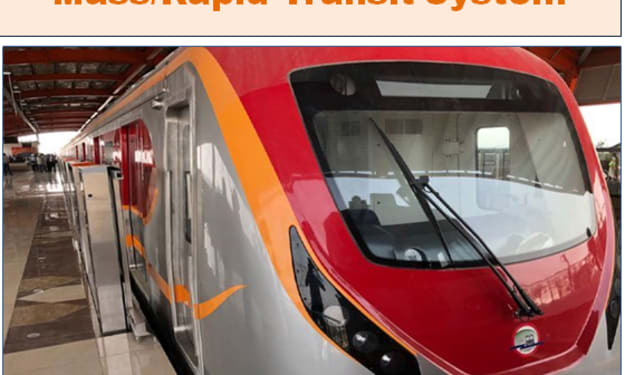
Environmental Pollution Impact due to Metro and Orange line train in Lahore, Pakistan
Introduction Humans and the environment have a close relationship for centuries; a small move by humans puts a long-lasting effect on the environment. Environmental pollution could be a major problem we are facing within the past 20 years because it directly or indirectly affects human health and other species. The carcinogens present in the air cause serious respiratory disorders. It also affects the physical and biological components of the ecosystem which can cause drastic changes within the atmosphere. Any environmental state of a city is best described by its water and air quality.
By Fatima Jamil3 years ago in Education
Breaking Down Private and Commercial Pilot Licenses
Taking flight is more than just a thrill; it can be a lifestyle or a full-fledged career. But before you can soar through the skies, you need to earn the appropriate pilot license. Two of the most common paths for aspiring aviators are the private pilot license (PPL) and the commercial pilot license (CPL). While both enable you to fly aircraft, they serve very different purposes and require varying levels of commitment. If you're deciding between the two, understanding the distinctions can help you make the right choice for your future in aviation.
By Jett Harris of Arkansas5 days ago in Education
📢 Raise Your Voice Thread: 01/22/2026
Our “Raise Your Voice Threads” are hosted most alternating Thursdays at 12PM ET to offer creators more avenues to uncover exceptional stories on Vocal. As we are continuously searching for fresh creators and inspiring stories, this thread provides an opportunity to exchange and discuss the stories that have moved and motivated us on Vocal.
By Raise Your Voice by Vocal6 days ago in Resources



Comments
There are no comments for this story
Be the first to respond and start the conversation.