
The Story of the "Velho do Saco":
An Intriguing Character in Brazilian Folklore.

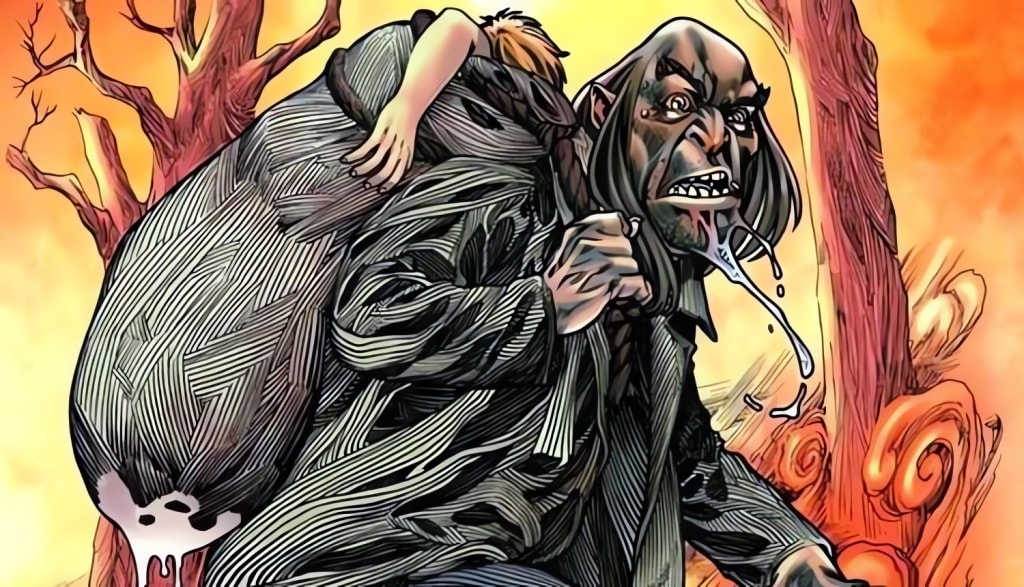
Brazilian folklore presents a rich array of myths, legends, and characters that have been transmitted through the ages. One particularly intriguing figure is the Velho do Saco, or "The Old Man with the Bag." This enigmatic and occasionally intimidating character features prominently in cautionary tales aimed at children throughout Brazil. The Velho do Saco is commonly depicted as an old man wandering the streets with a sizable sack. Legend has it that he seizes unruly or disobedient children and places them inside his bag. Depending on the version of the tale, these children may be taken to an undisclosed location, sold, or even consumed.
While frightening, the Velho do Saco is not an isolated figure in folklore. Numerous cultures feature analogous characters designed to instill fear in children and encourage good behavior, such as the Boogeyman in Western traditions or El Coco in Spain and Latin America.
Brazil is a nation characterized by its cultural diversity and rich heritage, and the narrative of the Velho do Saco differs across various regions.
In the North and Northeast, the Velho do Saco is frequently associated with legends involving spirits or demons, introducing a supernatural element to his persona.
Conversely, in the Southeast, he is typically portrayed as a more relatable, human figure—an outcast or recluse residing on the outskirts of society.
In the South, the tales often merge with European customs introduced by immigrants, resulting in a character reminiscent of Krampus, the punisher of misbehaving children in Alpine folklore.
The Velho do Saco, once a familiar presence in Brazilian homes, has seen a decline in his influence in recent years. The evolution of parenting styles and a move away from fear-driven discipline have contributed to the diminishing frequency of his tale. Nevertheless, the legend continues to thrive in rural communities and among older generations who take pleasure in sharing stories from their past.
In modern popular culture, the Velho do Saco occasionally resurfaces in literature, music, and films that delve into Brazilian folklore. His narrative frequently represents societal anxieties regarding the unknown or the repercussions of deviating from established norms.
The Velho do Saco transcends the realm of mere folklore; he symbolizes the cultural values and concerns prevalent in Brazil. As with numerous figures in folklore, he acts as a societal mirror, representing fears related to abandonment, peril, and the repercussions of misconduct. His role in Brazilian folklore underscores the significance of storytelling as a means of education and cultural preservation.
The story of the Velho do Saco is a captivating aspect of Brazilian folklore, intertwining themes of fear, morality, and cultural heritage. This legend serves not only as a means to discipline children but also as a way to ignite interest in Brazil's diverse traditions. The figure of the Velho do Saco continues to linger in the minds of those who encounter his narrative.
Have you come across the Velho do Saco or comparable legends from different cultures? We invite you to share your insights in the comments below.
About the Creator
A História
"Hi. My name is Wellington and I'm a passion for general history. Here, I publish articles on different periods and themes in history, from prehistory to the present day.
Keep reading
More stories from A História and writers in Horror and other communities.
Exploring the Brazilian Folklore
In the vibrant landscape of Brazilian folklore, a multitude of captivating and unsettling characters exists. The Cuca, in particular, emerges as one of the most compelling and formidable figures. Renowned for her terrifying aura and association with childhood anxieties, the Cuca has established herself as a prominent element in Brazilian cultural narratives, evoking feelings of fear, reverence, and intrigue. This article will explore the origins, characteristics, and cultural importance of the Cuca, examining the reasons behind her enduring influence in Brazilian folklore. The Cuca is a mythical entity frequently portrayed as a witch or a terrifying old woman. In various narratives, she is described as a woman with reptilian characteristics or is envisioned as a creature resembling a crocodile, possessing the power to transform. Unlike numerous other folkloric beings tied to specific locations or items, the Cuca is predominantly feared for her tendency to abduct misbehaving children or those who remain awake too late. Similar to the Bogeyman in Western folklore, the Cuca serves as a daunting figure employed by parents to discipline their children. The origins of Cuca are deeply intertwined with a fusion of Brazilian indigenous, African, and Portuguese legends. Some interpretations suggest that her character may be linked to the ancient Portuguese tale of Coca, a dragon or monster symbolizing evil, which was vanquished by St. George in medieval narratives. Over time, this figure evolved, becoming an integral part of Brazilian folklore, uniquely adapted to the nation's cultural landscape.
By A Históriaabout a year ago in Horror
The Man Who Lost 300 Years in a Single Night: The Tale of Urashima Taro
1. The Paradox of the Perfect Ending Every culture has its stories of forbidden kingdoms and magic. In the West, we have Rip Van Winkle and Pandora’s Box. But in Japan, there is a folktale that masterfully combines these elements into a single, haunting narrative: The Tale of Urashima Taro.
By Takashi Nagayaabout 19 hours ago in Horror




Comments
There are no comments for this story
Be the first to respond and start the conversation.