
The Mysterious and Advanced Indus Valley Civilization
A Bronze Age Wonder

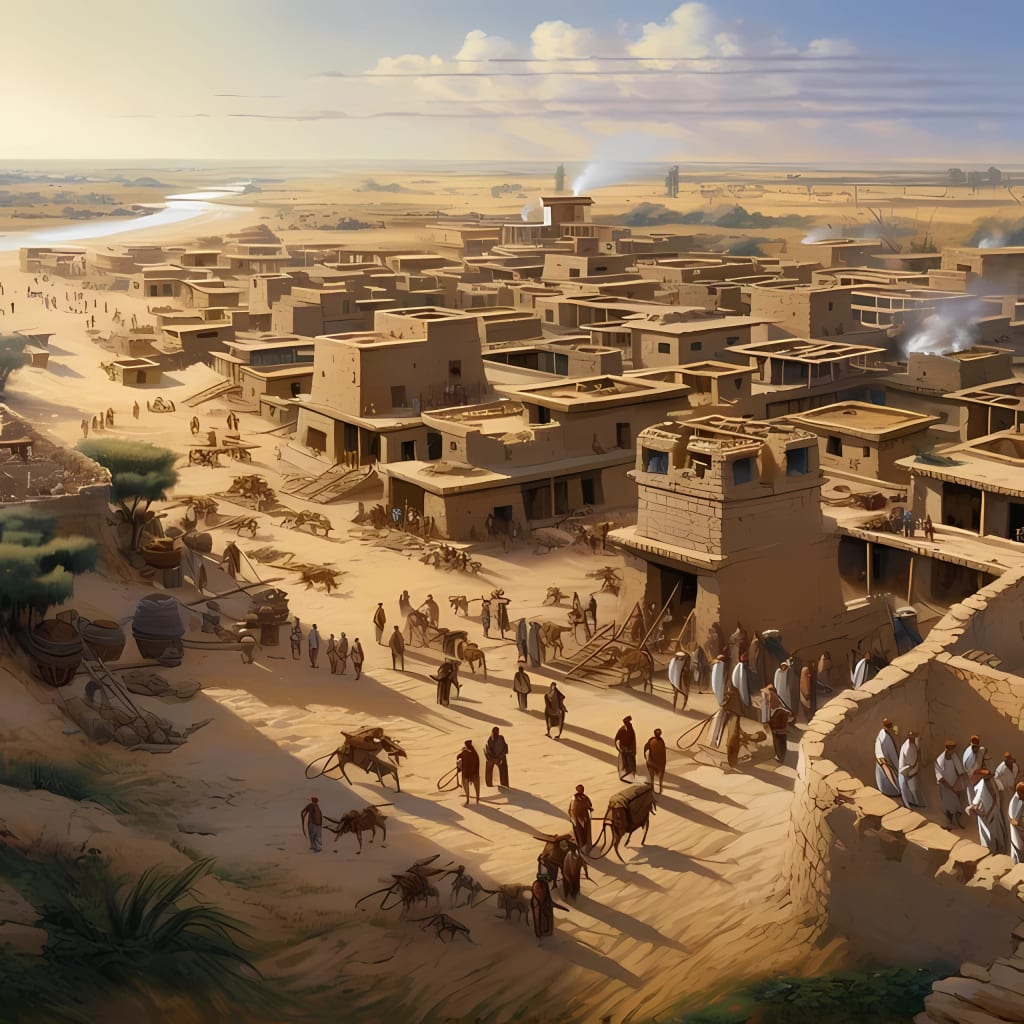
The Indus Valley Civilization, often referred to as the Harappan Civilization, stands as one of the most captivating and contentious societies of the Bronze Age. Flourishing in what is now Pakistan approximately 5,000 years ago, this enigmatic culture has bequeathed a wealth of mysteries for contemporary archaeologists to explore. In this article, we shall embark on a journey through the latest findings that illuminate the splendor of this extraordinary civilization.
The Harappan Civilization is thought to have emerged around 3300 BCE, flourishing until approximately 1300 BCE, with its zenith, referred to as the Mature Harappan Period, occurring around 2500 BCE. This remarkable era paralleled the rise of other illustrious ancient civilizations, including those in Egypt, Mesopotamia, and China. Spanning an impressive expanse of approximately 1.3 million square kilometers, the Indus Valley Civilization encompassed regions of present-day Pakistan, Afghanistan, and India.
The roots of this civilization can be traced back to a Neolithic community at Mehrgarh, located in the Kacchi Plain of Pakistan, to the west of the Indus Valley. Unearthed in 1974, Mehrgarh provided compelling evidence of human habitation dating as far back as 7000 BCE, predating the Indo-European migrations. This settlement serves as the foundation of the Harappan Civilization, which subsequently evolved into a distinctive culture between 5400 BCE and 3700 BCE.
By 2600 BCE, the nascent societies of the Indus Valley blossomed into magnificent urban hubs, notably Harappa and Mohenjo-Daro in what is now Pakistan, alongside significant sites such as Dholavira and Lothal in India. Archaeological endeavors have unveiled more than 1,000 settlements, predominantly situated along the banks of the Indus and Ghaggar-Hakra Rivers.
These cities exemplified the pinnacle of urban design, constructed on elevated platforms to mitigate the risk of flooding. Crafted from both baked and sun-dried bricks, they boasted sophisticated drainage systems, expansive granaries, ceremonial terraces, and ample water reservoirs. Intriguingly, the majority of residences were equipped with private wells, bathing facilities, and covered drains that directed wastewater into communal sewers. Such sanitation innovations eclipsed those found in contemporary urban locales of Mesopotamia and Egypt, showcasing a level of advancement that even surpasses certain regions of modern South Asia.
Among the most captivating edifices discovered at Mohenjo-Daro is the Great Bath, an impressive public water tank measuring 12 by 7 meters and exceeding 2 meters in depth. Sealed with natural tar and bricks, its exact purpose remains a mystery, though it is widely believed to have held religious or ceremonial significance.
The Harappan civilization exhibited a remarkable absence of centralized governance or monumental architecture, such as grand palaces or temples. Instead, it is believed to have functioned as a sophisticated network of city-states, each with its own local administration. The majority of its populace comprised skilled artisans, traders, and agrarians who thrived in the region's fertile landscapes, nourished by the annual monsoons that enriched the soil.
Trade played a pivotal role in the economic framework of the Harappan society. Numerous artifacts, including exquisite beads, fine ceramics, and intricate tools, have been discovered, indicating extensive trade links with distant lands such as Mesopotamia, Persia, and the Arabian Peninsula. The civilization's maritime commerce was underpinned by advanced shipbuilding techniques, enabling the exchange of luxurious goods like lapis lazuli, carnelian, and copper.
The Harappan civilization was renowned for its exceptional craftsmanship, creating exquisite jewelry, finely crafted pottery, and delicate terracotta figurines. Among their most celebrated artifacts are the steatite seals, adorned with intricate representations of animals, humans, and enigmatic symbols. These seals likely served commercial functions, perhaps acting as stamps to authenticate goods.
Additionally, this remarkable civilization developed a sophisticated writing system, consisting of approximately 460 unique symbols discovered on seals, pottery, and various other relics. Despite extensive research, the Harappan script remains an enigma, leaving their language and much of their historical narrative enveloped in intrigue.
While their religious practices are not entirely comprehended, they seem to encompass elements that may have influenced subsequent Indian religions. Notably, the Pashupati seal features a horned figure amidst a gathering of animals, which some scholars suggest may be linked to the early manifestations of Hinduism, Jainism, or Buddhism.
The Indus Valley Civilization stands as a magnificent tribute to human creativity and tenacity. Its remarkable urban design, groundbreaking engineering feats, and extensive trade networks underscore the exceptional skills of this ancient culture. However, the enigmas surrounding it—most notably its undeciphered script—remain a source of fascination for historians and archaeologists alike.
As we delve deeper into the lives of the Harappans, their narrative illuminates the remarkable adaptability of humanity and the lasting influence of ancient advancements. By examining their triumphs and tribulations, we can extract valuable insights applicable to our contemporary society.
About the Creator
A História
"Hi. My name is Wellington and I'm a passion for general history. Here, I publish articles on different periods and themes in history, from prehistory to the present day.
Keep reading
More stories from A História and writers in History and other communities.
The Capelobo
Brazilian folklore is abundant with intriguing creatures and tales that reflect a blend of indigenous, African, and European heritage. One such mythical entity is the Capelobo, a lesser-known yet equally enthralling figure. Frequently eclipsed by more renowned characters such as the Saci or Curupira, the Capelobo embodies an aura of mystery, fear, and fascination. Let us explore the legend of this enigmatic creature and its importance within Brazilian folklore.
By A Históriaabout a year ago in History
The Year 1974 in Review: Fun Facts, Trivia, and Historic Highlights
This quick read is a collection of fun facts, trivia, and historic events from the year 1974. Discover the year’s top news stories, most influential people, sports trivia, the cost of living, retail prices, entertainment news, and much more.
By Gregory DeVictor3 days ago in History


Comments
There are no comments for this story
Be the first to respond and start the conversation.