politics
Politics does not dictate our collective cultural mindset as much as it simply reflects it; We've got to look in the mirror sometimes, and we've got one.
Trump’s Actions Are Illegal — But His Greed May Hold Him in Check. AI-Generated.
In American politics, few figures inspire as much debate, outrage, and fascination as Donald Trump. For years, legal scholars, journalists, and political opponents have argued that many of his actions — both in office and out — cross clear legal and ethical lines. From election interference claims to alleged misuse of power and financial conflicts of interest, the accusations are serious and persistent. Yet, paradoxically, there may be one force more powerful than law, norms, or even public pressure that restrains Trump: his own greed. This is not a defense of Trump’s conduct. Rather, it is an examination of a reality that many critics reluctantly acknowledge — Trump’s intense focus on personal wealth and brand preservation may sometimes limit how far he is willing to go, even when legality appears optional. A Pattern of Questionable Legality Trump’s political career has been marked by repeated legal challenges. Courts, prosecutors, and watchdog organizations have raised concerns about actions ranging from campaign finance violations to attempts to overturn election results. Unlike many politicians who seek plausible deniability, Trump often acts openly, publicly testing the boundaries of legality. This brazenness has led critics to argue that he believes himself above the law. His rhetoric frequently reinforces this perception, portraying investigations as “witch hunts” and prosecutors as politically motivated enemies. Such framing has proven effective with his core supporters, who often see legal accountability as persecution rather than prosecution. Still, even Trump has not been completely indifferent to consequences. The question is why. The Central Role of Money and Brand At the heart of Trump’s restraint lies his self-image — not as a public servant, but as a businessman. Trump’s wealth, properties, licensing deals, and media presence form the backbone of his identity. Politics, for him, has never been separate from profit. Unlike ideological leaders driven by belief systems or historical legacies, Trump’s decision-making often reflects a cost-benefit analysis rooted in personal gain. Actions that threaten his brand value, business empire, or fundraising potential are approached with caution. This explains why Trump frequently escalates rhetorically while hesitating operationally. He may encourage supporters with inflammatory language, but stops short of actions that would directly jeopardize his financial standing in irreversible ways. Greed as a Limiting Force Greed is typically seen as a corrupting influence, but in Trump’s case, it may also act as a brake. Total authoritarian power, while appealing in theory, comes with risks: sanctions, asset seizures, international isolation, and loss of market credibility. Trump understands markets better than institutions. He knows that investors flee instability, lenders demand predictability, and brands collapse under sustained legal uncertainty. Even if he dismisses court rulings publicly, he responds privately by delaying, negotiating, or reframing rather than outright defying them. This behavior suggests not fear of prison, but fear of bankruptcy — a fate Trump has narrowly avoided multiple times in the past and one he seems determined never to face again. Why This Is Not Reassuring It would be a mistake to take comfort in the idea that greed will save democracy. Personal financial interest is an unreliable safeguard against systemic damage. Trump’s restraint is situational, not principled. When profit and power align, the risks multiply. Moreover, relying on self-interest rather than rule of law sets a dangerous precedent. Democracy should not depend on whether a powerful individual calculates that illegal actions are “bad for business.” That logic leaves institutions vulnerable to leaders with fewer assets to lose or greater tolerance for chaos. In Trump’s case, the line is not legality — it is profitability. The Legal System Still Matters Trump’s ongoing legal battles demonstrate that institutions, while slow and imperfect, still function. Courts have imposed fines, restricted business operations, and upheld investigations despite political pressure. These outcomes matter not only symbolically but financially. Every legal loss chips away at Trump’s brand as a “winner,” a persona essential to his fundraising and political influence. Greed does not just restrain him; it also makes him vulnerable. Ironically, the same obsession with money that fuels his behavior also exposes him to accountability in ways that ideological leaders might evade. A Calculated Balance Trump operates within a narrow corridor: push boundaries enough to energize supporters, but not so far that the financial consequences become catastrophic. This balancing act explains his pattern of aggressive speech followed by procedural stalling and strategic retreats. It also explains why he often targets institutions rhetorically while continuing to rely on them practically. Banks, courts, and markets are not enemies he can afford to lose entirely. The Bigger Picture Trump’s actions may be illegal, and many argue they demand stronger consequences. But understanding what restrains him is crucial for anticipating future behavior. Greed is not a moral safeguard, but it is a practical one — and a fragile one at that. If future circumstances reduce the financial risks of illegal action, or if political power offers greater protection for wealth, that restraint could disappear. This is why strong institutions, independent courts, and clear enforcement matter more than ever. Conclusion Donald Trump’s legacy will likely be defined by how often he tested the limits of law and how rarely those limits stopped him outright. Yet, in a political landscape full of uncertainties, one constant remains: his devotion to personal profit. That devotion may hold him in check — not because he respects the law, but because he values his wealth. Democracy should demand better guardians than greed, but for now, it remains an uncomfortable part of the equation.
By Muhammad Hassan13 days ago in The Swamp
Bride and Groom Among 8 Killed in Gas Cylinder Blast at Wedding in Pakistan’s Capital. AI-Generated.
What was meant to be one of the happiest days of a couple’s life ended in unspeakable sorrow when a gas cylinder explosion killed eight people, including the bride and groom, during a wedding celebration in Islamabad, Pakistan’s capital. The tragic incident has shocked the nation, highlighting the dangers of unsafe gas usage and the fragility of life itself.
By Aqib Hussain13 days ago in The Swamp
Trump Pushes for a 1-Year, 10% Cap on Credit Card Interest Rates — and Banks Push Back. AI-Generated.
In a move that has reignited debate over consumer protection and financial regulation, former U.S. President Donald Trump has floated a proposal to cap credit card interest rates at 10% for one year. The idea is simple on its surface: provide immediate relief to millions of Americans struggling under high-interest debt. But the reaction from banks and financial institutions has been swift and hostile, revealing deep divisions over how the U.S. credit system should function. At a time when credit card interest rates in the United States routinely exceed 20% and, in some cases, climb above 30%, Trump’s proposal strikes a populist chord. Yet critics argue that such a cap could disrupt lending markets, reduce credit availability, and create unintended economic consequences. So why is Trump pushing this plan, why are banks balking, and what could it mean for consumers? Why Credit Card Interest Rates Are Under the Spotlight Over the past few years, American households have increasingly relied on credit cards to cope with inflation, rising rent, and higher everyday expenses. As the Federal Reserve raised benchmark interest rates to fight inflation, credit card APRs surged alongside them. For many consumers, this has meant: Growing balances that are harder to pay down Monthly interest charges that exceed minimum payments A cycle of debt that feels nearly impossible to escape Against this backdrop, Trump’s proposal taps into widespread frustration. By capping interest rates at 10% for a limited, one-year period, the plan aims to give borrowers breathing room and slow the growth of household debt. The Political Strategy Behind the Proposal Trump has long positioned himself as a champion of “forgotten” or financially stressed Americans. This proposal fits neatly into that narrative, allowing him to argue that he is standing up to powerful banks on behalf of everyday consumers. Politically, the idea is strategic: It appeals to working-class voters burdened by debt It contrasts sharply with what many see as Wall Street-friendly policies It reframes economic debate around fairness rather than market efficiency Even though the proposal is temporary, its symbolism is powerful. A one-year cap suggests urgency without committing to a permanent overhaul of the credit system, making it easier to sell to voters while still appearing bold. Why Banks Are Pushing Back Hard Financial institutions wasted no time expressing concern. From their perspective, a 10% cap—especially one imposed quickly—poses serious risks. Banks’ main arguments include: 1. Reduced profitability Credit cards are one of the most profitable products for banks. Interest revenue helps offset defaults, fraud, and operational costs. A sharp cap would significantly reduce margins. 2. Higher risk, lower reward Banks argue that high interest rates compensate for lending to higher-risk borrowers. If rates are capped, they may simply stop offering credit to those consumers. 3. Less access to credit Rather than lowering rates, banks could tighten approval standards, leaving many Americans—especially those with lower credit scores—without access to credit at all. 4. Market interference concerns The banking industry maintains that interest rates should reflect market conditions, not political decisions. They warn that government-imposed caps distort lending behavior. In short, banks claim the proposal could hurt the very people it intends to help. Would Consumers Actually Benefit? For consumers carrying balances, the immediate benefits are obvious. A 10% cap could: Dramatically reduce monthly interest charges Help borrowers pay down principal faster Prevent balances from ballooning However, the longer-term impact is less clear. If banks respond by: Cutting credit limits Closing accounts Rejecting new applicants Then access to short-term credit could become more limited, particularly for lower-income households. Still, supporters argue that the current system already fails many consumers. With interest rates exceeding 25%, critics say the credit card market borders on exploitative, especially when borrowers are already financially vulnerable. How This Fits Into the Broader Economic Debate Trump’s proposal revives a long-standing debate in U.S. politics: Should there be a legal limit on how much lenders can charge? Historically, usury laws capped interest rates at the state level. Over time, deregulation and federal preemption weakened those limits, allowing banks to charge far higher rates nationwide. The proposal also intersects with broader questions about: Corporate responsibility Income inequality The role of government in regulating financial markets Supporters see the cap as overdue consumer protection. Opponents see it as economic overreach with potentially destabilizing effects. Is the Proposal Likely to Become Law? Realistically, the chances of this policy being enacted in its current form are slim—at least in the short term. Implementing a nationwide cap would require congressional support and face intense lobbying from the financial industry. However, even if it never becomes law, the proposal serves another purpose: shifting the conversation. By putting credit card interest rates front and center, Trump has forced policymakers, banks, and the public to confront an issue that often receives little attention. In that sense, the plan may already be achieving one of its goals. What Happens Next? As banks continue to push back and economists debate the consequences, consumers are watching closely. Whether through legislation or public pressure, calls for relief from high credit card interest rates are unlikely to fade. Trump’s proposal may be temporary, controversial, and politically charged—but it highlights a reality many Americans live with every day: debt is expensive, and the system often feels stacked against borrowers. Even if the 10% cap never materializes, the question remains: how long can sky-high interest rates persist before meaningful reform becomes unavoidable?
By Muhammad Hassan13 days ago in The Swamp
Major military, political, and humanitarian developments as the conflict continues. AI-Generated.
As the Russia-Ukraine war reaches day 1,417, the conflict shows no signs of easing. Fighting continues across multiple фронт lines, diplomatic efforts remain stalled, and civilians on both sides face ongoing hardships. Below is a comprehensive overview of the most significant military, political, and humanitarian developments reported over the past day, reflecting the evolving dynamics of one of the longest and most consequential conflicts in modern European history.
By Aqib Hussain13 days ago in The Swamp
UK Wants Peaceful Transition of Power in Iran, Says Minister. AI-Generated.
As Iran’s largest wave of protests in years continues, the United Kingdom has publicly urged for a peaceful transition of power in Tehran amid mounting violence and government crackdowns. British officials are emphasizing diplomacy and restraint while calling on the Iranian government to respect human rights, even as divisions within UK politics reveal differing views on how far London should go in supporting change. �
By Fiaz Ahmed Brohi13 days ago in The Swamp
Last Kurdish Forces Leave Aleppo After Ceasefire Deal Reached. AI-Generated.
In a significant development in the long-running conflict in Syria, the last remaining Kurdish forces have left the city of Aleppo, following a newly negotiated ceasefire deal. The withdrawal marks a pivotal moment in the city’s complex war history, reshaping local power dynamics and leaving many observers to wonder what comes next for Aleppo — once a symbol of the brutal devastation of the Syrian civil war.
By Fiaz Ahmed Brohi13 days ago in The Swamp
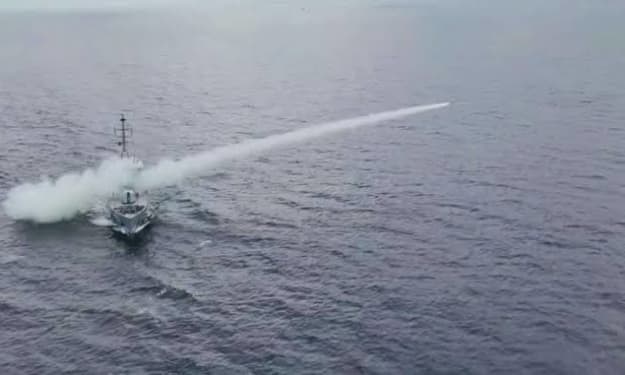
Senegalese Navy Conducted Historic First Anti-Ship Missile Launch. AI-Generated.
In a significant milestone for West African maritime security, the Senegalese Navy has successfully conducted its first ever anti-ship missile launch during a carefully planned naval exercise. The announcement — confirming that Senegal’s naval forces have now demonstrated capability to fire advanced surface-to-surface missiles — represents a landmark achievement in the nation’s military evolution and raises the profile of security cooperation across the Atlantic coast of Africa. This historic event is about far more than a single weapons test; it symbolizes a shift in how West African nations are preparing to defend their territorial waters, protect economic interests, and engage in multinational security efforts across a region increasingly challenged by piracy, criminal networks, and geopolitical competition. A Strategic Upgrade for Senegal Senegal’s coast spans some of the busiest maritime routes in the world. The country’s Exclusive Economic Zone (EEZ) — rich in fisheries, oil, gas prospects, and vital shipping lanes — has grown in economic importance over the past decade. But these riches also present security challenges. Illegal fishing, maritime smuggling, piracy, and the growing sophistication of criminal networks have put pressure on national navies in the region to modernize and expand their capabilities. The Senegalese Navy’s successful anti-ship missile launch — conducted under the supervision of high-ranking naval officers and with the support of foreign partners — reflects Dakar’s intention to play a more proactive role in the security of the Gulf of Guinea and beyond. What the Milestone Entails Anti-ship missiles are designed to engage and destroy hostile surface vessels at significant distances, giving naval forces a long-range defensive and deterrent capability. By successfully launching such a weapon, the Senegalese Navy has demonstrated that it can now respond more assertively to threats at sea, rather than relying solely on patrol boats, light armaments, or foreign military support. During the exercise, Senegalese naval crews reportedly tracked a designated sea target and launched the missile with precision, showcasing coordination between sensors, radar systems, communication networks, and the missile platform itself. While specific details about the missile system used have not been fully disclosed for security reasons, military analysts say that such systems typically require rigorous training, disciplined operational procedures, and a deep understanding of modern naval warfare principles. Regional Ramifications The Gulf of Guinea — stretching from Senegal in the west to Angola in the south — has become one of the globe’s most troubled maritime regions in recent years. According to international watchdogs, piracy, kidnapping at sea, and armed robbery against vessels surged in the early 2020s, prompting coastal states to pursue stronger defense mechanisms. By successfully demonstrating anti-ship missile capability, Senegal is sending a message to both allies and potential adversaries: it is investing in strategic defense and expanding its role in regional security. Neighboring nations, including Nigeria, Ghana, and Côte d’Ivoire, have similarly increased their naval capabilities through international cooperation and equipment modernization. Senegal’s successful launch may encourage further collaboration and shared training programs, strengthening collective security frameworks in West Africa. International Partnerships and Support Senegal’s naval achievement did not happen in isolation. Over the years, Dakar has worked closely with international partners — including France, the United States, and European Union navies — to train personnel, modernize equipment, and engage in joint naval exercises. Many Western partners view Senegal as a key security partner in Africa due to its relative political stability, strategic Atlantic location, and commitment to democratic governance. The anti-ship missile exercise, therefore, also underscores how global military cooperation can enhance the capabilities of emerging navies, enabling them to meet evolving security challenges more effectively. A Boost for National Defense For Senegal, the successful missile launch carries both symbolic and practical importance. It boosts national confidence in the navy’s role, affirms Dakar’s defense investments, and signals to citizens and global observers alike that Senegal is ready to protect its maritime interests. In a world where maritime security is increasingly interconnected — affecting trade, energy infrastructure, fisheries, and global supply chains — Senegal’s move toward modern naval deterrence reflects a broader trend among coastal nations that seek greater autonomy in defending their waters. Balancing Capability With Responsibility While the milestone is notable, experts stress the importance of responsible use of such capabilities. Senegal has emphasized that the exercise was strictly defensive, conducted in controlled conditions, and intended to enhance maritime safety rather than escalate tensions. International law, including the United Nations Convention on the Law of the Sea (UNCLOS), enshrines the right of coastal states to protect their territorial waters. Senegal’s missile launch falls within this context of sovereign defense — not offensive posture — and reinforces its commitment to lawful maritime conduct. What Comes Next Following the successful launch, analysts expect further developments in Senegal’s naval strategy, including: Expanded naval training programs Possible acquisition of additional defense platforms Increased joint exercises with regional and global partners Enhanced maritime surveillance and intelligence capacity These steps would help Senegal play a central role in regional maritime security and contribute more broadly to Atlantic and Gulf of Guinea stability. Conclusion: A New Era on the Waves Senegal’s historic anti-ship missile launch marks a watershed moment for the country’s navy and for West African maritime defense. In strengthening its deterrent capability, Senegal is responding to real and evolving threats to its waters and economic interests. As navies around the world adjust to changing security environments, Dakar’s achievement highlights how even regional forces can leverage technology, training, and international cooperation to shift the narrative — from vulnerability to capability — in the world’s oceans.
By Fiaz Ahmed Brohi13 days ago in The Swamp
Trump Is the Political Earthquake Shaking Latin America. AI-Generated.
Donald Trump may no longer occupy the Oval Office, but his political aftershocks continue to ripple far beyond the borders of the United States. Nowhere is this more evident than in Latin America, where Trump’s rhetoric, policies, and political style have helped reshape debates about nationalism, populism, democracy, and U.S. influence. Whether admired or fiercely rejected, Trump has become a political earthquake—one that is still shaking the foundations of Latin American politics.
By Aqib Hussain13 days ago in The Swamp