
Trump Is the Political Earthquake Shaking Latin America
How One U.S. Figure Is Reshaping Power, Populism, and Political Identity South of the Border
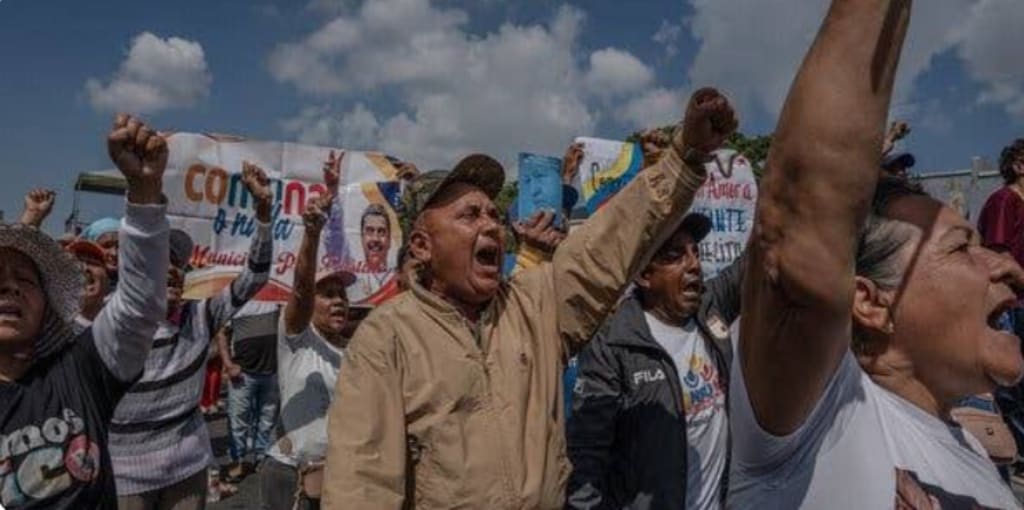
Donald Trump may no longer occupy the Oval Office, but his political aftershocks continue to ripple far beyond the borders of the United States. Nowhere is this more evident than in Latin America, where Trump’s rhetoric, policies, and political style have helped reshape debates about nationalism, populism, democracy, and U.S. influence. Whether admired or fiercely rejected, Trump has become a political earthquake—one that is still shaking the foundations of Latin American politics.
A New Kind of U.S. Influence
For decades, U.S. influence in Latin America was exercised through diplomacy, economic policy, and sometimes covert intervention. Trump changed the tone entirely. His approach was blunt, transactional, and unapologetically nationalist. Instead of carefully worded diplomatic language, he relied on slogans, social media, and confrontation.
This shift resonated deeply in Latin America, not because governments necessarily agreed with him, but because his style mirrored a growing trend already present in the region: strongman politics. Leaders and political hopefuls began to borrow elements of Trumpism—anti-elite messaging, attacks on the press, and the framing of politics as a battle between “the people” and corrupt institutions.
Populism Finds a Powerful Reference Point
Latin America has long been fertile ground for populist leaders, but Trump gave modern populism a new global brand. His success showed that openly defying political norms could be rewarded at the ballot box. This lesson did not go unnoticed.
From Brazil to El Salvador, political figures have echoed Trump’s language and tactics. Attacks on journalists as “enemies,” skepticism toward elections and institutions, and the promise to rule with personal authority rather than consensus have become increasingly common. Trump didn’t invent these strategies, but he legitimized them on a global stage, making them feel less risky and more effective.
Migration: The Fault Line That Split the Region
No issue better illustrates Trump’s impact on Latin America than migration. His hardline stance—border walls, mass deportations, and harsh rhetoric—forced Latin American governments into uncomfortable positions. Countries that depend heavily on remittances suddenly faced the possibility of millions of citizens being sent back home.
At the same time, Trump’s policies exposed the deep inequalities driving migration in the first place. Violence, corruption, and economic instability in Central America became global talking points, even if Trump framed them through fear rather than empathy. Ironically, while his rhetoric often demonized migrants, it also kept Latin America at the center of U.S. political conversation in a way few presidents had before.
Economic Shockwaves and Trade Tensions
Trump’s “America First” agenda challenged long-standing trade relationships. Threats to tear up agreements and impose tariffs created uncertainty across Latin American economies, especially in Mexico. While some governments resisted, others adapted, learning to negotiate in Trump’s preferred language of leverage and pressure.
This environment encouraged Latin American leaders to adopt more nationalist economic rhetoric at home. Protectionism, skepticism toward globalization, and distrust of multinational institutions gained renewed popularity. Trump’s confrontational trade stance reinforced the idea that economic self-interest should outweigh regional cooperation.
A Mirror for Democracy’s Fragility
Perhaps Trump’s most profound influence has been symbolic. His refusal to accept electoral defeat and his constant questioning of democratic institutions sent a dangerous message worldwide. In Latin America—where democratic systems are often younger and more fragile—this example was particularly potent.
Political actors who lose elections now more openly claim fraud. Courts, electoral authorities, and legislatures are increasingly portrayed as obstacles rather than safeguards. Trump became a reference point for how to challenge democracy without immediately abandoning it, a strategy that has proven destabilizing in several countries.
Resistance and Rejection
Yet the earthquake has not only caused destruction; it has also sparked resistance. In many Latin American nations, Trump became a cautionary tale. Progressive movements, journalists, and civil society groups used his presidency as an example of what happens when democratic norms erode.
Anti-Trump sentiment strengthened alliances among activists and voters who feared similar figures emerging at home. In this way, Trump polarized Latin America not just between left and right, but between those willing to accept authoritarian tendencies and those determined to defend democratic values.
The Aftershocks Continue
Even out of office, Trump’s influence remains alive. His potential political return, ongoing media presence, and continued grip on a large segment of the U.S. electorate ensure that Latin America is still watching closely. His legacy has altered expectations of leadership, diplomacy, and political behavior.
Trump is not just a former U.S. president to Latin America; he is a symbol. To some, he represents strength and defiance. To others, chaos and division. Either way, the ground has shifted.
Conclusion: A Region Still Feeling the Tremors
Trump’s impact on Latin America cannot be measured solely by policies or speeches. It lies in the way he changed political imagination—what leaders believe they can say, how they can rule, and how far they can push democratic boundaries.
Like any earthquake, the damage is uneven. Some systems cracked, others adapted, and a few grew stronger in response. But one thing is certain: Latin America is still feeling the tremors of Trump’s political quake, and the landscape may never return to what it once was.
About the Creator
Keep reading
More stories from Aqib Hussain and writers in The Swamp and other communities.
A Ghost Town Votes in Myanmar Election’s Second Phase
In most countries, elections are noisy affairs. Streets fill with campaign posters, queues form outside polling statio Ins, and political debate spills into tea shops and living rooms. In parts of Myanmar, however, the second phase of the country’s elections has unfolded in near silence — so quiet that some polling stations stand in places where almost no civilians remain.
By Aqib Hussain8 days ago in The Swamp
JD Vance to Host Greenland Talks at the White House
Arctic US Senator JD Vance is set to host high-level talks on Greenland at the White House, signaling renewed American interest in the strategically vital Arctic region. The discussions are expected to focus on security, economic development, climate change, and the future of US engagement with Greenland, a semi-autonomous territory of Denmark that has become increasingly important amid rising global competition in the far north.
By Aarif Lashari6 days ago in The Swamp


Comments
There are no comments for this story
Be the first to respond and start the conversation.