
BRICS Wargames: Why They Matter, Why India Opted Out
Joint military drills reveal shifting global power dynamics as India chooses strategic distance

Introduction
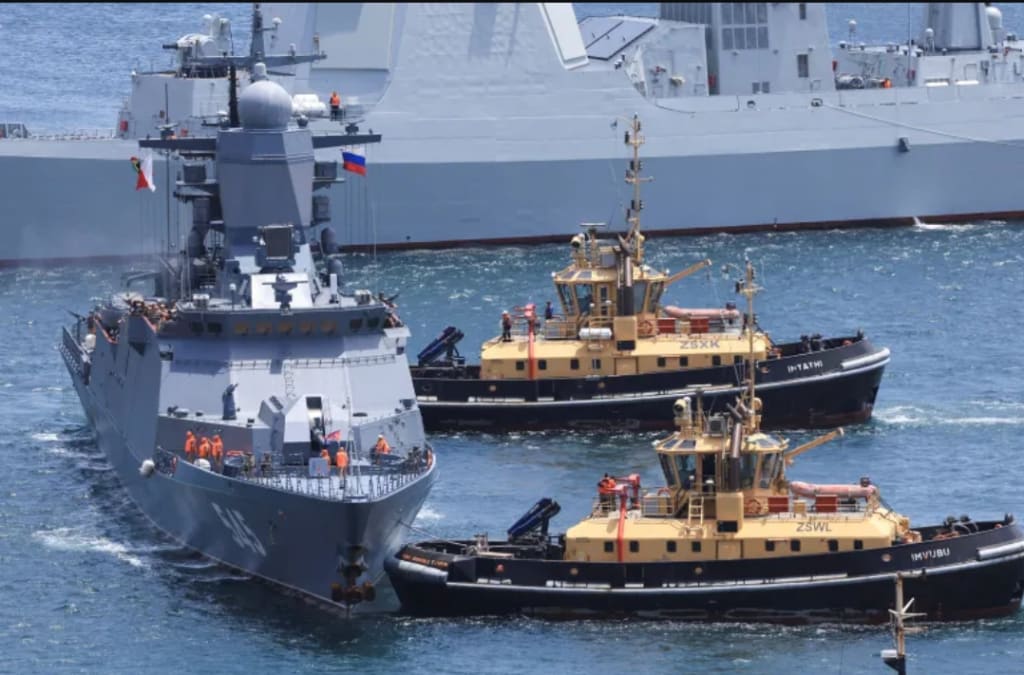
Recent BRICS joint military exercises, often described as wargames, have drawn global attention amid rising geopolitical tensions. As major powers like China, Russia, Iran, and South Africa deepen military cooperation, the absence of India, a founding BRICS member, has sparked debate among analysts and policymakers.
The wargames are more than routine drills — they reflect evolving alliances, strategic signaling, and diverging national interests within the BRICS bloc itself.
---
What Are the BRICS Wargames?
The BRICS wargames refer to joint military exercises conducted among some BRICS nations and aligned partners. These drills typically involve:
Naval maneuvers
Air defense coordination
Counterterrorism simulations
Cyber and electronic warfare components
While officially framed as defensive and cooperative, such exercises carry symbolic weight, especially when held amid global conflicts and heightened tensions between East and West.
Why the Wargames Matter
1. Strategic Signaling
The drills send a clear message that participating nations are willing to coordinate militarily outside Western-led alliances. This challenges the dominance of NATO and underscores the emergence of alternative power centers.
2. Strengthening Military Interoperability
Joint exercises allow forces to improve coordination, share tactics, and test command structures. For countries under sanctions or diplomatic pressure, this cooperation offers strategic reassurance.
3. Political Messaging
The wargames reinforce a narrative of resistance to Western influence, particularly at a time when sanctions, trade disputes, and regional conflicts are reshaping global alignments.
India’s Notable Absence
Despite being a key BRICS member, India opted out of the wargames, a decision rooted in strategic calculation rather than disengagement.
Balancing Act
India maintains a complex foreign policy that balances ties with:
The United States and its allies
Russia, a long-standing defense partner
Regional neighbors with competing interests
Participating in drills alongside China and Iran could complicate India’s broader diplomatic posture.
China Factor
India’s strained relationship with China, particularly after border clashes in recent years, plays a major role. Military participation alongside China could be seen domestically as politically sensitive and strategically risky.
India prefers to keep military cooperation compartmentalized, avoiding symbolic gestures that could dilute its security concerns.
India’s Strategic Autonomy
India has consistently emphasized strategic autonomy — the ability to make independent decisions without aligning fully with any bloc. Opting out of the wargames reinforces this principle.
Rather than joining multilateral military signaling, India focuses on:
Bilateral exercises with trusted partners
Indo-Pacific security initiatives
Defense modernization and self-reliance
This approach allows New Delhi to maintain flexibility in a volatile global environment.
Internal BRICS Divergence
The episode also highlights internal differences within BRICS. While the group promotes economic cooperation and multipolarity, members do not share a unified military vision.
Some countries see military coordination as a natural extension of political alignment, while others — like India — prefer to limit BRICS cooperation to economic and developmental areas.
Global Reactions and Implications
Western analysts view the wargames as part of a broader trend of non-Western military coordination, though not yet a formal alliance. At the same time, India’s absence reassures partners that BRICS is not evolving into a unified military bloc.
For regional security dynamics, the drills underscore:
Growing multipolar competition
Fragmented alliances
The rise of flexible, issue-based partnerships
What This Means Going Forward
The BRICS wargames illustrate how global power is no longer organized around rigid alliances but around selective cooperation. India’s decision to opt out reflects its desire to engage globally without being drawn into symbolic confrontations.
As BRICS continues to expand and redefine itself, differing national priorities will shape how far cooperation extends — especially in sensitive areas like defense.
Conclusion
The BRICS wargames matter because they reveal shifting geopolitical realities and emerging security partnerships beyond the Western orbit. However, India’s decision to stay out underscores that BRICS is not a monolithic bloc. Instead, it is a coalition of nations pursuing diverse interests under a shared economic banner. By opting out, India reaffirmed its commitment to strategic autonomy, signaling that cooperation does not require uniform alignment. As global tensions rise, such calculated distance may prove just as influential as participation.
About the Creator
Asad Ali
I'm Asad Ali, a passionate blogger with 3 years of experience creating engaging and informative content across various niches. I specialize in crafting SEO-friendly articles that drive traffic and deliver value to readers.
Parallel Protests
I haven't written for quite some time, but I have A LOT of thoughts about yesterday's protest rally against our government's involvement and complicity in America's war on Iran, on the harbourside of my home city Bristol, and I need to put them somewhere. My gorgeous girlfriend is always a loving and listening ear and sharing it all with her will always be a healthy and happy way of processing the mental and emotional weight, but getting it straight in my brain to share means writing it all down in straight lines, so, here we are and thanks for being here.
By Steph Cole6 days ago in The Swamp




Comments
There are no comments for this story
Be the first to respond and start the conversation.