politics
Politics does not dictate our collective cultural mindset as much as it simply reflects it; We've got to look in the mirror sometimes, and we've got one.
Hong Kong Greets 2026 Without Fireworks After Deadliest Blaze in Decades. AI-Generated.
As 2026 arrived, Hong Kong did something it rarely does — it looked up at a silent sky. No fireworks burst over Victoria Harbour. No thunderous cheers echoed across the waterfront. Instead, the city welcomed the New Year with lights, music, and a mood that was far more reflective than celebratory. The decision to cancel the iconic fireworks display followed one of the darkest tragedies Hong Kong has experienced in decades: a deadly residential fire that claimed more than 160 lives.
By Aqib Hussain29 days ago in The Swamp
“Hezbollah Must Be Disarmed”: Trump Signals Support for Action in Exclusive Message to Netanyahu. AI-Generated.
A new wave of geopolitical tension has emerged in the Middle East following reports that former U.S. President Donald Trump told Israeli Prime Minister Benjamin Netanyahu that he would back an attack on Hezbollah, emphasizing that the militant group “must be disarmed.” The exclusive statement has sparked intense debate among diplomats, analysts, and regional observers, raising concerns about escalation in an already volatile region.
By Ayesha Lashari29 days ago in The Swamp
Israel to Bar 37 Aid Groups as UK and EU Warn of Severe Impact in Gaza. AI-Generated.
Israel’s recent decision to bar 37 international aid organisations from operating in Gaza has raised alarms across the globe. The United Kingdom, the European Union, and multiple other countries have warned that this move could severely disrupt humanitarian efforts, leaving civilians in Gaza at greater risk. The ban, set to take effect in January 2026, comes amid new Israeli regulations requiring NGOs to meet strict transparency and security standards. According to Israeli authorities, the affected organisations failed to provide detailed information about their Palestinian staff and operations — a step the government says is necessary to ensure security. However, humanitarian groups and international critics argue that these requirements are excessive and arbitrary. They warn that halting operations of these NGOs could worsen an already dire humanitarian situation in Gaza. Why Israel Says the Ban Is Necessary Israeli officials insist that the new rules are a matter of national security. NGOs operating in Gaza must disclose detailed staff information and prove compliance with rigorous vetting processes. Authorities claim that failing to meet these standards threatens security and undermines oversight of aid operations. The 37 organisations affected include globally recognised NGOs such as Médecins Sans Frontières (Doctors Without Borders), Oxfam, World Vision International, CARE International, and the Norwegian Refugee Council. These groups provide essential services like healthcare, food, shelter, and water sanitation — services critical to millions of Gazans. Israeli authorities have stated that humanitarian assistance will continue through approved channels, including UN agencies and vetted partners. They argue that the barred groups account for a relatively small percentage of overall aid entering Gaza. Humanitarian Concerns and International Backlash The decision has drawn sharp criticism from the UK, EU, and other Western nations, who warn that removing these organisations will obstruct life-saving aid. EU humanitarian chief Hadja Lahbib emphasized that international humanitarian law demands assistance reach civilians, especially in conflict zones. The United Nations rights chief called the ban “arbitrary” and urged Israel to reconsider, saying the suspension will make “an already intolerable situation even worse.” Several foreign ministers, including from the UK, Canada, France, and Japan, echoed these concerns, highlighting the urgent need for food, medical care, and shelter in Gaza. The Risk for Civilians Gaza’s humanitarian situation remains fragile and precarious. Even before the ban, many hospitals operated at limited capacity, food and water supplies were insufficient, and winter storms destroyed temporary shelters. By removing 37 major aid organisations, critics say Israel risks creating dangerous gaps in essential services. Many local Gazans rely on these NGOs for survival, and UN agencies alone may struggle to fill the void. Without continued support, the region faces the potential for increased malnutrition, medical crises, and deteriorating living conditions. Data Protection and Safety Issues A major concern cited by several NGOs is the safety of their Palestinian staff. Sharing detailed personal data with the Israeli government could put employees at risk, especially in a politically sensitive environment. Doctors Without Borders and other organisations have publicly stated that they take staff safety seriously and rigorously screen employees to ensure no connections to militant groups. They continue negotiations to clarify misunderstandings and find ways to continue operations safely. What the International Community Is Doing Western governments, UN agencies, and civil society organisations are pressing Israel to allow predictable and unhindered humanitarian access. They stress that aid delivery should remain independent of political disputes and focused solely on protecting civilians. At the same time, Israel maintains that transparency and security compliance are essential to preventing misuse of aid and maintaining safety in conflict zones. This tension highlights the complexity of delivering humanitarian assistance in politically charged areas. Looking Ahead As the ban takes effect, Gaza’s humanitarian landscape faces new challenges. How international actors, aid organisations, and Israel respond in the coming months could determine whether relief efforts succeed or falter. The situation serves as a stark reminder of how political decisions directly affect the lives of civilians, and the importance of maintaining access to humanitarian aid in conflict zones. In 2026, the world will be watching closely as Gaza navigates these unprecedented restrictions, and whether diplomatic pressure can prevent a worsening crisis.
By Muhammad Hassan29 days ago in The Swamp
10 Conflicts to Watch in 2026. AI-Generated.
As global power shifts and geopolitical tensions rise, the year 2026 is shaping up to be a turning point for international relations. From long-running territorial disputes to emerging flashpoints driven by climate, politics, and technology, the world is entering a period of heightened uncertainty. Below are 10 major conflicts to watch in 2026, each with the potential to reshape regional stability and global politics. 1. Russia–Ukraine War: A Prolonged Struggle Despite years of fighting, the Russia–Ukraine conflict shows no clear end. As 2026 approaches, the war continues to reshape European security, global energy markets, and NATO’s role. Whether through escalation, stalemate, or fragile negotiations, the outcome will have lasting consequences for Europe and beyond. 2. Israel–Palestine Conflict The long-standing conflict between Israel and Palestine remains one of the most volatile in the world. Periodic escalations, humanitarian crises in Gaza, and regional involvement keep tensions high. In 2026, diplomatic efforts may intensify, but deep-rooted political and territorial disagreements continue to challenge peace. 3. Taiwan–China Tensions Taiwan sits at the center of growing geopolitical rivalry between China and the United States. Beijing’s insistence on reunification and increasing military pressure around the island raise fears of confrontation. Any escalation would have global economic consequences, particularly for the semiconductor industry. 4. South China Sea Disputes Several nations — including China, the Philippines, Vietnam, and Malaysia — claim parts of the South China Sea. With increased military patrols and strategic competition, 2026 could see rising tensions affecting global trade routes and regional stability. 5. Iran and the Middle East Power Struggle Iran’s regional influence, nuclear ambitions, and strained relations with Western nations continue to shape Middle Eastern geopolitics. Proxy conflicts in Syria, Yemen, and Iraq remain active, while tensions with Israel and Gulf states could escalate into broader confrontation. 6. North Korea and the Korean Peninsula North Korea’s ongoing missile tests and nuclear ambitions remain a serious concern. Diplomatic engagement has stalled, and the Korean Peninsula remains one of the world’s most militarized regions. In 2026, regional security will depend heavily on diplomacy involving South Korea, the U.S., China, and Japan. 7. Sudan’s Internal Conflict Sudan’s ongoing power struggle between rival military factions has triggered a devastating humanitarian crisis. As violence continues into 2026, international mediation efforts will be critical to prevent further regional instability across North and East Africa. 8. Sahel Region Instability Countries like Mali, Niger, and Burkina Faso face growing insecurity driven by militant groups, political instability, and climate stress. The Sahel’s fragile governments and shifting alliances make it one of the most unpredictable regions heading into 2026. 9. Armenia–Azerbaijan Tensions Despite ceasefire agreements, tensions between Armenia and Azerbaijan remain high following conflicts over Nagorno-Karabakh. Border incidents and political uncertainty keep the risk of renewed fighting alive, with implications for regional energy routes and diplomacy. 10. Venezuela’s Political and Economic Crisis Venezuela’s prolonged economic collapse and political standoff continue to fuel regional migration and instability. As elections and international negotiations evolve, 2026 may prove decisive in determining whether the country moves toward recovery or deeper crisis. Conclusion: A World at a Crossroads The conflicts shaping 2026 reflect a world navigating power shifts, climate stress, and unresolved historical tensions. While diplomacy remains the preferred path forward, rising nationalism and competition threaten global stability. Understanding these conflicts is essential for anticipating how international relations, economies, and humanitarian conditions may evolve in the years ahead. As the world becomes more interconnected, the consequences of regional conflicts increasingly ripple across borders — making global awareness more important than ever.
By Muhammad Hassan29 days ago in The Swamp
North Korea Reveals New Images of Its First ‘Nuclear‑Powered’ Submarine. AI-Generated.
North Korea has recently released striking new images showing what it claims is its first nuclear-powered strategic submarine — a development that could dramatically shift the country’s naval and nuclear capabilities. Published by the Korean Central News Agency (KCNA) late last week, the photos show a massive submarine hull under construction, accompanied by statements from Kim Jong Un, framing the vessel as a critical step in strengthening North Korea’s defense and deterrence.
By Aarif Lashari29 days ago in The Swamp
Russia-Ukraine War: List of Key Events, Day 1,407. AI-Generated.
As the Russia-Ukraine war reaches Day 1,407, the conflict shows no sign of resolution. What began as a full-scale invasion has evolved into one of the longest and most consequential wars in modern European history. Nearly four years in, the fighting continues across multiple fronts, diplomacy remains fragile, and civilians are still paying the highest price.
By Aqib Hussain29 days ago in The Swamp
Taiwan’s President Pledges to Defend Island’s Sovereignty After China’s Military Drills. AI-Generated.
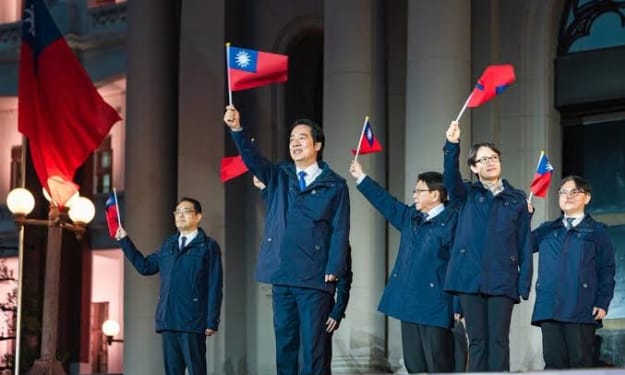
Taiwan finds itself at the center of global attention once again as President Tsai Ing-wen reaffirmed her commitment to defending the island’s sovereignty in the wake of extensive Chinese military drills in surrounding waters. The maneuvers, which involved dozens of warships, fighter jets, and missile tests, were framed by Beijing as “routine exercises,” but Taiwan and international observers see them as a direct demonstration of China’s intent and growing military pressure. For Tsai Ing-wen, the drills are not merely a regional concern—they represent a challenge to Taiwan’s very identity and autonomy. In a televised statement, she emphasized that Taiwan will “never yield to intimidation” and vowed to “protect our democratic way of life at all costs.” Her words resonated with both domestic and international audiences, highlighting the island’s determination to resist external coercion. The recent drills come amid rising tensions in the Taiwan Strait. Over the past few years, China has increasingly demonstrated its capacity to project military power near Taiwan, conducting air incursions and naval patrols that have unsettled the region. Analysts warn that these exercises are not isolated incidents but part of a broader strategy to pressure Taiwan politically and militarily, testing both the island’s defenses and the international community’s resolve. Taiwan, though smaller in size compared to its neighbor, has invested heavily in defense technology and strategic planning. Its military emphasizes rapid response, asymmetric warfare capabilities, and the ability to defend key locations despite numerical disadvantages. The island’s air defense systems, coastal missile batteries, and naval forces are all geared toward deterring aggression and ensuring that any potential attack would come at a significant cost to an aggressor. President Tsai’s recent pledge underscores the importance of national morale during these periods of heightened tension. She noted that the people of Taiwan have “demonstrated resilience and unity” in the face of past threats, and she called on citizens to remain vigilant without succumbing to fear. In practical terms, the administration has accelerated military readiness exercises, coordinated with international partners, and maintained clear communication lines for crisis management. Internationally, reactions have been mixed but largely supportive of Taiwan’s position. The United States, Japan, and several European nations have expressed concern over China’s aggressive military posturing, affirming support for a peaceful resolution and respect for Taiwan’s de facto autonomy. Washington, in particular, continues to provide defensive equipment and intelligence support, signaling that any attack on Taiwan could have broader geopolitical repercussions. China, for its part, maintains that Taiwan is an inseparable part of its territory and views foreign support for the island as interference in its internal affairs. Chinese officials insist that military exercises are “defensive” in nature, intended to simulate scenarios that could arise from external threats or separatist movements. Yet, analysts argue that these drills are as much political signaling as they are military training, sending a message to both Taiwan and international stakeholders about Beijing’s strategic priorities. Taiwanese society, meanwhile, balances apprehension with determination. Citizens are aware of the geopolitical stakes, but there is a prevailing sense of resilience, often described as the “Taiwanese spirit.” Schools, businesses, and local governments have prepared contingency measures for emergencies, while public awareness campaigns educate residents on safety and preparedness without causing panic. The significance of President Tsai’s pledge extends beyond immediate military concerns. It is a reaffirmation of Taiwan’s democratic principles in contrast to the authoritarian governance model of mainland China. For many in Taiwan, sovereignty is intertwined not just with national defense but with the preservation of freedoms, rule of law, and civil liberties that define daily life on the island. As tensions persist, experts suggest that the coming months will be critical. Diplomatic efforts, international pressure, and strategic deterrence will all play a role in shaping the region’s stability. Taiwan’s approach—firm yet measured, resilient yet diplomatic—illustrates the delicate balance of asserting sovereignty while avoiding unnecessary escalation. In conclusion, Taiwan faces a precarious geopolitical environment as Chinese military drills test both its defensive capabilities and its international support. President Tsai Ing-wen’s declaration to defend the island’s sovereignty is more than a political statement—it is a signal to the world that Taiwan remains committed to its democratic identity and its right to self-determination. While the threat of conflict lingers, Taiwan’s leadership and citizens alike demonstrate a resolve that may ultimately define the island’s future in the global order.
By Fiaz Ahmed Brohi29 days ago in The Swamp
Singapore Airlines’ New Business Class Could Debut on This Flagship Route in 2026. AI-Generated.
Singapore Airlines, long regarded as a benchmark for luxury and service in the aviation industry, is poised to revolutionize the business travel experience once again. Reports indicate that the airline’s new business class cabin—featuring cutting-edge design, advanced comfort, and personalized service—could debut on its flagship route in 2026, marking a significant step in premium air travel.
By Fiaz Ahmed Brohi29 days ago in The Swamp
Annual Channel Migrant Crossings Highest Since 2022. AI-Generated.
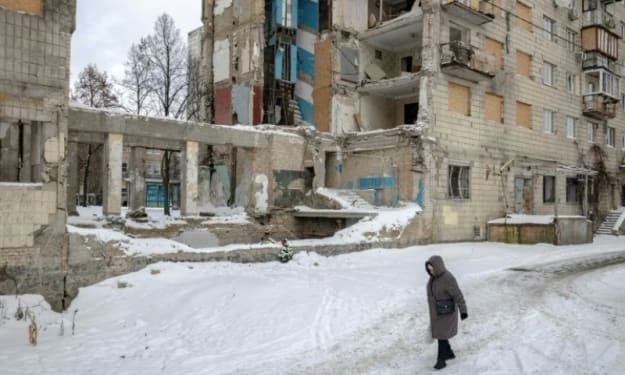
As fireworks lit up skylines across the globe welcoming 2026, many countries celebrated with joy and anticipation. But in Ukraine, the New Year arrived under the shadow of war. For Ukrainian soldiers stationed along the frontlines, the festivities were muted, the crackle of celebratory fireworks often indistinguishable from distant artillery fire. After more than three years of relentless conflict with Russian forces, there is little cause for optimism. Many troops openly question whether this New Year will mark the last spent in active combat. The Ukraine war, now in its 1,400th day, continues to strain not just military resources but the morale of those defending the nation. While international media focus on diplomatic talks and potential peace deals, the reality on the ground remains stark. Ukrainian soldiers face a daily struggle: unpredictable shelling, supply shortages, harsh winter conditions, and the psychological toll of sustained combat. Despite occasional successes in retaking occupied territories, the persistence of Russian offensives means the line of control remains fluid and fragile. Captain Oleksandr Moroz, a platoon leader in eastern Ukraine, expressed the mindset shared by many of his comrades. "We’ve learned not to hope too much," he said. "Every time we think a ceasefire is near, new attacks remind us that the war isn’t ending anytime soon." Moroz’s words echo the sentiments of countless troops who have grown weary yet remain committed to defending their homeland. The human cost is immense. Thousands of Ukrainian soldiers have been killed or injured, and the psychological strain is compounded by the uncertainty of the future. Military psychologists note that prolonged exposure to conflict often leads to heightened stress, depression, and even post-traumatic stress disorder. Yet, for many, patriotism and duty continue to drive them forward. Small gestures—letters from family, occasional gifts from civilians, and the support of fellow soldiers—help sustain morale even amid adversity. Ukraine’s civilian population has also adapted to this prolonged state of war. Cities near the frontlines operate under strict curfews, shelters are reinforced, and evacuation plans are regularly updated. The New Year, which once symbolized hope and renewal, has become a reminder of the resilience required to endure ongoing hostilities. Despite this, local communities continue to celebrate in whatever ways they can—lighting candles, singing carols, or sharing simple meals with loved ones. These acts are not just traditions but forms of resistance, a refusal to allow war to erase the fabric of daily life. Internationally, there is cautious attention to Ukraine’s evolving strategies and potential diplomatic resolutions. Several European nations, alongside the United States, continue to supply weapons, intelligence, and financial support. Yet, peace remains elusive. Analysts argue that both sides are entrenched, and territorial concessions are politically challenging. This stalemate has left Ukrainian troops with a sobering reality: even with global attention, the frontlines may see little immediate change. Moreover, winter conditions present another layer of complexity. Snow, freezing temperatures, and icy terrain impede mobility, supply lines, and defensive operations. Soldiers report that while technology and surveillance aid in anticipating enemy movements, nature itself is a formidable opponent. The bitter cold magnifies fatigue, complicates medical treatment, and strains logistical support. Yet, Ukrainian forces continue to hold key positions, adapting to both environmental and military challenges. For many soldiers, the New Year is not marked by celebration but reflection. It is a time to consider fallen comrades, reassess strategies, and summon the inner strength to endure months ahead. Letters from family members, phone calls, and messages of support from citizens across Ukraine serve as a lifeline. They remind troops that their sacrifices are not in vain and that a nation looks to them for protection. Looking forward, there is cautious optimism that Ukraine’s resilience, combined with international backing, may eventually tilt the balance. Yet, for those on the frontlines, the war remains a persistent, grinding reality. As Ukrainian troops welcomed 2026, few believed it would be the final New Year at war. Instead, they brace for continued uncertainty, holding fast to the hope that perseverance and unity might one day bring peace. In a world where celebrations often overshadow struggle, Ukraine’s troops exemplify quiet heroism. Their experience is a stark reminder that not all New Year’s Eve fireworks symbolize joy—sometimes, they illuminate the stark contrast between hope and hardship. For now, the sound of distant artillery mingles with celebrations elsewhere, a poignant testament to a nation still fighting for its future.
By Fiaz Ahmed Brohi29 days ago in The Swamp
Will Saudi Arabia Succeed in Turning Its Vast Desert Landscape Green by Planting 10 Billion Trees?. AI-Generated.
Saudi Arabia, a nation synonymous with sweeping deserts and arid landscapes, has launched one of the most ambitious environmental projects in modern history: planting 10 billion trees across its territory. This initiative, part of the broader Saudi Green Initiative, aims to combat climate change, reduce carbon emissions, and create a more sustainable environment. But as the kingdom embarks on this colossal task, experts are questioning the feasibility of turning deserts into thriving green spaces. The Vision Behind the Project The Saudi Green Initiative, announced in 2021, is a cornerstone of the nation’s environmental strategy. Its goals are ambitious: reduce carbon emissions by more than 4 percent of global levels, restore degraded lands, and plant billions of trees by 2030. The 10-billion-tree plan specifically targets desert regions, urban areas, and degraded land, aiming to increase greenery and biodiversity while mitigating the effects of climate change. Prince Abdulaziz bin Salman, Saudi Arabia’s Minister of Energy, emphasized, “Planting trees is not just about beautification; it is a strategic move to reduce carbon, conserve water, and restore ecosystems in one of the harshest climates on Earth.” The Challenges of Desert Afforestation While the goal is inspiring, the task is daunting. Saudi Arabia’s desert landscape poses unique challenges for tree planting: Extreme Temperatures: The desert experiences scorching heat during the day and cold nights. Most traditional tree species struggle to survive in such extreme conditions. Scarce Water Supply: Trees need water to survive, and Saudi Arabia relies heavily on desalinated water and underground aquifers. Large-scale irrigation could strain already limited water resources. Soil Quality: Desert soils are often sandy and lack the nutrients necessary for most plants, requiring soil enrichment or innovative planting techniques. To overcome these obstacles, Saudi Arabia is exploring drought-resistant species and innovative irrigation techniques, such as drip irrigation and hydroponic methods, which minimize water usage while maximizing survival rates. Lessons from Global Green Projects Saudi Arabia is not alone in its ambition to green deserts. Similar projects around the world provide both inspiration and cautionary tales: China’s “Great Green Wall”: China has planted billions of trees to combat desertification in the Gobi Desert. While some areas saw success, others experienced high tree mortality due to unsuitable species and water shortages. Africa’s Great Green Wall: African nations aim to restore 100 million hectares of degraded land. While progress has been made, experts note that long-term success depends on community involvement, proper maintenance, and sustainable water management. These examples highlight a crucial point: planting trees is only the first step. Maintenance, irrigation, and ecological planning are essential to ensure that planted trees survive and thrive. Potential Environmental and Economic Benefits If successful, Saudi Arabia’s project could yield enormous environmental benefits: Carbon Sequestration: Trees absorb CO2, which could help the kingdom reduce its carbon footprint and combat global warming. Temperature Regulation: Green spaces can moderate local temperatures, reducing urban heat islands and making cities more livable. Biodiversity: Afforestation can create habitats for native species, enhancing ecological balance in arid regions. Economically, the project could generate employment in tree planting, irrigation, and environmental management, while also promoting tourism in newly green areas. Furthermore, it may enhance Saudi Arabia’s global image as a leader in environmental innovation and sustainability. Criticism and Skepticism Despite its promise, the initiative has faced criticism. Environmentalists caution that 10 billion trees in a desert may be more symbolic than practical, emphasizing that survival rates may be low without consistent water and soil management. Critics also warn that focusing solely on tree planting could divert attention from other crucial climate solutions, such as renewable energy expansion and reducing fossil fuel dependence. Moreover, some experts argue that indigenous plants and native species may be better suited to thrive in desert conditions than imported tree species. Successful desert greening often requires a mix of native flora, soil restoration, and water-efficient technology rather than large-scale monoculture planting. The Road Ahead Saudi Arabia’s ambitious plan reflects a bold vision for a greener future. However, turning deserts into forests is not simply a matter of planting billions of trees—it requires long-term planning, scientific research, and careful resource management. Success will depend on factors such as: Selecting species that can survive in arid climates Developing sustainable water solutions Engaging local communities in maintenance Integrating ecological and economic planning If these elements align, Saudi Arabia could set a precedent for desert afforestation worldwide. If not, the project may become a cautionary tale of ambition colliding with environmental realities. Conclusion Saudi Arabia’s plan to plant 10 billion trees is a monumental undertaking, reflecting both the urgency of climate action and the kingdom’s aspiration to transform its environment. While challenges are significant—extreme heat, water scarcity, and harsh soil conditions—the potential benefits of a greener Saudi Arabia are enormous, from carbon reduction to biodiversity restoration. The initiative’s success will not be measured simply by the number of trees planted but by the resilience, sustainability, and ecological impact of those trees in the years to come. Whether Saudi Arabia can turn its deserts green remains uncertain, but the effort marks a historic attempt at large-scale environmental transformation, one that could inspire similar projects across the world.
By Fiaz Ahmed Brohi29 days ago in The Swamp
Ten Years After Ending Its ‘One-Child’ Policy, China’s Push for More Babies Isn’t Winning Citizens Over. AI-Generated.
A decade has passed since China officially ended its controversial one-child policy, a strict measure that shaped generations and restricted families from having more than one child. In 2016, authorities announced the two-child policy, and more recently, even relaxed restrictions to allow three children per family. Yet, despite these efforts, the nation’s population growth continues to falter, as citizens remain reluctant to expand their families. The Legacy of the One-Child Policy China’s one-child policy, introduced in 1979, was aimed at curbing rapid population growth that threatened economic stability and environmental sustainability. While it succeeded in slowing population expansion, it created deep societal effects. Many urban couples today, shaped by decades of state-imposed family planning, have internalized small-family norms. Even after policy relaxations, the psychological and financial habits formed over a generation are hard to undo. The mindset of limiting family size has persisted, with many young couples preferring one child—or sometimes none—despite government encouragement. Incentives Aren’t Enough The Chinese government has introduced a range of incentives to boost fertility, including extended maternity leave, subsidies for childcare, tax deductions, and housing benefits. Some cities have gone further, offering cash rewards or monthly allowances for families who have more children. However, these measures are struggling to achieve the desired effect. Urban couples cite soaring living costs, expensive education, and competitive job markets as significant barriers to having more children. Housing prices in major cities like Beijing and Shanghai make it financially daunting for families to accommodate additional children. The rising costs of healthcare and early education further reinforce the reluctance to expand families. Zhang Wei, a 32-year-old software engineer in Shanghai, says, “Even with government incentives, it’s not just money. It’s time, energy, and work pressure. Raising a child here is exhausting. Two seems impossible for most young couples.” Changing Social Attitudes Beyond economics, social and cultural attitudes are shifting. Many young Chinese adults prioritize career growth, personal freedom, and lifestyle choices over starting large families. Delayed marriages and later childbirth are becoming common, further reducing fertility rates. Research indicates that the ideal family size among Chinese urban couples is just one child. This preference reflects long-term adaptation to the one-child policy and broader global trends where urbanization and modern lifestyles correlate with smaller family sizes. Women’s empowerment also plays a role. More women are pursuing higher education and professional ambitions, often postponing childbearing or choosing fewer children. While policies aim to reduce the burden of parenting, entrenched societal norms and workplace pressures continue to influence personal decisions. Demographic and Economic Consequences China’s declining birth rate has significant implications for the country’s future. A shrinking workforce threatens economic growth, reduces consumer demand, and places greater strain on social security systems. The aging population is growing faster than the younger generation, creating an imbalance that could challenge healthcare systems and pension schemes. The National Bureau of Statistics reported a record low in births in 2023, signaling that policy adjustments alone may be insufficient. Economists warn that without addressing structural issues—such as cost of living, childcare, and workplace flexibility—China’s demographic crisis may continue. Lessons from Other Countries China is not alone in facing declining fertility. South Korea, Japan, and many European nations have struggled to increase birth rates despite generous incentives. The experience shows that financial support alone cannot reverse deeply ingrained social and economic pressures. Comprehensive measures, including cultural shifts, gender equality in parenting, and work-life balance, are essential. Government Response and Challenges Ahead In response to the persistent low fertility, Chinese authorities are expanding family-friendly policies and promoting societal campaigns emphasizing the value of children. Yet, experts suggest that reversing decades of population control will be an uphill battle. Long-term cultural change, coupled with structural reforms in housing, healthcare, and workplace practices, will be necessary to persuade citizens to have larger families. Political analyst Li Hong argues, “The government can’t force fertility. Incentives help, but unless society addresses the real challenges—economic pressures, career demands, urban living costs—birth rates will remain low. It’s a multifaceted problem requiring patience and creativity.” Conclusion Ten years after ending its one-child policy, China faces a critical demographic dilemma. Despite policy relaxations and financial incentives, citizens are not convinced to have more children. The combination of economic pressures, modern lifestyles, and long-standing cultural norms has created a population landscape resistant to change. China’s efforts highlight the complex interplay between government policy, social attitudes, and personal choices. As the nation grapples with an aging population and slowing workforce growth, policymakers may need to think beyond incentives, addressing the structural and cultural factors that truly influence family decisions. Only a holistic approach, balancing economic, social, and personal considerations, may eventually lead to a meaningful increase in fertility.
By Fiaz Ahmed Brohi29 days ago in The Swamp