The Insight Ledger
Bio
Writing about what moves us, breaks us, and makes us human — psychology, love, fear, and the endless maze of thought.
Stories (47)
Filter by community
The Voynich Manuscript: The World’s Most Unbreakable Code
Some mysteries refuse to age. No matter how advanced our technology becomes, they sit quietly in the corner of history, watching generations of experts fail one after another. The Voynich Manuscript is one of those rare puzzles—a book so strange, so stubbornly unreadable, that it has humbled medieval scholars, World War II cryptographers, and modern artificial intelligence alike. At first glance, it looks like a medieval manuscript: yellowed parchment, hand-drawn illustrations, flowing text written with care. But the moment you try to read it, the illusion collapses. The language doesn’t exist. The alphabet doesn’t match anything known. And despite more than a century of serious study, no one can say with certainty what this book actually says—or why it was written at all. A Book Without a Language The Voynich Manuscript dates back to the early 15th century, confirmed by carbon dating of the parchment. Its pages are filled with an unknown script—consistent, structured, and clearly intentional. This isn’t random scribbling. Words repeat. Sentences flow. Patterns emerge. Yet no known language fits. Not Latin. Not Arabic. Not Hebrew. Not any European or Asian system. Linguists have tried to map it. Cryptographers have tried to crack it. Computer scientists have fed it to algorithms. Every approach hits the same wall: the text behaves like a real language, but refuses to translate like one. That contradiction is what makes the manuscript so fascinating to geeks. It sits perfectly between order and chaos—structured enough to be meaningful, alien enough to resist decoding. Illustrations That Deepen the Mystery If the text alone wasn’t strange enough, the illustrations raise even more questions. The manuscript is divided into sections that appear to focus on different themes: Botanical drawings of plants that don’t exist Astronomical charts with unfamiliar symbols Zodiac-like diagrams that don’t match known astrology Naked human figures—mostly women—bathing in interconnected pools and tubes Some pages look scientific. Others feel symbolic, even surreal. Modern eyes see echoes of biology, alchemy, herbal medicine, and early astronomy—but nothing lines up cleanly with known medieval knowledge. It’s as if the book comes from a parallel intellectual tradition that never made it into recorded history. The Ultimate Challenge for Codebreakers The Voynich Manuscript didn’t just confuse historians—it defeated some of the greatest minds in cryptography. During World War II, elite codebreakers who successfully cracked enemy ciphers—including those used by Nazi Germany—took a shot at the manuscript. They failed. Completely. Later, Cold War cryptographers tried again. Same result. In recent years, researchers turned to AI and machine learning, hoping pattern recognition and statistical models could finally unlock the text. While computers identified linguistic-like structures, they couldn’t translate meaning. The manuscript remains stubbornly silent. For the Geeks community, this is irresistible. A problem that survives brute-force computing, neural networks, and centuries of human intelligence feels almost illegal. Hoax, Cipher, or Lost Knowledge? Naturally, theories exploded. Some argue the manuscript is an elaborate hoax—a meaningless text designed to look complex. But this theory struggles to explain the internal consistency of the language. Creating such a detailed fake would require immense effort with no clear payoff, especially in the 1400s. Others believe it’s a cipher, encoding a real language through a complex substitution system. The problem? No known cipher from that era behaves like this one. Then there are the more speculative ideas: A lost scientific tradition A private language invented by a single mind An early attempt at universal knowledge Even theories involving extraterrestrial influence Science remains cautious. None of these explanations fully fit the evidence. Why the Mystery Still Matters The Voynich Manuscript isn’t just an old book—it’s a stress test for human understanding. It challenges assumptions about language, communication, and knowledge preservation. It reminds us that intelligence doesn’t always travel straight lines through history. Entire systems of thought can emerge—and disappear—without leaving context behind. For technologists and sci-fi fans, it raises unsettling questions: What if advanced knowledge existed, but we lost the key to read it? What if future civilizations find our data, but can’t decode it? Is meaning dependent on technology—or shared culture? A Puzzle That Refuses to Die Today, the Voynich Manuscript sits safely in Yale University’s library, digitized and freely available. Anyone with curiosity, coding skills, or imagination can take a crack at it. So far, no one has won. And that may be its greatest power. In an age where information feels instantly solvable, the Voynich Manuscript stands as a reminder that some puzzles don’t care how smart we think we are. Six hundred years later, it still doesn’t speak. And that silence is exactly why we can’t stop listening.
By The Insight Ledger 2 months ago in Geeks
Divisive Rhetoric Reloaded: Inside Trump’s Bold Midterm Bet
Donald Trump’s latest midterm strategy does not whisper. It shouts. It doesn’t arrive dressed in policy white papers or carefully hedged language aimed at consensus-building. Instead, it storms into the political arena with familiar tools: volume, confrontation, and an unmistakable sense of grievance. From rally stages to social media feeds, the message is relentless—America is under threat, enemies are everywhere, and only unwavering loyalty can hold the line.
By The Insight Ledger 2 months ago in The Swamp
Trump’s Shocking Endorsement: How Anti-Muslim Views Slipped Into the Mainstream
American politics has never been short on controversy, but every so often a moment arrives that feels heavier than the usual cycle of outrage. Donald Trump’s recent endorsement of a candidate known for openly anti-Muslim rhetoric was one of those moments. It wasn’t just another tactical move in a crowded political chessboard. It landed as a signal—clear, public, and impossible to ignore—about which voices are acceptable, which fears are worth amplifying, and which communities are once again expected to absorb the fallout. For many Muslims in the United States and beyond, the endorsement felt deeply personal. It didn’t read like an abstract policy disagreement or a debate over national security. It felt like a reminder that their faith, identity, and citizenship can still be treated as negotiable in the pursuit of votes. In a country that prides itself on religious freedom, the moment cut sharply: belonging, it seemed, was being put up for debate again. Why This Endorsement Hit So Hard Endorsements happen all the time. Politicians support allies, reward loyalty, and energize their base. What made this endorsement different wasn’t just the candidate’s history—it was the context. The political environment is already tense, polarized, and emotionally charged. Elections are approaching, global conflicts are inflaming sectarian narratives, and social media ensures every statement travels at the speed of outrage. In that climate, amplifying a figure associated with blanket anti-Muslim claims felt less like oversight and more like intention. Supporters defended the move as “free speech” or “tough talk on security.” Critics saw something else entirely: a calculated decision to legitimize rhetoric that paints Muslims as a monolithic threat rather than a diverse community of citizens. When such rhetoric is elevated by a former president—and a dominant figure in national politics—the line between fringe prejudice and mainstream discourse begins to blur. When Dog Whistles Become Megaphones Anti-Muslim sentiment in Western politics isn’t new. For years, it lived behind euphemisms—phrases about “integration,” “values,” or “security risks” that hinted at suspicion without naming it directly. Everyone understood what was being implied, even if it wasn’t said aloud. This endorsement stripped away much of that ambiguity. The candidate in question didn’t rely on coded language. Their record included sweeping generalizations, dehumanizing stereotypes, and claims that treated Muslims as a single, dangerous bloc. When a national leader amplifies that voice, the message changes. What was once whispered at the margins is suddenly spoken into a microphone. That shift matters. History shows that prejudice doesn’t need majority support to cause harm; it needs permission. When powerful figures appear to grant that permission, social barriers erode. Language hardens. Behavior follows. From Rhetoric to Real-World Consequences Words don’t exist in a vacuum. Political rhetoric shapes social norms, and social norms shape behavior. When Muslims are repeatedly framed as “other,” suspicion becomes easier to justify. Policies that disproportionately affect them—enhanced surveillance, travel restrictions, selective enforcement—become more palatable to the public. Discrimination doesn’t always announce itself loudly; often it creeps in quietly, normalized by repetition. Beyond policy, there are everyday consequences. Spikes in hate crimes often track with moments of heightened anti-Muslim rhetoric. Children face bullying at school. Adults face hostility at work. Ordinary acts—wearing religious clothing, speaking a different language, having a Muslim name—can suddenly feel risky. For those living this reality, the endorsement wasn’t theoretical. It was a reminder that political theater can spill directly into daily life. Inside the Muslim Community: Fear, Fatigue, and Determination Reactions within the Muslim community were complex and deeply human. There was anger—at being singled out yet again. There was exhaustion—from constantly having to explain that terrorism and extremism are not Islam, that Muslims are not a single ideology, and that millions of Muslim Americans contribute to society every day without incident. There was fear—especially among parents worried about their children’s safety and sense of belonging. But there was also resolve. Over the years, Muslim communities in the U.S. have grown more organized, more legally savvy, and more politically engaged. Advocacy groups, civil rights organizations, lawyers, journalists, and grassroots activists have built networks designed to respond quickly when rhetoric turns hostile. In many ways, moments like this sharpen that resolve. When silence feels dangerous, visibility becomes a form of protection. For every headline fueled by prejudice, there are efforts underway to challenge it—in courts, at ballot boxes, and in public discourse. Why This Is Bigger Than One Community It’s tempting to frame this controversy as a “Muslim issue.” That framing misses the point. When a society becomes comfortable with vilifying one religious group for political gain, it sets a precedent. The logic doesn’t stop with Muslims. It can be redirected toward any group that becomes politically convenient to target—Jews, Christians, Sikhs, Hindus, atheists, immigrants, or others who fall outside an imagined norm. Democracy relies not only on laws and elections but on unwritten agreements: that citizenship isn’t conditional, that rights aren’t selective, and that losing political power doesn’t mean losing basic dignity. When leaders undermine those agreements, they weaken the system for everyone. History offers plenty of warnings about where this path can lead. What begins as rhetoric can harden into policy. What starts as “just politics” can evolve into structural exclusion. The Role of Media and Amplification Media plays a crucial role in moments like this—not just in reporting events, but in framing them. Sensational coverage can amplify the most extreme voices, turning outrage into entertainment. Social media accelerates this effect, rewarding inflammatory content with attention and reach. In that environment, nuance struggles to survive. Yet media also has the power to contextualize, to challenge false narratives, and to center the voices of those affected rather than those provoking outrage. Whether it rises to that responsibility shapes how quickly harmful ideas spread—or how effectively they’re resisted. What Ordinary People Can Do When politics feels this ugly, it’s easy to feel powerless. But ordinary actions matter more than they appear. Refusing to normalize dehumanizing language is a start. Pushing back—calmly, clearly—when friends or colleagues repeat harmful narratives disrupts their spread. Listening to Muslims and other minorities about how rhetoric affects their lives matters more than debating abstract principles. Civic engagement matters too. Voting, supporting civil rights organizations, and paying attention to local politics all shape the environment leaders operate in. Endorsements carry weight because they assume public tolerance. Challenging that assumption changes the calculation. Even small acts—solidarity, empathy, everyday kindness—send a counter-signal. They remind targeted communities that they are not alone, and they remind opportunistic politicians that division has limits. A Moment That Will Be Remembered This endorsement will be remembered not just for what it said, but for what it revealed. It exposed how easily fear can be repackaged as policy talk. It showed how quickly fringe ideas can gain legitimacy when power amplifies them. And it forced a reckoning—for Muslims, for allies, and for anyone who believes that citizenship should not depend on faith. History rarely judges societies solely by their leaders’ words. It judges them by how people respond when those words test the boundaries of decency. In that sense, this moment is still unfolding. The final chapter won’t be written by endorsements alone, but by whether citizens accept a shrinking definition of belonging—or insist on a broader one that reflects the country’s reality. In the end, no endorsement, however shocking, can fully define a nation. That power rests with the people who decide whether prejudice gets applause—or resistance.
By The Insight Ledger 2 months ago in The Swamp
Opendoor’s Sudden 25% Surge: A Real Opportunity or a Familiar Trap?
In a market where most stocks grind forward inch by inch, a sudden 25% jump grabs attention. That’s exactly what happened with Opendoor Technologies (NASDAQ: OPEN), a company many investors had quietly written off after years of volatility, losses, and broken promises. In a single trading session, Opendoor shares surged dramatically, climbing from deeply depressed levels to around $2.50. Trading volume spiked far above average, lighting up retail trading forums, financial Twitter, and speculative investor circles. For some, it looked like the beginning of a long-awaited comeback. For others, it felt uncomfortably similar to rallies that fizzled just as fast in the past. The question now is simple but critical: Is this the early stage of a genuine turnaround—or just another short-lived bounce in a difficult business model? Understanding What Opendoor Actually Does Opendoor operates in the iBuying space—short for “instant buying.” Instead of listing a home traditionally, sellers can receive an algorithm-generated cash offer within days, skip showings, and close quickly. Opendoor then renovates the home, relists it, and attempts to sell it for a profit. At its best, the model promises speed, certainty, and convenience in an industry often criticized for inefficiency. At its worst, it exposes the company to massive capital risk, housing market cycles, and razor-thin margins. Opendoor has lived through both extremes. During the pandemic housing boom, the company expanded aggressively, buying homes at scale as prices surged. When interest rates rose sharply in 2022 and demand cooled, Opendoor was left holding expensive inventory that quickly lost value. Losses ballooned, cash burned fast, and confidence evaporated. By early 2025, the stock was trading near penny-stock territory, with many investors assuming the iBuying dream had failed. Why the Market Suddenly Paid Attention Again The recent rally didn’t come from nowhere. Several factors aligned at once. First, expectations around interest rates shifted. As inflation cooled and economic data softened, markets began pricing in the possibility of rate cuts. Lower mortgage rates don’t just help buyers—they directly impact housing liquidity. For a company like Opendoor, even modest improvements in transaction volume can significantly change the outlook. Second, Opendoor’s operational metrics showed signs of stabilization. Inventory turnover improved, pricing accuracy increased, and losses narrowed compared to the worst quarters of 2022–2023. The company became more selective about purchases, reduced exposure to volatile markets, and leaned heavily on data to manage risk. Third, short interest remained elevated. With many traders betting against the stock, any positive catalyst had the potential to trigger a short squeeze. When volume surged, those short positions were forced to cover, amplifying the upward move. Finally, sentiment shifted. Investors began reconsidering whether Opendoor had quietly survived the worst and emerged leaner, smarter, and better positioned for a more balanced housing environment. The Technology Advantage—Real or Overstated? Opendoor’s core claim has always been that data and automation can outperform human judgment in residential real estate. Over time, the company has accumulated data from more than 150,000 home transactions across dozens of U.S. markets. That dataset feeds machine-learning models that estimate fair value, renovation costs, resale timelines, and demand patterns with increasing precision. Recent disclosures suggest pricing accuracy has improved substantially compared to earlier years, reducing the risk of catastrophic overpayment. Operational improvements—such as faster inspections, standardized renovations, and tighter resale windows—have also helped control costs. The company is no longer chasing growth at any price; instead, it appears focused on survival and discipline. Whether that’s enough to generate sustainable profits remains an open question—but it’s a meaningful change from past behavior.
By The Insight Ledger 2 months ago in Journal
Behind the Avatar
At first glance, the VTuber world looks like pure escapism. Bright anime avatars smile endlessly on screen. Voices laugh, whisper, scream, and sing. Millions of viewers gather nightly to watch virtual idols play games, talk about life, or simply exist together in a shared digital space. It feels light, harmless—almost unreal. But in 2025, the illusion cracked. What happened behind the scenes of one of the industry’s most beloved agencies revealed something uncomfortable: behind every avatar is a real human being, and behind every smiling brand is a system that can fail—quietly, expensively, and painfully. At the center of this reckoning stood Ironmouse. A Digital Star Built on Something Real Ironmouse was never just another VTuber. Long before she broke Twitch records, before subathons became headlines, before agencies chased her name, she was an independent creator streaming from her bedroom. Her demon-girl avatar was playful, chaotic, and mischievous—but her voice carried honesty. She openly spoke about her lifelong battle with common variable immunodeficiency (CVID), a condition that severely weakens the immune system and keeps her largely homebound. For viewers, that honesty mattered. They weren’t just watching content. They were supporting a person. Over time, Ironmouse became one of the most recognizable faces—ironically—of virtual entertainment. Her streams blended humor, vulnerability, exhaustion, joy, and resilience. Fans didn’t call themselves an audience. They called themselves family. When VShojo launched in 2020, Ironmouse wasn’t just signed. She was a co-founder. VShojo: The Agency That Promised Something Different At the time, VShojo represented a radical idea. Unlike Japanese agencies with strict contracts and tight control, VShojo marketed itself as “creator-first.” No exclusivity. Freedom to collaborate. Ownership over personal brands. It attracted independent VTubers who wanted support without surrendering control. For years, the model seemed to work. VShojo talents grew rapidly. Merchandise sold globally. Brand deals followed. Ironmouse, in particular, became the agency’s crown jewel—breaking Twitch’s all-time subscription record during her 2024 subathon, pulling in hundreds of thousands of paying supporters. A significant portion of that money wasn’t even for her. It was for charity. When Charity Money Doesn’t Arrive Ironmouse’s subathons weren’t only entertainment events. They were fundraisers—especially for the Immune Deficiency Foundation (IDF), an organization directly tied to her survival. Fans donated generously, trusting that their money would go where it was promised. That trust was sacred. Then, quietly, something went wrong. Months passed. Then more months. According to Ironmouse, the charity funds—over half a million dollars from one event alone—were never delivered. At the same time, her own earnings were delayed or missing. She raised concerns privately. She waited. She believed explanations. Nothing changed. In late July 2025, she finally spoke publicly. The Video That Changed Everything When Ironmouse uploaded “Why I Left VShojo,” it didn’t feel like drama content. It felt like exhaustion. She didn’t accuse recklessly. She didn’t shout. She explained, carefully, emotionally, how she had been misled for months. How money meant for her and for IDF was still unpaid. How pressure was placed on her to stay quiet—implying that leaving would harm her friends and destroy the company. The most painful part wasn’t financial. It was personal. She spoke about how the charity mattered to her life. How fans trusted her. How knowing that money meant to help people like her was stuck somewhere inside a system she helped build broke something inside her. Shortly after, VShojo’s CEO publicly admitted to mismanagement. The agency announced it would shut down. Just like that, one of the most prominent VTuber organizations collapsed. The Silence Between the Numbers No one outside VShojo has full access to the books. Legal proceedings are ongoing. Details remain locked behind lawyers and contracts. But patterns matter. Other talents had already left earlier, citing burnout or vague internal issues. Payout delays became an open secret. Fans noticed changes—less transparency, fewer updates, quiet exits. When Ironmouse left, the silence finally made sense. It wasn’t a single mistake. It was systemic failure. Fans React, Not With Rage—But With Action The response online was intense, but not directionless. Fans didn’t just argue on Twitter. They donated directly to IDF to make up the shortfall. They archived evidence. They supported creators who suddenly found themselves without agency backing. Hashtags trended. Memes spread. But beneath the noise was something deeper: a demand for accountability in an industry that had relied heavily on trust. VTubers reacted too. Some spoke carefully. Others chose silence. Many quietly shifted toward independence. The message was clear—creators were reevaluating the cost of safety promised by agencies. A Turning Point for Virtual Stardom The Ironmouse–VShojo collapse didn’t kill VTubing. It changed it. Agencies are now being questioned openly. Contracts are scrutinized. Donation handling is expected to be transparent. Creators are demanding direct access to their revenue. Fans are asking where their money goes—and refusing to accept vague answers. Ironmouse, meanwhile, continues independently. Her streams are strong. Her community is intact. Charity donations now flow directly, without intermediaries. The avatar never broke. The system behind it did. What This Moment Really Means This story isn’t about one agency failing. It’s about an industry growing up. Virtual avatars allowed creators to hide their faces, but not their humanity. Behind the models are real people managing real health issues, real finances, real stress. When systems treat them as assets instead of individuals, something eventually snaps. Ironmouse didn’t go rogue. She chose transparency over comfort. And in doing so, she forced the VTuber world to confront an uncomfortable truth: digital dreams still require real accountability. As virtual entertainment continues to evolve, one lesson now stands unmistakably clear— Behind every avatar is a human being, and trust is the most valuable currency of all.
By The Insight Ledger 2 months ago in Journal
Dyatlov Pass
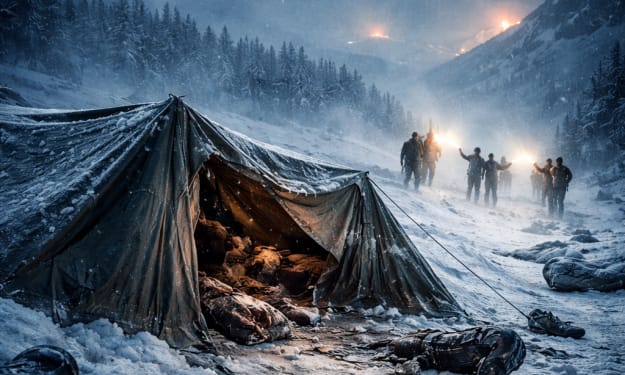
The northern Ural Mountains are not dramatic in the way the Alps are dramatic. They do not rise like stone cathedrals or glitter with postcard beauty. They are older than that—rounded, wind-carved, patient. In winter, they become something else entirely: a vast white emptiness where sound dies quickly and mistakes are punished without mercy. In late January of 1959, nine young people set out into that emptiness. They were students and recent graduates from the Ural Polytechnic Institute, most of them in their early twenties. They skied together, trained together, trusted one another. Their leader, Igor Dyatlov, was 23 years old—serious, meticulous, known for careful planning and quiet competence. This was not a reckless group chasing adventure for the thrill of it. This was a disciplined expedition aiming to complete a Category III winter trek, the highest difficulty rating at the time. They packed well. They documented everything. They kept diaries, took photographs, joked in their notes. Nothing in their writing suggests fear, tension, or even unease. That is what makes what happened next so disturbing. Their last confirmed campsite was on the eastern slope of a mountain the local Mansi people called Kholat Syakhl—often translated as “Dead Mountain.” The name predates the incident by centuries and refers not to curses, but to the fact that game animals rarely passed through the area. It was an empty place. On the night of February 1st, 1959, the weather was harsh but not unusual for the region: strong winds, sub-zero temperatures, blowing snow. The group pitched their tent on an exposed slope instead of descending into the forest below. Investigators later speculated that Dyatlov may have done this deliberately, as a training exercise—to practice camping under worst-case conditions. If so, it would be his final decision. Days passed. Then weeks. When the group failed to return or send word, a search was organized—first by fellow students, then by the military. On February 26th, rescuers found the tent. It was still standing. That detail alone should have been comforting. It wasn’t collapsed. It hadn’t been flattened by an avalanche. But as the searchers drew closer, comfort turned into confusion. The tent had been cut open from the inside. Not the entrance. The side. Clothing, boots, food, and equipment were still inside—neatly arranged, as if the occupants had planned to return. Footprints led away from the tent in a scattered line down the slope. Some were barefoot. Some wore socks. A few had a single boot. No signs of a struggle. No animal tracks. No indication of panic in the snow itself—just a quiet, impossible retreat into the freezing dark. The first two bodies were found beneath a large cedar tree about a mile from the campsite. They were nearly naked, dressed only in underwear. Their hands were raw and damaged, as if they had clawed at bark. A small fire had been built beneath the tree, its remains barely visible. They had died of hypothermia. Between the tree and the tent, searchers found three more bodies, spaced out along the slope as if they were trying—desperately—to return. One was Dyatlov himself. All showed signs of extreme cold exposure. No fatal injuries. At this point, the story might have ended as a tragic but explainable case: disorientation, exposure, a poor decision under stress. But four members of the group were still missing. Their bodies were discovered months later, buried under several meters of snow in a ravine. And this is where the case breaks apart. These four were better dressed, wearing clothes taken from their already-dead companions—suggesting they survived longer. But their injuries were catastrophic. One woman had a fractured skull. Another had multiple broken ribs. One man’s chest injuries were so severe that a medical examiner compared the force to that of a car crash. And yet—there were no external wounds consistent with such trauma. No bruising, no lacerations, no signs of impact against rocks or trees. One woman was missing her tongue. Another had radiation traces on parts of his clothing. The official Soviet investigation concluded in May 1959 with a single, vague sentence: “The cause of death was a compelling natural force which the hikers were unable to overcome.” The case was closed. That sentence has haunted people ever since. Over the decades, theories multiplied. Some argued avalanche—but the tent was not buried, the slope angle was shallow, and experienced skiers would not flee half-dressed from a minor slide. Others proposed katabatic winds, sudden violent gusts capable of producing terrifying noise and pressure. This might explain panic, but not the injuries. There were whispers of military tests, secret weapons, or parachute mines detonating in the air. Witnesses reported strange orange lights in the sky that night. Files were classified. Some remain missing. Others blamed infrasound, low-frequency sound waves produced by wind interacting with the mountain’s shape, possibly inducing panic or dread. Interesting—but still speculative. Then there are the wilder ideas: escaped prisoners, local tribes, unknown creatures
By The Insight Ledger 2 months ago in Criminal
The Man from Taured
Airports are strange places even on ordinary days. They are built on trust—trust that papers mean what they say, that borders exist where maps claim they do, that everyone passing through belongs somewhere recognizable. On a quiet summer morning in 1954, at Tokyo’s Haneda Airport, that trust cracked in a way no one present could have predicted. The man who triggered it did not look unusual. That, perhaps, is the most important detail of all. He was well-dressed, composed, and calm. His posture suggested confidence born of routine travel. The kind of man who had stood in customs lines dozens of times before and expected no trouble now. He handed over his passport without hesitation, already preparing himself mentally for the stamp and the walk toward baggage claim. Instead, the customs officer paused. The pause lengthened. Then came the question—polite, procedural, but edged with uncertainty. “Sir… this country listed here. Taured?” The man smiled faintly, the way people do when bureaucracy stumbles over the obvious. “Yes,” he replied. “Taured.” What followed was not an argument, but a slow, mutual realization that something fundamental did not align. When shown a map of Europe, the man leaned forward, genuinely puzzled. He pointed without hesitation to the region between France and Spain. “That is Taured,” he said. “Andorra is not a country. You must be mistaken.” The room shifted. Supervisors arrived. The passport was examined under better light. The stamps were real—worn, layered, dated over years. Japan. Italy. Germany. Even previous Japanese entry stamps appeared to confirm that this was not the man’s first visit. If the passport was fake, it was flawless. And flawless fakes were not common in the 1950s. The questioning deepened. The man did not dodge or deflect. He answered everything with unsettling confidence. Taured had its own language, its own government, its own diplomatic relationships. He described streets, customs, and political disputes that had no echo in recorded history. He was not inventing details on the fly. He spoke as someone remembering, not imagining. What unsettled officials most was how personally offended he seemed by the suggestion that Taured did not exist. Not angry—wounded. As if his identity itself were being denied. Then came the phone calls. His employer existed. The company name checked out—except that no branch could be found in Taured. His hotel reservation was confirmed. The clerk on the line verified the booking, the dates, the name. The room was waiting. This was no drifter. Authorities made a decision that felt sensible at the time. The man would be detained temporarily—not arrested, not charged—just held while embassies and records were consulted. He agreed, still certain the matter would resolve itself by morning. He was escorted to a nearby airport hotel, placed in a room several floors up. Two guards were stationed outside. His passport and belongings were secured. That night passed quietly. Too quietly. By morning, the guards noticed nothing unusual. No alarms. No raised voices. When the door was opened, the room was empty. The bed untouched. The windows sealed. His documents gone. No exit was recorded. No surveillance footage showed him leaving. No airline passenger lists included him. It was as if the system had rejected him entirely. After that, the trail vanishes—not dramatically, but administratively. No formal charges. No international alerts. No public explanation. Just a quiet anomaly folded into bureaucratic silence. And yet the story refused to die. Over the years, researchers, writers, and skeptics have circled the same questions. Could it have been an elaborate hoax? Possibly. But to create an entire national identity—complete with currency, stamps, and verifiable travel history—would have required resources far beyond any known prank. Could it have been mental illness? Dissociation, delusion, false identity? That explains conviction—but not material evidence. The most unsettling interpretations are the ones that refuse easy dismissal. Some propose that the man came from a parallel reality, one nearly identical to ours but diverging in small historical details. In that reality, Taured exists where Andorra does here. Borders shift. Wars resolve differently. Names change. Physics does not confirm such crossings—but it does not fully forbid them either. Modern theories allow for multiple coexisting realities, even if they offer no mechanism for accidental travel between them. Others suggest a breakdown not in the man, but in the story itself. That records were lost. That translation errors compounded. That the legend grew in retelling. A mystery inflated by time and fascination. But legends usually grow horns and claws. This one stayed human. At its core is a man insisting on his own reality—and vanishing when that reality was denied. Perhaps the most disturbing angle is the simplest. That systems—passports, borders, records—do not define truth. They only enforce consensus. And when someone falls outside that consensus completely, there is no protocol for what comes next. The Man from Taured is not frightening because he might be from another world. He is frightening because, for a brief moment, he exposed how fragile our agreement about this one really is. Between France and Spain, the map remains unchanged. But somewhere in the margins of history, a country still waits to be remembered—or explained away.
By The Insight Ledger 2 months ago in History
The Kuntilanak Files
Indonesia is a country where the modern world never fully erased the old one. Glass towers rise beside centuries-old banyan trees. Smartphones glow in villages where spirits are still spoken of in whispers. In many parts of the archipelago, the supernatural is not dismissed—it is managed, respected, avoided. Among these beliefs, few names carry as much fear as Kuntilanak. Traditionally, the Kuntilanak is described as the spirit of a woman who died during childbirth—her grief twisting into something violent and restless. Pale-faced, long-haired, dressed in white, she is said to appear at night, often announced by the sound of soft laughter or a baby crying. In folklore, she haunts forests, abandoned houses, and roadside trees. She is not a metaphor. She is a warning. For generations, these stories remained where stories usually belong: around fires, in village advice, in cautionary tales meant to keep children close to home after dark. Until the deaths began. In the late 2000s and early 2010s, a pattern emerged across parts of Java, Kalimantan, and Sumatra that unsettled even seasoned investigators. The cases were not identical, but they echoed one another in troubling ways. Young men—often students, amateur paranormal investigators, or urban explorers—were found dead near abandoned locations tied to Kuntilanak lore. At first, authorities treated each death separately. Accidents. Exposure. Falls. Natural causes compounded by risky behavior. But local communities noticed something else. The locations were wrong. The timing was wrong. And the behavior of the victims before death was… off. One of the earliest widely discussed cases involved a university student in West Java who had joined a small group dedicated to documenting haunted sites for social media. Their goal was not worship or provocation—at least publicly—but proof. They filmed night visits to abandoned houses, cemeteries, and forest edges. Their content gained traction. Fear, after all, travels well online. According to friends, the student began experiencing disturbances weeks before his death. Sleep paralysis. Nightmares involving a woman laughing behind him. Sudden mood shifts. He became withdrawn, irritable, convinced that something was “following” him. They assumed stress. One night, he returned alone to an abandoned colonial-era building rumored to be a Kuntilanak site. His camera was later found intact. The footage ended abruptly, mid-sentence, as if he had turned suddenly toward a sound. His body was discovered the next morning beneath a staircase. There were no defensive wounds. No signs of assault. The autopsy cited internal injuries consistent with a fall. But the locals focused on something else. His face, witnesses said, was frozen in terror. More cases followed. In Central Java, two young men were found dead in a forest clearing after attempting a ritual they had read about online—one meant to “summon” or “record” paranormal entities. One died at the scene. The other survived long enough to be hospitalized, where he reportedly screamed about a woman sitting on his chest at night. He died three days later from organ failure. Doctors could not link the deaths to toxins or known disease. Stress-induced complications were mentioned. The files closed quietly. But the stories did not. By this point, Indonesian social media had already connected the dots. Videos surfaced showing shadowy figures, unexplained sounds, distorted faces caught in reflections. Most were easily debunked. Some were not. Then came the Kalimantan case that changed the tone entirely. A group of construction workers clearing land near a long-abandoned village reported nightly disturbances. Tools moved. Voices heard. One worker fled the site claiming a woman in white followed him through the trees. Days later, another worker was found dead near a large fig tree. No visible injuries. No signs of struggle. The project was halted after elders from a nearby village intervened, insisting the land was known Kuntilanak territory and had been avoided for decades. This was no longer just internet folklore. Authorities were placed in an impossible position. Acknowledge supernatural causation and risk panic—or reduce everything to coincidence and offend deeply held cultural beliefs. Official explanations remained clinical. Accidents. Psychological stress. Mass suggestion. Environmental hazards. Privately, some investigators admitted discomfort. What made the Kuntilanak Files different from typical ghost stories was the consistency of behavior before death. Victims reported similar experiences across regions that did not share immediate cultural circles. Nightmares. Pressure on the chest. The sensation of being watched. A fixation on returning to specific locations. Psychologists proposed sleep paralysis combined with cultural expectation—a known phenomenon where the mind fills terror with familiar symbols. But that explanation weakens when the final outcomes are fatal. No drugs. No poisons. No physical attackers. Just bodies and fear. The Indonesian government never officially linked the cases. But internally, some law enforcement documents reportedly advised officers to consult local religious leaders when dealing with deaths tied to supernatural belief systems. Not for investigation—but for prevention. The advice was simple: Don’t provoke what you don’t understand. In traditional belief, the Kuntilanak is not mindless. She appears when disturbed. When mocked. When summoned without respect. Modern behavior—cameras, flashlights, viral challenges—violates every boundary these stories were meant to enforce. This clash between digital bravado and ancient taboo may be the true heart of the mystery. Whether the Kuntilanak exists as a literal entity or as a psychological weapon shaped by belief, the outcome is the same. People died. And they died believing something was with them in their final moments. Today, many of the most notorious sites are quietly avoided. Content creators move on to safer myths. Elders still warn travelers not to laugh at night near certain trees. Not because they expect outsiders to believe—but because belief is not required for consequences. The Kuntilanak Files remain open, unofficially. Not because science failed. But because some questions refuse to stay within neat categories. In Indonesia, the past does not sleep easily. And some legends, when dragged into the light, do not fade— they follow.
By The Insight Ledger 2 months ago in Psyche
I Let AI Help Run My Love Life in 2025 — And It Got a Little Too Honest
If you’ve been single in 2025, you already know: the dating apps are starting to feel less like apps and more like ecosystems. Profiles are written by AI, photos are filtered by AI, and now, if you want, your whole “compatibility journey” can be guided by an algorithm that claims to understand you better than you understand yourself.��
By The Insight Ledger 2 months ago in Psyche
I Tried Living Like It Was 2010 Again — And It Quietly Broke Me
Nostalgia is sneaky. It doesn’t just show you the past; it edits it for you. It cuts out the awkward silences, the cheap shampoo, the bad phone cameras, and leaves you with sunsets, inside jokes, and a version of yourself who always seemed a little lighter.
By The Insight Ledger 2 months ago in Psyche
THE HOUSE THAT NEVER LET GO
On the southeastern shore of Loch Ness, where the water looks black even on bright days and the hills seem to lean inward, stands a white house that was never meant to be ordinary. Boleskine House does not announce itself with screams or shattered windows. It sits quietly, almost politely, as if nothing has ever gone wrong there.
By The Insight Ledger 2 months ago in History
THE NIGHT THE SNOW WAS MARKED
In early February of 1855, southern England went to sleep under a heavy blanket of snow. It was the kind of winter night that muffles sound, erases detail, and turns familiar streets into pale, quiet corridors. Villages locked their doors. Farmers secured their animals. Churches stood dark and still.
By The Insight Ledger 2 months ago in Horror