
Two Ship Crew Members Arrested in Finland Over Baltic Sea Cable Damage
“Why the Baltic Sea Incident Has Raised Alarms About Global Undersea Infrastructure Security”

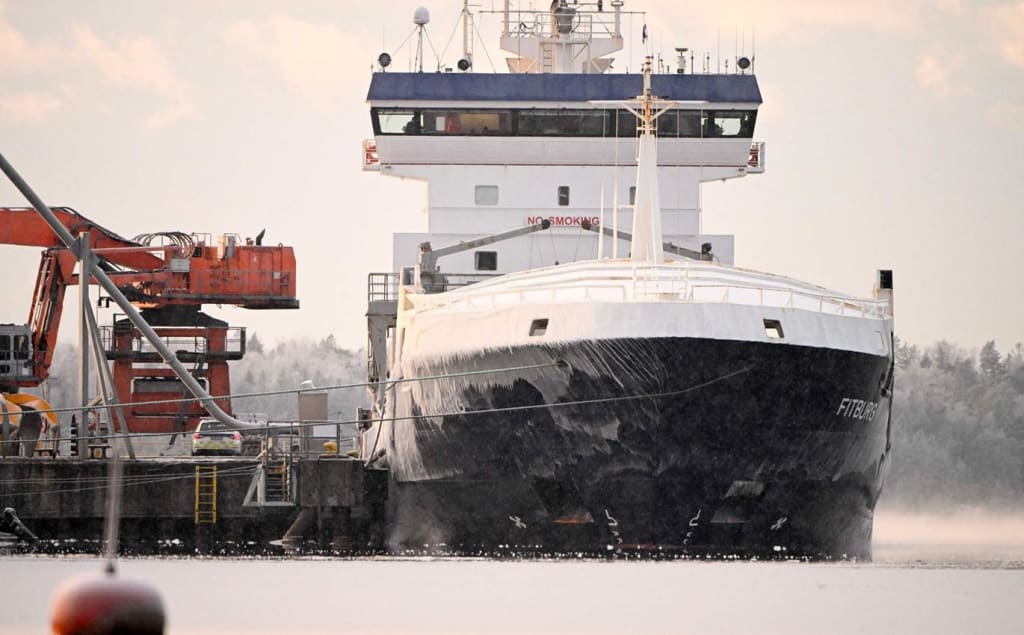
The arrest of two ship crew members in Finland over damage to undersea cables in the Baltic Sea has intensified global concerns about the vulnerability of critical maritime infrastructure. As nations increasingly rely on underwater cables for electricity, internet connectivity, and secure communications, even a single incident can have far-reaching geopolitical and economic consequences.
What Happened in the Baltic Sea?
Finnish authorities confirmed the arrest of two crew members from a foreign-flagged vessel suspected of being involved in damage to subsea infrastructure in the Baltic Sea. The incident came to light after disruptions were detected in underwater cables that play a vital role in regional communications and energy transmission between Northern European countries.
Investigators believe the damage occurred during routine maritime activity, but the circumstances raised enough suspicion to warrant criminal investigation. The arrested crew members are reportedly being questioned over potential negligence, violation of maritime safety laws, or deliberate interference with protected infrastructure.
Why Undersea Cables Matter
Underwater cables form the backbone of modern civilization. Over 95% of global internet traffic travels through subsea fiber-optic cables, while power cables beneath the sea connect national grids and ensure energy security. The Baltic Sea, in particular, hosts a dense network of cables linking Finland, Sweden, Estonia, Germany, and other European nations.
Any damage—intentional or accidental—can disrupt communications, affect financial markets, delay emergency services, and raise national security alarms. This is why undersea cable protection has become a strategic priority for governments worldwide.
Finland’s Response and Legal Action
Finland has taken a firm stance by swiftly detaining the suspects and launching a full investigation. Authorities emphasized that while maritime accidents do happen, the protection of critical infrastructure cannot be taken lightly. Finnish law allows for arrests when there is reasonable suspicion of criminal responsibility, even if intent has not yet been proven.
Officials are also cooperating with international partners to determine whether the incident has cross-border implications. Given the shared nature of Baltic Sea infrastructure, neighboring countries are closely monitoring the investigation.
Accidental Damage or Something More?
One of the central questions surrounding the case is whether the cable damage was accidental or deliberate. Ships can sometimes damage undersea cables through anchor dragging or improper navigation, especially in congested waters like the Baltic Sea. However, recent global tensions have increased scrutiny over any such incidents.
In recent years, several countries have reported unexplained damage to subsea cables and pipelines, fueling concerns about sabotage, hybrid warfare, and covert operations. While no conclusions have been drawn in the Finnish case, the arrests reflect heightened vigilance rather than an assumption of guilt.
Rising Global Concern Over Maritime Infrastructure
The Baltic Sea incident is part of a broader global trend. Governments and security experts are increasingly warning that underwater infrastructure is one of the most exposed elements of national security. Unlike land-based systems, subsea cables are difficult to monitor continuously and costly to repair.
As geopolitical rivalries intensify, protecting these assets has become as important as defending airspace or borders. NATO and European Union members have already begun discussing enhanced surveillance, stricter maritime regulations, and improved information-sharing to prevent future incidents.
Impact on Shipping and Crew Accountability
The arrests also send a clear message to the global shipping industry: accountability at sea is tightening. Ship operators are expected to adhere strictly to navigation protocols, especially in sensitive zones marked by underwater infrastructure.
Crew members now face greater legal responsibility, not only for safety at sea but also for the protection of invisible assets beneath it. Training, route planning, and compliance with maritime warnings are becoming more critical than ever.
Legal and Diplomatic Implications
If the investigation finds negligence or misconduct, the case could result in fines, imprisonment, or broader legal action against the vessel’s operators. If international involvement is suspected, diplomatic discussions may follow.
At the same time, Finland has been careful to emphasize due process, underscoring that arrests are part of an investigation—not a verdict. This balanced approach aims to uphold the rule of law while maintaining regional stability.
A Wake-Up Call for the World
The Baltic Sea cable damage serves as a reminder that modern infrastructure extends far beyond what we can see. Beneath calm waters lie systems that keep societies connected, economies running, and governments functioning.
As investigations continue, the case is likely to influence future maritime policies and international cooperation on infrastructure protection. Whether the damage proves accidental or intentional, the message is clear: undersea cables are no longer out of sight—or out of mind.
Final Thoughts
The arrest of two ship crew members in Finland highlights the growing intersection of maritime activity, national security, and global connectivity. In an age where digital and energy lifelines run beneath the oceans, safeguarding them has become a shared global responsibility. The outcome of this case may well shape how nations protect their underwater arteries in the years to come.
About the Creator
Fiaz Ahmed Brohi
I am a passionate writer with a love for exploring and creating content on trending topics. Always curious, always sharing stories that engage and inspire.
Keep reading
More stories from Fiaz Ahmed Brohi and writers in The Swamp and other communities.
New Year Drone Strike Kills 24 in Russian-Occupied Ukraine, Moscow Says
The new year began with renewed violence in Ukraine as a drone strike reportedly killed at least 24 people in Russian-occupied territory, according to statements from Moscow. The incident underscores a grim reality: despite seasonal hopes for ceasefires or diplomacy, the war continues to claim lives on both sides, even as the calendar turns. Russian authorities said the strike targeted a civilian area during New Year celebrations, calling it one of the deadliest drone attacks in recent months in occupied regions. Ukraine has not officially commented on the specific claims, while independent verification remains difficult due to restricted access and competing narratives from both sides. A War That Refuses to Pause For civilians living in occupied areas, the New Year attack reflects a familiar and devastating pattern. Holidays that once symbolized family, renewal, and peace have become periods of heightened fear. Air raid sirens, blackouts, and explosions have replaced fireworks and celebrations across much of the region. The reported drone strike is part of a broader escalation in the use of unmanned aerial systems by both Russia and Ukraine. Drones have become a defining feature of this conflict, used for surveillance, targeting, and increasingly, long-range strikes. Their relatively low cost and high impact have reshaped modern warfare—often at the expense of civilians caught in the middle. Moscow’s Claims and the Information War Russia described the strike as a deliberate attack on civilians, accusing Ukraine of violating international humanitarian norms. Such claims are not new. Throughout the war, both sides have repeatedly accused each other of targeting civilian infrastructure and population centers. However, verifying casualty figures and responsibility remains challenging. Independent journalists and international observers have limited access to Russian-controlled areas, making it difficult to confirm Moscow’s version of events. This information vacuum has become a battleground of its own, where narratives are weaponized alongside missiles and drones. Ukraine, for its part, has consistently stated that its military operations focus on legitimate military targets and logistics hubs, particularly in occupied territories. Kyiv argues that Russia often embeds military assets near civilian areas, increasing the risk of collateral damage. The Human Cost in Occupied Territories Regardless of responsibility, the human toll is undeniable. Civilians in occupied regions face a double burden: exposure to active hostilities and limited access to independent media, humanitarian aid, and evacuation routes. Many residents live under constant surveillance, with restricted movement and fear of reprisals. The New Year strike reportedly hit during a time when families were gathered indoors, amplifying its impact. Emergency services in occupied zones often struggle with shortages of equipment, trained personnel, and safe access to damaged areas, delaying rescue and medical care. As the war stretches into another year, fatigue is setting in—not only among soldiers, but also among civilians who see no clear end to the violence. Drones and the Evolution of the Conflict The increasing reliance on drones highlights how the war has evolved. Once seen primarily as reconnaissance tools, drones are now capable of delivering precise—and sometimes devastating—strikes deep behind front lines. Their use blurs traditional battlefields, bringing warfare closer to civilian life. Experts warn that drone warfare lowers the threshold for attacks, making it easier for conflicts to escalate. Unlike large missile systems, drones can be deployed quickly and frequently, increasing the risk of miscalculation and unintended casualties. The New Year incident may further intensify calls for stronger international rules governing drone use in armed conflicts—though enforcement remains a major challenge. International Reaction and Diplomatic Stalemate So far, international reactions have been muted, reflecting a broader diplomatic stalemate. While Western allies continue to support Ukraine militarily and financially, Russia remains defiant, framing the war as an existential struggle against external pressure. Human rights organizations have repeatedly urged all parties to protect civilians and allow independent investigations into alleged war crimes. However, with trust between the sides at rock bottom, meaningful cooperation appears unlikely. As 2026 begins, prospects for peace remain uncertain. Previous attempts at negotiations have failed, and battlefield dynamics continue to shift without delivering decisive outcomes. A Bleak Start to a New Year The reported drone strike serves as a stark reminder that time alone does not heal conflicts. Each new year adds another chapter of loss, displacement, and trauma for millions of Ukrainians and Russians alike. For families mourning loved ones lost in the latest attack, political statements and strategic debates offer little comfort. Their grief is immediate and personal—another entry in a growing ledger of wartime suffering. Conclusion Whether the full details of the New Year drone strike are ever independently verified, the incident reinforces a painful truth: the Russia-Ukraine war shows no sign of slowing. As drones buzz over contested skies and civilians bear the consequences, hopes for peace feel increasingly distant. Until diplomacy finds a way forward, the new year in Ukraine looks heartbreakingly similar to the last—marked not by celebration, but by survival.
By Fiaz Ahmed Brohi16 days ago in The Swamp



Comments
There are no comments for this story
Be the first to respond and start the conversation.