finance
Money talks; reviewing the global economy, government spending, taxes, and economic policy that affect our social and political future.
Pahalgam Terror Attack 2025: Hindu Tourists Killed in Kashmir, Global Reactions and Full Report. Content Warning. AI-Generated.
On April 22, 2025, a brutal terrorist attack in Pahalgam, Jammu and Kashmir sent shockwaves across India and the international community. Armed militants opened fire on a group of tourists at Baisaran Valley, deliberately targeting individuals based on their Hindu identity. The attack, which left 26 civilians dead and over 20 injured, is being called one of the deadliest attacks in Kashmir in recent years.
By Tanushree Das10 months ago in The Swamp
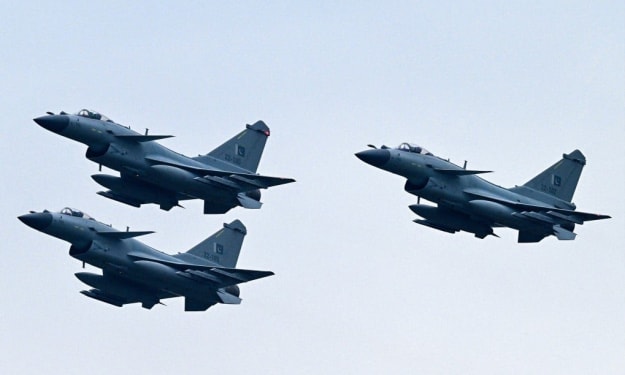
Pakistan Claims Chinese-Made J-10C Fighter Jets Used Against India’s Air Force. AI-Generated.
Pakistan Claims Chinese-Made J-10C Fighter Jets Used Against India’s Air Force In a significant escalation between two nuclear-armed rivals, Pakistan has claimed that its air force used Chinese-made J-10C fighter jets to shoot down five Indian aircraft during a recent military confrontation. The assertion comes amid rising tensions between India and Pakistan over the disputed Kashmir region, with both nations exchanging accusations and conducting air strikes.
By Adnan Rasheed10 months ago in The Swamp
A Timeline of Tensions Between India and Pakistan Over Kashmir
A Timeline of Tensions Between India and Pakistan Over Kashmir The Kashmir conflict is one of the most protracted and volatile territorial disputes in the world rooted in the partition of British India in 1947. India and Pakistan both nuclear armed neighbors have fought multiple wars and engaged in recurring skirmishes over this contested region. This article outlines a detailed timeline of the tensions between the two nations over Kashmir.
By Adnan Rasheed10 months ago in The Swamp
Trump’s Space Budget Reflects Influence of Elon Musk and SpaceX. AI-Generated.
Trump’s Space Budget Reflects Influence of Elon Musk and SpaceX In a striking shift in America’s space strategy, former President Donald Trump’s proposed space budget for 2026 reveals a clear preference for privatization and a growing reliance on commercial spaceflight companies—chief among them, Elon Musk’s SpaceX. The proposed budget, which significantly reduces NASA’s funding while boosting support for private sector-led space exploration and defense initiatives, underscores the increasing influence of Musk in shaping the nation’s space agenda.
By Adnan Rasheed10 months ago in The Swamp
Jeff Bezos Plans to Sell \$5 Billion Worth of Amazon Stock: What It Means for Investors and the Future of Amazon
Jeff Bezos, the founder and executive chairman of Amazon, has once again made headlines—this time not for a rocket launch or a major acquisition, but for a massive stock sale plan. In a new filing disclosed with the U.S. Securities and Exchange Commission, Bezos revealed his intention to sell up to 25 million shares of Amazon stock, estimated to be worth around \$4.75 billion. This stock divestment is scheduled to take place over the course of the next year as part of a pre-arranged trading plan.
By Tech Horizons10 months ago in The Swamp
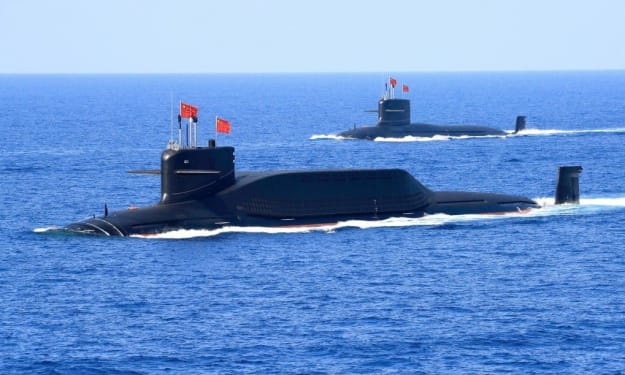
China’s Military Reveals Details of Type 094 Nuclear Submarine for First Time
China’s Military Reveals Details of Type 094 Nuclear Submarine for First Time In a significant move reflecting growing military transparency and strategic assertion China has officially released detailed information about its Type 094 nuclear powered ballistic missile submarine (SSBN) also known as the Jin class submarine. This is the first time that the People’s Liberation Army Navy (PLAN) has publicly acknowledged specific features of this crucial component of China’s second strike nuclear capability. The revelation coming through a state affiliated media outlet and military analysts offers insights into China’s evolving sea based nuclear deterrence modernization of its naval forces, and its strategic ambitions in regional and global maritime affairs. The Type 094 SSBN is China’s second generation nuclear powered ballistic missile submarine designed to replace the outdated Type 092 Xia class submarine. The Type 094 measures approximately 137 meters in length has a beam of around 12 meters and a submerged displacement of about 11,000 tons. It is powered by a nuclear reactor that allows the submarine to remain submerged for long periods without surfacing providing it with virtually unlimited range and extended patrol capability. According to the details shared the submarine can achieve speeds exceeding 20 knots while submerged and can carry out extended deterrence patrols in China's near seas and beyond. The Jin class submarine is designed to remain hidden and mobile while carrying out missions making it a central pillar of China’s strategic deterrent. Perhaps the most significant aspect of the Type 094 is its armament. Initially the submarine was designed to carry 12 JL-2 submarine launched ballistic missiles (SLBMs) which have a reported range of 7,200 kilometers. This allowed China to target parts of the United States such as Alaska and much of Asia and the Pacific region from waters closer to its coast. However new reports indicate that China has begun outfitting the Type 094 submarines with the more advanced JL-3 SLBMs. The JL-3 is believed to have a range of over 10,000 kilometers meaning the submarine could now strike targets across the entire continental United States from positions in the South China Sea or near Chinese territorial waters. This dramatically enhances the credibility of China’s second strike capability as the submarine can now perform its deterrent role without having to venture into vulnerable waters near enemy coastlines.
By Adnan Rasheed10 months ago in The Swamp
Inflation in Pakistan
Inflation in Pakistan is more than a buzzword; it is a grave reality for most Pakistanis. The rising costs are becoming a daily struggle, a kitchen table crisis, and a constant threat to the country’s fragile economy. Increasing fuel and transport costs, skyrocketing costs of basic grocery, and the constant squeeze of energy bills has now made life very difficult and complex for the average countryman.
By Bella Clum10 months ago in The Swamp