
A Timeline of Tensions Between India and Pakistan Over Kashmir
Decades of conflict wars and diplomatic breakdowns have marked the enduring India Pakistan rivalry over the contested region of Kashmir.

A Timeline of Tensions Between India and Pakistan Over Kashmir
The Kashmir conflict is one of the most protracted and volatile territorial disputes in the world rooted in the partition of British India in 1947. India and Pakistan both nuclear armed neighbors have fought multiple wars and engaged in recurring skirmishes over this contested region. This article outlines a detailed timeline of the tensions between the two nations over Kashmir.
1947 Partition and First Indo Pak War
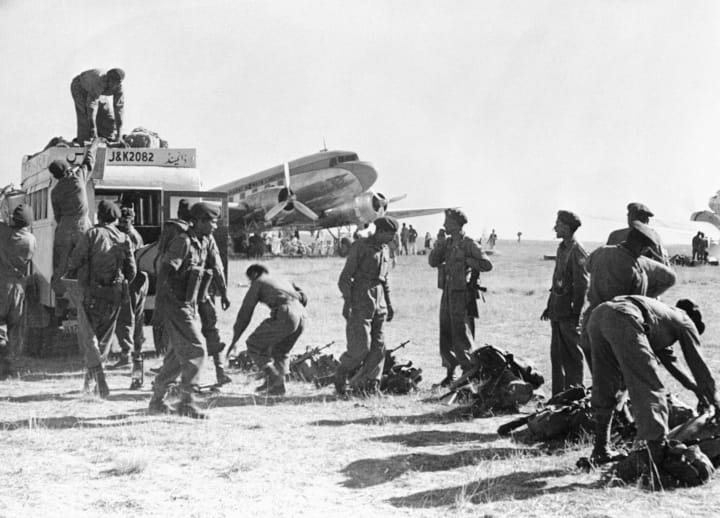
At the time of British India's partition princely states were given the choice to join either India or Pakistan. Maharaja Hari Singh the ruler of Jammu and Kashmir initially wanted to remain independent. However when tribal militias from Pakistan invaded he sought military assistance from India and signed the Instrument of Accession in October 1947 allowing India to take control of the region. This led to the First Indo Pak War (1947–48). A UN mediated ceasefire in 1949 established the Line of Control (LoC) dividing Kashmir into Indian administered and Pakistani administered territories. In 1965 Pakistan launched Operation Gibraltar sending infiltrators into Indian Kashmir to incite rebellion. This led to the Second Indo Pak War which lasted five weeks and caused heavy casualties on both sides. A ceasefire was brokered by the Soviet Union and the USA and the Tashkent Agreement was signed in January 1966 restoring pre war boundaries. Though the primary cause of the 1971 war was the Bangladesh Liberation War the conflict had implications for Kashmir as well. India’s victory led to the signing of the Simla Agreement in 1972 where both nations agreed to resolve their disputes bilaterally. The Line of Control was recognized as the de facto border but the Kashmir issue remained unresolved.
1989 Insurgency Begins in Kashmir
By the late 1980s discontent and political instability in Indian administered Kashmir gave rise to a separatist insurgency. Pakistan was accused of supporting militant groups with training arms and funding. This marked the beginning of a prolonged period of violence in the valley with thousands of civilian militant and military casualties.
1999 Kargil Conflict
In a major escalation, Pakistani soldiers and militants occupied strategic positions in the Kargil sector of Indian Kashmir. This led to the Kargil War during which Indian forces recaptured the territory. The international community especially the United States pressured Pakistan to withdraw. This conflict seriously damaged the already fragile peace process between the two nations.
2001/2002 Parliament Attack and Military Standoff
In December 2001 an attack on the Indian Parliament was blamed on Pakistan based groups like Jaish-e-Mohammed and Lashkar-e-Taiba. This led to a massive military buildup on both sides of the border creating fears of a full scale war. Diplomatic efforts helped defuse the crisis but relations remained tense. On November 26/2008 coordinated attacks in Mumbai by militants linked to Pakistan based Lashkar-e-Taiba resulted in over 170 deaths. The incident froze peace talks and heightened mistrust with India demanding Pakistan take strong action against terrorist groups operating from its soil. Four Indian soldiers were killed in a terror attack on an army base in Uri Kashmir. India responded with what it called surgical strikes across the LoC to target militant camps a move denied by Pakistan. This marked a shift in India’s strategy showcasing a more aggressive posture.
2019 Pulwama Attack and Balakot Airstrikes
In February 2019 a suicide bombing in Pulwama killed 40 Indian paramilitary personnel. The attack was claimed by Jaish-e-Mohammed leading India to conduct airstrikes in Balakot Pakistan targeting militant training camps. Pakistan retaliated with its own airstrikes and both nations engaged in an aerial dogfight. An Indian pilot was captured and later released easing tensions. In August 2019 India revoked Article 370 which granted special autonomy to Jammu and Kashmir. Pakistan condemned the move as illegal and downgraded diplomatic ties. India maintained that it was an internal matter while Pakistan raised the issue at international forums including the United Nations. Though active conflict has subsided tensions remain. A ceasefire agreement was reaffirmed in February 2021 leading to relative calm along the LoC. However the political and diplomatic relationship remains strained with both countries maintaining hardened positions over Kashmir. The Kashmir issue remains a deeply emotional and geopolitical flashpoint between India and Pakistan. Despite numerous wars diplomatic efforts and international mediation a long term resolution remains elusive. Until both nations find a sustainable political solution the region will continue to be a source of tension with global implications.
About the Creator
Adnan Rasheed
Author & Creator | Writing News , Science Fiction, and Worldwide Update| Digital Product Designer | Sharing life-changing strategies for success.
Keep reading
More stories from Adnan Rasheed and writers in The Swamp and other communities.
Trump Sparks Controversy by Posting AI-Generated Image of Himself as Pope
Trump Sparks Controversy by Posting AI-Generated Image of Himself as Pope May 3/2025 In a move that has sparked both amusement and criticism online former U.S President Donald Trump shared an AI generated image of himself dressed as the Pope on his Truth Social platform reigniting debates about artificial intelligence political satire and the boundaries of online content. The post made on Thursday evening showed Trump wearing ornate papal robes and a grand miter standing in a position reminiscent of the Pope delivering a blessing from the Vatican balcony. The image was clearly labeled as AI generated but that did not stop it from going viral within hours drawing sharp reactions from supporters critics and digital ethics experts alike.
By Adnan Rasheed9 months ago in The Swamp
Germany’s Nationalist AfD Party Hopes to Take Power in 2026
Germany’s political landscape is facing a potential shift as the nationalist Alternative für Deutschland (AfD) party sets its sights on the 2026 elections. Known for its right-wing populist agenda, anti-immigration rhetoric, and Euroscepticism, the AfD has steadily gained traction over the past decade. While mainstream parties continue to dominate national politics, analysts warn that the AfD’s growing influence could reshape Germany’s policy direction and challenge the country’s longstanding commitment to liberal democracy. The Origins of the AfD Founded in 2013, the AfD initially positioned itself as a Eurosceptic party, opposing the European Union’s handling of the eurozone crisis. Over time, the party shifted its focus toward nationalist and anti-immigration policies, tapping into public frustration over migration, globalization, and perceived threats to German cultural identity. The party has also adopted a strong stance against climate regulations and progressive social policies, appealing to conservative voters who feel alienated by Germany’s traditional political parties. These positions have allowed the AfD to carve out a niche in Germany’s fragmented political landscape. Recent Electoral Gains The AfD has seen steady growth in regional and national elections. In the 2021 federal elections, the party captured around 10% of the vote, becoming the third-largest party in the Bundestag. Its support is particularly strong in eastern Germany, where economic disparities, historical resentment, and dissatisfaction with mainstream politics have contributed to its rise. Political analysts note that the AfD’s success is not only electoral but also cultural. By dominating media narratives on immigration and national identity, the party has shifted public debate and forced mainstream parties to respond to issues they might otherwise have avoided. The 2026 Ambitions Looking ahead to the 2026 elections, the AfD aims to increase its share of seats and, potentially, enter government coalitions at both state and federal levels. Party leaders have emphasized a platform focused on reducing immigration, reforming the European Union, and rolling back environmental regulations. Some strategists within the party believe that growing concerns over energy costs, economic inequality, and social change could bolster voter support. By framing itself as a defender of “traditional German values,” the AfD hopes to attract both its core base and disillusioned voters from the center-right spectrum. Controversies and Criticism The AfD’s rise has not been without controversy. Critics accuse the party of promoting xenophobia, undermining democratic norms, and fostering extremist tendencies. Multiple AfD members have faced scrutiny for inflammatory remarks, associations with far-right groups, and attempts to normalize nationalist rhetoric. Germany’s domestic intelligence agency has labeled parts of the AfD as “suspected extremist,” monitoring its activities closely. Opposition parties argue that allowing the AfD into power could threaten Germany’s democratic institutions and international reputation. Public Perception and Support Despite criticism, the AfD retains a loyal voter base. Many supporters argue that the party addresses real concerns about immigration, economic stagnation, and EU bureaucracy that they feel are ignored by mainstream parties. Polls suggest that younger voters and urban populations are less supportive of the AfD, while older, rural, and economically disadvantaged communities continue to provide the party with significant backing. Analysts believe that the 2026 elections could hinge on turnout in these demographic groups. Implications for Germany and Europe The AfD’s potential rise has implications beyond Germany’s borders. As Europe faces migration pressures, energy crises, and political polarization, the success of a nationalist party in one of the continent’s largest economies could inspire similar movements in other countries. European Union leaders have expressed concern that an AfD-led government might adopt policies that clash with EU regulations, potentially straining relations with neighboring countries and weakening cohesion in European decision-making. Challenges Ahead While the AfD hopes to gain power, it faces significant obstacles. Mainstream parties, including the Christian Democrats (CDU) and Social Democrats (SPD), are actively campaigning to prevent the AfD from entering government. Additionally, voter concerns about extremism, international relations, and social stability may limit the party’s growth. Coalition-building will also be a challenge. Many parties have ruled out working with the AfD, meaning that even a strong electoral showing may not translate into executive power. Analysts predict that the AfD’s influence may grow through parliamentary presence rather than direct governance. The Role of Media and Messaging The AfD has been adept at using social media and alternative media platforms to bypass traditional journalistic filters. By framing itself as a voice for the “ignored majority,” the party appeals to voters who distrust mainstream institutions. At the same time, investigative journalism and public awareness campaigns have sought to highlight the party’s extremist tendencies and controversial rhetoric. This ongoing battle over narrative and perception will be crucial in shaping the 2026 elections. Conclusion: A Defining Moment for Germany As Germany approaches 2026, the rise of the AfD represents both an opportunity and a challenge for the nation. For supporters, the party embodies a chance to restore national pride and prioritize domestic concerns. For critics, it threatens to destabilize democratic norms and exacerbate social divisions. The upcoming elections will test Germany’s resilience, political maturity, and commitment to pluralism. Whether the AfD succeeds in taking power or remains a powerful opposition force, its impact on Germany’s political discourse—and the broader European context—will be felt for years to come.
By Aarif Lashari5 days ago in The Swamp



Comments
There are no comments for this story
Be the first to respond and start the conversation.