
4 Fast Startup Ideas You Can Steal and Launch Before Friday
Everyone’s playing with ChatGPT… you should build with it

We need to stop fetishizing AI and start verticalizing.
OpenAI’s new ChatGPT Image Generation API made that clearer than ever.
Most people missed it. Too busy using AI to spin out spaghetti-eating videos and meme generators, bottom-feeding what AI can do.
Waiting for someone else to show them what’s possible.
If you’re reading this, you can be that someone!
Hijack one of the most powerful image generators ever built and wrap a product around it. You can ship something this weekend and build a product people will actually pay for.
What is the ChatGPT Image Generation API?
When you hear that “ChatGPT can make images now”, they’re talking about a new model behind the scenes called “gpt-image-1” (formerly DALL·E 3).
This lets you type a description and get back a high-quality image with style, accuracy, and real-world text rendering.
OpenAI has made this model available as an API, which means:
You can generate images inside your own product, without sending users to ChatGPT.
Companies like Adobe, Airtable, and OpusClip all use the GPT Image API. They’re embedding it directly into their respective platforms.
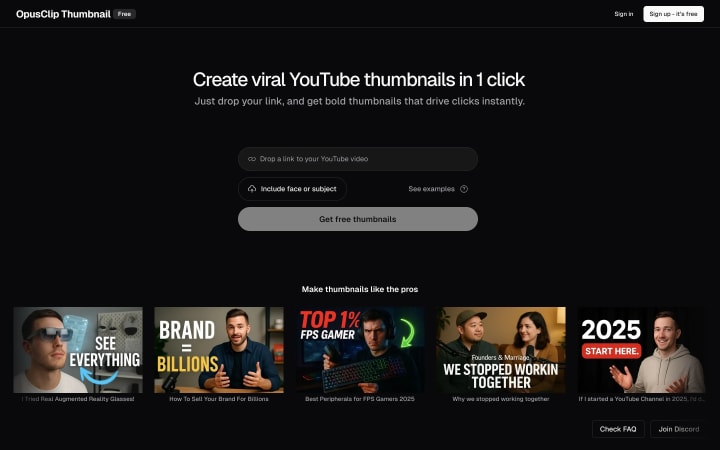
Here’s how it works:
- You sign up at platform.openai.com and get an API key (your developer pass).
- You build a simple product or interface. It can be a web app, dashboard, or just a form where users type prompts.
- You connect it to the API by writing a bit of code that sends the user’s prompt to OpenAI’s servers.
- The API returns a high-quality image that you display, download, or let users purchase.
You’re not training a model or building AI from scratch.
You’re plugging into OpenAI’s engine and creating something new around it, with your own twist, your own style, and your own customers.
And the best part?
You don’t need a full-blown SaaS product to get started. You could prototype something on Bubble, Webflow, or even Notion.
Here are 4 startup ideas, how to build them, and how to launch:
#1. Visual Email Builder for Ecommerce
Every email from the brands you know and others who stalk your inbox needs custom promo visuals and product mockups.
Very few have competent designers on staff.
The Problem
Brands send 3–5 emails per week. Every one needs fresh, on-brand visuals. Hiring a designer for each email? $1,500–$5,000+ per month. Small brands either overspend or settle for ugly templates.
The data shows emails with custom visuals convert better than text-heavy alternatives.
The Product
An AI-powered visual generator where brands can:
Input their product details and promotion type (“Summer sale on our organic cotton bedding”)
Upload product images and brand assets (logos, color schemes)
Select their target audience and messaging tone
Generate ready-to-use email blocks in seconds:
→ Hero banners with typography and product placement
→ Product showcases that highlight key features
→ Call-to-action buttons optimized for clicks
Market Landscape
Pain Point: Email remains the highest ROI channel for e-commerce (ROI of $36 for every $1 spent), but the design challenge limits campaign frequency and quality.
Market Size: Over 5 million Shopify merchants plus millions more on WooCommerce and BigCommerce, all sending multiple campaigns weekly.
White Space: Existing tools like Canva require manual design work. Mailchimp and Klaviyo offer templates, but not custom visuals. No dominant player offers brand-specific email visuals.
Revenue Model:
$49/mo Starter Plan (500 images/mo)
$149/mo Business Plan (2,000 images/mo)
$499/mo Agency Plan (unlimited + API access)
How to Build This
Frontend
Use Bubble or Webflow to build a simple form where users input:
→ Campaign type (“Summer Sale” / “New Arrival” / “Clearance”)
→ Upload logo, brand colors, product images
→ Choose aesthetic (“Luxury,” “Casual,” “Corporate”)
Backend
→ Feed brand details into the GPT Image API using prompt templates.
→ Generate 2–3 polished images per prompt.
Export
→ Let users download PNG/JPG files.
→ Bonus: Add direct export buttons for Klaviyo, Mailchimp, or Beehiiv.
Better creative → higher click-through rates → more revenue. The ROI here is immediate and measurable.
#2. Game Asset Generator for Broke Indie Devs
The gaming industry revenues are projected to hit $226 million by 2028, with indies accounting for a growing share of releases.
Yet the visual quality gap between AAA and indie titles remains the biggest barrier to market success. A single character artist costs $65,000+ annually, placing quality art beyond reach for most indie teams.
The Problem
Indie devs can’t afford top-tier artists, but players judge games instantly based on visual polish. Creating consistent, professional game art requires skills most coding-focused devs don’t have.
These creators need a way to generate unique characters, environments, and UI elements without breaking their already thin budgets.

The Product
A specialized asset generator where game developers can:
Define their game’s art style and aesthetic direction through examples or descriptions
Output complete asset sets that maintain visual consistency:
→ Character sprites with multiple animations and expressions
→ Environment tiles and backgrounds with matching elements
→ Textures and materials that work within game engines
The product generates game-ready assets in proper formats (transparent PNGs, sprite sheets, texture maps) that can be imported directly into game engines like Unity, Unreal, or Godot with minimal post-processing.

Market Landscape
Pain Point: Visual asset creation is a major time and budget constraint for indie developers, with most compromising on quality due to resource limitations.
Market Size: Over 2 million registered Unity developers worldwide, with the indie segment growing rapidly.
White Space: Existing AI image generators aren’t optimized for game assets.
Revenue Model:
$39/mo Solo Indie (200 assets/mo)
$99/mo Small Studio (unlimited)
$4.99 per asset pack
How to Build This
Frontend
Create a dashboard where devs pick:
→ Art style (pixel art, cel-shaded, low-poly, etc.)
→ Asset type (character, environment, UI, texture)
→ Upload style references if available
Backend
→ Use pre-written prompt templates optimized for each asset type.
→ Request transparent backgrounds in the prompts (important!).
→ Return assets in proper file types: PNGs, sprite sheets, layered files.
Think of it as “Midjourney for game assets.” While everyone else is making art with AI, you’re delivering actual game-ready assets that accelerate development cycles.
#3. Auto-Generated Onboarding for SaaS
User activation is one of the most critical metrics for SaaS success, directly impacting retention and revenue.
Despite this, startups cobble together onboarding flows without UX expertise, resulting in confused users and high abandonment rates.
The Problem
SaaS companies live or die by their activation rates.
Activation rate is the percentage of users who, after signing up, successfully engage with the core features of the product, moving beyond simply creating an account.
Yet most founders spend weeks designing onboarding flows that still confuse users. Small teams lack UX resources, and even funded startups struggle to simplify onboarding.
Bad onboarding = low activation = fast churn.
The Product
An onboarding flow builder that creates custom welcome screens, tooltips, feature walkthroughs, and milestones from a short product description:
Founders describe their SaaS product’s key features and value proposition (ex., AI note-taker for remote teams)
The system analyzes the description and generates:
→ Welcome screens that communicate the product’s value
→ Step-by-step tutorial flows with visual guides
→ Feedback collection points at critical moments
Market Landscape
Pain Point: Poor onboarding directly impacts churn rates, yet requires specialized UX skills most startups don’t have.
Market Size: The number of SaaS companies worldwide in 2024 was about 30,800, with approximately 450 new companies created annually. They all need onboarding flows.
White Space: Existing solutions like Appcues, Pendo, and UserGuiding focus on implementation but not design creation. No tool currently generates complete onboarding flows from product descriptions.
Revenue Model:
$49/mo Starter (1 project)
$149/mo Growth (3 projects)
$499/mo Agency (unlimited projects + priority rendering)
How to Build This
Frontend
A simple form that asks:
→ What does your product do?
→ What are the 3–5 key actions users need to take?
Backend
→ Use GPT-4o text output to write copy for tooltips and walkthroughs.
→ Use GPT Image API to generate visuals and workflows for onboarding sequences (welcome screens, progress trackers).
→ Allow export into formats compatible with Framer, Webflow, or Figma.
This is activation-as-a-service. Everyone wants better onboarding, but nobody wants to design it.
#4. “What It Costs” Generator (Google Replacement)
Financial uncertainty prevents millions from pursuing entrepreneurship.
While 62% of Americans have considered starting a business, only 16.5% follow through, with “unclear startup costs” cited as the #2 reason people abandon their ideas (right after “fear of failure”).
The Problem
Startup dreams die because people can’t figure out costs. Vague articles and “range estimates” scare off potential founders.
People Google search questions like:
“What would it cost to launch a skincare brand?”
“How much does opening a food truck cost?”
“What’s the budget for starting a podcast?”
They find wildly inconsistent answers, generic ranges without context, or content marketing from companies trying to sell them services. This information gap prevents action and feeds analysis paralysis.
The Product
A visual startup cost breakdown engine that renders detailed, industry-specific breakdowns for any business model or major project:
Users enter their business idea (e.g., “organic skincare brand targeting millennials”)
The system generates comprehensive visual breakdowns:
→ Itemized startup costs with realistic ranges
→ One-time vs. recurring costs
→ Comparison charts with similar businesses
Market Landscape
Pain Point: Cost uncertainty is a major reason potential entrepreneurs never start.
Market Size: Over 500 million people worldwide are in the process of starting or running their own business.
White Space: Most business cost information is scattered across blogs, outdated, or intentionally vague.
Revenue Model:
Freemium: Basic cost breakdown is free.
$19/mo Pro: Detailed reports + supplier connections.
Affiliate revenue: Link to banks, POS providers, website builders.
How to Build This
Frontend
A simple landing page where users input:
→ Type of business (ex., coffee shop, skincare brand, app startup)
→ Location (optional for cost-of-living adjustment)
Backend
→ Use GPT-4o to research and synthesize itemized costs.
→ Feed outputs to the GPT Image API to create clear visual charts and breakdowns.
Start small with a few high-demand industries, then expand based on search volume and user requests. Build an educational media brand around transparent business costs.
Every once in a while, a new tool quietly flips the table.
Figma made design multiplayer.
Canva made it accessible.
GPT made content infinitely scalable.
Now, image generation is the next unlock.
But most people will ignore it. They’ll wait for the perfect prompt. Or the “perfect” idea.
You have access to one of the most powerful creative tools ever made. It’s cheap, fast, and available to everyone. Pick one of these ideas and launch your MVP this weekend.
This is how it starts. This is the part where it still feels early.
Don’t waste it.
About the Creator
Md kamrul Islam
Myself is a passionate writer with a deep love for storytelling and human connection. With a background in humanities and a keen interest in child development and social relationships
Keep reading
More stories from Md kamrul Islam and writers in The Swamp and other communities.
5 Multi-Million-Dollar Businesses You Can Start Now (That Are Fun, Scalable, & Tech-Free)
I’m going to be honest: My business partner told me not to write this article. My fiancé begged, pleaded, and attempted to dissuade me from divulging these 7-figure secrets. They both held the same scarcity-ingrained belief around spilling these money-makers to the general public: They’re too valuable to share, especially if I may one day pursue any of them myself.
By Md kamrul Islam10 months ago in Geeks
Parallel Protests
I haven't written for quite some time, but I have A LOT of thoughts about yesterday's protest rally against our government's involvement and complicity in America's war on Iran, on the harbourside of my home city Bristol, and I need to put them somewhere. My gorgeous girlfriend is always a loving and listening ear and sharing it all with her will always be a healthy and happy way of processing the mental and emotional weight, but getting it straight in my brain to share means writing it all down in straight lines, so, here we are and thanks for being here.
By Steph Cole6 days ago in The Swamp
Mojtaba Khamenei Named Supreme Leader; Israel Bombs Tehran
Iran has entered a new and uncertain political chapter after clerical authorities named Mojtaba Khamenei as the country’s new supreme leader, even as Israeli airstrikes struck strategic targets in the capital, Tehran. The appointment follows the death of his father, Ali Khamenei, during the early days of the ongoing conflict involving Israel, Iran, and allied forces. The decision was made by the powerful clerical body known as the Assembly of Experts, which is responsible under Iran’s constitution for selecting the supreme leader. After several days of uncertainty and the establishment of an interim leadership council, the assembly announced that Mojtaba Khamenei would assume the country’s highest religious and political office. The appointment comes at one of the most volatile moments in Iran’s modern history. Israeli fighter jets reportedly carried out a series of strikes on energy infrastructure and strategic sites in Tehran overnight, sending large plumes of smoke into the sky and raising fears of further escalation. The attacks were part of a broader campaign targeting Iranian facilities and military leadership in response to missile and drone attacks launched by Tehran and its allies. A Controversial Succession Mojtaba Khamenei, a mid-ranking cleric long believed to wield influence behind the scenes, has rarely appeared in public or held major official positions. However, analysts say he maintained close ties with the powerful Islamic Revolutionary Guard Corps (IRGC), which has played a decisive role in Iranian politics and security. His elevation to supreme leader is significant because it marks the first time in the history of the Islamic Republic that power has effectively passed from father to son. Critics inside and outside Iran have argued that such a transition resembles a hereditary system rather than the revolutionary model established after the 1979 Islamic Revolution. Supporters of the new leader, however, argue that continuity is essential during wartime. Iranian state media described the decision as necessary to preserve stability and ensure unified leadership as the country faces external threats. Senior political figures and military commanders quickly pledged allegiance to Mojtaba following the announcement. Israeli Strikes Intensify At the same time, Israel intensified its air campaign against Iranian targets. Military officials in Israel said the strikes were aimed at degrading Iran’s military and energy infrastructure, including fuel depots and facilities believed to support missile operations. Residents in several districts of Tehran reported hearing multiple explosions overnight. Emergency services were deployed to affected areas, while authorities attempted to assess damage and secure critical infrastructure. Images circulating on social media showed large fires burning at industrial sites across the capital. The Israeli government has argued that the attacks are necessary to prevent Iran from expanding its military capabilities and threatening Israeli territory. However, the strikes have also heightened fears that the conflict could spiral into a broader regional war. Regional Tensions Rising The crisis has already spread beyond Iran and Israel. Missile and drone attacks linked to the conflict have targeted facilities in Gulf states, while Hezbollah forces in Lebanon have exchanged fire with Israeli troops along the border. The growing confrontation has raised alarms among international observers, who warn that the Middle East could face one of its most dangerous periods in decades. Meanwhile, Iran has vowed retaliation. Officials in Tehran warned that attacks on its territory would trigger responses against Israeli and allied interests across the region. Early reports indicated that Iran launched new waves of missiles and drones shortly after Mojtaba Khamenei’s leadership was announced. The international community has reacted with concern as the conflict escalates. Governments across Europe, Asia, and the Gulf have urged restraint and called for diplomatic efforts to prevent further violence. Energy markets have also reacted nervously, as any prolonged disruption in the region could affect global oil supplies. Analysts say the combination of leadership transition and military confrontation makes the situation particularly unpredictable. Mojtaba Khamenei now assumes power at a moment when Iran faces both internal uncertainty and external military pressure. A Defining Moment for Iran For Iran, the selection of Mojtaba Khamenei represents a defining political moment. The Islamic Republic must navigate the challenge of maintaining internal cohesion while confronting intensifying military pressure from Israel and its allies. Whether the new leader will pursue confrontation or attempt diplomatic engagement remains unclear. What is certain, however, is that his leadership begins amid war, economic strain, and deep geopolitical tensions. As Israeli airstrikes continue and Iran vows retaliation, the coming weeks may determine not only the future of Iran’s leadership but also the stability of the entire Middle East.
By Fiaz Ahmed about 10 hours ago in The Swamp



Comments
There are no comments for this story
Be the first to respond and start the conversation.