Latest Stories
Most recently published stories in The Swamp.
Meta Blocks 550,000 Accounts Under Australia’s Social Media Ban. AI-Generated.
Australia’s Social Media Ban Hits Hard Meta, the parent company of Facebook and Instagram, has blocked more than 550,000 accounts in response to Australia’s new social media regulations. The move comes as the government enforces stricter rules designed to combat misinformation, online harassment, and harmful content, including material deemed illegal or unsafe. While this is the largest enforcement action of its kind, it reflects a growing trend: governments are no longer treating social media platforms as free-for-all spaces. Regulators are increasingly holding tech giants accountable for what happens on their platforms—sometimes forcing them to act quickly and decisively, even at scale. What Australia’s Social Media Ban Entails Australia’s legislation, aimed at protecting citizens online, gives authorities the power to demand removal or restriction of content considered illegal, unsafe, or harmful. Social media companies that fail to comply face heavy fines. The law targets a range of issues, including: Misinformation and fake news Content promoting self-harm or suicide Hate speech and harassment Material that violates national security or public order For Meta, compliance meant identifying, reviewing, and blocking hundreds of thousands of accounts—a task of unprecedented scale. How Meta Responded Meta confirmed it had blocked over 550,000 accounts, including both individual users and pages, primarily to comply with government orders. The company also ramped up automated systems and human moderation teams in Australia to monitor content and enforce the new rules. The scale of the action highlights how governments can now influence the digital landscape, especially when platforms operate within their borders. However, Meta’s approach has sparked debate about accuracy, fairness, and free expression. Critics argue that large-scale account blocking can inadvertently silence legitimate users alongside harmful actors. Free Speech vs. Safety: A Delicate Balance Australia’s social media ban raises challenging questions about the balance between free expression and online safety. Supporters argue that strict enforcement is necessary to protect citizens, prevent the spread of dangerous misinformation, and curb online harassment. Critics warn that sweeping measures can unintentionally suppress legitimate voices, limit public debate, and give tech companies enormous power to decide what is acceptable. This tension is not unique to Australia—it reflects a global debate over how much control governments should have over online platforms. The Human and Technical Challenges Blocking over half a million accounts is no small feat. Meta relies on both automated systems and human moderators to identify content that violates laws. While technology can flag obvious violations, subtle issues like satire, context, and regional differences require human review. This raises questions about errors and fairness. Could legitimate accounts be blocked? How transparent is the process? Meta says it tries to balance compliance with user rights, but incidents of overreach or mistakes are almost inevitable at this scale. International Implications Australia’s social media ban is likely to influence other countries considering stricter regulation of digital platforms. Governments in Europe, Asia, and North America are watching closely to see how social media companies respond to legal pressure. The action by Meta signals to regulators worldwide that tech giants can and will comply with national laws, even when it involves mass enforcement. At the same time, it highlights the challenges of global platforms operating under multiple jurisdictions, each with different legal and cultural standards. Meta’s Broader Strategy Meta’s large-scale blocking of accounts is part of a broader strategy to adapt to increasing regulation worldwide. Over the past few years, governments have enacted laws targeting misinformation, online harassment, hate speech, and data privacy. Companies like Meta face a delicate balancing act: comply with local laws, protect users, and maintain global platform consistency. Australia’s enforcement highlights how reactive and adaptive tech companies must become in a rapidly changing regulatory landscape. Public Reaction and Controversy The public reaction has been mixed. Many Australians support strong measures to curb online harm, especially after high-profile cases of online abuse or misinformation. At the same time, some worry about overreach, censorship, and the lack of transparency in mass account blocking. Social media users, advocacy groups, and legal experts are calling for clearer guidelines and appeals processes, so that users whose accounts were mistakenly blocked can have their voices restored. This conversation is likely to intensify as governments continue to regulate online speech more aggressively. Looking Ahead: What This Means for Social Media Australia’s social media ban—and Meta’s response—marks a turning point in the regulation of online platforms. Governments now have tools to enforce compliance, while social media companies must adapt quickly or face legal consequences. For users, it signals a changing landscape where content is increasingly monitored and regulated. For companies, it demonstrates the high stakes of non-compliance and the operational challenges of moderating millions of accounts worldwide. The broader implication is clear: social media is no longer a free-for-all environment. National laws, safety concerns, and global scrutiny now dictate how platforms operate, shaping the way millions of people interact online. Final Thoughts Meta’s blocking of 550,000 accounts under Australia’s social media ban is a powerful example of how governments and tech companies are grappling with the complexities of online regulation. Balancing safety, legality, and free expression is a high-stakes challenge that will only grow as the digital landscape evolves. For Australia, it is a test of regulatory power. For Meta, it is a test of operational capacity and ethical responsibility. And for users worldwide, it is a reminder that the rules of the online world are changing—and that compliance, safety, and governance now shape how we experience social media every day.
By Muhammad Hassan2 days ago in The Swamp
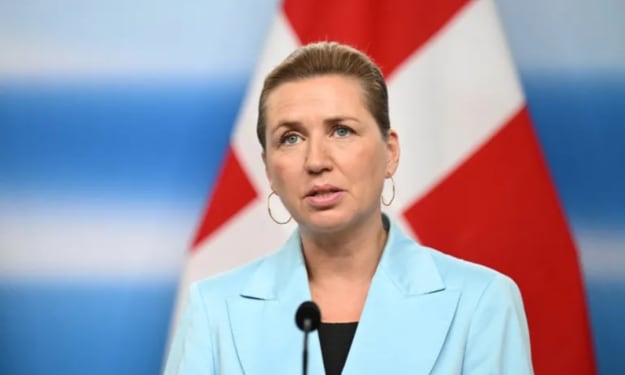
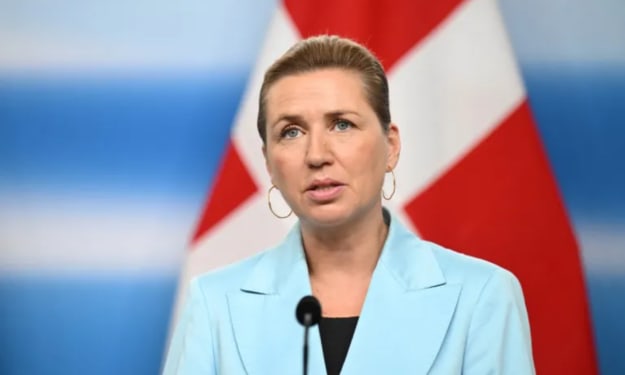
Denmark’s Prime Minister Warns Greenland Showdown Is at a ‘Decisive Moment’. AI-Generated.
A Warning That Signals Rising Tension When Denmark’s Prime Minister said the Greenland situation has reached a “decisive moment,” it was more than a dramatic turn of phrase. It was a clear signal that the world’s largest island—long viewed as remote and strategically quiet—is now at the center of intensifying global attention. Greenland has become a focal point where great-power rivalry, Arctic security, climate change, and self-determination collide. For Denmark, which governs Greenland as an autonomous territory within the Kingdom of Denmark, the stakes are unusually high. Decisions made now could shape the island’s future for decades and redefine Denmark’s role in Arctic geopolitics. Why Greenland Suddenly Matters So Much Greenland has always been strategically important, but melting Arctic ice has transformed its value. As climate change opens new shipping routes and access to natural resources, Greenland’s geographic position between North America and Europe has become more significant than ever. The island sits along vital transatlantic air and sea routes and hosts critical military infrastructure, including a key U.S. base used for missile warning and space surveillance. At the same time, Greenland holds deposits of rare earth minerals essential for modern technology and defense systems—resources that global powers are eager to secure. What was once a frozen frontier is now a strategic prize. Denmark’s Balancing Act Denmark faces a complex challenge. On one hand, it is responsible for Greenland’s defense and foreign policy. On the other, Greenland has its own elected government and a strong movement advocating for greater independence—or eventual statehood. The prime minister’s warning reflects concern that external pressures, particularly from major powers, could exploit this delicate balance. Denmark must reassure Greenlanders that their autonomy and interests are protected, while also signaling to allies and rivals that sovereignty is not negotiable. This balancing act has become more difficult as international interest intensifies. The Role of the United States The United States has long had a military presence in Greenland, but its interest has grown more visible in recent years. Former President Donald Trump’s suggestion that the U.S. should buy Greenland was widely ridiculed at the time, yet it underscored a serious strategic calculation. Washington sees Greenland as essential to Arctic defense, early-warning systems, and countering rival influence in the High North. Denmark, while closely allied with the U.S. through NATO, has made it clear that Greenland is not for sale and that any cooperation must respect Greenlandic and Danish sovereignty. Still, the episode revealed how exposed Denmark feels when powerful allies publicly express interest in its territory. China’s Quiet Presence Raises Alarms While U.S. interest is open and military-focused, China’s approach has been more subtle. Beijing has sought to invest in Greenland’s infrastructure, mining projects, and research initiatives. Though many proposals have been blocked or scaled back, they raised red flags in Copenhagen and Washington. Denmark’s leadership fears that economic influence could translate into political leverage over time. For a small population spread across a vast island, foreign investment can be tempting—but it also carries long-term risks. The prime minister’s remarks reflect growing urgency to ensure Greenland’s development does not come at the cost of strategic vulnerability. Greenland’s Own Voice in the Debate Crucially, Greenland is not a passive observer. Its leaders have increasingly asserted their right to decide the island’s future. Many Greenlanders support gradual independence from Denmark, driven by cultural identity, economic ambition, and a desire for greater control over resources. However, independence raises difficult questions. Can Greenland sustain itself economically? How would defense and foreign relations be managed? And how can it avoid becoming overly dependent on powerful external partners? Denmark’s challenge is to support Greenland’s aspirations while ensuring decisions are made freely, not under pressure from global competition. NATO and Arctic Security Concerns Greenland’s strategic importance has also elevated its role within NATO’s Arctic planning. As Russia expands its military presence across the Arctic and China deepens its regional ambitions, alliance leaders increasingly view Greenland as a critical node in Northern defense. Denmark’s prime minister has emphasized that Greenland’s security is inseparable from European and transatlantic security. The “decisive moment” she refers to may involve strengthening defense cooperation, increasing investment, and clarifying responsibilities before tensions escalate further. In this context, inaction could be more dangerous than decisive leadership. Climate Change as a Geopolitical Force Climate change is not just reshaping Greenland’s environment—it is reshaping global power dynamics. Retreating ice makes mineral extraction and shipping more viable, accelerating interest from foreign governments and corporations. For Denmark and Greenland, this creates both opportunity and risk. Economic development could support independence ambitions, but it could also attract unwanted influence and environmental damage. The prime minister’s warning suggests recognition that climate-driven change is moving faster than political frameworks can adapt. What Does “Decisive Moment” Really Mean? The phrase points to a narrowing window for action. Denmark must now: Reaffirm its commitment to Greenland’s autonomy and welfare Set clear boundaries for foreign involvement Strengthen security cooperation without escalating tensions Support sustainable development that benefits Greenlanders first Failing to act decisively could allow external powers to shape outcomes by default. A Test of Leadership and Sovereignty Greenland’s future will not be decided overnight, but the pressure is unmistakable. Denmark’s prime minister is signaling that this is a moment requiring clarity, unity, and long-term vision. For a small country managing a territory of enormous strategic value, the challenge is immense. Yet it also offers an opportunity—to show that sovereignty, cooperation, and respect for self-determination can coexist, even in an era of great-power rivalry. Final Thoughts Denmark’s warning about a “decisive moment” in the Greenland showdown captures the urgency of a rapidly changing Arctic. What happens next will shape not only Greenland’s destiny, but also the balance of power in the High North. As ice melts and interest grows, Greenland is no longer on the margins of global politics. It is at the center—and Denmark knows it must act now, before decisions are made for it.
By Muhammad Hassan2 days ago in The Swamp
Two Men Died After Falls at an Overstretched A&E. AI-Generated.
A Tragedy That Raises Urgent Questions The deaths of two men following falls at an overstretched Accident and Emergency (A&E) department have sent shockwaves through the healthcare community. While hospitals are places of healing, these incidents highlight a harsh reality: when emergency departments are under extreme pressure, patient safety can be compromised in ways that are both tragic and preventable. These cases are not just about individual mistakes or isolated failures. They point to deeper, systemic problems facing emergency healthcare—problems that demand urgent attention, accountability, and reform. Understanding What Happened According to reports, the two men suffered fatal injuries after falling while receiving care in an overcrowded A&E unit. Investigations suggest that extreme pressure on staff, long waiting times, and limited supervision played a role in the circumstances surrounding the falls. Importantly, these incidents did not occur in a vacuum. They happened in a setting already struggling to cope with rising patient numbers, staff shortages, and limited physical space. While the precise details are subject to formal inquiries, the broader context is painfully familiar to both healthcare workers and patients. A&E Departments Under Relentless Strain Across the UK, A&E departments are facing unprecedented demand. Seasonal illnesses, an ageing population, and delays in social care have all contributed to overcrowded emergency rooms. Patients often wait hours—or even days—on trolleys for beds to become available. When departments become overstretched, the risk of accidents increases. Staff must monitor dozens of patients simultaneously, many of whom are elderly, confused, injured, or at risk of falling. In such conditions, even the most dedicated professionals can struggle to provide the level of observation each patient needs. Falls in Hospitals: A Known Risk Falls are among the most common patient safety incidents in hospitals. They are especially dangerous for older adults and those with underlying medical conditions. Hospitals typically have protocols in place to assess fall risk, such as mobility checks, regular monitoring, and the use of bed rails or alarms. However, these safeguards rely heavily on adequate staffing and time—two resources often in short supply in overcrowded A&E units. When corridors are filled with trolleys and staff are stretched thin, maintaining consistent fall prevention becomes far more difficult. The Human Cost Behind the Headlines Behind statistics and policy discussions are real people—families who entrusted their loved ones to the healthcare system and now face unimaginable loss. For them, explanations about “system pressure” offer little comfort. Families often ask difficult questions: Why wasn’t someone there to help? Were warning signs missed? Could these deaths have been prevented? These questions underscore the emotional toll such incidents take, not only on relatives but also on healthcare workers involved, many of whom experience guilt and distress even when systemic failures are to blame. Staff Under Pressure, Not at Fault It is crucial to distinguish between blame and responsibility. Frontline NHS staff repeatedly warn that unsafe conditions are becoming normalized. Doctors, nurses, and support staff frequently work long shifts with insufficient breaks, managing more patients than guidelines recommend. In many cases, staff raise concerns internally long before tragedies occur. When those warnings go unheeded due to funding constraints or workforce shortages, risk accumulates. The deaths of these two men highlight what happens when pressure reaches a breaking point. Investigations and Accountability Formal investigations into the deaths are now underway, aiming to establish exactly what went wrong and whether protocols were followed. Such reviews are essential—not to assign individual blame, but to identify systemic weaknesses and prevent future harm. Coroners, hospital trusts, and regulatory bodies all play a role in ensuring transparency. Past cases show that meaningful change often follows public scrutiny, especially when failings are clearly linked to overcrowding and under-resourcing. However, families and patient advocates argue that lessons are too often “learned” without being fully implemented. The Wider NHS Context These incidents come at a time when the NHS faces one of the most challenging periods in its history. Recruitment struggles, staff burnout, and funding pressures are combining with record demand for emergency care. Delayed discharges—patients medically fit to leave hospital but unable to do so due to lack of social care—create bottlenecks that spill back into A&E. The result is a system where emergency departments become holding areas rather than rapid-response units. In such an environment, safety risks multiply. What Needs to Change? Experts and healthcare leaders point to several urgent priorities: Increased staffing levels, especially in emergency departments Better-designed A&E spaces that reduce crowding and fall risks Stronger early-warning systems for vulnerable patients Investment in social care, to ease pressure on hospitals Listening to frontline staff, who often identify risks before harm occurs Without structural reform, similar tragedies are likely to recur. Public Trust and the Cost of Inaction Public trust in emergency healthcare depends on the belief that hospitals are safe, even under pressure. When deaths occur in circumstances linked to overcrowding, that trust is shaken. The danger lies in normalizing crisis conditions. If overstretched A&E departments become accepted as the standard rather than the exception, patient safety will continue to suffer—and avoidable harm will follow. Final Thoughts The deaths of two men after falls in an overstretched A&E are a stark reminder that healthcare systems have limits. Compassion, professionalism, and dedication cannot substitute for adequate resources and safe working conditions. These tragedies should not fade quietly into statistics. They must serve as a catalyst for honest reckoning and decisive action. Patient safety depends not only on the skill of healthcare workers, but on the systems that support—or fail—them. Until overcrowding and understaffing are addressed at their roots, stories like this will continue to emerge, each one a painful reminder of the human cost of systemic strain.
By Muhammad Hassan2 days ago in The Swamp
Too Much Screen Time May Be Shrinking Toddlers’ Vocabulary. AI-Generated.
Screens Are Everywhere—Even in Early Childhood In today’s digital world, screens are impossible to avoid. Smartphones, tablets, televisions, and smart devices are now part of everyday family life. For many parents, screens feel like a helpful tool—keeping toddlers entertained, calm, and occupied during busy moments. But child development experts are raising a growing concern: excessive screen time may be limiting toddlers’ vocabulary development. Language growth in the first few years of life is critical. These early words form the foundation for communication, learning, and social skills later on. When screens begin to replace human interaction, experts say, toddlers may miss essential opportunities to learn language naturally. Why the Toddler Years Matter So Much Between the ages of one and three, children experience rapid brain development. During this period, toddlers learn new words at an astonishing pace—often several each day. This learning happens best through real-life interaction, such as talking, singing, reading, and responding to facial expressions and gestures. Vocabulary doesn’t grow simply by hearing words. It develops through back-and-forth communication—when a toddler babbles, points, or asks questions, and an adult responds. These “serve and return” interactions are essential for building strong language skills. Screens, experts warn, cannot fully replicate this process. What Experts Are Warning About Pediatricians and child psychologists increasingly report a pattern: toddlers with high screen exposure often show delayed speech or smaller vocabularies compared to peers who spend more time in interactive play. The concern is not just about screens existing, but how much time they occupy. When screens dominate a toddler’s day, they can crowd out activities that naturally encourage speech, such as imaginative play, shared reading, and simple conversation. Experts emphasize that language learning is social by nature. A screen may talk at a child, but it rarely talks with them in a meaningful way. Passive Watching vs. Active Learning Not all screen time is equal. Educational programs are often marketed as language-boosting tools, but research suggests that passive viewing—where a child watches without interaction—offers limited benefits for toddlers. Even high-quality educational content struggles to replace real engagement. A video cannot adjust its responses to a child’s tone, interest, or confusion. It cannot pause to encourage a toddler to try a new word or celebrate their attempts at speech. In contrast, a caregiver can instantly respond, repeat words, simplify language, and provide emotional feedback—all crucial for vocabulary growth. The Hidden Cost of Background Screens One overlooked issue is background screen exposure. Even when a toddler is not actively watching, a TV playing in the background can reduce the amount and quality of conversation in the home. Studies show that adults tend to talk less to children when screens are on. Fewer words spoken by caregivers means fewer words heard by toddlers. Over time, this reduction can have a measurable impact on vocabulary size. In this way, screens affect language development indirectly as well as directly. Screen Time and Attention Skills Language learning requires focus. Toddlers need time to observe, listen, and process sounds. Fast-paced screen content—filled with quick cuts, bright visuals, and constant stimulation—can make it harder for young children to sustain attention during slower, real-world conversations. Experts worry that excessive screen exposure may condition toddlers to expect constant stimulation, making it more difficult for them to engage in activities like listening to a story or having a conversation. This doesn’t just affect vocabulary—it can influence broader learning habits later in life. What Do Experts Recommend? Health organizations and child development specialists generally advise very limited screen time for toddlers, especially under the age of two. When screens are used, they recommend: Choosing slow-paced, age-appropriate content Watching together with the child rather than leaving them alone Talking about what’s on the screen to turn it into a shared activity Balancing screen time with plenty of real-world interaction The goal is not to ban screens entirely, but to ensure they do not replace human connection. The Power of Simple Everyday Interaction The good news is that boosting a toddler’s vocabulary does not require expensive tools or structured lessons. Everyday moments are powerful learning opportunities. Talking through daily activities—like cooking, dressing, or walking outside—exposes toddlers to new words in meaningful contexts. Reading aloud, singing songs, and playing pretend games all encourage language use. Even short conversations, when repeated often, can have a lasting impact on vocabulary development. Parental Guilt vs. Practical Balance Many parents feel pressure or guilt around screen use. Life is busy, and screens often feel like a necessary break. Experts acknowledge this reality and stress that moderation matters more than perfection. The key is awareness. Understanding how screen time affects language development allows parents to make small, intentional changes—such as turning off background TV, setting screen-free times, or replacing some screen use with shared play. Language growth is resilient, especially when children are given consistent opportunities to interact and communicate. Looking Ahead: Why Early Vocabulary Matters A strong early vocabulary is linked to better reading skills, academic performance, and social confidence later in life. While screens will always be part of modern childhood, experts caution against letting them dominate the most important years for language development. Toddlers don’t just need words—they need people who talk, listen, and respond. No app or video can fully replace that human connection. Final Thoughts Excessive screen time may seem harmless, but experts warn it can quietly limit toddlers’ vocabulary by reducing meaningful interaction. The solution isn’t fear or strict bans—it’s balance. By prioritizing conversation, play, and shared attention, parents and caregivers can support healthy language development while still navigating a digital world. In the end, the most powerful learning tool a toddler has isn’t a screen—it’s a responsive, engaged human voice.
By Muhammad Hassan2 days ago in The Swamp
Bethany Beyond the Jordan: The Sacred Place of Jesus’ Baptism. AI-Generated.
A Sacred Place Hidden in Plain Sight Along the eastern bank of the Jordan River, just a short distance from the Dead Sea, lies a place revered by millions of Christians around the world: Bethany Beyond the Jordan. Known in Arabic as Al-Maghtas, this site is widely recognized as the location where Jesus Christ was baptized by John the Baptist. Though modest in appearance, its spiritual weight is immense, making it one of the holiest places in Christianity. Unlike grand cathedrals or bustling pilgrimage cities, Bethany Beyond the Jordan offers something rare—silence, simplicity, and a powerful sense of sacred history. It is here, according to Christian tradition and strong archaeological evidence, that Jesus’ public ministry began. Biblical Roots of Bethany Beyond the Jordan The Gospel of John provides the clearest reference to this site, describing it as “Bethany beyond the Jordan, where John was baptizing.” For centuries, scholars debated the exact location of this biblical Bethany. Some believed it lay west of the river, while others argued for the eastern bank. Modern archaeology has largely settled the debate. Excavations in Jordan uncovered ancient baptism pools, churches, monasteries, and water systems dating back to the Roman and Byzantine periods—all pointing to this area as the original baptism site. Early Christian pilgrims also recorded journeys to this very location, strengthening its authenticity. John the Baptist and the Meaning of Baptism Bethany Beyond the Jordan is inseparable from the figure of John the Baptist, a prophet who preached repentance and spiritual renewal. His act of baptizing Jesus transformed baptism from a symbol of repentance into a cornerstone sacrament of Christianity. The baptism of Jesus represents humility, obedience, and divine affirmation. According to scripture, the heavens opened, the Holy Spirit descended like a dove, and a voice declared Jesus as God’s beloved Son. This moment marks the beginning of Jesus’ mission and gives the site its profound theological importance. For believers, standing near the waters of the Jordan is not just about history—it is about reconnecting with faith at its source. Archaeology That Brings Scripture to Life What sets Bethany Beyond the Jordan apart from many holy sites is the strength of its archaeological record. Researchers have uncovered: Ruins of early Christian churches built to honor the baptism site Monastic cells where early monks lived and prayed Large baptism pools used by pilgrims Ancient water channels connecting the site to the Jordan River These findings show that Christians revered this location from the earliest centuries of the faith. Rather than relying solely on tradition, Bethany Beyond the Jordan is supported by physical evidence that aligns closely with biblical descriptions. Recognition as a World Heritage Site In 2015, UNESCO officially recognized Bethany Beyond the Jordan as a World Heritage Site, citing its outstanding universal value and deep religious significance. This recognition placed the site alongside the world’s most important cultural and spiritual landmarks. Jordan’s role in preserving and promoting the site has been widely praised. Despite being located in a region often associated with conflict, Bethany Beyond the Jordan stands as a symbol of peace, coexistence, and shared heritage among Christians, Muslims, and Jews. A Place of Pilgrimage and Papal Visits Over the years, Bethany Beyond the Jordan has welcomed pilgrims from every corner of the world. Many describe their visit as deeply emotional, even transformative. The quiet landscape, combined with the slow flow of the Jordan River, creates an atmosphere of reflection rarely found at more crowded holy sites. Several popes, including Pope John Paul II, Pope Benedict XVI, and Pope Francis, have visited the site, reinforcing its importance within the global Christian community. These visits also elevated international awareness of Jordan as a custodian of Christian holy places. The Jordan River: More Than Just Water The Jordan River itself holds immense symbolic power. In the Bible, it represents transition, renewal, and divine intervention. From the Israelites crossing into the Promised Land to Jesus’ baptism, the river is a recurring setting for spiritual turning points. At Bethany Beyond the Jordan, the river becomes more than geography—it becomes theology. For many pilgrims, touching or seeing its waters is a reminder of spiritual cleansing and new beginnings, echoing the meaning of baptism itself. Interfaith Importance and Cultural Harmony While Bethany Beyond the Jordan is a Christian holy site, its significance extends beyond one faith. Jordan, a Muslim-majority country, has actively protected Christian heritage, offering a powerful example of interfaith respect. The site demonstrates how sacred spaces can unite rather than divide. In a region often portrayed through the lens of conflict, Bethany Beyond the Jordan tells a different story—one of shared history, mutual reverence, and peaceful coexistence. Visiting Bethany Beyond the Jordan Today Today, the site is carefully managed to preserve its spiritual atmosphere. Modern walkways guide visitors through ruins without disturbing the landscape. Informational signs explain both the biblical and archaeological significance, making the experience educational as well as devotional. Unlike many major pilgrimage destinations, Bethany Beyond the Jordan remains calm and uncluttered. This simplicity allows visitors to focus not on spectacle, but on meaning. Why Bethany Beyond the Jordan Still Matters In a fast-paced, modern world, Bethany Beyond the Jordan offers something timeless. It reminds believers of humility, faith, and beginnings. It reminds historians that ancient texts can align with physical evidence. And it reminds the global community that sacred heritage deserves protection, regardless of borders or beliefs. More than a historical landmark, Bethany Beyond the Jordan is a living testament to the moment when a quiet act in a river changed the course of religious history. Final Reflections Bethany Beyond the Jordan is not defined by grandeur, but by depth. It stands as a sacred bridge between scripture and soil, faith and history. For Christians, it marks the beginning of Jesus’ mission. For the world, it stands as a symbol of spiritual heritage preserved with dignity and care. In the stillness of the Jordan’s waters, the story of baptism continues to flow—inviting reflection, renewal, and reverence for generations to come
By Muhammad Hassan2 days ago in The Swamp
Web Application Firewall Market Outlook 2025–2033. AI-Generated.
Introduction: Guarding the Digital Frontlines In an era where business operations, financial transactions, healthcare services, and public communication increasingly rely on web applications, the protection of these digital assets has become mission-critical. Web Application Firewalls (WAFs) are now at the forefront of cybersecurity strategies, acting as a powerful shield against threats such as SQL injection, cross-site scripting (XSS), distributed denial-of-service (DDoS) attacks, and sophisticated bot traffic.
By Marthan Sir2 days ago in The Swamp
U.S. Pushes for Faster Action to Cut Reliance on China for Rare Earths. AI-Generated.
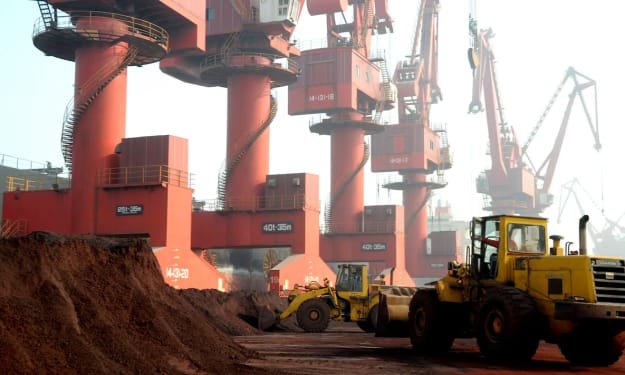
Rare Earths: Small Minerals, Massive Power Rare earth elements may sound obscure, but they sit at the heart of modern life. From smartphones and electric vehicles to fighter jets and missile systems, these minerals are essential to both civilian technology and national defense. That reality is why the United States is now pushing for quicker, more decisive action to reduce its dependence on China for rare earth supplies. For years, Washington talked about diversification. Now, it wants speed. The shift reflects growing concern that reliance on a geopolitical rival for critical materials is no longer sustainable in an era of strategic competition. Why China’s Dominance Worries Washington China controls roughly 60–70% of global rare earth mining and an even larger share of processing and refining. Even when rare earths are mined elsewhere, they are often shipped to China for processing. This gives Beijing enormous leverage over global supply chains. U.S. officials fear that in a moment of heightened tension—over Taiwan, trade disputes, or technology restrictions—China could restrict exports. Beijing has already hinted at this possibility in the past, using export controls as a diplomatic tool. From Washington’s perspective, this is not a hypothetical risk. It is a strategic vulnerability that touches everything from renewable energy goals to military readiness. Rare Earths and National Security Few issues unite Democrats and Republicans as strongly as national security. Rare earths fall squarely into that category. Advanced weapons systems rely on these materials for precision guidance, radar, and communications. A disrupted supply could delay production, weaken deterrence, and raise costs dramatically. Pentagon officials have repeatedly warned that dependence on China for defense-critical materials undermines U.S. security. As a result, rare earth supply chains are increasingly viewed through the same lens as energy independence once was. This framing explains the urgency behind Washington’s push for faster action. Why “Quicker Action” Matters Now The U.S. has discussed rare earth independence for over a decade, yet progress has been slow. Mining projects face environmental reviews, local opposition, and long development timelines. Processing facilities require heavy investment and technical expertise that has largely migrated to China. What has changed is the global context. Rising U.S.-China tensions, supply-chain disruptions during the pandemic, and growing demand for clean energy technologies have compressed timelines. Waiting another decade is no longer acceptable to policymakers. Quicker action now means fast-tracking permits, increasing federal funding, and working more aggressively with allies. The Role of Allies in Diversification The United States does not expect to solve the rare earth challenge alone. Instead, Washington is pushing for a “friend-shoring” strategy—building supply chains with trusted partners rather than relying on geopolitical rivals. Australia, Canada, Japan, and several European countries are key players in this effort. Australia already hosts significant rare earth mining operations, while Japan has invested heavily in reducing its own dependence on China after facing export restrictions in the past. By coordinating investment, sharing technology, and aligning regulations, the U.S. hopes to create an alternative ecosystem that can compete with China’s dominance. Environmental and Economic Tensions Rare earth mining is not clean. It involves toxic waste, radioactive byproducts, and significant environmental risks. Ironically, minerals essential for green technologies come with heavy environmental costs at the extraction stage. This creates a political dilemma. Americans want clean energy, but often oppose mining projects in their own communities. Faster action will require balancing environmental protections with strategic necessity—a challenge that has stalled projects in the past. The Biden administration, like administrations before it, faces pressure to prove that domestic mining can be done responsibly without undermining climate commitments. China’s Likely Response Beijing is watching these developments closely. While China has not yet weaponized rare earth exports on a large scale, it understands the leverage it holds. At the same time, China is moving up the value chain—focusing more on advanced manufacturing and less on raw material exports. If the U.S. accelerates diversification successfully, China may respond by tightening export controls in the short term while investing in higher-end technologies that keep it indispensable in other ways. This dynamic underscores that rare earths are not just a resource issue, but part of a broader strategic competition. Economic Implications Beyond Security Reducing reliance on China is not only about defense. It is also about economic resilience. Supply disruptions during the pandemic exposed how fragile global supply chains can be. Rare earth shortages could slow electric vehicle adoption, raise consumer prices, and delay infrastructure projects. By pushing for faster action, Washington hopes to stabilize future growth and protect key industries. Domestic production and allied partnerships could also create jobs and spur innovation, particularly in rural and industrial regions. However, building new supply chains will not be cheap. Consumers and taxpayers may face higher costs in the short term as alternatives to Chinese supplies come online. Challenges That Could Slow Progress Despite political momentum, obstacles remain. Mining projects take years to develop. Processing facilities require specialized knowledge. Workforce shortages, local resistance, and regulatory complexity all pose risks to rapid progress. There is also the danger of overpromising. Policymakers must manage expectations, making clear that reducing reliance on China is a long-term effort, even if action accelerates now. Failure to deliver tangible results could weaken public support and give critics ammunition. Final Thoughts The U.S. push for quicker action in reducing reliance on China for rare earths marks a turning point. What was once a niche policy issue has become a strategic priority at the highest levels of government. This is not about cutting China out of the global economy entirely. It is about ensuring that no single country can control materials essential to modern life and national defense. Speed, coordination, and political will will determine whether Washington succeeds. As competition intensifies, rare earths will remain a quiet but powerful force shaping the future of technology, security, and global influence. The race is no longer just about who has the minerals—but who controls the supply chains that define the 21st centur
By Muhammad Hassan2 days ago in The Swamp
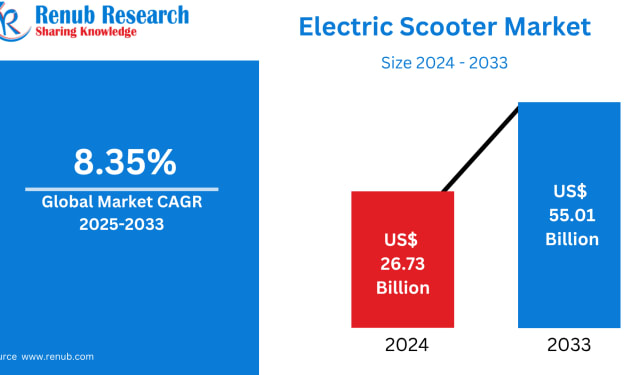
Electric Kick Scooter Market Outlook 2025–2033. AI-Generated.
Introduction Once seen as novelty gadgets for short commutes, electric kick scooters have rapidly become a defining symbol of modern urban mobility. From crowded European capitals to fast-growing Asian megacities, these compact vehicles are reshaping how people navigate short distances. Their appeal lies in a compelling combination of affordability, portability, and zero tailpipe emissions—attributes that align perfectly with global efforts to reduce congestion and carbon footprints.
By Marthan Sir2 days ago in The Swamp
Europe and South America Seal a Trade Pact for the Trump Era. AI-Generated.
A Deal Decades in the Making After more than two decades of negotiations, Europe and South America have finally moved closer to sealing one of the world’s largest trade agreements: the EU–Mercosur pact. Covering the European Union and the Mercosur bloc—Brazil, Argentina, Uruguay, and Paraguay—the agreement represents a market of nearly 780 million people. But what makes this moment especially significant is timing. The deal is being framed, openly and strategically, as preparation for a potential return of Donald Trump-era trade policies. In a world where tariffs, trade wars, and “America First” rhetoric reshaped global commerce, Europe and South America are signaling that they want stability, predictability, and diversification—before geopolitical shocks force their hand again. Why the Trump Era Still Shapes Global Trade Even years after leaving office, Donald Trump’s approach to trade continues to influence global economic planning. His presidency normalized aggressive tariffs, skepticism toward multilateral agreements, and a willingness to weaponize trade for political goals. With Trump once again a central figure in U.S. politics, governments around the world are preparing for renewed uncertainty. For the EU, the lesson was clear: overdependence on any single market—especially the United States—creates vulnerability. For South American economies long reliant on commodity exports and limited trade partners, the risk is even greater. The EU–Mercosur pact is, in many ways, a hedge against a future where access to the U.S. market becomes more restricted or unpredictable. What the EU–Mercosur Agreement Promises At its core, the agreement aims to eliminate tariffs on more than 90% of goods traded between the two regions. European exporters—particularly carmakers, machinery producers, and pharmaceutical companies—stand to gain improved access to South American markets. In return, Mercosur countries would benefit from easier entry for agricultural exports such as beef, soy, sugar, and poultry into Europe. Beyond tariffs, the pact includes provisions on: Rules of origin, making it easier for businesses to qualify for preferential treatment Public procurement, opening government contracts to foreign companies Intellectual property protections, important for European brands Sustainable development commitments, including labor rights and environmental standards Supporters argue that this combination creates a modern, rules-based trade framework that strengthens both regions economically and politically. The Environmental and Political Backlash Despite its economic promise, the agreement remains controversial—especially in Europe. Environmental groups and some EU member states argue that increased agricultural exports from South America could accelerate deforestation in the Amazon. French farmers, in particular, fear being undercut by cheaper South American beef produced under looser environmental and animal welfare standards. These concerns stalled ratification for years. What has changed now is political urgency. European leaders increasingly view the pact as a strategic necessity, even if it requires side agreements, enforcement mechanisms, or sustainability add-ons to address critics. In short, geopolitical pressure is outweighing political hesitation. South America’s Strategic Calculation For Mercosur nations, the deal is about more than trade—it’s about relevance. South America has often found itself caught between major powers: the United States, China, and the European Union. By deepening ties with Europe, Mercosur countries gain leverage, diversification, and access to technology and investment. Brazil, the bloc’s largest economy, sees the pact as a way to modernize its industrial base and attract European capital. Argentina, struggling with inflation and debt, hopes expanded exports will stabilize its economy. Smaller members like Uruguay and Paraguay view the agreement as a gateway to global markets they otherwise struggle to reach. Importantly, the pact also reduces overreliance on China, which has become South America’s dominant trading partner over the past decade. A Message to Washington While no official statement names the United States, the message is unmistakable. Europe and South America are preparing for a world where U.S. trade policy may once again turn inward. By locking in long-term access to each other’s markets, they are insulating themselves from sudden tariff shocks or political bargaining. This doesn’t mean cutting ties with the U.S.—far from it. Instead, it reflects a broader shift toward a multipolar trade system, where regions rely less on a single economic superpower. If Trump-era policies return, Washington may find that its traditional partners have already adapted. Challenges Still Ahead Sealing the deal politically is not the same as implementing it smoothly. Ratification still requires approval from EU institutions and member states, some of which remain skeptical. Monitoring environmental commitments will be crucial, as failure could reignite opposition and undermine public trust. There is also the risk that domestic politics—on either side of the Atlantic—could derail progress. Elections, leadership changes, and economic downturns all have the power to slow or reshape the agreement. Yet compared to previous years, momentum now appears stronger than resistance. What This Means for Global Trade If finalized, the EU–Mercosur pact would be one of the largest trade agreements in history. More importantly, it would signal that multilateral trade deals are not dead—even in an era of nationalism and protectionism. For businesses, it means new supply chains and investment opportunities. For governments, it offers a template for balancing economic growth with environmental responsibility. And for the global system, it represents a quiet but firm pushback against trade isolationism. Final Thoughts Europe and South America sealing a trade pact for the Trump era is not about the past—it’s about the future. It reflects a world learning from recent disruptions and choosing cooperation over confrontation. Whether the agreement lives up to its promise will depend on enforcement, trust, and political will. But one thing is clear: as uncertainty looms, regions are no longer waiting to react. They are preparing in advance—and reshaping global trade without asking Washington for permission.
By Muhammad Hassan2 days ago in The Swamp
Greed in the Desert: How the Promise of Gold Turned Survival Into a Death Trap
The film begins with a man named Sam who is traveling on a train. His life is not going well at all. At every turn, he faces problems. It is revealed that he is going to a deserted, desert-like city where he has to start a new job.
By Filmon Ke Raaz | Movie Mysteries Explained2 days ago in The Swamp
Venezuela Has a Ton of Oil. It Also Has Something Else America Needs. AI-Generated.
Venezuela’s name has long been synonymous with oil — and for good reason. The South American nation holds some of the largest proven crude oil reserves in the world, estimated at more than 300 billion barrels, surpassing even Saudi Arabia. � These vast fossil fuel resources have made Venezuela a central player in global energy markets and a key focus of U.S. strategic interest, especially as Washington looks to diversify supply and reduce dependence on adversarial producers. � Wikipedia Axios But oil is only part of Venezuela’s resource story. Beyond hydrocarbons, the country also sits atop significant critical minerals and natural resources that increasingly matter to modern economies, defense industries, and emerging technologies — assets that America is watching closely for their long-term strategic value. � finance.yahoo.com 1. The Energy Giant Next Door Venezuela’s oil reserves have historically underpinned its political and economic identity. These reserves reside predominantly in the Orinoco Belt, a vast geological formation rich in extra-heavy crude. � Before sanctions and decades of mismanagement, Venezuela exported large volumes of oil to the U.S., at times reaching over a million barrels per day. Today, U.S. negotiations aim to revive access to Venezuelan crude, with recent deals potentially redirecting tens of millions of barrels for American refineries, a significant geopolitical shift. � Wikipedia nypost.com For Washington, securing reliable energy sources remains a top priority. Venezuelan oil not only offers supply diversification but also preserves influence in a region historically dominated by U.S. energy interests. This has become even more salient in light of global energy volatility and shifting alliances that challenge traditional supply chains. � marketwatch.com 2. Critical Minerals: The Hidden Strategic Prize While oil grabs headlines, critical minerals are quietly shaping the geopolitical future. These metals — including aluminum, nickel, copper, and tantalum — are essential in everything from electric vehicles and renewable energy systems to microelectronics and defense applications. � aol.com Experts believe Venezuela has unverified but potentially substantial deposits of these materials. � Among them are minerals often associated with technological manufacturing and advanced industries: finance.yahoo.com Coltan, a source of tantalum used in capacitors and high-tech devices Bauxite, a primary source of aluminum Rare earth elements essential for motors, lasers, and batteries � aol.com These resources are crucial for the U.S. because of the country’s heavy reliance on global supply chains, many of which are dominated by China. Securing alternative sources of critical minerals could help reduce that dependence and strengthen America’s technological competitiveness. However, the scale and economic viability of these deposits remain uncertain, and extraction would face significant challenges. � finance.yahoo.com 3. Natural Gas: A Strategic Energy Hedge Beyond oil and minerals, Venezuela also holds substantial natural gas reserves — ranking among the top in the hemisphere. Although gas development has lagged behind oil due to infrastructure limitations, these deposits could provide a valuable strategic energy hedge for future global energy security. � Wikipedia Natural gas plays a key role in electricity generation and industrial processes worldwide. Expanding Venezuelan natural gas production could eventually help diversify energy imports and offer alternatives to markets currently dependent on Russian or Middle Eastern supplies. � Wikipedia 4. Gold and Other Resource Wealth While not as often discussed as oil, Venezuela’s gold reserves — the largest in Latin America — and other metals like iron ore and diamonds add layers of economic potential. � Although the development of these sectors has been limited by economic instability and security concerns, they represent another dimension of Venezuela’s resource wealth that could matter in the long term. � Ventura Securities Ventura Securities 5. The Geopolitical Chessboard Venezuela’s resource profile matters not only for what lies beneath the ground but for how it shapes international competition. For decades, China was Venezuela’s top oil buyer, strengthening its influence in South America. � The recent U.S. moves to secure Venezuelan energy access and broader natural resource leverage reflect a broader strategic realignment in global geopolitics, where access to essential materials and energy resources drives security thinking as much as military power or diplomacy. � WRAL News Reuters The possibility of accessing Venezuela’s critical minerals and gas, in addition to oil, gives Washington a long-term interest in seeing these new sectors develop — provided that investment, governance, and security conditions improve. � finance.yahoo.com Conclusion: Beyond Black Gold Venezuela’s oil reserves have made it a perennial subject of global energy politics, and recent U.S. efforts to control Venezuelan oil sales underline how strategic that resource remains. � But the country’s hidden resource base — minerals, metals, natural gas, and more — offers a broader, potentially transformative strategic value that America and other global powers are now beginning to reckon with. � Axios finance.yahoo.com In a world where energy and technology supply chains increasingly define economic and military strength, Venezuela’s resource portfolio is more than just black gold — it’s a resource mosaic that could shape geopolitical relationships and industrial futures for decades to come.
By Fiazahmedbrohi 2 days ago in The Swamp