
Too Much Screen Time May Be Shrinking Toddlers’ Vocabulary
Why experts warn that excessive screen exposure can slow early language development


Screens Are Everywhere—Even in Early Childhood
In today’s digital world, screens are impossible to avoid. Smartphones, tablets, televisions, and smart devices are now part of everyday family life. For many parents, screens feel like a helpful tool—keeping toddlers entertained, calm, and occupied during busy moments. But child development experts are raising a growing concern: excessive screen time may be limiting toddlers’ vocabulary development.
Language growth in the first few years of life is critical. These early words form the foundation for communication, learning, and social skills later on. When screens begin to replace human interaction, experts say, toddlers may miss essential opportunities to learn language naturally.
Why the Toddler Years Matter So Much
Between the ages of one and three, children experience rapid brain development. During this period, toddlers learn new words at an astonishing pace—often several each day. This learning happens best through real-life interaction, such as talking, singing, reading, and responding to facial expressions and gestures.
Vocabulary doesn’t grow simply by hearing words. It develops through back-and-forth communication—when a toddler babbles, points, or asks questions, and an adult responds. These “serve and return” interactions are essential for building strong language skills.
Screens, experts warn, cannot fully replicate this process.
What Experts Are Warning About
Pediatricians and child psychologists increasingly report a pattern: toddlers with high screen exposure often show delayed speech or smaller vocabularies compared to peers who spend more time in interactive play.
The concern is not just about screens existing, but how much time they occupy. When screens dominate a toddler’s day, they can crowd out activities that naturally encourage speech, such as imaginative play, shared reading, and simple conversation.
Experts emphasize that language learning is social by nature. A screen may talk at a child, but it rarely talks with them in a meaningful way.
Passive Watching vs. Active Learning
Not all screen time is equal. Educational programs are often marketed as language-boosting tools, but research suggests that passive viewing—where a child watches without interaction—offers limited benefits for toddlers.
Even high-quality educational content struggles to replace real engagement. A video cannot adjust its responses to a child’s tone, interest, or confusion. It cannot pause to encourage a toddler to try a new word or celebrate their attempts at speech.
In contrast, a caregiver can instantly respond, repeat words, simplify language, and provide emotional feedback—all crucial for vocabulary growth.
The Hidden Cost of Background Screens
One overlooked issue is background screen exposure. Even when a toddler is not actively watching, a TV playing in the background can reduce the amount and quality of conversation in the home.
Studies show that adults tend to talk less to children when screens are on. Fewer words spoken by caregivers means fewer words heard by toddlers. Over time, this reduction can have a measurable impact on vocabulary size.
In this way, screens affect language development indirectly as well as directly.
Screen Time and Attention Skills
Language learning requires focus. Toddlers need time to observe, listen, and process sounds. Fast-paced screen content—filled with quick cuts, bright visuals, and constant stimulation—can make it harder for young children to sustain attention during slower, real-world conversations.
Experts worry that excessive screen exposure may condition toddlers to expect constant stimulation, making it more difficult for them to engage in activities like listening to a story or having a conversation.
This doesn’t just affect vocabulary—it can influence broader learning habits later in life.
What Do Experts Recommend?
Health organizations and child development specialists generally advise very limited screen time for toddlers, especially under the age of two. When screens are used, they recommend:
Choosing slow-paced, age-appropriate content
Watching together with the child rather than leaving them alone
Talking about what’s on the screen to turn it into a shared activity
Balancing screen time with plenty of real-world interaction
The goal is not to ban screens entirely, but to ensure they do not replace human connection.
The Power of Simple Everyday Interaction
The good news is that boosting a toddler’s vocabulary does not require expensive tools or structured lessons. Everyday moments are powerful learning opportunities.
Talking through daily activities—like cooking, dressing, or walking outside—exposes toddlers to new words in meaningful contexts. Reading aloud, singing songs, and playing pretend games all encourage language use.
Even short conversations, when repeated often, can have a lasting impact on vocabulary development.
Parental Guilt vs. Practical Balance
Many parents feel pressure or guilt around screen use. Life is busy, and screens often feel like a necessary break. Experts acknowledge this reality and stress that moderation matters more than perfection.
The key is awareness. Understanding how screen time affects language development allows parents to make small, intentional changes—such as turning off background TV, setting screen-free times, or replacing some screen use with shared play.
Language growth is resilient, especially when children are given consistent opportunities to interact and communicate.
Looking Ahead: Why Early Vocabulary Matters
A strong early vocabulary is linked to better reading skills, academic performance, and social confidence later in life. While screens will always be part of modern childhood, experts caution against letting them dominate the most important years for language development.
Toddlers don’t just need words—they need people who talk, listen, and respond. No app or video can fully replace that human connection.
Final Thoughts
Excessive screen time may seem harmless, but experts warn it can quietly limit toddlers’ vocabulary by reducing meaningful interaction. The solution isn’t fear or strict bans—it’s balance.
By prioritizing conversation, play, and shared attention, parents and caregivers can support healthy language development while still navigating a digital world. In the end, the most powerful learning tool a toddler has isn’t a screen—it’s a responsive, engaged human voice.
About the Creator
Muhammad Hassan
Muhammad Hassan | Content writer with 2 years of experience crafting engaging articles on world news, current affairs, and trending topics. I simplify complex stories to keep readers informed and connected.
Keep reading
More stories from Muhammad Hassan and writers in The Swamp and other communities.
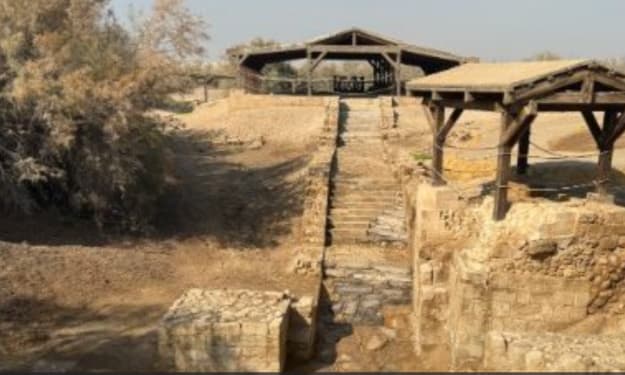
Bethany Beyond the Jordan: The Sacred Place of Jesus’ Baptism
A Sacred Place Hidden in Plain Sight Along the eastern bank of the Jordan River, just a short distance from the Dead Sea, lies a place revered by millions of Christians around the world: Bethany Beyond the Jordan. Known in Arabic as Al-Maghtas, this site is widely recognized as the location where Jesus Christ was baptized by John the Baptist. Though modest in appearance, its spiritual weight is immense, making it one of the holiest places in Christianity. Unlike grand cathedrals or bustling pilgrimage cities, Bethany Beyond the Jordan offers something rare—silence, simplicity, and a powerful sense of sacred history. It is here, according to Christian tradition and strong archaeological evidence, that Jesus’ public ministry began. Biblical Roots of Bethany Beyond the Jordan The Gospel of John provides the clearest reference to this site, describing it as “Bethany beyond the Jordan, where John was baptizing.” For centuries, scholars debated the exact location of this biblical Bethany. Some believed it lay west of the river, while others argued for the eastern bank. Modern archaeology has largely settled the debate. Excavations in Jordan uncovered ancient baptism pools, churches, monasteries, and water systems dating back to the Roman and Byzantine periods—all pointing to this area as the original baptism site. Early Christian pilgrims also recorded journeys to this very location, strengthening its authenticity. John the Baptist and the Meaning of Baptism Bethany Beyond the Jordan is inseparable from the figure of John the Baptist, a prophet who preached repentance and spiritual renewal. His act of baptizing Jesus transformed baptism from a symbol of repentance into a cornerstone sacrament of Christianity. The baptism of Jesus represents humility, obedience, and divine affirmation. According to scripture, the heavens opened, the Holy Spirit descended like a dove, and a voice declared Jesus as God’s beloved Son. This moment marks the beginning of Jesus’ mission and gives the site its profound theological importance. For believers, standing near the waters of the Jordan is not just about history—it is about reconnecting with faith at its source. Archaeology That Brings Scripture to Life What sets Bethany Beyond the Jordan apart from many holy sites is the strength of its archaeological record. Researchers have uncovered: Ruins of early Christian churches built to honor the baptism site Monastic cells where early monks lived and prayed Large baptism pools used by pilgrims Ancient water channels connecting the site to the Jordan River These findings show that Christians revered this location from the earliest centuries of the faith. Rather than relying solely on tradition, Bethany Beyond the Jordan is supported by physical evidence that aligns closely with biblical descriptions. Recognition as a World Heritage Site In 2015, UNESCO officially recognized Bethany Beyond the Jordan as a World Heritage Site, citing its outstanding universal value and deep religious significance. This recognition placed the site alongside the world’s most important cultural and spiritual landmarks. Jordan’s role in preserving and promoting the site has been widely praised. Despite being located in a region often associated with conflict, Bethany Beyond the Jordan stands as a symbol of peace, coexistence, and shared heritage among Christians, Muslims, and Jews. A Place of Pilgrimage and Papal Visits Over the years, Bethany Beyond the Jordan has welcomed pilgrims from every corner of the world. Many describe their visit as deeply emotional, even transformative. The quiet landscape, combined with the slow flow of the Jordan River, creates an atmosphere of reflection rarely found at more crowded holy sites. Several popes, including Pope John Paul II, Pope Benedict XVI, and Pope Francis, have visited the site, reinforcing its importance within the global Christian community. These visits also elevated international awareness of Jordan as a custodian of Christian holy places. The Jordan River: More Than Just Water The Jordan River itself holds immense symbolic power. In the Bible, it represents transition, renewal, and divine intervention. From the Israelites crossing into the Promised Land to Jesus’ baptism, the river is a recurring setting for spiritual turning points. At Bethany Beyond the Jordan, the river becomes more than geography—it becomes theology. For many pilgrims, touching or seeing its waters is a reminder of spiritual cleansing and new beginnings, echoing the meaning of baptism itself. Interfaith Importance and Cultural Harmony While Bethany Beyond the Jordan is a Christian holy site, its significance extends beyond one faith. Jordan, a Muslim-majority country, has actively protected Christian heritage, offering a powerful example of interfaith respect. The site demonstrates how sacred spaces can unite rather than divide. In a region often portrayed through the lens of conflict, Bethany Beyond the Jordan tells a different story—one of shared history, mutual reverence, and peaceful coexistence. Visiting Bethany Beyond the Jordan Today Today, the site is carefully managed to preserve its spiritual atmosphere. Modern walkways guide visitors through ruins without disturbing the landscape. Informational signs explain both the biblical and archaeological significance, making the experience educational as well as devotional. Unlike many major pilgrimage destinations, Bethany Beyond the Jordan remains calm and uncluttered. This simplicity allows visitors to focus not on spectacle, but on meaning. Why Bethany Beyond the Jordan Still Matters In a fast-paced, modern world, Bethany Beyond the Jordan offers something timeless. It reminds believers of humility, faith, and beginnings. It reminds historians that ancient texts can align with physical evidence. And it reminds the global community that sacred heritage deserves protection, regardless of borders or beliefs. More than a historical landmark, Bethany Beyond the Jordan is a living testament to the moment when a quiet act in a river changed the course of religious history. Final Reflections Bethany Beyond the Jordan is not defined by grandeur, but by depth. It stands as a sacred bridge between scripture and soil, faith and history. For Christians, it marks the beginning of Jesus’ mission. For the world, it stands as a symbol of spiritual heritage preserved with dignity and care. In the stillness of the Jordan’s waters, the story of baptism continues to flow—inviting reflection, renewal, and reverence for generations to come
By Muhammad Hassan2 months ago in The Swamp
Parallel Protests
I haven't written for quite some time, but I have A LOT of thoughts about yesterday's protest rally against our government's involvement and complicity in America's war on Iran, on the harbourside of my home city Bristol, and I need to put them somewhere. My gorgeous girlfriend is always a loving and listening ear and sharing it all with her will always be a healthy and happy way of processing the mental and emotional weight, but getting it straight in my brain to share means writing it all down in straight lines, so, here we are and thanks for being here.
By Steph Cole9 days ago in The Swamp


Comments
There are no comments for this story
Be the first to respond and start the conversation.