
Electric Kick Scooter Market Outlook 2025–2033
Urban Micro-Mobility Accelerates as Cities Embrace Clean, Compact Transport


Introduction
Once seen as novelty gadgets for short commutes, electric kick scooters have rapidly become a defining symbol of modern urban mobility. From crowded European capitals to fast-growing Asian megacities, these compact vehicles are reshaping how people navigate short distances. Their appeal lies in a compelling combination of affordability, portability, and zero tailpipe emissions—attributes that align perfectly with global efforts to reduce congestion and carbon footprints.
According to Renub Research, the international electric kick scooter market was valued at US$ 26.73 billion in 2024. It is projected to expand at a compound annual growth rate (CAGR) of 8.35% between 2025 and 2033, reaching approximately US$ 55.01 billion by 2033. This steady growth reflects both rising consumer adoption and institutional backing from city authorities, fleet operators, and sustainability-focused policymakers.
This outlook examines the forces driving the market, emerging technological trends, competitive dynamics, and how leading manufacturers are positioning themselves for the next decade of urban micro-mobility.
Electric Kick Scooter Market: Industry Overview
An electric kick scooter is a lightweight, battery-powered personal mobility device designed primarily for short-distance travel. Unlike traditional scooters, electric variants rely on rechargeable lithium-ion batteries and electric motors to provide smooth acceleration and consistent range. Most models feature foldable frames, regenerative braking, LED lighting, and increasingly, smart connectivity through mobile apps.
The surge in adoption has been driven by three structural shifts:
Urbanization and Congestion: Cities worldwide face increasing traffic density and limited parking. Electric kick scooters offer a fast, door-to-door solution for “last-mile” travel.
Sustainability Priorities: As governments commit to climate targets, electric micro-mobility supports low-emission transport strategies.
Digital Integration: GPS tracking, IoT-based fleet management, and mobile payment systems have made shared scooter programs scalable and user-friendly.
Beyond personal ownership, shared mobility platforms have played a transformative role. Dockless e-scooter fleets enable users to rent vehicles on demand, reducing the need for private vehicle ownership while improving accessibility.
Market Size & Forecast (Renub Research)
2024 Market Size: US$ 26.73 billion
Forecast CAGR (2025–2033): 8.35%
2033 Market Size: US$ 55.01 billion
This growth trajectory reflects sustained demand across developed and emerging economies. Europe and North America remain strong adopters due to established infrastructure and regulatory clarity, while Asia-Pacific is emerging as the fastest-growing region, fueled by population density, smartphone penetration, and expanding charging networks.
Key Market Drivers
1. Environmental Regulations and Climate Commitments
Governments are aggressively promoting electric mobility to reduce urban pollution. Incentives such as tax rebates, dedicated lanes, and subsidies for electric vehicles have lowered adoption barriers. Electric kick scooters, with near-zero operational emissions, fit seamlessly into clean-transport frameworks.
2. Rising Fuel Prices and Urban Costs
As fuel costs remain volatile and parking becomes increasingly expensive, consumers are seeking low-cost alternatives for short trips. Electric scooters provide an economical solution with minimal maintenance and charging expenses.
3. Technology Advancements
Battery efficiency has improved dramatically, enabling longer range, faster charging, and enhanced durability. Integration of IoT, GPS, and mobile app ecosystems has also strengthened fleet management, theft prevention, and user experience.
4. Growth of Shared Mobility
Shared e-scooter programs are now a core component of urban transport networks. Partnerships between municipalities and private operators have normalized scooter usage, expanding visibility and consumer acceptance.
5. Smart City Initiatives
Electric kick scooters align with smart city visions emphasizing data-driven traffic management, multimodal transport integration, and sustainable infrastructure.
Challenges and Market Constraints
Despite its promise, the industry faces several hurdles:
Regulatory Uncertainty: Safety regulations, speed limits, and sidewalk usage rules vary widely by region, creating compliance challenges.
Infrastructure Limitations: Inadequate charging stations and poor road quality can restrict adoption.
Safety Concerns: Accidents, improper parking, and pedestrian conflicts have prompted stricter enforcement in some cities.
Battery Sustainability: Lithium-ion battery production and disposal raise environmental concerns that manufacturers must address through recycling and circular-economy practices.
Top Companies in the Electric Kick Scooter Industry
BMW Motorrad International (Germany)
Established in 1923, BMW Motorrad represents premium engineering in two-wheel mobility. The brand’s urban mobility focus emphasizes advanced technology, safety, and sustainable design.
Gogoro Inc. (Taiwan)
Founded in 2011, Gogoro is a pioneer in battery-swapping ecosystems and connected electric mobility. Its smart infrastructure and GoShare platform have made it a global leader in urban EV solutions.
Govecs Group (Germany)
Govecs specializes in high-performance electric scooters for both consumers and fleet operators, emphasizing reliability, efficiency, and sustainability across Europe.
Hero Electric (India)
Established in 2007, Hero Electric is one of India’s most prominent electric two-wheeler manufacturers, offering affordable, eco-friendly scooters tailored to mass urban adoption.
TVS Motor Company Ltd. (India)
A global automotive leader, TVS Motor integrates electric mobility across its diverse two- and three-wheeler portfolio, supported by extensive manufacturing and distribution networks.
SWOT Analysis: Electric Kick Scooter Market
Vmoto Limited
Strength – Manufacturing Scale and Global Distribution
Vmoto’s vertically integrated manufacturing and established supplier network allow cost-effective production across multiple regions. Its global sales, service, and parts infrastructure ensures rapid deployment and strong after-sales support—critical advantages in fleet operations and large-scale urban rollouts.
Opportunity – Fleet Partnerships and Fleet-to-Consumer Expansion
Vmoto can capitalize on rising shared-mobility demand by securing long-term B2B contracts with municipalities and operators. Converting fleet-grade platforms into premium consumer variants, offering battery-as-a-service, and expanding into emerging markets can significantly increase lifetime customer value.
Ather Energy Ltd.
Strength – Product Technology and Ecosystem Integration
Ather’s core strength lies in its advanced battery management systems, connected vehicle software, and proprietary charging network (Ather Grid). These capabilities enable high-performance, reliable products with superior user experience, positioning Ather as a premium technology-driven player.
Opportunity – Diversification into Micro-Mobility and Fleet Solutions
Ather can expand beyond traditional scooters into kick scooters for urban commuters and managed fleet solutions. Leveraging its software ecosystem for telematics, subscriptions, and charging integration opens new revenue streams while reinforcing its leadership in connected electric mobility.
Sustainability Analysis: Mahindra & Mahindra
Mahindra & Mahindra (M&M) has embedded sustainability into its long-term strategy. As the first Indian automobile company to commit to carbon neutrality by 2040, Mahindra aligns its operations with global climate goals and the Science Based Targets initiative (SBTi).
Key initiatives include:
Renewable Energy Adoption: Solar installations across manufacturing facilities reduce Scope 1 and 2 emissions.
Electric Mobility Investment: Through Mahindra Electric, the company develops affordable EVs and electric three-wheelers, accelerating India’s clean-transport transition.
Circular Economy Practices: Reduced water usage, waste minimization, and sustainable packaging support responsible manufacturing.
Biodiversity and Community Impact: Projects like “Hariyali,” which has planted millions of trees, reinforce Mahindra’s environmental stewardship.
Mahindra’s integrated approach—combining clean energy, sustainable mobility, and community development—positions it as a benchmark for responsible growth within the electric kick scooter ecosystem.
Recent Developments in the Industry
November 2024 – Segway-Ninebot: Introduced the Segway-Max Pro, featuring extended battery life, enhanced braking systems, and advanced anti-theft technology to meet demand for secure, long-range urban mobility.
July 2024 – NIU Technologies: Launched the KQi 100 series across major U.S. retailers, blending affordability with premium features to expand mass-market reach.
April 2024 – Yadea: Unveiled the EliteMax and Artist models at CES 2024, highlighting lightweight design, powerful motors, and advanced suspension systems—demonstrating rapid innovation in performance and portability.
These launches reflect a broader industry trend toward longer range, improved safety, and smarter connectivity.
Company Analysis Framework
To evaluate competitive positioning, the following standardized framework is applied to leading manufacturers including Niu Technologies, Mahindra, Vmoto Limited, Amper Vehicles, BMW Motorrad, Gogoro, Govecs, Hero Electric, Zhejiang Luyuan, Ather Energy, Ola Electric, Segway-Ninebot, Sunra Group, TVS Motor, Vespa (Piaggio Group), Aima Technology, Okinawa Autotech, Pure EV, and Piaggio & C. S.p.A.
Electric Kick Scooter Market & Forecast
Historical trends
Forecast analysis (2025–2033)
Market share dynamics
Company Analysis
Overview & Mission
Business Model and Operations
Workforce and Leadership Structure
Recent Strategies: Mergers, partnerships, investments
Sustainability Review
Renewable energy usage
Energy-efficient manufacturing
Sustainable packaging
Water conservation
Waste management and circular economy initiatives
Product Analysis
Product profiles and quality standards
Pipeline and innovation roadmap
Product benchmarking against competitors
Strategic Assessment (SWOT)
Strengths
Weaknesses
Opportunities
Threats
Revenue Analysis
Regional and segment-wise performance
Consumer vs. fleet revenue mix
Regional Outlook
Europe
Early regulatory support, established cycling infrastructure, and sustainability policies make Europe a mature market for electric kick scooters. Shared mobility remains a dominant model, with continued expansion in major cities.
North America
The U.S. market benefits from widespread retail availability and strong brand presence. Safety standards and municipal regulations will shape growth, but demand for affordable last-mile solutions remains robust.
Asia-Pacific
This region represents the fastest growth, driven by population density, smartphone adoption, and aggressive EV policies. China and India are key production hubs, while Southeast Asia shows increasing adoption for urban commuting.
Future Outlook: What Lies Ahead
Over the next decade, the electric kick scooter market will transition from novelty to necessity. Three themes will define its evolution:
Technology-Led Differentiation: Longer battery life, faster charging, and AI-driven fleet optimization will become standard.
Policy Integration: Governments will increasingly integrate micro-mobility into public transport planning, supporting multimodal travel.
Sustainability by Design: Lifecycle management of batteries, recyclable materials, and renewable energy-powered charging will shape competitive advantage.
Manufacturers that combine engineering excellence with environmental responsibility and scalable business models will lead the next phase of growth.
Final Thoughts
The electric kick scooter market stands at the intersection of technology, sustainability, and urban transformation. With the market projected by Renub Research to grow from US$ 26.73 billion in 2024 to US$ 55.01 billion by 2033, the sector offers compelling opportunities for innovators, investors, and city planners alike.
As congestion intensifies and climate commitments become more urgent, electric kick scooters are no longer optional add-ons—they are becoming integral components of future-ready cities. Companies that prioritize safety, connectivity, and environmental stewardship will not only capture market share but also help redefine how the world moves through its cities.
About the Creator
Marthan Sir
Educator with 30+ years of teaching experience | Passionate about sharing knowledge, life lessons & insights | Writing to inspire, inform, and empower readers.
Keep reading
More stories from Marthan Sir and writers in The Swamp and other communities.
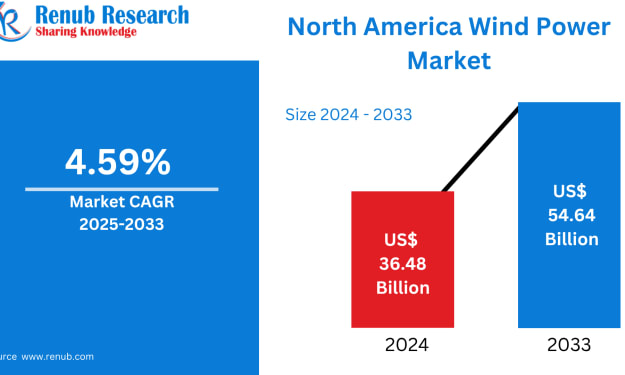
North America Wind Power Market Size and Forecast 2025–2033
Introduction The transition toward sustainable energy sources is accelerating worldwide, and North America stands at the forefront of this global shift. Among renewable energy technologies, wind power has emerged as one of the most reliable, scalable, and economically viable solutions for decarbonizing electricity generation. With increasing environmental awareness, policy backing, and technological advancements, the region’s wind energy sector is positioned for steady expansion over the coming decade.
By Marthan Sir7 days ago in The Swamp
Coercion Without Ownership: The Real Trump Playbook on Iran
From grandiose promises of crushing the Iranian regime to last‑minute deals with Tehran over prisoner exchanges, the policy of former President Donald Trump toward Iran often appeared contradictory, transactional, and ultimately unconsolidated. What consistent logic underlay this approach? The answer lies in a framework that scholars and strategists might call “coercion without ownership” — an effort to force desired outcomes from Tehran without building or sustaining the political, diplomatic, and strategic consensus necessary to make those outcomes durable.
By Aqib Hussainabout 8 hours ago in The Swamp


Comments
There are no comments for this story
Be the first to respond and start the conversation.