
Denmark’s PM Says Greenland Showdown at ‘Decisive Moment
Rising geopolitical pressure, Arctic security concerns, and global power rivalry put Greenland’s future at the center of international debate

Introduction
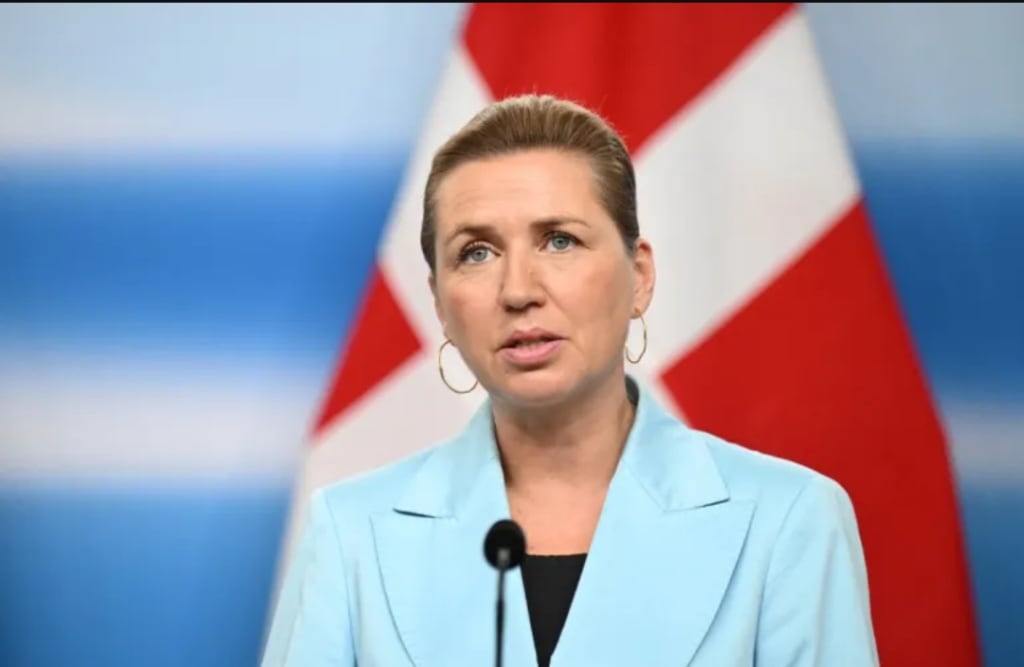
Denmark’s Prime Minister has declared that the growing political and strategic tensions surrounding Greenland have reached a “decisive moment,” signaling a critical phase in the Arctic territory’s future. The statement comes amid renewed global interest in Greenland’s strategic location, natural resources, and geopolitical importance, as major powers seek greater influence in the Arctic region.
Greenland, an autonomous territory within the Kingdom of Denmark, has long balanced its push for greater self-determination with Denmark’s responsibility for defense and foreign policy. Today, that balance is under unprecedented strain as security concerns, climate change, and international competition converge.
Why Greenland Matters More Than Ever
Greenland’s importance has grown dramatically in recent years. Located between North America and Europe, the island occupies a strategic position in the Arctic, a region increasingly seen as a future hub for shipping routes, military operations, and natural resource extraction.
As Arctic ice melts due to climate change, new sea lanes are becoming navigable, drawing the attention of global powers such as the United States, Russia, and China. Greenland also holds vast reserves of rare earth minerals, which are essential for renewable energy technologies, defense systems, and electronics.
These factors have elevated Greenland from a remote territory to a central player in global geopolitics.
Denmark’s Warning of a ‘Decisive Moment’
The Danish prime minister’s remarks underscore growing concerns in Copenhagen that Greenland is facing mounting external pressure. According to Danish leadership, the territory’s political future and security arrangements can no longer be treated as distant or theoretical issues.
Denmark has emphasized that while Greenland enjoys extensive autonomy, decisions involving defense, sovereignty, and foreign relations carry consequences for the entire kingdom. The prime minister’s statement suggests Denmark believes the coming years will shape whether Greenland strengthens its ties with Copenhagen, moves closer to independence, or becomes more exposed to foreign influence.
Security Concerns and Military Interest
Security has emerged as one of the most sensitive aspects of the Greenland debate. The Arctic is increasingly militarized, with Russia expanding its northern military footprint and NATO members stepping up surveillance and defense cooperation.
The United States maintains a long-standing military presence at Thule Air Base (now Pituffik Space Base), which plays a key role in missile warning and space surveillance. Denmark has repeatedly stated that Arctic security must remain coordinated within NATO frameworks, warning against unilateral actions that could destabilize the region.
These military dynamics have placed Greenland in the crosshairs of broader global competition.
Greenland’s Push for Greater Autonomy
At the same time, Greenland’s own political aspirations are evolving. Many Greenlandic leaders and citizens support a gradual path toward full independence, driven by cultural identity, economic self-sufficiency, and control over natural resources.
However, independence remains complex. Greenland’s economy is still heavily dependent on Danish subsidies, and the cost of maintaining defense, infrastructure, and social services poses significant challenges. Denmark has stressed that any move toward independence must be carefully planned to avoid economic or security vulnerabilities.
The “decisive moment,” as Denmark frames it, may lie in how Greenland navigates these ambitions while safeguarding stability.
Global Powers Watching Closely
International interest in Greenland has intensified diplomatic tensions. Past attempts by foreign leaders to propose closer ties or investment initiatives have raised alarm in Denmark, which fears that economic influence could translate into political leverage.
China, in particular, has sought Arctic partnerships through infrastructure and mining investments, while the United States has strengthened diplomatic engagement with Nuuk. Denmark’s leadership has made clear that Greenland must not become a pawn in great-power rivalry.
This delicate balancing act is central to the current showdown.
Climate Change Adds Urgency
Climate change has accelerated Greenland’s strategic relevance. Melting ice is reshaping the Arctic environment, opening shipping routes and exposing untapped resources. However, it also threatens Greenland’s ecosystems, traditional livelihoods, and infrastructure.
Denmark and Greenland face the shared challenge of ensuring that economic opportunities do not come at the expense of environmental protection or local communities. The decisions made now will have lasting consequences for the Arctic’s future.
Conclusion
Denmark’s declaration that the Greenland showdown has reached a “decisive moment” reflects the gravity of the choices ahead. Greenland stands at the intersection of autonomy, security, economic opportunity, and global rivalry. As international attention intensifies, Denmark and Greenland must navigate a narrow path that preserves sovereignty, stability, and democratic decision-making.
The coming years will likely determine whether Greenland strengthens its partnership within the Kingdom of Denmark, advances toward independence, or becomes increasingly entangled in global power competition. What is clear is that Greenland’s future is no longer a regional issue—it is a matter of international significance that could reshape Arctic geopolitics for decades to come.
About the Creator
Asad Ali
I'm Asad Ali, a passionate blogger with 3 years of experience creating engaging and informative content across various niches. I specialize in crafting SEO-friendly articles that drive traffic and deliver value to readers.
The Forsyth House Fire
Since 1851, Forsyth House has stood on the corner of Union Street and Gordon Street in the heart of Glasgow. Its iconic, or was... because on Sunday 8th of March, 2026, a fire broke out in a small, seemingly un-named shop in the building and tore all that history down. As I write, the rubble is still unsettled and the street is still blocked off. Central Station is quiet on the upper level, and around 30 small businesses have quite literally gone up in smoke.
By S. A. Crawford2 days ago in The Swamp
Australian Businessman Found Guilty of Working for Suspected Chinese Spies
An Australian court has found a businessman guilty of secretly working with individuals suspected of being linked to Chinese intelligence, marking one of the most significant foreign interference cases in the country in recent years. The ruling underscores growing security concerns in Australia about covert influence operations connected to China. The man at the center of the case, Alexander Csergo, was accused of providing sensitive information about Australia’s national security and defence arrangements to people believed to be associated with Chinese intelligence services. Prosecutors argued that his actions represented a serious breach of the country’s strict foreign-interference laws. The case was heard in a Sydney court, where prosecutors presented evidence showing that Csergo had communicated with overseas contacts and passed along detailed reports about Australian defence matters and strategic policies. Authorities said the information he shared could have been valuable to foreign intelligence agencies seeking insight into Australia’s security planning. Investigators from the Australian Security Intelligence Organisation (ASIO) began examining Csergo’s activities after receiving intelligence indicating that he had been approached by individuals believed to be acting on behalf of the Chinese government. According to court documents, those contacts allegedly encouraged him to gather information on political, economic and security developments in Australia. Prosecutors told the court that Csergo accepted payment in exchange for compiling reports and sending them to his overseas contacts. The reports reportedly included commentary on defence cooperation between Australia and its allies, as well as information about regional security issues in the Indo-Pacific. The court found that these actions fell under offences introduced as part of Australia’s strengthened foreign interference legislation. The laws were enacted in 2018 in response to growing concerns that foreign governments were attempting to influence political processes and gain access to sensitive information. While the prosecution argued that the businessman knowingly worked with foreign intelligence operatives, the defence maintained that Csergo believed he was conducting legitimate consulting work. His legal team said he did not fully understand that the people requesting the information could have been connected to a foreign spy network. Despite this argument, the court ruled that the evidence demonstrated he had knowingly engaged in conduct intended to benefit foreign actors at the expense of Australia’s national interests. The verdict could result in a significant prison sentence once sentencing proceedings conclude. The case has drawn attention from security analysts and government officials, who say it reflects the growing complexity of modern espionage. Rather than relying solely on professional spies, intelligence agencies increasingly seek information through business contacts, researchers and consultants who may have access to valuable insights. Australia’s government has repeatedly warned about the risks posed by foreign interference activities. Officials say attempts to gather intelligence can target a wide range of individuals, including academics, corporate executives and former government employees. In recent years, the Australian government has taken a tougher stance on national security threats linked to foreign powers. Relations between Canberra and Beijing have experienced periods of tension, particularly over issues such as trade disputes, technology security and geopolitical competition in the Indo-Pacific region. Security experts say the verdict sends a strong signal that Australian authorities are willing to pursue individuals suspected of assisting foreign intelligence services. It also highlights the role of intelligence agencies like Australian Security Intelligence Organisation in identifying and investigating potential espionage activities. Following the ruling, government officials reiterated that protecting national security remains a top priority. They emphasized that anyone approached by foreign contacts seeking sensitive information should report such approaches to authorities. Analysts say the case may also encourage businesses and institutions to strengthen internal security measures, particularly when dealing with international partnerships or consulting arrangements. As global competition intensifies, governments around the world are becoming increasingly vigilant about protecting sensitive information. For Australia, the conviction marks a significant milestone in the enforcement of its foreign interference laws. Authorities believe the case demonstrates that covert attempts to gather intelligence within the country will face serious legal consequences.
By Fiaz Ahmed 2 days ago in The Swamp



Comments
There are no comments for this story
Be the first to respond and start the conversation.