
U.S. Pushes for Faster Action to Cut Reliance on China for Rare Earths
Why Washington sees supply-chain independence as a strategic priority, not just an economic goal

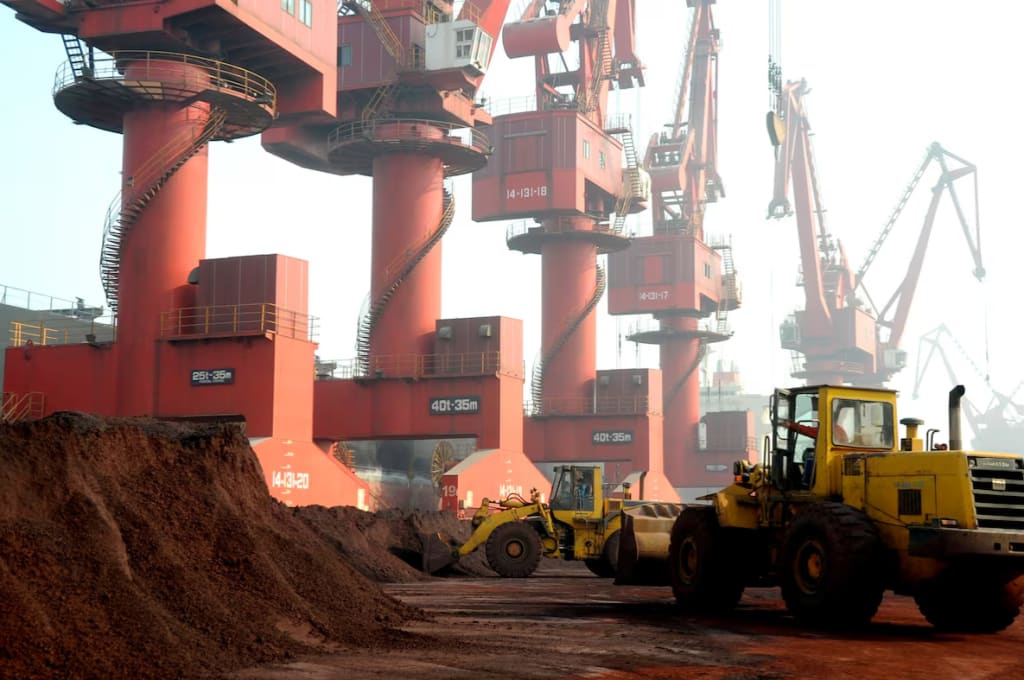
Rare Earths: Small Minerals, Massive Power
Rare earth elements may sound obscure, but they sit at the heart of modern life. From smartphones and electric vehicles to fighter jets and missile systems, these minerals are essential to both civilian technology and national defense. That reality is why the United States is now pushing for quicker, more decisive action to reduce its dependence on China for rare earth supplies.
For years, Washington talked about diversification. Now, it wants speed. The shift reflects growing concern that reliance on a geopolitical rival for critical materials is no longer sustainable in an era of strategic competition.
Why China’s Dominance Worries Washington
China controls roughly 60–70% of global rare earth mining and an even larger share of processing and refining. Even when rare earths are mined elsewhere, they are often shipped to China for processing. This gives Beijing enormous leverage over global supply chains.
U.S. officials fear that in a moment of heightened tension—over Taiwan, trade disputes, or technology restrictions—China could restrict exports. Beijing has already hinted at this possibility in the past, using export controls as a diplomatic tool.
From Washington’s perspective, this is not a hypothetical risk. It is a strategic vulnerability that touches everything from renewable energy goals to military readiness.
Rare Earths and National Security
Few issues unite Democrats and Republicans as strongly as national security. Rare earths fall squarely into that category. Advanced weapons systems rely on these materials for precision guidance, radar, and communications. A disrupted supply could delay production, weaken deterrence, and raise costs dramatically.
Pentagon officials have repeatedly warned that dependence on China for defense-critical materials undermines U.S. security. As a result, rare earth supply chains are increasingly viewed through the same lens as energy independence once was.
This framing explains the urgency behind Washington’s push for faster action.
Why “Quicker Action” Matters Now
The U.S. has discussed rare earth independence for over a decade, yet progress has been slow. Mining projects face environmental reviews, local opposition, and long development timelines. Processing facilities require heavy investment and technical expertise that has largely migrated to China.
What has changed is the global context. Rising U.S.-China tensions, supply-chain disruptions during the pandemic, and growing demand for clean energy technologies have compressed timelines. Waiting another decade is no longer acceptable to policymakers.
Quicker action now means fast-tracking permits, increasing federal funding, and working more aggressively with allies.
The Role of Allies in Diversification
The United States does not expect to solve the rare earth challenge alone. Instead, Washington is pushing for a “friend-shoring” strategy—building supply chains with trusted partners rather than relying on geopolitical rivals.
Australia, Canada, Japan, and several European countries are key players in this effort. Australia already hosts significant rare earth mining operations, while Japan has invested heavily in reducing its own dependence on China after facing export restrictions in the past.
By coordinating investment, sharing technology, and aligning regulations, the U.S. hopes to create an alternative ecosystem that can compete with China’s dominance.
Environmental and Economic Tensions
Rare earth mining is not clean. It involves toxic waste, radioactive byproducts, and significant environmental risks. Ironically, minerals essential for green technologies come with heavy environmental costs at the extraction stage.
This creates a political dilemma. Americans want clean energy, but often oppose mining projects in their own communities. Faster action will require balancing environmental protections with strategic necessity—a challenge that has stalled projects in the past.
The Biden administration, like administrations before it, faces pressure to prove that domestic mining can be done responsibly without undermining climate commitments.
China’s Likely Response
Beijing is watching these developments closely. While China has not yet weaponized rare earth exports on a large scale, it understands the leverage it holds. At the same time, China is moving up the value chain—focusing more on advanced manufacturing and less on raw material exports.
If the U.S. accelerates diversification successfully, China may respond by tightening export controls in the short term while investing in higher-end technologies that keep it indispensable in other ways.
This dynamic underscores that rare earths are not just a resource issue, but part of a broader strategic competition.
Economic Implications Beyond Security
Reducing reliance on China is not only about defense. It is also about economic resilience. Supply disruptions during the pandemic exposed how fragile global supply chains can be. Rare earth shortages could slow electric vehicle adoption, raise consumer prices, and delay infrastructure projects.
By pushing for faster action, Washington hopes to stabilize future growth and protect key industries. Domestic production and allied partnerships could also create jobs and spur innovation, particularly in rural and industrial regions.
However, building new supply chains will not be cheap. Consumers and taxpayers may face higher costs in the short term as alternatives to Chinese supplies come online.
Challenges That Could Slow Progress
Despite political momentum, obstacles remain. Mining projects take years to develop. Processing facilities require specialized knowledge. Workforce shortages, local resistance, and regulatory complexity all pose risks to rapid progress.
There is also the danger of overpromising. Policymakers must manage expectations, making clear that reducing reliance on China is a long-term effort, even if action accelerates now.
Failure to deliver tangible results could weaken public support and give critics ammunition.
Final Thoughts
The U.S. push for quicker action in reducing reliance on China for rare earths marks a turning point. What was once a niche policy issue has become a strategic priority at the highest levels of government.
This is not about cutting China out of the global economy entirely. It is about ensuring that no single country can control materials essential to modern life and national defense. Speed, coordination, and political will will determine whether Washington succeeds.
As competition intensifies, rare earths will remain a quiet but powerful force shaping the future of technology, security, and global influence. The race is no longer just about who has the minerals—but who controls the supply chains that define the 21st centur
About the Creator
Muhammad Hassan
Muhammad Hassan | Content writer with 2 years of experience crafting engaging articles on world news, current affairs, and trending topics. I simplify complex stories to keep readers informed and connected.
Keep reading
More stories from Muhammad Hassan and writers in The Swamp and other communities.
Europe and South America Seal a Trade Pact for the Trump Era
A Deal Decades in the Making After more than two decades of negotiations, Europe and South America have finally moved closer to sealing one of the world’s largest trade agreements: the EU–Mercosur pact. Covering the European Union and the Mercosur bloc—Brazil, Argentina, Uruguay, and Paraguay—the agreement represents a market of nearly 780 million people. But what makes this moment especially significant is timing. The deal is being framed, openly and strategically, as preparation for a potential return of Donald Trump-era trade policies. In a world where tariffs, trade wars, and “America First” rhetoric reshaped global commerce, Europe and South America are signaling that they want stability, predictability, and diversification—before geopolitical shocks force their hand again. Why the Trump Era Still Shapes Global Trade Even years after leaving office, Donald Trump’s approach to trade continues to influence global economic planning. His presidency normalized aggressive tariffs, skepticism toward multilateral agreements, and a willingness to weaponize trade for political goals. With Trump once again a central figure in U.S. politics, governments around the world are preparing for renewed uncertainty. For the EU, the lesson was clear: overdependence on any single market—especially the United States—creates vulnerability. For South American economies long reliant on commodity exports and limited trade partners, the risk is even greater. The EU–Mercosur pact is, in many ways, a hedge against a future where access to the U.S. market becomes more restricted or unpredictable. What the EU–Mercosur Agreement Promises At its core, the agreement aims to eliminate tariffs on more than 90% of goods traded between the two regions. European exporters—particularly carmakers, machinery producers, and pharmaceutical companies—stand to gain improved access to South American markets. In return, Mercosur countries would benefit from easier entry for agricultural exports such as beef, soy, sugar, and poultry into Europe. Beyond tariffs, the pact includes provisions on: Rules of origin, making it easier for businesses to qualify for preferential treatment Public procurement, opening government contracts to foreign companies Intellectual property protections, important for European brands Sustainable development commitments, including labor rights and environmental standards Supporters argue that this combination creates a modern, rules-based trade framework that strengthens both regions economically and politically. The Environmental and Political Backlash Despite its economic promise, the agreement remains controversial—especially in Europe. Environmental groups and some EU member states argue that increased agricultural exports from South America could accelerate deforestation in the Amazon. French farmers, in particular, fear being undercut by cheaper South American beef produced under looser environmental and animal welfare standards. These concerns stalled ratification for years. What has changed now is political urgency. European leaders increasingly view the pact as a strategic necessity, even if it requires side agreements, enforcement mechanisms, or sustainability add-ons to address critics. In short, geopolitical pressure is outweighing political hesitation. South America’s Strategic Calculation For Mercosur nations, the deal is about more than trade—it’s about relevance. South America has often found itself caught between major powers: the United States, China, and the European Union. By deepening ties with Europe, Mercosur countries gain leverage, diversification, and access to technology and investment. Brazil, the bloc’s largest economy, sees the pact as a way to modernize its industrial base and attract European capital. Argentina, struggling with inflation and debt, hopes expanded exports will stabilize its economy. Smaller members like Uruguay and Paraguay view the agreement as a gateway to global markets they otherwise struggle to reach. Importantly, the pact also reduces overreliance on China, which has become South America’s dominant trading partner over the past decade. A Message to Washington While no official statement names the United States, the message is unmistakable. Europe and South America are preparing for a world where U.S. trade policy may once again turn inward. By locking in long-term access to each other’s markets, they are insulating themselves from sudden tariff shocks or political bargaining. This doesn’t mean cutting ties with the U.S.—far from it. Instead, it reflects a broader shift toward a multipolar trade system, where regions rely less on a single economic superpower. If Trump-era policies return, Washington may find that its traditional partners have already adapted. Challenges Still Ahead Sealing the deal politically is not the same as implementing it smoothly. Ratification still requires approval from EU institutions and member states, some of which remain skeptical. Monitoring environmental commitments will be crucial, as failure could reignite opposition and undermine public trust. There is also the risk that domestic politics—on either side of the Atlantic—could derail progress. Elections, leadership changes, and economic downturns all have the power to slow or reshape the agreement. Yet compared to previous years, momentum now appears stronger than resistance. What This Means for Global Trade If finalized, the EU–Mercosur pact would be one of the largest trade agreements in history. More importantly, it would signal that multilateral trade deals are not dead—even in an era of nationalism and protectionism. For businesses, it means new supply chains and investment opportunities. For governments, it offers a template for balancing economic growth with environmental responsibility. And for the global system, it represents a quiet but firm pushback against trade isolationism. Final Thoughts Europe and South America sealing a trade pact for the Trump era is not about the past—it’s about the future. It reflects a world learning from recent disruptions and choosing cooperation over confrontation. Whether the agreement lives up to its promise will depend on enforcement, trust, and political will. But one thing is clear: as uncertainty looms, regions are no longer waiting to react. They are preparing in advance—and reshaping global trade without asking Washington for permission.
By Muhammad Hassan2 months ago in The Swamp
The Forsyth House Fire
Since 1851, Forsyth House has stood on the corner of Union Street and Gordon Street in the heart of Glasgow. Its iconic, or was... because on Sunday 8th of March, 2026, a fire broke out in a small, seemingly un-named shop in the building and tore all that history down. As I write, the rubble is still unsettled and the street is still blocked off. Central Station is quiet on the upper level, and around 30 small businesses have quite literally gone up in smoke.
By S. A. Crawford3 days ago in The Swamp
China calls for talks to end Pak-Afghan clashes
Beijing urges restraint as border tensions threaten regional stability China has called for urgent dialogue between Pakistan and Afghanistan following a new round of clashes along their volatile frontier, warning that continued violence could undermine regional security and economic cooperation. The appeal came from the Ministry of Foreign Affairs of the People's Republic of China, which expressed concern over reports of cross-border shelling and armed confrontations in areas along the disputed border. Beijing urged both sides to exercise restraint, resolve differences through diplomatic channels, and avoid actions that might escalate the situation further. Tensions between Pakistan and Afghanistan have periodically flared along the border marked by the Durand Line, a colonial-era boundary established in 1893 that remains contested by successive Afghan governments. In recent days, exchanges of fire between border forces and armed groups reportedly left several people dead and dozens injured, forcing civilians to flee nearby villages. Officials in Islamabad said Pakistani forces responded after militants attempted to cross the border from Afghan territory, claiming the armed fighters targeted security posts. Authorities in Kabul, however, accused Pakistani troops of firing artillery into Afghan villages, damaging homes and triggering panic among residents. The government of China emphasized that dialogue and coordination between the two neighboring countries are crucial to preventing further escalation. A spokesperson said Beijing supports efforts aimed at maintaining peace along the border and stands ready to assist through diplomatic engagement if both sides request it. “China hopes Pakistan and Afghanistan will handle their differences through consultations and maintain peace and stability in the border areas,” the spokesperson said during a regular press briefing in Beijing. Security along the frontier has grown increasingly fragile since the return of the Taliban government in Kabul in 2021. While relations between Islamabad and the Afghan leadership initially appeared cooperative, mistrust has deepened over the presence of militant groups accused of launching attacks inside Pakistan. Pakistan has repeatedly voiced concern about fighters linked to the Tehrik-i-Taliban Pakistan operating from Afghan soil. Islamabad says the group has intensified assaults on Pakistani security forces and infrastructure in recent months. Afghan authorities have rejected the accusations, insisting they do not allow any group to use Afghan territory to threaten other countries. The clashes also carry broader regional implications, particularly for major infrastructure and connectivity projects supported by China. Stability along the Pakistan–Afghanistan border is seen as critical for the expansion of the China–Pakistan Economic Corridor, a flagship component of the Belt and Road Initiative. Chinese officials have previously encouraged both Islamabad and Kabul to deepen security cooperation to ensure the protection of cross-border trade routes and investment projects. Analysts say Beijing’s diplomatic outreach reflects concern that escalating violence could disrupt economic corridors and create new security risks across the region. In recent years, China has sought to position itself as a mediator in regional disputes, particularly those that threaten economic integration in Central and South Asia. Beijing has hosted several rounds of informal dialogue involving Pakistani and Afghan representatives aimed at improving communication and addressing mutual security concerns. Despite these efforts, distrust between the two countries remains strong. Communities living near the border frequently find themselves caught in the middle when tensions flare, with schools closed and markets disrupted during military exchanges. Regional observers warn that without sustained diplomatic engagement, the cycle of accusations and retaliation could continue. They argue that confidence-building measures—such as border coordination mechanisms and intelligence sharing—could help prevent misunderstandings from turning into armed confrontations. For now, Beijing’s message is clear: both sides must prioritize dialogue over confrontation. With the region already grappling with economic challenges and security threats, China’s leadership believes that de-escalation between Pakistan and Afghanistan is essential to preserving stability across a strategically important corridor linking South Asia, Central Asia, and beyond.
By Fiaz Ahmed a day ago in The Swamp



Comments
There are no comments for this story
Be the first to respond and start the conversation.