
Web Application Firewall Market Outlook 2025–2033
How Intelligent Cyber Defense Is Reshaping Global Digital Security

Introduction: Guarding the Digital Frontlines
In an era where business operations, financial transactions, healthcare services, and public communication increasingly rely on web applications, the protection of these digital assets has become mission-critical. Web Application Firewalls (WAFs) are now at the forefront of cybersecurity strategies, acting as a powerful shield against threats such as SQL injection, cross-site scripting (XSS), distributed denial-of-service (DDoS) attacks, and sophisticated bot traffic.
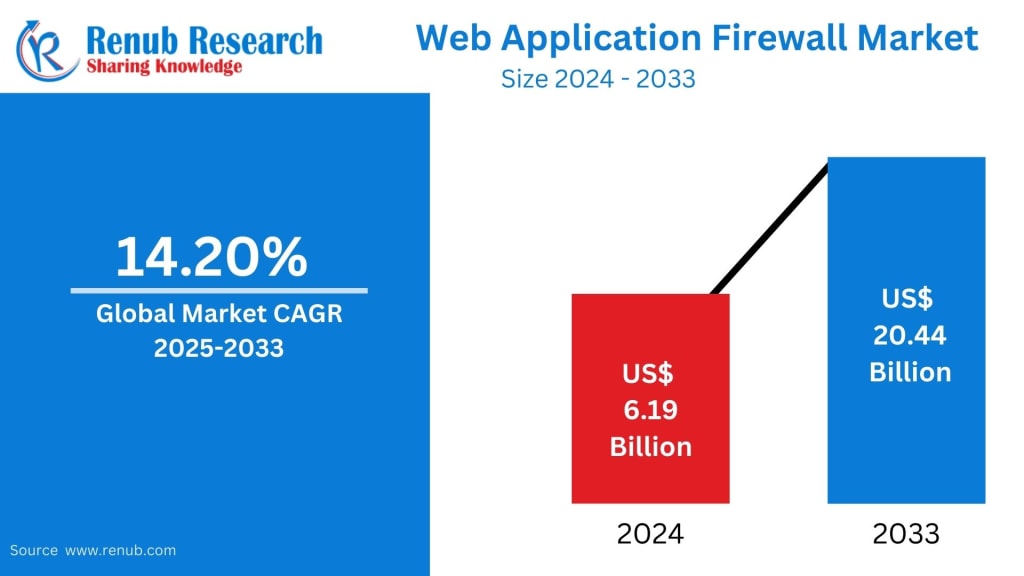
According to Renub Research, the international Web Application Firewall market was estimated at around US$ 6.19 billion in 2024 and is projected to grow at a compound annual growth rate (CAGR) of 14.20% from 2025 to 2033, reaching approximately US$ 20.44 billion by 2033. This robust expansion reflects the escalating threat landscape, increasing regulatory requirements, and accelerating adoption of cloud-based infrastructure worldwide.
Understanding Web Application Firewalls
A Web Application Firewall is a cybersecurity solution designed to monitor, filter, and block malicious HTTP/S traffic between the internet and web applications. Positioned at the application layer, WAFs inspect incoming requests based on predefined security rules and behavioral analytics. Unlike traditional firewalls that focus on network-level traffic, WAFs are specifically engineered to safeguard web applications from attacks that exploit application vulnerabilities.
Modern WAF solutions can be deployed on-premises, in the cloud, or through hybrid models, offering flexibility to organizations of all sizes. Beyond threat mitigation, WAFs support regulatory compliance with standards such as PCI DSS, GDPR, and HIPAA, helping enterprises avoid costly penalties while preserving user trust and application availability.
Market Size and Forecast: A Rapid Growth Trajectory
Renub Research highlights the significant growth potential of the global WAF market. From US$ 6.19 billion in 2024, the industry is expected to expand to approximately US$ 20.44 billion by 2033, driven by a 14.20% CAGR. This growth reflects not only the rising frequency of cyberattacks but also the expanding digital footprint of organizations across e-commerce, banking, healthcare, government, education, and technology sectors.
As enterprises increasingly rely on cloud computing, application programming interfaces (APIs), and mobile applications, traditional perimeter security tools are no longer sufficient. WAFs have emerged as a vital layer of defense for safeguarding customer data, ensuring uninterrupted digital services, and protecting brand reputation.
Key Drivers of Market Growth
1. Escalating Cyber Threats
Web-based attacks continue to grow in scale and sophistication. Hackers are increasingly targeting vulnerabilities in web applications to steal sensitive data, disrupt services, and execute ransomware attacks. The surge in bot-driven fraud, credential stuffing, and API abuse has further intensified demand for advanced WAF solutions.
2. Expansion of Cloud and Hybrid Environments
The widespread adoption of cloud computing and hybrid IT infrastructures has transformed how applications are built and deployed. Cloud-native WAFs provide scalable, on-demand protection for applications hosted across distributed environments, making them essential for modern digital operations.
3. Regulatory Compliance Requirements
Stringent data protection laws such as GDPR in Europe, HIPAA in healthcare, and PCI DSS in financial services require organizations to implement strong security controls. WAFs help enterprises meet compliance standards by monitoring traffic, preventing data breaches, and providing audit-ready reporting.
4. Rise of Digital Transformation and Remote Work
The acceleration of digital transformation initiatives and the normalization of remote work have expanded attack surfaces. As more applications become publicly accessible, organizations must adopt proactive security measures, driving further adoption of WAF technologies.
Industry Landscape: Leading Players
The Web Application Firewall market is characterized by the presence of global cybersecurity leaders and cloud service providers. Major companies shaping the industry include:
Akamai Technologies, Inc. – Known for its cloud security, content delivery, and application performance solutions, serving enterprises across multiple industries.
Qualys Inc. – A pioneer in cloud-based security and compliance, offering integrated vulnerability management and WAF services.
F5 Inc. – A leader in application delivery and security, providing advanced WAF solutions across multi-cloud environments.
Fortinet Inc. – Renowned for its high-performance cybersecurity portfolio, including application security and network protection.
NSFOCUS Technologies Group Co Ltd – A globally recognized provider of internet and application security solutions with strong threat intelligence capabilities.
These companies continue to innovate through artificial intelligence (AI), machine learning (ML), automation, and advanced analytics, enhancing threat detection and minimizing false positives.
SWOT Perspective: Competitive Strengths and Opportunities
The competitive environment highlights the strategic strengths of key market participants.
Citrix Systems, Inc. demonstrates strong integration of WAF technologies with cloud and virtualization platforms, enabling scalable and high-performance application security. Its opportunity lies in expanding cloud-based managed security services as enterprises migrate toward hybrid and multi-cloud environments.
Amazon Web Services (AWS) commands market leadership with its cloud-native AWS WAF, offering seamless scalability and integration with a broader security ecosystem. The growing adoption of multi-cloud strategies and AI-driven automation presents AWS with opportunities to further strengthen its dominance.
Sustainability in Cybersecurity: Microsoft’s Leadership Example
Sustainability is increasingly becoming a strategic priority in the technology sector, including cybersecurity. Microsoft Corporation stands out as a pioneer, committing to become carbon negative by 2030 and eliminate all historical carbon emissions by 2050. Its initiatives in renewable energy adoption, water conservation, and waste reduction demonstrate how digital security providers can integrate environmental responsibility into core operations.
Microsoft’s alignment with the United Nations Sustainable Development Goals (SDGs) and transparent ESG reporting reinforces the growing trend of sustainability in cybersecurity. As organizations prioritize eco-friendly operations, vendors that combine robust security with sustainable practices are likely to gain competitive advantage.
Recent Developments Shaping the Market
The WAF industry continues to evolve through innovation and strategic partnerships:
Cloudflare (November 2024): Launched its Advanced Certificate Manager, integrating automated SSL/TLS management with WAF functionality to enhance global website security and performance.
Radware (October 2023): Expanded its cybersecurity partner program, strengthening offerings for Managed Security Service Providers (MSSPs) with advanced WAF and DDoS protection services.
Palo Alto Networks (November 2022): Acquired Cider Security to enhance application and software supply chain protection within its Prisma Cloud platform, enabling end-to-end security from code to cloud.
These developments reflect a broader industry trend toward unified security platforms that combine application protection, automation, and intelligence-driven threat management.
Market Segmentation and Technology Trends
Deployment Models:
Cloud-based WAF: Dominates the market due to scalability, cost-effectiveness, and ease of integration.
On-premises WAF: Preferred by organizations with strict data residency and compliance requirements.
Hybrid WAF: Offers a balanced approach for enterprises operating across multiple environments.
Enterprise Size:
Large Enterprises: Major adopters due to complex IT infrastructures and high regulatory exposure.
Small and Medium-Sized Enterprises (SMEs): Rapidly increasing adoption as cloud-based WAFs become more affordable and accessible.
Industry Verticals:
Key sectors include banking and financial services, healthcare, retail and e-commerce, government, telecommunications, and technology.
Technology Innovations:
AI and ML are revolutionizing WAF capabilities by enabling predictive threat detection, behavioral analytics, and automated incident response. API security, bot management, and zero-trust architectures are also becoming integral components of next-generation WAF solutions.
Regional Outlook
North America remains the largest market, driven by high cybersecurity spending, regulatory enforcement, and the presence of leading technology firms.
Europe follows closely, supported by stringent data protection regulations and increasing digitalization across industries.
Asia-Pacific is expected to witness the fastest growth, fueled by rapid adoption of cloud services, expanding e-commerce, and rising cybersecurity awareness among enterprises.
Middle East, Africa, and Latin America are emerging markets, with increasing government initiatives and digital infrastructure investments boosting demand for application security solutions.
Challenges and Restraints
Despite strong growth prospects, the WAF market faces several challenges. High implementation and maintenance costs can be a barrier for smaller organizations. Additionally, managing false positives and ensuring seamless integration with existing IT environments require skilled cybersecurity professionals. The evolving nature of cyber threats also demands continuous updates and innovation, increasing operational complexity for vendors.
Future Outlook: Toward Intelligent, Unified Security
The future of the Web Application Firewall market lies in intelligent, automated, and integrated security ecosystems. As enterprises adopt DevOps, microservices, and API-driven architectures, WAFs will evolve beyond traditional rule-based systems into adaptive platforms that learn, predict, and respond to threats in real time.
Strategic collaborations, mergers and acquisitions, and the integration of AI-driven analytics will further shape the competitive landscape. Vendors that offer scalable, cloud-native, and sustainability-focused solutions are poised to lead the next phase of growth.
Final Thoughts
The Web Application Firewall market is undergoing a transformative phase, driven by escalating cyber risks, rapid cloud adoption, and stringent regulatory requirements. Backed by Renub Research’s forecast — projecting growth from US$ 6.19 billion in 2024 to approximately US$ 20.44 billion by 2033 at a 14.20% CAGR — the industry stands as one of the most dynamic segments of the global cybersecurity landscape.
As digital transformation accelerates across every sector, WAFs will remain a cornerstone of application security, protecting sensitive data, ensuring business continuity, and enabling organizations to operate with confidence in an increasingly connected world. For enterprises, investors, and technology leaders alike, the Web Application Firewall market represents not just a security necessity, but a strategic investment in the future of digital trust.
About the Creator
Marthan Sir
Educator with 30+ years of teaching experience | Passionate about sharing knowledge, life lessons & insights | Writing to inspire, inform, and empower readers.
Keep reading
More stories from Marthan Sir and writers in The Swamp and other communities.
Electric Kick Scooter Market Outlook 2025–2033
Introduction Once seen as novelty gadgets for short commutes, electric kick scooters have rapidly become a defining symbol of modern urban mobility. From crowded European capitals to fast-growing Asian megacities, these compact vehicles are reshaping how people navigate short distances. Their appeal lies in a compelling combination of affordability, portability, and zero tailpipe emissions—attributes that align perfectly with global efforts to reduce congestion and carbon footprints.
By Marthan Sira day ago in The Swamp
Berlin Blackout Sparks Alarm After Left-Wing Group Claims Responsibility for Sabotage
Start wrBerlin is no stranger to political protest, but a recent citywide blackout has pushed Germany into uneasy territory. After tens of thousands of residents were left without power, a left-wing activist group came forward claiming responsibility, framing the incident as an act of political sabotage aimed at forcing attention on climate policy and technological governance. The claim has intensified public concern, not only about the blackout itself, but about the growing willingness of activist groups to target critical infrastructure. What began as a disruption has now become a national debate over the limits of protest, the definition of extremism, and how democracies should respond when political activism crosses into sabotage. The Blackout That Shook the Capital The outage affected multiple districts across Berlin, disrupting homes, businesses, and public transport systems. Traffic lights failed, trains were delayed, and residents reported hours without heating, internet access, or reliable communication. While hospitals and emergency facilities relied on backup generators, authorities acknowledged that the incident placed significant strain on public services. Initial reports described the blackout as a technical failure. That explanation changed dramatically when a left-wing group issued a statement online claiming responsibility, describing the outage as a deliberate act designed to expose what it called the “fragility of systems that sustain an unjust and destructive status quo.” The group framed the sabotage as non-violent, arguing that disruption — not harm — was the goal. The Group’s Message and Motivation In its statement, the group linked the blackout to broader grievances over climate change, artificial intelligence, and what it described as government inaction. According to the group, modern societies continue to rely on fossil fuels, centralized energy grids, and rapidly advancing technologies without sufficient democratic oversight. By targeting infrastructure, the activists said they hoped to demonstrate how vulnerable modern life is — and how urgently political priorities need to shift. This rhetoric reflects a growing strand within radical activism that views disruption of everyday life as a legitimate tool. Supporters argue that traditional protests no longer generate meaningful political change. Critics see a dangerous escalation that risks normalizing tactics once associated with extremist movements. Government and Security Response German authorities reacted swiftly. Interior Ministry officials condemned the sabotage, stressing that interference with critical infrastructure is a serious criminal offense regardless of political motivation. Investigators are now working to verify the group’s claim and determine how the outage was carried out. Security agencies have also launched a broader review of infrastructure protection, particularly energy systems that are increasingly decentralized and digitized. Officials warned that while the blackout did not result in fatalities, similar incidents could have far more serious consequences in the future. Several political leaders called for tougher penalties for those who sabotage essential services, arguing that democratic societies cannot tolerate actions that endanger public safety. Public Reaction: Sympathy Meets Anger Public opinion in Berlin and across Germany has been sharply divided. Some residents expressed sympathy with the underlying causes highlighted by the group, particularly concerns over climate change and unchecked technological power. However, frustration and anger dominated many responses. Small business owners reported financial losses. Families with elderly or medically vulnerable members described fear and anxiety during the outage. Commuters voiced outrage at being used, in their words, as “collateral damage” in a political statement. For many, the group’s justification rang hollow. While climate anxiety is widespread, the idea of sabotaging infrastructure crossed a line. Protest or Extremism? The central question now facing Germany is how to define actions like the Berlin blackout. Is this civil disobedience, or does it constitute political extremism? Legal experts point out that intent matters. Civil disobedience traditionally involves breaking laws openly and accepting consequences to highlight injustice. Sabotage, by contrast, is covert and risks unintended harm. The blackout’s scale and impact complicate claims that the action was harmless. German history adds another layer of sensitivity. The country remains acutely aware of how political extremism — from both the far right and far left — has threatened democratic stability in the past. As a result, there is little tolerance for actions that undermine public trust or safety. Infrastructure as a New Protest Target The Berlin blackout underscores a worrying trend: infrastructure has become a new battleground for political activism. Energy grids, transport networks, and data systems are increasingly seen as pressure points capable of generating maximum attention with minimal effort. Experts warn that this approach carries serious risks. Even well-intentioned activists cannot fully control the consequences of infrastructure disruption. Power outages can affect hospitals, emergency communications, and vulnerable populations in unpredictable ways. There is also concern that such tactics could inspire copycat actions — not only by activists, but by criminal or hostile actors exploiting similar vulnerabilities. Political Fallout and Policy Implications The incident is already shaping political discussions in Germany. Lawmakers are debating whether existing laws adequately address sabotage motivated by ideology. Some have proposed expanding surveillance powers or tightening restrictions on protest activities near critical infrastructure. Civil liberties groups caution against overreaction, warning that broad crackdowns could erode democratic freedoms and push activism further underground. They argue that the solution lies not only in security measures, but in addressing the grievances that fuel radicalization. The challenge for policymakers is finding a balance: protecting infrastructure without criminalizing dissent. A Warning for Europe Berlin’s blackout is being closely watched across Europe. As cities become smarter, greener, and more interconnected, they also become more vulnerable. Energy transitions, while essential for climate goals, introduce new complexities into grid management and security. The incident serves as a reminder that resilience is not just about technology, but governance. Transparent decision-making, public trust, and credible political pathways for change are crucial in preventing radical escalation. Conclusion: A Line Has Been Crossed The claim of responsibility by a left-wing group has transformed the Berlin blackout from a technical incident into a political reckoning. While the urgency of climate change and concerns about technology are widely shared, the method chosen has sparked fear rather than consensus. Democracies depend on protest, but they also depend on trust and safety. When activism turns to sabotage, it risks undermining the very values it claims to defend. Berlin’s blackout is more than a disruption of power — it is a warning about how fragile the line between protest and extremism can become in an age of crisis, urgency, and political frustration.iting...
By Muhammad Hassan6 days ago in The Swamp



Comments
There are no comments for this story
Be the first to respond and start the conversation.