Latest Stories
Most recently published stories in The Swamp.
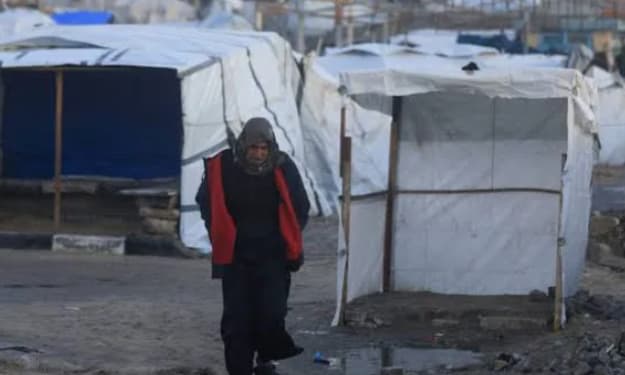
Hamas Says It Will Dissolve Its Gaza Government Upon New Palestinian Body Taking Over. AI-Generated.
For the first time since taking control of Gaza in 2007, Hamas has announced its willingness to dissolve its governing authority in the Gaza Strip—but only once a newly formed Palestinian body assumes administrative control. This announcement has sparked global attention, as it may signal a turning point in Gaza’s long-standing political and humanitarian crisis.
By Aqib Hussaina day ago in The Swamp
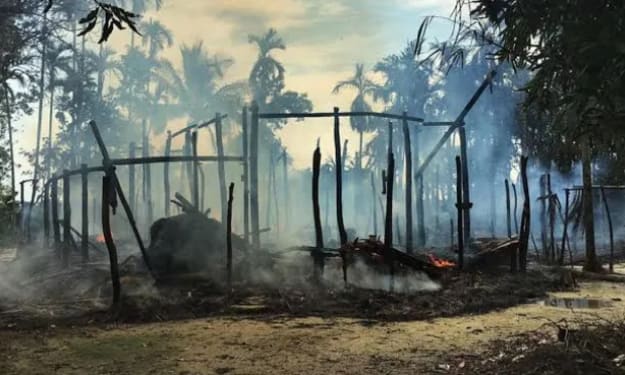
Hearings on Whether Myanmar Committed Genocide Against the Rohingya Opens at Top UN Court. AI-Generated.
The halls of the International Court of Justice (ICJ) in The Hague are once again at the center of global attention. This time, the focus is on Myanmar — and whether its actions against the Rohingya Muslim minority amount to genocide under international law.
By Aqib Hussaina day ago in The Swamp
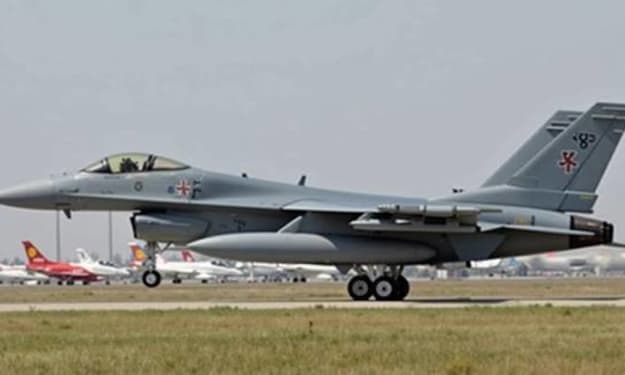
Strategic Move: US Air Force Shifts Special Forces Toward Russia. AI-Generated.
In a significant development in global military strategy, the United States Air Force (USAF) has repositioned elements of its special forces closer to Russian borders. This strategic redeployment underscores the increasing tensions between the two nations and highlights Washington’s intent to maintain readiness in a volatile geopolitical environment. Experts suggest that this move, while defensive in nature, could have far-reaching implications for NATO, Russia, and global security dynamics. Strengthening Deterrence at the Eastern Flank According to Pentagon sources, the redeployment involves elite units trained for rapid response and specialized operations, including intelligence gathering, reconnaissance, and unconventional warfare. These forces are now positioned in Eastern European countries, including Poland, Romania, and the Baltic States, which serve as NATO’s frontline allies. The presence of U.S. special forces near Russian borders is aimed primarily at deterrence. By maintaining highly capable units in proximity to potential flashpoints, the United States signals its commitment to NATO allies and underscores its readiness to respond to any escalation swiftly. Analysts point out that the psychological impact of such deployments can often be as influential as actual military action. Tactical Advantages and Readiness The redeployment allows the U.S. Air Force to project power more effectively while maintaining flexibility. Special forces units can be rapidly inserted into sensitive regions, provide real-time intelligence, and support conventional military operations. These capabilities are particularly valuable in scenarios involving hybrid warfare, cyber operations, or sudden regional crises. In addition, the forward positioning facilitates joint training exercises with NATO allies, enhancing interoperability and operational cohesion. The move is expected to strengthen surveillance and reconnaissance along critical air and maritime routes, allowing the United States and its partners to monitor military activities more closely. Russia’s Response and Geopolitical Implications Unsurprisingly, Moscow has reacted with caution and criticism. Russian officials have described the deployment as “provocative” and have accused the United States of escalating tensions unnecessarily. In a statement to the press, a spokesperson for Russia’s Ministry of Defense emphasized that any military activity near its borders would be closely monitored and countered if deemed threatening. Experts warn that while the U.S. deployment is defensive in nature, it risks triggering a security dilemma. Russia may respond by reinforcing its own military presence along its western borders, increasing the risk of miscalculations or accidental confrontations. This tit-for-tat dynamic could heighten instability in an already sensitive region, with serious consequences for European security. Balancing Strategy and Diplomacy While military readiness is essential, U.S. officials have stressed that the redeployment is not intended to provoke direct conflict. Instead, it is part of a broader strategy that combines deterrence with diplomacy. The United States continues to engage in diplomatic channels, emphasizing dialogue and crisis management mechanisms to reduce the risk of escalation. Analysts note that the move also reflects Washington’s broader strategic priorities. By positioning special forces closer to Russia, the U.S. enhances its ability to respond to global crises, project influence, and reassure allies of its commitment to regional stability. This approach aligns with a long-standing doctrine of forward presence, which has historically been used to deter potential aggressors while maintaining strategic flexibility. Implications for NATO and Regional Allies For NATO members, particularly those in Eastern Europe, the redeployment is seen as a reassurance of U.S. commitment to collective defense. Countries such as Poland, Latvia, Lithuania, and Estonia have long expressed concerns about their vulnerability to Russian aggression. The presence of U.S. special forces enhances deterrence and provides a tangible demonstration of the alliance’s solidarity. However, experts caution that forward deployments alone cannot replace broader security strategies. Effective deterrence requires a combination of conventional forces, intelligence-sharing, cyber defense, and strong diplomatic engagement. In other words, the U.S. move is only one component of a complex, multi-layered strategy aimed at preserving stability in a challenging security environment. Looking Ahead The redeployment of U.S. special forces toward Russia represents a clear signal that Washington is taking a proactive approach to regional security. While it is unlikely to result in immediate confrontation, it underscores the fragility of international relations in Eastern Europe and the importance of strategic foresight. As tensions continue to simmer, all eyes will remain on the actions of both the United States and Russia. Analysts agree that a careful balance of military readiness, alliance coordination, and diplomatic engagement will be essential to prevent escalation and maintain peace in a region fraught with geopolitical risks.
By Fiazahmedbrohi 2 days ago in The Swamp
How One of the Driest Countries, Kuwait, Delivers Water to Millions Despite No Rivers or Lakes. AI-Generated.
Kuwait, a small nation located on the arid Arabian Peninsula, is one of the world’s driest countries. Rainfall is scarce, averaging just 110 millimeters per year, and the nation has no natural rivers or lakes to draw from. Yet, despite these harsh conditions, Kuwait manages to provide clean, potable water to millions of residents, a feat that combines modern engineering, strategic planning, and innovative technology. How does this desert nation overcome its natural water limitations?
By Fiazahmedbrohi 2 days ago in The Swamp
Greenland’s Security ‘Firmly’ Belongs in NATO, Says Prime Minister, After Latest Trump Threats to Take Over Territory. AI-Generated.
Greenland, the world’s largest island, has once again found itself at the center of geopolitical tensions after former U.S. President Donald Trump’s renewed remarks about acquiring the territory. The island’s strategic position in the Arctic and its natural resources have made it a coveted prize in global politics, drawing attention from not only the United States but also European powers. In response to the latest threats, Greenland’s Prime Minister emphasized that the island’s security is firmly embedded within NATO, signaling a clear message to any nation considering unilateral action.
By Fiazahmedbrohi 2 days ago in The Swamp
Iran Acknowledges Mass Protest Deaths, But Claims Situation Under Control as Trump Mulls Response. AI-Generated.
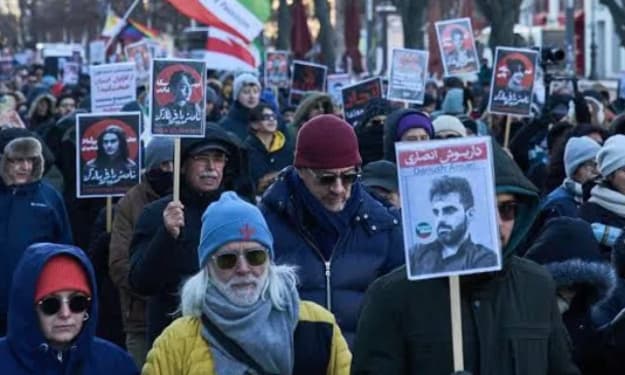
Iran is facing one of the most intense and deadly waves of civil unrest in years, with nationwide protests pushing the clerical regime into a precarious position. While Tehran has publicly acknowledged that demonstrators have died, Iranian officials maintain that the situation is now under control — a claim sharply contrasted by mounting reports of deaths, widespread arrests, and international pressure. Meanwhile, U.S. President Donald Trump has made clear that Washington is weighing a range of responses, including possible military action, in reaction to Tehran’s violent crackdown.
By Aadil shanawar2 days ago in The Swamp
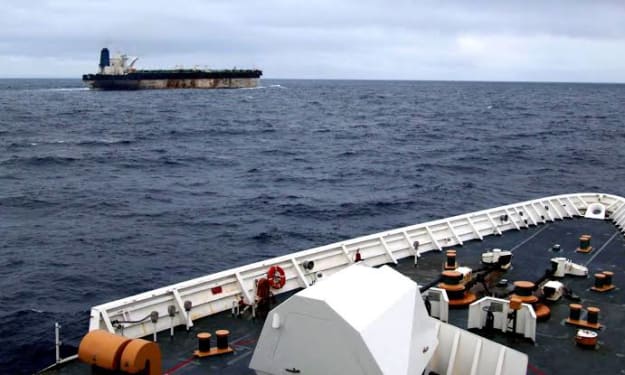
UK Can Legally Stop “Shadow Fleet” Tankers, Ministers Believe. AI-Generated.
The UK government believes it has the legal authority to stop and inspect so-called “shadow fleet” oil tankers operating in and around British waters, a move that could significantly tighten enforcement of international sanctions. These vessels, often linked to sanctioned states and opaque ownership structures, have become a growing concern for global maritime security, environmental safety, and the integrity of international law.
By Fiazahmedbrohi 2 days ago in The Swamp
The Galaxy S26 Finally Has a Real Launch Window and It’s Not What Samsung Usually Does
For months, the Galaxy S26 has resided in that peculiar spot where tech aficionados know it’s coming, but no one can predict precisely when it will come. Samsung’s flagship phones normally follow a regular schedule, but this year, that rhythm altered—just enough to make many question whether anything was unusual behind the scenes.
By abualyaanart2 days ago in The Swamp
Hong Kong Media Tycoon Jimmy Lai’s Health in Focus at Mitigation Hearing. AI-Generated.
When Hong Kong media tycoon Jimmy Lai appeared in court for his mitigation hearing, the focus shifted from legal arguments to something far more human: his health. At 78 years old, the founder of the now-closed Apple Daily newspaper is facing the possibility of spending the rest of his life behind bars. For supporters and critics alike, the question now is not only about the law — but about compassion, proportionality, and what justice looks like for an elderly prisoner.
By Aqib Hussain2 days ago in The Swamp
Iran Foreign Minister Claims Protest Unrest Has ‘Come Under Total Control’. AI-Generated.
Iran’s foreign minister has claimed that the wave of protests that swept across the country has now “come under total control,” signaling what authorities describe as a return to stability after weeks of unrest. The statement, made during a public appearance and echoed by state media, comes amid continued skepticism from activists and human rights groups who say tensions remain high despite a visible reduction in street demonstrations.
By Aarif Lashari2 days ago in The Swamp
The Remarkable, Heroic Life of Ted Williams
When you think of the Boston Red Sox, names such as David Ortíz, Pedro Martínez, and the late Tim Wakefield come to mind. However, the Red Sox player who is the focus of this story is none other than Ted Williams. Even if you're not a baseball fan, you've probably heard of his name at least once. Towards the end of this story, I'll share the one admirable thing Williams had done to get Major League Baseball's attention. But first, let's get to know the Hall of Famer's life and career.
By Mark Wesley Pritchard 2 days ago in The Swamp
Which Are Iran’s Main Opposition Groups?. AI-Generated.
Iran has one of the most complex political landscapes in the Middle East. Since the 1979 Islamic Revolution, the country has been ruled by the Islamic Republic — a system that tightly controls political activity, media, and civil freedoms. Despite this, opposition to the regime has never disappeared. Instead, it has taken many forms, ranging from organized political groups to grassroots protest movements.
By Aqib Hussain2 days ago in The Swamp