
Hearings on Whether Myanmar Committed Genocide Against the Rohingya Opens at Top UN Court
Why this historic case could reshape global justice and accountability
The halls of the International Court of Justice (ICJ) in The Hague are once again at the center of global attention. This time, the focus is on Myanmar — and whether its actions against the Rohingya Muslim minority amount to genocide under international law.
For the Rohingya people, scattered across refugee camps and borders, these hearings are more than legal proceedings. They represent hope — hope that the world has not forgotten them, and that justice, however delayed, may finally be within reach.
Why this case matters
The case was brought by The Gambia in 2019 under the UN Genocide Convention, accusing Myanmar of committing acts intended to destroy the Rohingya as a group. Although The Gambia is geographically distant from Southeast Asia, its move was legally significant. Any country that has signed the Genocide Convention has the right — and arguably the duty — to act when genocide is alleged.
This makes the case not just about Myanmar or the Rohingya, but about global responsibility and the enforcement of international law.
A look back at the Rohingya crisis
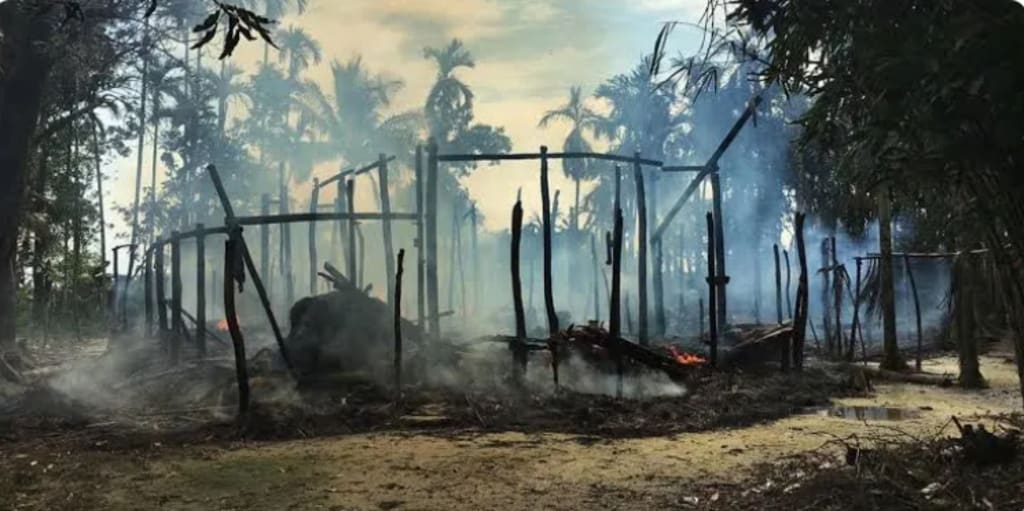
The roots of the case lie in the events of 2017, when Myanmar’s military launched a large-scale operation in Rakhine State. Entire villages were burned to the ground. Thousands were reportedly killed. Women and girls were subjected to sexual violence, and more than 700,000 Rohingya fled across the border into Bangladesh.
The United Nations later described the military’s actions as having “genocidal intent,” one of the strongest accusations the international body can make. Myanmar, however, has consistently denied these claims, calling the operation a response to militant attacks.
What the ICJ hearings are about
Unlike criminal courts, the ICJ does not try individuals. Instead, it determines whether a state has violated international law. In this case, judges are examining whether Myanmar breached its obligations under the Genocide Convention by failing to prevent genocide or by actively committing genocidal acts.
During the hearings:
The Gambia is presenting evidence of mass killings, forced displacement, and systematic abuse.
Myanmar’s legal team is arguing that the accusations are exaggerated or misinterpreted and that no genocide occurred.
Expert testimonies and survivor accounts are being reviewed, some behind closed doors for safety reasons.
A final ruling could take months or even years, but its impact would be profound.
The human face of the courtroom
While legal arguments dominate the courtroom, the emotional weight of the case is impossible to ignore. Rohingya survivors and activists have traveled to The Hague, standing silently in the public gallery — a reminder that behind every legal term lies real human suffering.
For refugees living in camps in Cox’s Bazar, Bangladesh, the hearings are being followed closely. Many see the case as validation of their pain and a chance for the world to formally acknowledge what they endured.
Myanmar’s changing political landscape
Myanmar’s political situation has shifted dramatically since the case was filed. In 2021, the military seized power in a coup, overthrowing the civilian government led by Aung San Suu Kyi — who once personally defended Myanmar at the ICJ.
Now imprisoned, Suu Kyi is no longer part of the proceedings. Instead, the military government represents the state, maintaining its denial of genocide allegations while facing growing international isolation.
Why this case goes beyond Myanmar
Legal experts believe the outcome could influence future genocide cases worldwide. The ICJ’s interpretation of “genocidal intent” — often the hardest element to prove — will set an important precedent.
The hearings are also unfolding alongside other high-profile cases at the ICJ, reinforcing the court’s role as a key arena for resolving disputes involving alleged mass atrocities.
In parallel, the International Criminal Court (ICC) is investigating individual responsibility for crimes against the Rohingya, including possible charges against senior military leaders. Together, these efforts suggest a broader push toward accountability.
The challenge of enforcement
Even if the ICJ rules that Myanmar committed genocide, enforcing the judgment will not be easy. The court lacks its own enforcement power, relying instead on international pressure and diplomatic action.
Still, a ruling in favor of The Gambia would carry enormous symbolic and legal weight. It could strengthen sanctions, support future prosecutions, and reinforce international norms against genocide.
A step toward justice — however slow
For the Rohingya, justice has been a long and painful journey. Many remain stateless, unable to return home, and dependent on humanitarian aid. While the ICJ cannot undo their suffering, it can affirm a critical truth: that their lives matter and that the world is willing to listen.
As the hearings unfold, one thing is clear — this is not just a legal battle. It is a test of the international community’s commitment to never again allowing genocide to go unanswered.
About the Creator
Keep reading
More stories from Aqib Hussain and writers in The Swamp and other communities.
Hong Kong Media Tycoon Jimmy Lai’s Health in Focus at Mitigation Hearing
When Hong Kong media tycoon Jimmy Lai appeared in court for his mitigation hearing, the focus shifted from legal arguments to something far more human: his health. At 78 years old, the founder of the now-closed Apple Daily newspaper is facing the possibility of spending the rest of his life behind bars. For supporters and critics alike, the question now is not only about the law — but about compassion, proportionality, and what justice looks like for an elderly prisoner.
By Aqib Hussain2 months ago in The Swamp
The Forsyth House Fire
Since 1851, Forsyth House has stood on the corner of Union Street and Gordon Street in the heart of Glasgow. Its iconic, or was... because on Sunday 8th of March, 2026, a fire broke out in a small, seemingly un-named shop in the building and tore all that history down. As I write, the rubble is still unsettled and the street is still blocked off. Central Station is quiet on the upper level, and around 30 small businesses have quite literally gone up in smoke.
By S. A. Crawford3 days ago in The Swamp



Comments
There are no comments for this story
Be the first to respond and start the conversation.