
UK Can Legally Stop “Shadow Fleet” Tankers, Ministers Believe
Government ministers assert legal authority to intercept privately operated tankers suspected of circumventing sanctions, amid rising tensions over oil shipments."

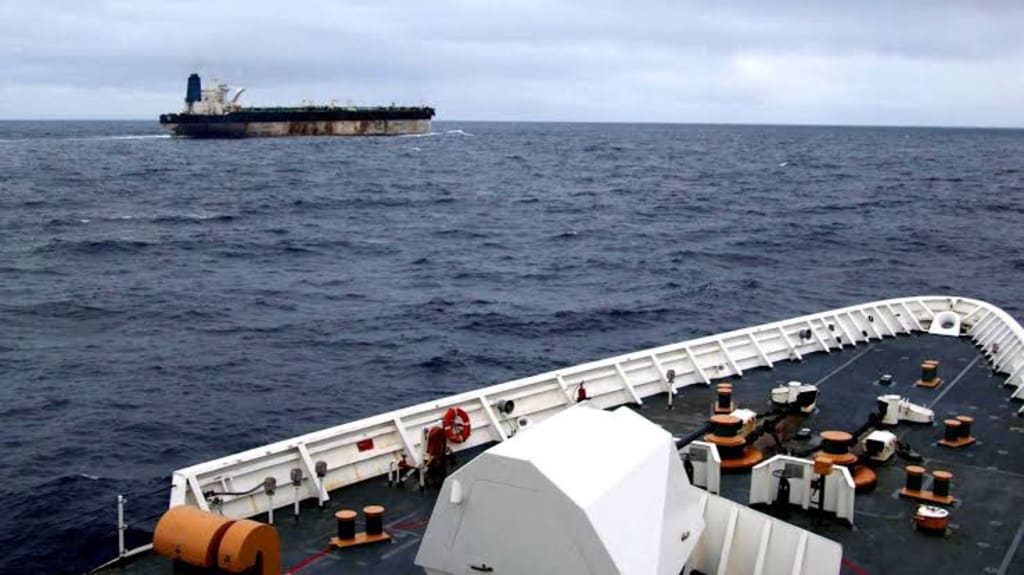
The UK government believes it has the legal authority to stop and inspect so-called “shadow fleet” oil tankers operating in and around British waters, a move that could significantly tighten enforcement of international sanctions. These vessels, often linked to sanctioned states and opaque ownership structures, have become a growing concern for global maritime security, environmental safety, and the integrity of international law.
What Is the “Shadow Fleet”?
The term “shadow fleet” refers to a loosely connected network of aging oil tankers that operate outside standard international regulations. These ships are typically used to transport oil from sanctioned countries by concealing their origins, disabling tracking systems, conducting ship-to-ship transfers at sea, and using complex ownership arrangements to evade detection.
Many of these vessels sail under flags of convenience, lack adequate insurance, and fail to meet safety or environmental standards. Western governments argue that shadow fleets undermine sanctions regimes designed to limit the revenues of states accused of violating international norms.
Why the UK Is Taking Action
UK ministers now believe domestic and international maritime law provides sufficient legal grounds to intervene. According to officials, ships passing through UK territorial waters or key chokepoints can be stopped if there is reasonable suspicion of sanctions breaches, environmental risks, or safety violations.
The move reflects growing concern that shadow fleet tankers pose not only a geopolitical challenge but also a direct threat to coastal states. Aging vessels with poor maintenance records increase the risk of oil spills, collisions, and environmental disasters—particularly in busy shipping lanes such as the English Channel.
Legal Grounds for Intervention
The UK’s position rests on several legal pillars. Under international maritime law, coastal states have rights to regulate vessels within their territorial waters, especially where safety, environmental protection, or sanctions enforcement is concerned. The UK can also rely on powers granted under domestic sanctions legislation and port state control rules.
Ministers argue that if a tanker is suspected of breaching sanctions, falsifying documents, or operating without valid insurance, authorities can legally board, inspect, or detain the vessel. Environmental laws may also apply if a ship is deemed unseaworthy or poses a pollution risk.
Enforcement Challenges at Sea
Despite legal confidence, enforcing action against shadow fleets is complex. These vessels often operate in legal grey areas, carefully avoiding ports where inspections are strict. Some frequently change names, flags, and owners, making it difficult to trace responsibility.
There is also the risk of diplomatic fallout. Stopping or detaining tankers linked—directly or indirectly—to major oil-producing nations could escalate political tensions. As a result, UK authorities are expected to proceed cautiously, coordinating closely with allies to ensure consistency and legitimacy.
Environmental and Security Risks
Beyond sanctions enforcement, environmental concerns are a major driver of UK action. Shadow fleet tankers are often old and poorly maintained, increasing the likelihood of mechanical failure. An oil spill in UK waters or nearby shipping routes would have devastating consequences for marine ecosystems, fisheries, and coastal economies.
Security experts also warn that unregulated maritime activity can be exploited for broader illicit purposes, including smuggling, money laundering, and even espionage. From this perspective, cracking down on shadow fleets is as much about national security as it is about sanctions.
International Cooperation Is Key
The UK’s approach aligns with broader efforts by Western allies to close loopholes in sanctions enforcement. European nations and the United States have increasingly focused on tracking shadow fleet movements, sharing intelligence, and tightening insurance and certification requirements.
Analysts argue that unilateral action would be less effective without coordinated international support. A collective stance makes it harder for shadow fleet operators to simply reroute or shift operations to more permissive jurisdictions.
What Happens Next?
If the UK begins actively stopping and inspecting shadow fleet tankers, it could mark a turning point in maritime sanctions enforcement. Such action would send a strong signal that evasive shipping practices will no longer be tolerated.
However, experts caution that enforcement must be consistent, transparent, and legally sound to withstand potential legal challenges. Any misstep could weaken international cooperation or expose the UK to diplomatic disputes.
A New Era of Maritime Oversight
The belief that the UK can legally stop shadow fleet tankers reflects a broader shift in how governments view maritime enforcement. As sanctions evasion becomes more sophisticated, states are increasingly willing to use existing legal frameworks more assertively.
For the UK, the challenge lies in balancing firm enforcement with international law, environmental protection, and geopolitical stability. If successful, the move could reshape how shadow fleets operate—and significantly reduce their ability to undermine global sanctions regimes.
About the Creator
Fiaz Ahmed Brohi
I am a passionate writer with a love for exploring and creating content on trending topics. Always curious, always sharing stories that engage and inspire.
Keep reading
More stories from Fiaz Ahmed Brohi and writers in The Swamp and other communities.
Venezuela Has a Ton of Oil. It Also Has Something Else America Needs
Venezuela’s name has long been synonymous with oil — and for good reason. The South American nation holds some of the largest proven crude oil reserves in the world, estimated at more than 300 billion barrels, surpassing even Saudi Arabia. � These vast fossil fuel resources have made Venezuela a central player in global energy markets and a key focus of U.S. strategic interest, especially as Washington looks to diversify supply and reduce dependence on adversarial producers. � Wikipedia Axios But oil is only part of Venezuela’s resource story. Beyond hydrocarbons, the country also sits atop significant critical minerals and natural resources that increasingly matter to modern economies, defense industries, and emerging technologies — assets that America is watching closely for their long-term strategic value. � finance.yahoo.com 1. The Energy Giant Next Door Venezuela’s oil reserves have historically underpinned its political and economic identity. These reserves reside predominantly in the Orinoco Belt, a vast geological formation rich in extra-heavy crude. � Before sanctions and decades of mismanagement, Venezuela exported large volumes of oil to the U.S., at times reaching over a million barrels per day. Today, U.S. negotiations aim to revive access to Venezuelan crude, with recent deals potentially redirecting tens of millions of barrels for American refineries, a significant geopolitical shift. � Wikipedia nypost.com For Washington, securing reliable energy sources remains a top priority. Venezuelan oil not only offers supply diversification but also preserves influence in a region historically dominated by U.S. energy interests. This has become even more salient in light of global energy volatility and shifting alliances that challenge traditional supply chains. � marketwatch.com 2. Critical Minerals: The Hidden Strategic Prize While oil grabs headlines, critical minerals are quietly shaping the geopolitical future. These metals — including aluminum, nickel, copper, and tantalum — are essential in everything from electric vehicles and renewable energy systems to microelectronics and defense applications. � aol.com Experts believe Venezuela has unverified but potentially substantial deposits of these materials. � Among them are minerals often associated with technological manufacturing and advanced industries: finance.yahoo.com Coltan, a source of tantalum used in capacitors and high-tech devices Bauxite, a primary source of aluminum Rare earth elements essential for motors, lasers, and batteries � aol.com These resources are crucial for the U.S. because of the country’s heavy reliance on global supply chains, many of which are dominated by China. Securing alternative sources of critical minerals could help reduce that dependence and strengthen America’s technological competitiveness. However, the scale and economic viability of these deposits remain uncertain, and extraction would face significant challenges. � finance.yahoo.com 3. Natural Gas: A Strategic Energy Hedge Beyond oil and minerals, Venezuela also holds substantial natural gas reserves — ranking among the top in the hemisphere. Although gas development has lagged behind oil due to infrastructure limitations, these deposits could provide a valuable strategic energy hedge for future global energy security. � Wikipedia Natural gas plays a key role in electricity generation and industrial processes worldwide. Expanding Venezuelan natural gas production could eventually help diversify energy imports and offer alternatives to markets currently dependent on Russian or Middle Eastern supplies. � Wikipedia 4. Gold and Other Resource Wealth While not as often discussed as oil, Venezuela’s gold reserves — the largest in Latin America — and other metals like iron ore and diamonds add layers of economic potential. � Although the development of these sectors has been limited by economic instability and security concerns, they represent another dimension of Venezuela’s resource wealth that could matter in the long term. � Ventura Securities Ventura Securities 5. The Geopolitical Chessboard Venezuela’s resource profile matters not only for what lies beneath the ground but for how it shapes international competition. For decades, China was Venezuela’s top oil buyer, strengthening its influence in South America. � The recent U.S. moves to secure Venezuelan energy access and broader natural resource leverage reflect a broader strategic realignment in global geopolitics, where access to essential materials and energy resources drives security thinking as much as military power or diplomacy. � WRAL News Reuters The possibility of accessing Venezuela’s critical minerals and gas, in addition to oil, gives Washington a long-term interest in seeing these new sectors develop — provided that investment, governance, and security conditions improve. � finance.yahoo.com Conclusion: Beyond Black Gold Venezuela’s oil reserves have made it a perennial subject of global energy politics, and recent U.S. efforts to control Venezuelan oil sales underline how strategic that resource remains. � But the country’s hidden resource base — minerals, metals, natural gas, and more — offers a broader, potentially transformative strategic value that America and other global powers are now beginning to reckon with. � Axios finance.yahoo.com In a world where energy and technology supply chains increasingly define economic and military strength, Venezuela’s resource portfolio is more than just black gold — it’s a resource mosaic that could shape geopolitical relationships and industrial futures for decades to come.
By Fiaz Ahmed Brohi6 days ago in The Swamp
Winter Battles in Donbas: Russia Pushes Hard on Pokrovsk and Kupyansk
The war in eastern Ukraine has entered another brutal chapter this winter. Russian forces are intensifying pressure on Ukrainian defenses around Pokrovsk and Kupyansk, two cities that now represent critical anchors in Ukraine’s hold on the Donbas region. According to Meduza, the fighting is not slowing down, and both sides are bracing for what could be a decisive stretch in the months ahead.
By Aqib Hussainabout 13 hours ago in The Swamp


Comments
There are no comments for this story
Be the first to respond and start the conversation.