
Which Are Iran’s Main Opposition Groups?
A Clear and Simple Guide to Iran’s Political Opposition
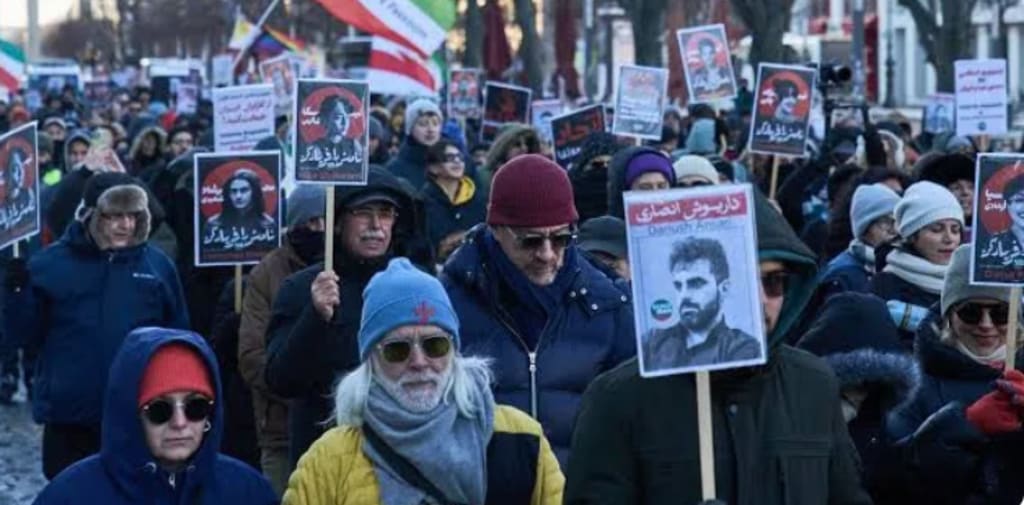
Iran has one of the most complex political landscapes in the Middle East. Since the 1979 Islamic Revolution, the country has been ruled by the Islamic Republic — a system that tightly controls political activity, media, and civil freedoms. Despite this, opposition to the regime has never disappeared. Instead, it has taken many forms, ranging from organized political groups to grassroots protest movements.
In this blog, we’ll break down Iran’s main opposition groups, explain who they are, what they stand for, and why they matter — all in a clear and accessible way.
Understanding Iran’s Opposition Landscape
Iran’s opposition is highly fragmented. There is no single leader or unified movement representing all critics of the regime. Some opposition groups operate underground inside Iran, while many function in exile due to government repression.
What unites these groups is dissatisfaction with authoritarian rule, economic hardship, corruption, and human rights violations. What divides them is ideology — secularism vs. religion, reform vs. revolution, unity vs. ethnic autonomy.
Let’s explore the most prominent opposition groups shaping Iran’s political debate.
1. People’s Mujahedin Organization of Iran (MEK / PMOI)
The People’s Mujahedin Organization of Iran, commonly known as MEK, is one of the most well-known and controversial Iranian opposition groups.
Founded in the 1960s, MEK initially blended Islamic and leftist ideas while opposing the Shah’s monarchy. After the 1979 revolution, the group quickly fell out with the new Islamic Republic and entered into violent conflict with the state.
One of the biggest controversies surrounding MEK is its alliance with Saddam Hussein during the Iran-Iraq War — a move that severely damaged its reputation among many Iranians.
Today, MEK operates mostly in exile and leads the National Council of Resistance of Iran (NCRI), which claims to offer a democratic alternative to the current regime. While MEK is highly organized and vocal internationally, its actual support inside Iran remains a topic of debate.
2. The National Council of Resistance of Iran (NCRI)
The NCRI is a coalition of opposition groups dominated by MEK leadership. It presents itself as a “government-in-waiting” and promotes a platform that includes:
Secular governance
Gender equality
Free elections
Separation of religion and state
The council has gained attention in Western political circles, but critics argue that it lacks broad grassroots legitimacy within Iran.
3. Nationalist and Pro-Democracy Groups
National Front of Iran
The National Front is one of Iran’s oldest democratic movements. It traces its roots back to Prime Minister Mohammad Mossadegh, who famously nationalized Iran’s oil industry in the 1950s.
The group supports secular democracy, national sovereignty, and constitutional rule. Although its influence has declined over the decades, it remains symbolically important as a historic voice for Iranian democracy.
Freedom Movement of Iran
The Freedom Movement of Iran (FMI) promotes a blend of Islamic values and democratic principles. Unlike revolutionary groups, it has historically sought reform through peaceful and legal means.
Operating mostly inside Iran, FMI has faced repeated bans and arrests but continues to represent a “reformist opposition” rather than a revolutionary one.
4. Secular Republican Groups
United Republicans of Iran
Formed in the early 2000s, the United Republicans of Iran advocate for a secular democratic republic. They reject both the Islamic Republic and monarchy, calling instead for a modern political system based on popular sovereignty.
This group is largely based in exile and works through political advocacy, media, and coalition-building.
5. Kurdish and Ethnic Opposition Groups
Iran is ethnically diverse, and some opposition movements are rooted in minority communities seeking greater rights or autonomy.
Kurdish Opposition Parties
The Kurdish population in western Iran has long resisted central government control. Major Kurdish opposition groups include:
Kurdistan Democratic Party of Iran (KDPI)
Komala Party of Iranian Kurdistan
PJAK (Free Life Party of Kurdistan)
These groups advocate for cultural rights, political autonomy, and economic justice. Some have armed wings and have clashed with Iranian security forces, making them a persistent challenge to Tehran.
Other Ethnic Movements
Other minority groups, such as Arab, Baluchi, and Qashqai activists, also maintain opposition organizations. These movements usually focus on federalism, local governance, and protection of cultural identity rather than nationwide leadership.
6. Grassroots Protest Movements
Not all opposition in Iran comes from formal organizations. In recent years, grassroots movements have played a major role in challenging the regime.
“Woman, Life, Freedom” Movement
Sparked by the death of Mahsa Amini in 2022, this movement became one of the largest protest waves in Iran’s modern history. It brought together women, students, workers, and minorities under a shared demand for dignity, freedom, and social justice.
These movements are decentralized and leaderless, making them harder to suppress — but also harder to turn into lasting political structures.
7. Monarchist Opposition
Another segment of the opposition supports the return of Iran’s monarchy.
Reza Pahlavi
The son of Iran’s last Shah, Reza Pahlavi, has emerged as a symbolic figure for monarchists and some secular activists in the diaspora. While he promotes democracy and human rights, opinions about restoring the monarchy remain deeply divided inside Iran.
8. Why Iran’s Opposition Remains Divided
Despite widespread dissatisfaction with the government, Iran’s opposition struggles with:
Ideological disagreements
Lack of unified leadership
Heavy state repression
Limited coordination between exile groups and activists inside Iran
This fragmentation has made it difficult for opposition forces to mount a unified challenge to the Islamic Republic.
Final Thoughts
Iran’s opposition is not a single movement, but a patchwork of ideologies, identities, and strategies. From organized exile groups like MEK and NCRI to grassroots movements like “Woman, Life, Freedom,” each plays a role in shaping Iran’s future.
While the Islamic Republic remains firmly in power, the persistence of these opposition voices reflects a deeper reality: many Iranians continue to seek political change, social freedom, and a more just system of governance.
Understanding these groups is essential for anyone trying to make sense of Iran’s internal struggles — and its uncertain political future.
About the Creator
Keep reading
More stories from Aqib Hussain and writers in The Swamp and other communities.
Europe and South America Seal a Trade Pact for the Trump Era
Global trade is changing — and fast. In an era defined by tariffs, protectionism, and shifting alliances, Europe and South America have quietly made history. After more than two decades of negotiations, the European Union and the Mercosur bloc have sealed a major trade pact, creating one of the world’s largest free-trade zones.
By Aqib Hussain2 months ago in The Swamp
The Saddest Thing - The Billionaires Who Rule America Aren't Even Enjoying Themselves
This single post says more about our ruling class than a thousand policy papers. The saddest thing about today's system is that the men robbing the rest of us - sabotaging our economic prospects, our pensions, our access to affordable healthcare - are not even happy.
By Scott Christenson🌴28 days ago in The Swamp
How the Royal Navy went from being the envy of the world to a shadow of its former self
For centuries, the Royal Navy stood as one of the most powerful and respected military forces on the planet. At its height, Britain’s naval fleet dominated global seas, protected vast trade routes, and played a central role in maintaining the British Empire. Today, however, many defense analysts argue that the Royal Navy is only a shadow of its former self, facing shrinking fleets, budget constraints, and growing strategic challenges. The Royal Navy’s dominance began in the 18th and 19th centuries, when Britain relied heavily on maritime power to protect trade and colonial territories. Victories in historic battles such as Trafalgar cemented Britain’s reputation as the world’s leading naval power. At the height of the British Empire, the Royal Navy maintained hundreds of warships stationed across the globe, ensuring that Britain could project power wherever its interests were threatened. Following the Second World War, however, the geopolitical landscape began to change dramatically. The decline of the British Empire, combined with the rise of new superpowers such as the United States and the Soviet Union, gradually reduced Britain’s role as the world’s dominant naval force. Maintaining a massive global fleet became increasingly difficult as economic priorities shifted toward rebuilding the post-war economy. Over the following decades, successive British governments reduced defense spending and focused on modernizing rather than expanding the fleet. While new technologies improved the capabilities of individual ships, the total number of vessels steadily declined. This shift marked the beginning of a long-term contraction in Britain’s naval strength. Today, the Royal Navy operates far fewer ships than it did during its peak years. While the fleet includes advanced aircraft carriers, nuclear submarines, and modern destroyers, critics argue that its size is no longer sufficient to meet the wide range of commitments expected from a global maritime power. One major challenge facing the Royal Navy is maintaining a balance between technological sophistication and fleet size. Modern warships are far more complex and expensive than their historical counterparts. As a result, governments often choose to invest in fewer but more capable vessels. While this strategy enhances technological superiority, it also reduces the number of ships available for simultaneous missions. Personnel shortages have also become a concern. Recruiting and retaining skilled sailors and engineers has grown more difficult in recent years, partly because modern naval systems require highly specialized training. Some reports suggest that staffing shortages have occasionally limited the ability to deploy certain ships or maintain continuous operations. Another issue is the growing range of responsibilities assigned to the Royal Navy. In addition to traditional combat roles, the navy is now involved in humanitarian missions, anti-piracy operations, maritime security patrols, and disaster relief efforts. These diverse tasks stretch resources and place additional pressure on a relatively small fleet. At the same time, global maritime competition is intensifying. Countries such as China are rapidly expanding their naval forces, building dozens of new warships each year. Russia, while smaller in scale, continues to modernize its submarine fleet and invest in advanced missile technologies. These developments are forcing Western navies to reconsider how they allocate resources and plan future strategies. Despite these challenges, supporters of the Royal Navy emphasize that it remains one of the most technologically advanced naval forces in the world. Britain’s aircraft carriers, nuclear-powered submarines, and advanced radar systems provide capabilities that many other nations cannot match. Moreover, the Royal Navy continues to play a vital role within NATO and in international maritime security. Through alliances and joint operations with partners such as the United States and European nations, Britain maintains a significant presence in global waters even with a smaller fleet. Ultimately, the transformation of the Royal Navy reflects broader changes in global power dynamics. The era of a single nation dominating the seas has largely passed, replaced by a more complex and competitive international environment. While the Royal Navy may no longer command the overwhelming dominance it once enjoyed, its legacy and strategic importance remain deeply embedded in Britain’s national identity and global role.
By Fiaz Ahmed about 21 hours ago in The Swamp
The Piggy Project
I’ve had so many names in this life I lose track of which ones were ever really mine and which ones I wore because someone needed me to. Some were handed to me before I had words to refuse them, before I knew what they meant, before I knew I could say no. Most weren’t meant to hurt. That doesn’t mean they didn’t leave marks. Marks that told me who I belong to, who I am by way of who claims me, recognizes me in the good and bad, who walks beside me.
By Fatal Serendipity2 days ago in Confessions



Comments
There are no comments for this story
Be the first to respond and start the conversation.