
Hamas Says It Will Dissolve Its Gaza Government Upon New Palestinian Body Taking Over
A Political Shift That Could Redefine Gaza’s Future Governance
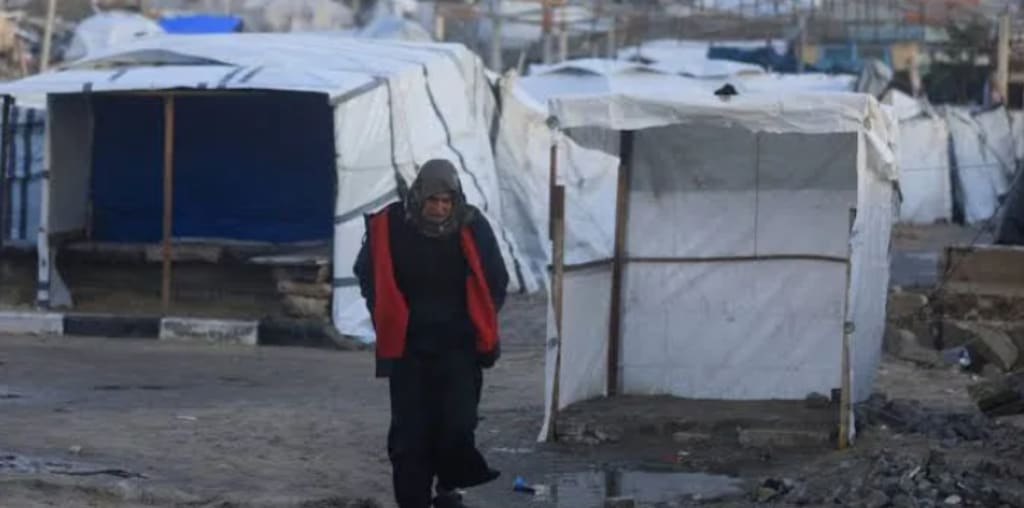
For the first time since taking control of Gaza in 2007, Hamas has announced its willingness to dissolve its governing authority in the Gaza Strip—but only once a newly formed Palestinian body assumes administrative control. This announcement has sparked global attention, as it may signal a turning point in Gaza’s long-standing political and humanitarian crisis.
The move comes amid renewed international efforts to stabilize the region following years of conflict, isolation, and economic collapse. While many questions remain unanswered, the statement alone marks a rare moment of political flexibility from a group that has long resisted relinquishing power.
What Exactly Did Hamas Announce?
Hamas stated that it is prepared to step aside from governing Gaza once a new Palestinian-led administrative body is fully established and operational. According to the announcement, this new body would not be a Hamas-led government, but rather a technocratic authority composed of independent professionals.
The idea is that this body would focus on civil administration—managing health care, education, reconstruction, and public services—rather than engaging in factional politics. Hamas emphasized that the transition would only occur after the new authority proves capable of taking responsibility for governance.
Why This Announcement Matters
Hamas has governed Gaza for nearly two decades, following its takeover from the Fatah-led Palestinian Authority (PA). Since then, Gaza has experienced repeated wars, international sanctions, and severe humanitarian challenges.
This announcement matters because it suggests:
A potential end to single-faction rule in Gaza
A possible path toward Palestinian political reconciliation
Renewed chances for international aid and reconstruction
A shift from militant governance to civilian administration
For many observers, the statement represents a pragmatic acknowledgment by Hamas that Gaza’s future may require a new political formula.
The Proposed Technocratic Body Explained
The proposed governing structure would consist of technocrats—experts in administration, economics, infrastructure, and public services—rather than politicians or armed group members. The goal is to create a neutral authority that can operate without ideological alignment to Hamas, Fatah, or any armed faction.
Such a body would be tasked with:
Restoring basic services such as electricity and water
Overseeing post-war reconstruction
Coordinating humanitarian aid
Preparing the ground for longer-term political solutions
Supporters argue that a technocratic approach could help bypass factional rivalries that have paralyzed Palestinian governance for years.
The Role of International Oversight
International involvement is expected to play a significant role in the transition. According to reports, the new Palestinian body would operate under international supervision, ensuring accountability, transparency, and security coordination.
This oversight could encourage foreign governments and donors to re-engage with Gaza, especially if the new authority is seen as independent from militant groups. However, critics warn that excessive external control could undermine Palestinian self-determination.
Challenges Standing in the Way
While the announcement sounds promising, the road ahead is far from simple.
1. Trust Deficit
Decades of conflict have created deep mistrust between Hamas, the Palestinian Authority, Israel, and the international community. Convincing all parties that the transition is genuine will be difficult.
2. Undefined Timeline
Hamas has not provided a clear timeline for dissolving its government, raising concerns that the move could be delayed indefinitely.
3. Internal Palestinian Divisions
Reconciliation between Hamas and Fatah has failed multiple times in the past. Whether both sides can cooperate under a new administrative framework remains uncertain.
4. Public Skepticism
Many Gazans remain cautious. After years of unfulfilled promises, residents want tangible improvements—not just political announcements.
How Palestinians Are Reacting
Public reaction inside Gaza has been mixed. Some see the move as a necessary step toward stability and rebuilding, while others fear it may simply reshuffle power without meaningful change.
For civilians who have endured war, displacement, and poverty, the priority is clear: improved living conditions, security, and economic opportunity. Whether a new governing body can deliver on these expectations will determine its legitimacy.
What This Could Mean for Gaza’s Future
If implemented sincerely, Hamas’s decision to dissolve its Gaza government could:
Open the door to long-term ceasefire arrangements
Enable large-scale reconstruction efforts
Reduce Gaza’s political isolation
Lay groundwork for future Palestinian elections
However, failure to follow through could deepen cynicism and further destabilize the region.
Final Thoughts
Hamas’s announcement that it will dissolve its Gaza government upon the takeover by a new Palestinian body represents one of the most significant political signals in years. While the statement alone does not guarantee change, it introduces a rare opportunity to rethink governance in Gaza.
Whether this moment becomes a true turning point—or just another missed chance—will depend on transparency, cooperation, and the willingness of all parties to prioritize civilian welfare over political dominance.
For Gaza’s people, the hope is simple: that words will finally turn into action.
About the Creator
Keep reading
More stories from Aqib Hussain and writers in The Swamp and other communities.
Hearings on Whether Myanmar Committed Genocide Against the Rohingya Opens at Top UN Court
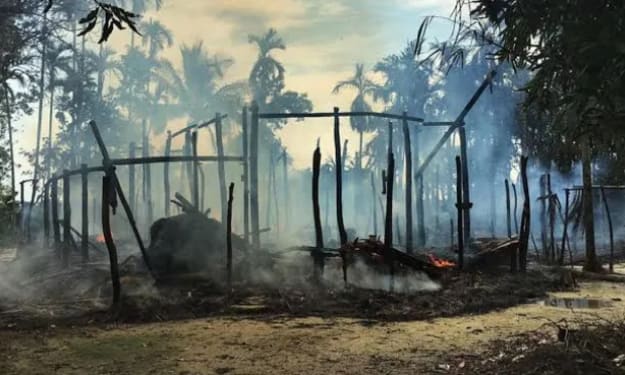
The halls of the International Court of Justice (ICJ) in The Hague are once again at the center of global attention. This time, the focus is on Myanmar — and whether its actions against the Rohingya Muslim minority amount to genocide under international law.
By Aqib Hussain6 days ago in The Swamp
EU and Mercosur Seal Historic Trade Deal
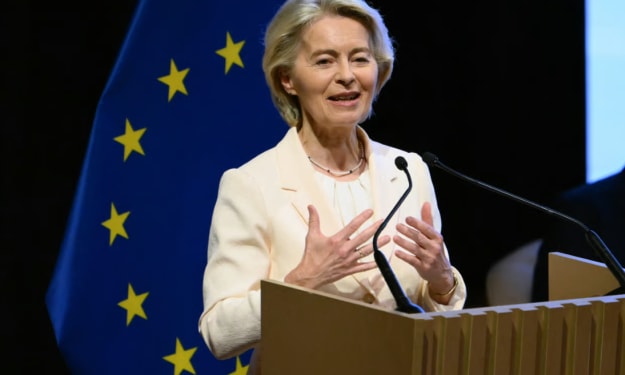
After more than two decades of negotiations, delays, political resistance, and diplomatic resets, the European Union and the Mercosur bloc have finally sealed a historic trade deal. The agreement, hailed by supporters as one of the most ambitious trade pacts ever negotiated, promises to reshape economic ties between Europe and South America while redefining how global trade aligns with climate goals, labor standards, and geopolitical realities. The deal links the EU — one of the world’s largest single markets — with Mercosur, a South American trade bloc comprising Brazil, Argentina, Uruguay, and Paraguay, representing a combined population of over 780 million people. Together, they form a massive economic zone with the potential to influence global supply chains, agricultural markets, and industrial trade for decades to come. What Is the EU–Mercosur Trade Deal? At its core, the EU–Mercosur agreement is designed to reduce or eliminate tariffs on a wide range of goods and services, making trade between the two regions cheaper and more efficient. For European exporters, the deal opens access to South American markets for products such as cars, machinery, pharmaceuticals, chemicals, and industrial equipment — many of which currently face high import duties. For Mercosur countries, the agreement improves access to the EU market for agricultural products, including beef, poultry, sugar, ethanol, soy, and coffee. The European Commission estimates that the deal could save European companies billions of euros annually in tariffs, while boosting economic growth and strengthening strategic ties between the two regions. Why This Deal Took So Long Negotiations between the EU and Mercosur began in 1999, but progress was repeatedly stalled by disagreements over agriculture, environmental protection, labor rights, and political shifts on both sides of the Atlantic. European farmers, particularly in France and Ireland, have long opposed the deal, fearing competition from cheaper South American agricultural imports. Environmental groups raised alarms about deforestation in the Amazon, arguing that increased beef and soy exports could accelerate forest loss. On the Mercosur side, concerns centered on protecting domestic industries and ensuring fair access to European markets without being overwhelmed by EU industrial powerhouses. Only in recent years — amid rising global trade tensions, supply chain disruptions, and geopolitical competition — did momentum return. Both blocs increasingly saw strategic value in diversifying partnerships beyond China and the United States. Economic Impact: Who Stands to Gain? Supporters argue that the agreement is a win-win for both regions. For the European Union, the deal strengthens export opportunities for manufacturers and service providers while reinforcing Europe’s role as a global trade leader. European carmakers, engineering firms, and pharmaceutical companies are expected to benefit significantly. For Mercosur countries, the agreement provides stable access to one of the world’s wealthiest consumer markets. Agricultural exporters, in particular, stand to gain from reduced tariffs and predictable trade rules. Supporters say the deal could stimulate investment, create jobs, and modernize industries across South America. Economists also highlight that the agreement sends a strong signal in favor of rules-based international trade at a time when protectionism is rising globally. Environmental and Climate Concerns Despite the economic promise, the deal remains controversial — especially in Europe. Environmental organizations warn that increased agricultural exports from South America could intensify deforestation, biodiversity loss, and carbon emissions, particularly in Brazil’s Amazon region. Critics argue that previous environmental commitments have not been adequately enforced and fear the trade deal could undermine the EU’s climate leadership. In response, the European Commission has emphasized that the final agreement includes binding sustainability provisions, commitments to the Paris Climate Agreement, and mechanisms to address environmental violations. Supporters argue that engagement — rather than isolation — gives the EU more leverage to promote sustainable practices. Still, skepticism remains strong among green groups and some EU lawmakers, who insist that enforcement will be key. Political Resistance Inside the EU Even after sealing the deal, ratification is far from guaranteed. Several EU member states, including France, Austria, and Ireland, have expressed strong reservations. Farmers’ unions worry about unfair competition, while political leaders face domestic pressure to protect local agriculture and environmental standards. Because the agreement requires approval from all EU member states and the European Parliament, even a small number of dissenting countries could delay or derail implementation. This political reality means that while the deal has been sealed at the diplomatic level, its future still depends on intense political negotiation within Europe. Why the Deal Matters Globally Beyond trade volumes and tariff reductions, the EU–Mercosur agreement carries geopolitical significance. It strengthens ties between Europe and South America at a time when global power dynamics are shifting. China has significantly expanded its economic footprint in Latin America, and the EU sees the deal as a way to remain relevant and competitive in the region. The agreement also reinforces the EU’s ambition to shape global trade rules around sustainability, labor rights, and environmental standards, even if critics question how effective those safeguards will be in practice. In a world marked by trade wars, sanctions, and fragmented supply chains, the deal stands as a rare example of multilateral cooperation. What Happens Next? The next phase involves legal review, translation into all EU languages, and the ratification process across member states. This could take several years, and political opposition may still reshape or delay parts of the agreement. Meanwhile, businesses on both sides are already preparing for potential opportunities, assessing new markets, and planning long-term strategies around the expected changes. Whether the deal ultimately fulfills its promise will depend not only on economic performance but also on enforcement, transparency, and political will. A Turning Point for Trade Relations The EU–Mercosur trade deal marks a historic turning point in relations between Europe and South America. It reflects a growing recognition that global challenges — from climate change to economic resilience — require cooperation across continents. Yet the agreement also highlights the tensions between economic growth and environmental responsibility, free trade and local protection, ambition and accountability. As the world watches the ratification process unfold, one thing is clear: this deal is more than a trade agreement. It is a test of how global partnerships can evolve in an increasingly complex and divided world.
By Muhammad Hassanabout 19 hours ago in The Swamp


Comments
There are no comments for this story
Be the first to respond and start the conversation.