
Why some see the dollar's drop as a sign America is losing its financial might
The Dollar’s Decline: A Sign of America’s Waning Financial Might?

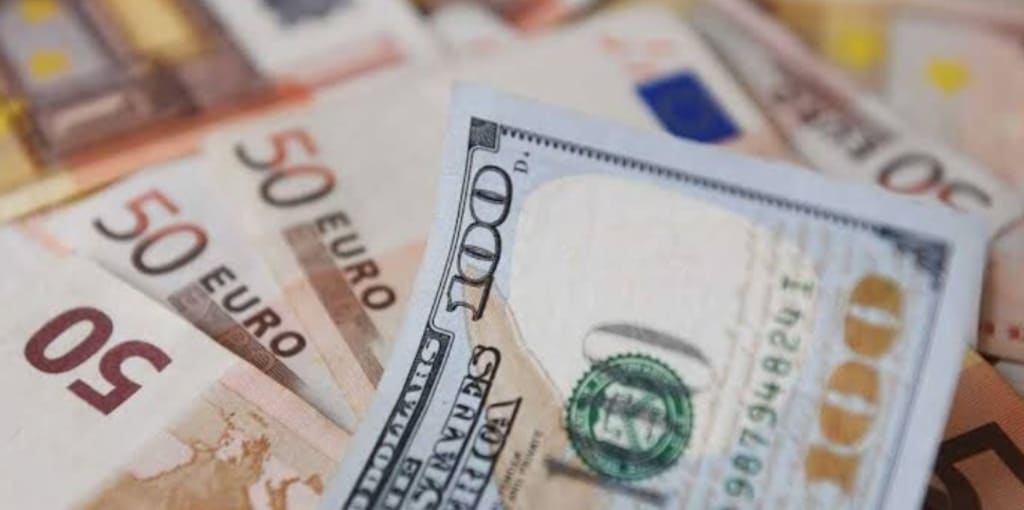
**The Dollar’s Decline: A Sign of America’s Waning Financial Might? **
In recent months, the U.S. dollar has seen a notable decline against major global currencies, sparking widespread debate among economists, investors, and policymakers. This depreciation is seen by some as a warning sign that America may be losing its long-standing financial dominance, rather than just a market fluctuation. While others see it as part of a natural economic cycle, the perception that the dollar’s weakening reflects a deeper erosion of U.S. financial influence is gaining traction.
The strength of the dollar has long been a symbol of American economic leadership. As the world’s primary reserve currency since the end of World War II, the dollar has provided the U.S. with unmatched financial power. It enables the U.S. government to borrow cheaply, underpins the global financial system, and allows American sanctions to carry enormous global weight. However, given the recent decline of the dollar, some analysts believe that this era of dominance may be at risk. Several key factors are contributing to the dollar's slide. First, there is growing concern about the U.S. fiscal outlook. Investors are beginning to question the viability of U.S. government borrowing over the long term because of the nation's debt, which now exceeds 34 trillion dollars, and rising interest rates. At the same time, persistent political gridlock in Washington over spending and debt ceiling issues has dented confidence in America’s ability to manage its finances responsibly.
Second, the monetary policy implemented by the Federal Reserve is a significant factor. After aggressively raising interest rates to combat inflation, the Fed has signaled a potential pivot toward rate cuts amid signs of slowing economic growth. The dollar is less appealing to investors looking for higher returns when interest rates are lower, which prompts capital flows into other currencies and markets. The global economic landscape is changing simultaneously. Emerging powers like China, Russia, and members of the BRICS bloc are actively working to reduce their dependence on the dollar. These nations are pursuing a strategic de-dollarization agenda by promoting local currency trade and introducing alternative payment systems. While such efforts remain in the early stages, they represent a challenge to the dollar’s hegemonic status.
Moreover, geopolitical tensions are exacerbating concerns. Some governments have questioned whether it is prudent to hold substantial dollars reserves due to the sanctions imposed by the United States on nations like Russia and Iran. The weaponization of the dollar has, in some cases, accelerated moves toward diversifying currency reserves.
Critics of the “decline” narrative argue that the dollar remains dominant by almost every metric. It continues to be the standard for commodities like oil, dominates global trade invoicing, and contributes nearly 60% of global reserves of foreign currency. Despite their growing influence, the euro and the Chinese yuan have yet to demonstrate that they can match the liquidity, stability, and legal transparency of the dollar. Yet perception matters in global finance. If enough countries and investors believe the dollar is no longer a safe or dominant store of value, behavior will shift—even slowly—toward alternatives. This may gradually diminish the advantages the United States has long enjoyed, such as the low cost of deficit financing and financial influence over international policy. The implications of a weaker dollar extend beyond Wall Street. For American consumers, it could mean higher prices for imported goods, greater inflationary pressures, and a potential decline in living standards. For U.S. companies, it may alter competitiveness abroad, impacting profits and global reach.
Whether the recent slide in the dollar signals a temporary adjustment or the beginning of a longer-term erosion of U.S. financial power remains to be seen. However, it serves as a timely reminder that economic leadership must be actively maintained. Fiscal discipline, monetary prudence, and a commitment to political stability are not just domestic issues—they are foundational to sustaining the dollar’s role in the world.
The United States must make important decisions as the global economy continues to change. The dollar’s future, and with it America's financial might, hinges on how those choices are made and perceived by the rest of the world.
About the Creator
GLOBAL NEWS
World News Updated
Short News upload
Technology News
Keep reading
More stories from GLOBAL NEWS and writers in History and other communities.
Dow futures fall as Trump officials signal limited breathing room before tariffs ‘boomerang back’
**Dow Futures Fall as Trump Officials Warn of Tariff Repercussions** U.S. stock index futures fell early Monday morning after key Trump administration officials signaled that there may be limited time before escalating tariffs on China and other trade partners start to backfire on the American economy. Dow futures dropped more than 150 points as markets digested growing signs that trade tensions are not just here to stay—but may intensify in ways that hurt domestic industries.
By GLOBAL NEWS7 months ago in History
Power's Sake
When it comes to gaining power, bad people use it to gain more They never gain power to do something with it, they gain power to have it, relish in it, double it down on itself so it grows exponentially and never goes anywhere. Even if you see the people in power commit an atrocity, that is never the true goal. It is a deplorable action for sure but the action itself usually doesn't matter it's the outcome.
By Donny Foley4 days ago in History



Comments
There are no comments for this story
Be the first to respond and start the conversation.