
Dow futures fall as Trump officials signal limited breathing room before tariffs ‘boomerang back’
Dow Futures Fall as Trump Officials Warn of Tariff Repercussions

**Dow Futures Fall as Trump Officials Warn of Tariff Repercussions**
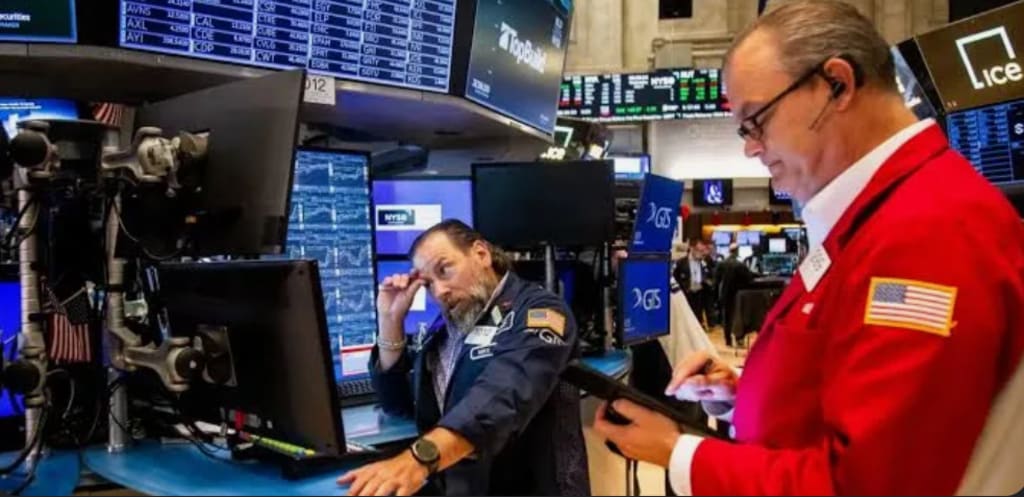
U.S. stock index futures fell early Monday morning after key Trump administration officials signaled that there may be limited time before escalating tariffs on China and other trade partners start to backfire on the American economy. Dow futures dropped more than 150 points as markets digested growing signs that trade tensions are not just here to stay—but may intensify in ways that hurt domestic industries.
Over the weekend, senior White House economic advisers hinted that the United States has a narrow window to recalibrate its tariff strategy before the economic effects begin to “boomerang back.” National Economic Council Director Larry Kudlow, speaking on a Sunday talk show, acknowledged that while the administration believes tariffs are a necessary tool to combat unfair trade practices, they are not without cost. “We have to be honest,” Kudlow said. “The tariffs do have an impact, and they could start hitting us in ways we hadn’t fully projected.”
Investors took that message seriously. Dow futures opened lower in overnight trading, followed by similar losses in S\&P 500 and Nasdaq futures. The decline follows a rocky week for equity markets, which have been whipsawed by alternating optimism and anxiety over U.S.-China trade talks.
The Trump administration has levied tariffs on more than \$350 billion worth of Chinese imports, while Beijing has retaliated with tariffs on over \$100 billion of American goods, including soybeans, automobiles, and technology products. Analysts warn that continued escalation could crimp consumer demand, disrupt global supply chains, and depress corporate earnings.
“There’s a tipping point,” said Sarah House, senior economist at Wells Fargo. “Tariffs may be effective tactically in the immediate future; however, the longer they last, the more uncertainty they introduce into business planning. That eventually filters down into jobs and spending.”
Business leaders are also sounding alarms. The U.S. Chamber of Commerce issued a statement Monday urging the administration to “reconsider its approach before further damage is done to American farmers, manufacturers, and consumers.” Retailers, in particular, have voiced concern that holiday shopping could be dampened by rising prices on Chinese-made goods.
Markets had hoped for a breakthrough after Treasury Secretary Steven Mnuchin and U.S. Trade Representative Robert Lighthizer resumed negotiations with Chinese counterparts. But while both sides have expressed a desire to reach a deal, substantive progress has been elusive.
One complicating factor is the approaching 2020 presidential election. Some analysts believe President Trump is reluctant to appear weak on trade, fearing backlash from his political base. A Republican strategist named John Feehery stated, "He sees tariffs as leverage." "Resigning now may be perceived as surrender," But some within the administration have begun to warn that the economic fallout could undercut Trump’s core campaign message: a strong economy. Recent manufacturing data has shown contraction in key sectors, and consumer confidence—while still high—has shown signs of softening.
The Federal Reserve has already cut interest rates multiple times this year to cushion the economy from trade-related headwinds. However, monetary policy has its limits. “We can’t offset all the damage from trade tensions,” Fed Chairman Jerome Powell said in a recent speech.
In the meantime, markets remain volatile. The CBOE Volatility Index, or VIX, rose 8% in early Monday trading, indicating growing investor nervousness. Gold, traditionally seen as a safe haven, jumped to a six-week high, while the yield on the 10-year Treasury dipped below 1.5% again—a sign that investors are seeking refuge in safer assets.
For now, Wall Street is bracing for more uncertainty. Unless there’s a sudden breakthrough in trade talks, analysts expect continued volatility through the end of the year. “We’re in uncharted waters,” said Lindsey Bell, chief investment strategist at Ally Invest. “The risk of policy miscalculation is very real.”
As investors search for clarity, the market will be watching closely for the next round of economic data, Fed signals, and—perhaps most critically—any shifts in the administration’s trade tone.
About the Creator
GLOBAL NEWS
World News Updated
Short News upload
Technology News
Keep reading
More stories from GLOBAL NEWS and writers in History and other communities.
Why the US Dollar Is Falling by Record Levels in 2025
Why the value of the US dollar is falling at an unprecedented rate in 2025 During the first half of 2025, the value of the US dollar experienced one of its most significant declines in modern financial history. The dollar has experienced its worst first-half performance in more than five decades, falling more than 10% since January. Investors, economists, and policymakers around the world are concerned due to the steep decline. Understanding the causes of this unprecedented depreciation requires examining a combination of political, economic, and structural factors reshaping global markets.
By GLOBAL NEWS9 months ago in History
The Queen of Jhansi : The British Must Never Capture My Body”
In the long history of resistance against colonial rule in the Indian subcontinent, few figures shine as brightly as Rani Lakshmibai, the legendary Queen of Jhansi. Remembered for her courage, leadership, and unwavering determination, she became one of the most powerful symbols of defiance during the Indian Rebellion of 1857. Her story is not only about war but also about dignity, honor, and a final wish that echoed through history: the British must never capture her body.
By Irshad Abbasi 4 days ago in History


Comments
There are no comments for this story
Be the first to respond and start the conversation.