
What did JFK new files revealed about CIA
Newly declassified documents shed light on the CIA's awareness of Lee Harvey Oswald and Cold War-era intelligence failures
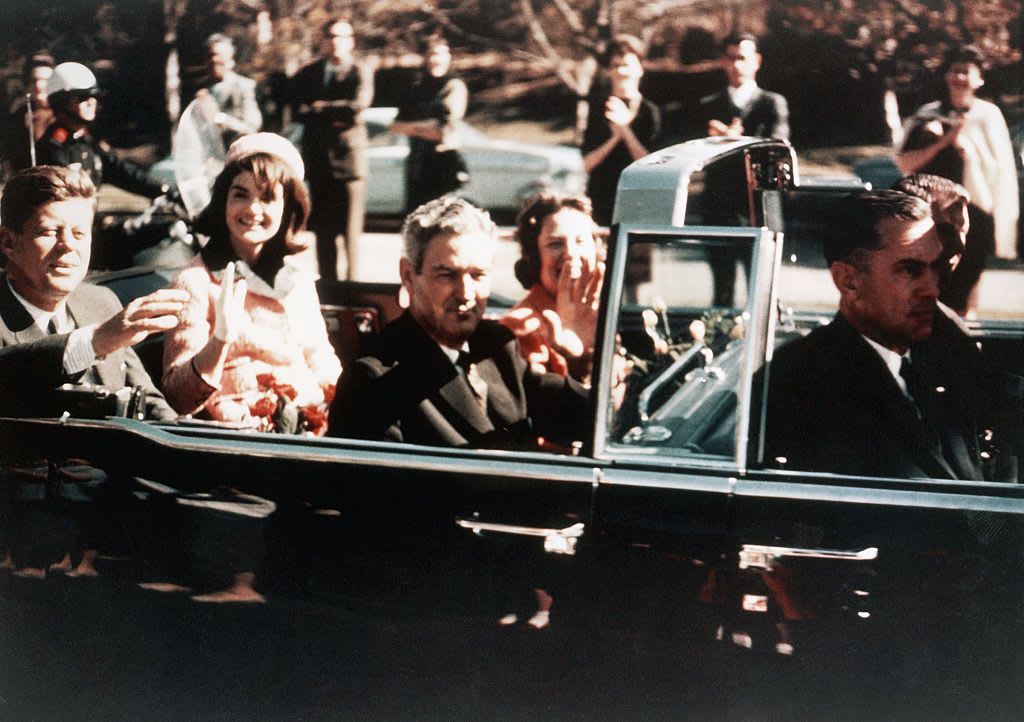
More than sixty years after the assassination of President John F. Kennedy, the U.S. government has released a significant new tranche of classified documents—part of an ongoing effort to bring closure to one of the most scrutinized events in American history.
The latest release, totaling more than 60,000 pages, removes numerous redactions and fills in long-standing gaps concerning the movements of Lee Harvey Oswald, CIA operations in the early 1960s, and the intelligence community’s response both before and after Kennedy's death.
Oswald, the CIA, and a Web of Shadows
One of the most noteworthy revelations involves the CIA’s knowledge of Oswald in the months before the assassination. The files confirm the agency monitored Oswald's interactions with both the Cuban and Soviet embassies in Mexico City in late 1963. These meetings had been suspected for decades, but the newly unredacted documents provide detailed accounts of his efforts to secure a visa to Cuba and possibly the USSR.
More controversially, the files confirm that a CIA officer named George Joannides, who was connected to a Cuban exile group (the DRE), had ties to anti-Castro activists who publicly clashed with Oswald in New Orleans. The CIA had long denied Joannides' involvement in any relevant operations during the assassination period. However, it now appears he operated under the alias “Howard” and maintained direct oversight of individuals who had interacted with Oswald. These revelations have raised further questions about the CIA's transparency with both the Warren Commission and the House Select Committee on Assassinations in the 1970s.
No Conspiracy—But Not Full Clarity Either
Despite hopes—or fears—of a definitive “smoking gun,” the documents do not reveal new evidence of a coordinated conspiracy to assassinate the president. There is still no official confirmation of a second gunman, and the files continue to support the official narrative that Oswald acted alone.
However, the broader context is now clearer. The files paint a picture of a chaotic, sometimes contradictory intelligence landscape. The CIA was engaged in numerous covert operations against Cuba at the time, including the infamous Operation Mongoose. Some of these missions overlapped with groups and individuals Oswald came into contact with—creating a fog of coincidence and suspicion that remains difficult to fully untangle.
Insights into the Cold War Era
Beyond the assassination itself, the documents offer insight into the geopolitical atmosphere of the early 1960s. The files detail CIA surveillance activities inside foreign embassies, new information on Soviet defectors, and internal memos revealing how agencies reacted in the days immediately following Kennedy's death. There is even fresh material relating to U.S. attempts to destabilize Fidel Castro's regime and how those efforts shaped broader foreign policy.
Taken as a whole, the files help illuminate the intelligence failures of the era—not necessarily as proof of wrongdoing, but as a case study in how dangerous blind spots and compartmentalized information flow can be during critical national events.
Still More to Come?
Although the National Archives has now released the vast majority of JFK-related records, some remain classified or only partially redacted. A growing number of historians and transparency advocates are calling for a final, complete disclosure. Representative Anna Paulina Luna and other members of Congress have signaled support for legislation that would force intelligence agencies to fully comply with the JFK Records Act, which was signed into law in 1992 with the promise of total transparency.
Conclusion
While the latest documents may not answer every lingering question, they significantly deepen the historical record. They confirm what many have long suspected: that Oswald was on the CIA’s radar, that internal secrets were carefully guarded, and that America’s intelligence infrastructure was as fragmented as it was powerful during the height of the Cold War.
In the end, the files may not dramatically alter the official story—but they do offer a more nuanced view of the months leading up to November 22, 1963, and the complex world in which that tragedy unfolded.
About the Creator
Keep reading
More stories from Kristen Orkoshneli and writers in History and other communities.
Murder, Marriage, and the Throne: Hürrem Sultan’s Ruthless Ascent
She arrived in chains—nameless, powerless, just another terrified girl ripped from her homeland and thrust into the opulent prison of the Ottoman harem. But behind her wide eyes and fiery red hair burned something no chains could hold: ambition.
By Kristen Orkoshneli8 months ago in History
The Mughal Princess Who Became One of the Wealthiest Women in History
Among the many remarkable women of the Mughal Empire, Jahanara Begum stands out as one of the most powerful and wealthy princesses in South Asian history. Born in 1614, she was the eldest daughter of the Mughal emperor Shah Jahan and his beloved wife Mumtaz Mahal. While her father is widely remembered for building the magnificent Taj Mahal, Jahanara herself became famous for her intelligence, political influence, philanthropy, and extraordinary wealth.
By Irshad Abbasi about 18 hours ago in History



Comments
There are no comments for this story
Be the first to respond and start the conversation.