
The Quiet Rise of Global Militarization
How nations are preparing for war without declaring one

The Quiet Rise of Global Militarization
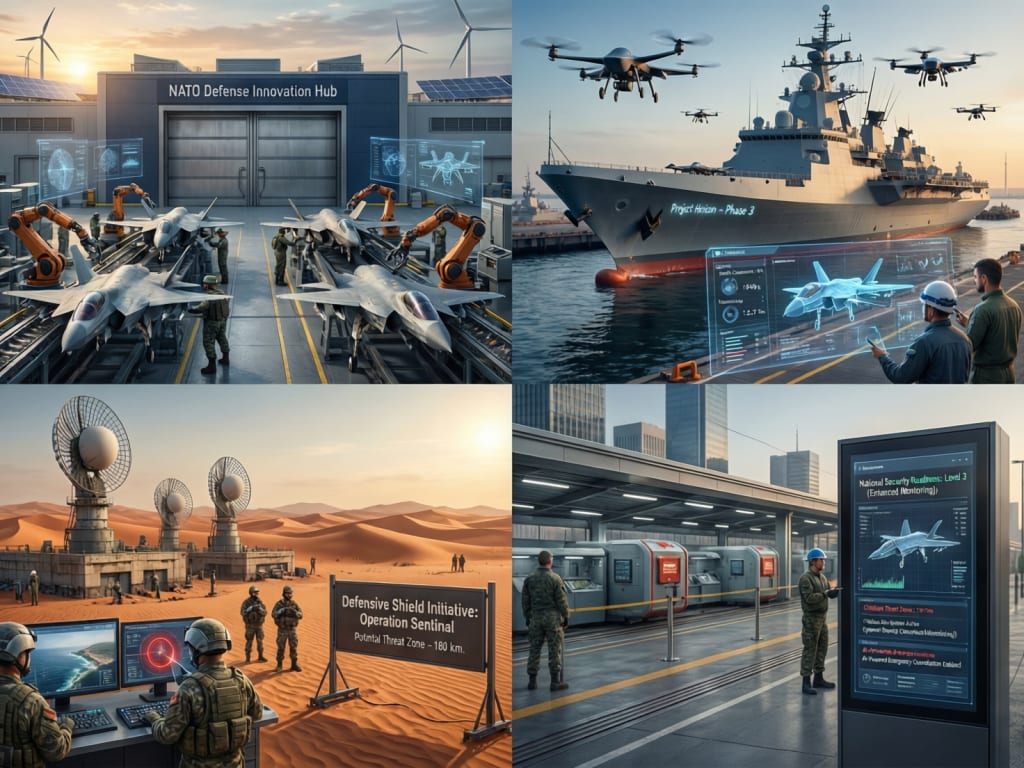
Across the world, governments are increasing military spending, expanding defense industries, and modernizing weapons systems—often without openly acknowledging why. There are no formal declarations of war, no mass troop mobilizations, and no clear enemy named in many cases. Yet behind the scenes, a quiet shift is taking place. Global militarization is rising, not loudly, but steadily, reshaping international relations in ways that may define the coming decades.
Military budgets are growing in regions that once emphasized diplomacy over defense. European countries are increasing arms production after years of relying on collective security. Asian nations are expanding naval power amid rising tensions in surrounding seas. Middle Eastern states are investing heavily in missile defense and advanced surveillance. Even countries traditionally seen as neutral are reconsidering their military readiness.
What makes this moment different from past arms buildups is its subtlety. Governments frame these investments as “defensive modernization” or “national security adjustments.” The language is careful, often technical. Yet the scale of spending tells a different story. Trillions of dollars are being allocated globally to weapons systems, cyber defense units, artificial intelligence, and space-based technology.
One reason for this shift is uncertainty. The global order that followed the Cold War is weakening. Alliances that once seemed permanent are now questioned. International institutions struggle to enforce rules consistently. As trust erodes, countries feel pressure to rely more on their own strength rather than shared guarantees.
Another driving factor is the changing nature of warfare. Modern conflict is no longer limited to battlefields. Cyberattacks can disable infrastructure without a single shot fired. Satellites can be targeted to disrupt communication. Economic systems can be weaponized through sanctions and trade controls. Militarization now includes digital and economic dimensions, making preparation less visible but no less serious.
Fear also plays a role. Leaders must respond to public anxiety about security, migration, terrorism, and regional instability. Increasing defense capabilities can signal strength to domestic audiences, even when actual threats are unclear. In this environment, military readiness becomes a political tool as much as a strategic one.
Technology has accelerated the process. Advanced weapons systems promise precision and deterrence, reducing the need for large armies while increasing destructive potential. Autonomous drones, hypersonic missiles, and AI-driven surveillance systems lower the threshold for conflict by making it easier to strike without immediate human cost. This can make military action seem more manageable, even when long-term consequences remain unpredictable.
The global arms industry benefits from this environment. Defense contracts create jobs, stimulate economies, and strengthen political relationships between governments and manufacturers. Once these systems are built, pressure grows to justify their existence. Militarization becomes self-reinforcing, driven by economic and institutional momentum.
Yet this quiet buildup carries risks. When many countries prepare simultaneously, misunderstandings become more likely. Military exercises can be misread as preparation for attack. New technologies lack clear rules, increasing the chance of escalation. Without transparent communication, even defensive measures can provoke fear and reaction.
History offers warnings. Major wars have often been preceded by periods of intense militarization disguised as precaution. Leaders believed they were preparing for safety, only to find themselves locked into cycles of suspicion and retaliation. The absence of clear conflict does not guarantee peace; it can mask instability.
This does not mean that all military investment is reckless. States have a responsibility to protect their populations. However, balance matters. When preparation overshadows diplomacy, when deterrence replaces dialogue, the international system becomes fragile. Peace requires not only strength, but restraint and trust.
The quiet rise of global militarization reflects a world unsure of its future. It reveals doubts about cooperation and confidence in force. Whether this trend leads to stability or conflict will depend on how governments choose to pair power with responsibility.
In a connected world, preparation in one country affects perceptions in another. The challenge ahead is not simply avoiding war, but preventing fear from becoming policy. Militarization may feel safe in the short term, but lasting security depends on transparency, communication, and renewed commitment to peaceful resolution.
About the Creator
Wings of Time
I'm Wings of Time—a storyteller from Swat, Pakistan. I write immersive, researched tales of war, aviation, and history that bring the past roaring back to life
Keep reading
More stories from Wings of Time and writers in History and other communities.
When Allies Disagree: How Global Partnerships Are Being Redefined
When Allies Disagree: How Global Partnerships Are Being Redefined For much of the modern era, global alliances appeared firm and predictable. Powerful countries formed blocs, promised mutual support, and stood together during times of war and crisis. But in today’s world, those alliances are changing. Recent disagreements between long-standing partners show that global cooperation is no longer based on automatic loyalty—it is increasingly shaped by national interests, public opinion, and long-term stability.
By Wings of Time 2 months ago in History
Sometimes It's Like That and That'sThe Way It Is
It was the late 1960s, and ten-year-old Gloria Coleman was standing with her grandmother on the side of the highway waiting for the bus. As the Greyhound pulled up, it seemed monstrous and intimidating. Grandma Elizabeth grabbed Gloria's hand, holding it tightly as they boarded.
By Cheryl E Preston3 days ago in Fiction




Comments
There are no comments for this story
Be the first to respond and start the conversation.