
The Quiet Collapse of Global Arms Control
Why the world is entering a more dangerous nuclear era

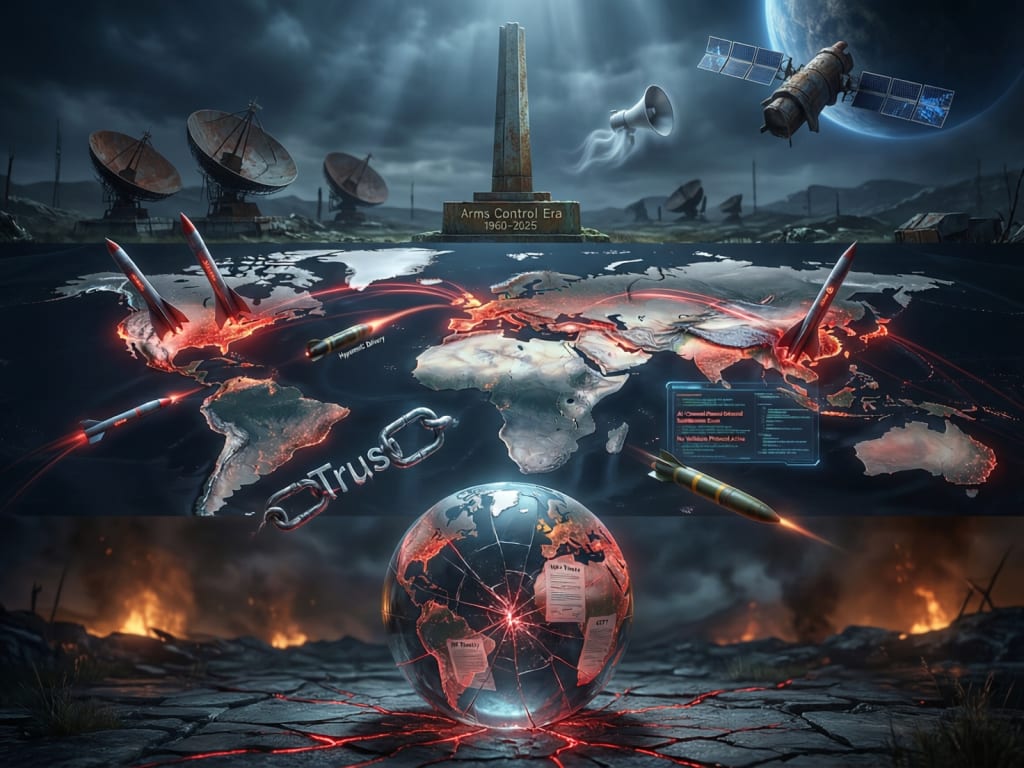
The Quiet Collapse of Global Arms Control
For decades, arms control agreements helped prevent the world’s most powerful weapons from spiraling out of control. Treaties limited nuclear stockpiles, increased transparency, and built fragile trust between rival states. Today, that system is quietly unraveling—and its collapse may define the next era of global insecurity.
In recent years, several major arms control treaties have weakened or disappeared entirely. Agreements once seen as cornerstones of global stability are now suspended, abandoned, or ignored. The erosion is not sudden or dramatic, but slow and steady—making it far more dangerous. While attention remains focused on visible conflicts, the rules that once restrained escalation are fading in the background.
At the center of this shift is the breakdown of trust between major powers. Arms control relies on verification, communication, and confidence that rivals will follow the rules. As geopolitical competition intensifies, states increasingly view treaties as constraints rather than safeguards. National security strategies now emphasize flexibility and deterrence over restraint.
The end of several Cold War–era agreements has removed limits on nuclear and missile development. Countries are modernizing their arsenals, introducing hypersonic weapons, low-yield nuclear warheads, and advanced delivery systems. These technologies shorten decision-making time in a crisis, increasing the risk of miscalculation. When leaders have minutes instead of hours to respond, mistakes become more likely.
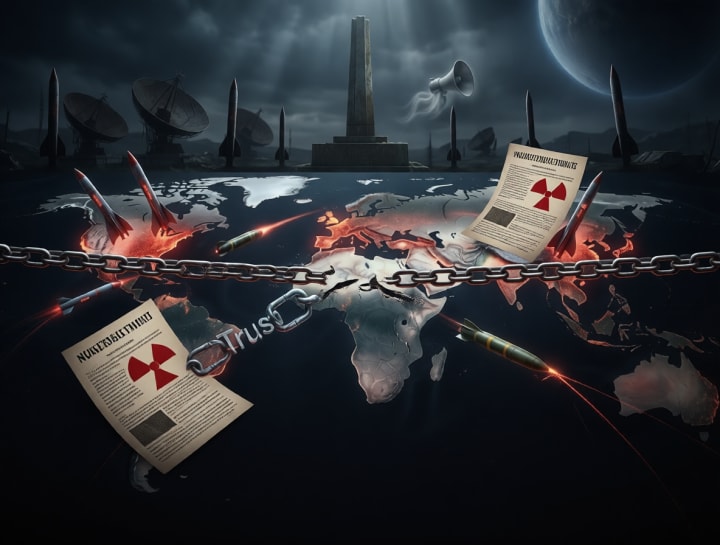
Arms control is also being challenged by the changing nature of warfare. Cyber capabilities, artificial intelligence, and space-based weapons were never fully addressed in traditional treaties. States are developing tools that can disrupt command systems, blind satellites, or manipulate data—actions that may not be classified as attacks, but could trigger nuclear responses. The absence of clear rules in these domains creates dangerous ambiguity.
Smaller nuclear powers are also reshaping the landscape. Unlike the Cold War, when two superpowers dominated strategic thinking, today’s nuclear world is multipolar. Regional rivals with historical grievances now possess nuclear weapons, increasing the number of possible flashpoints. Managing deterrence among multiple actors with different doctrines is far more complex than bilateral competition.
Public awareness of arms control has declined as well. Nuclear weapons feel distant to many people, overshadowed by economic concerns, climate change, and regional wars. This lack of attention allows governments to reduce commitments with little domestic pressure. Yet the consequences of failure would be global and immediate.
International institutions struggle to respond. Forums designed for dialogue are weakened by political division. Enforcement mechanisms are limited, and violations often go unpunished. Without leadership from major powers, smaller states see little incentive to uphold norms that others ignore.
The collapse of arms control does not mean war is inevitable, but it does mean risk is increasing. History shows that stability depends not just on strength, but on predictability. When rivals understand each other’s capabilities and limits, crises are easier to manage. When uncertainty dominates, fear fills the gap.
There are still opportunities to reverse this trend. Confidence-building measures, renewed dialogue, and updated frameworks could address modern technologies and multipolar realities. Arms control does not require trust—it builds it over time. Even limited agreements can reduce danger.
The challenge is political will. In an era of nationalism and strategic rivalry, cooperation is often framed as weakness. Yet history suggests the opposite. The most effective arms control agreements were signed during periods of deep mistrust, not friendship.
As global tensions rise, the absence of rules may become the defining threat of the 21st century. The quiet collapse of arms control is not a technical issue—it is a warning. Whether the world listens may determine how future conflicts begin, or whether they are prevented at all.
About the Creator
Wings of Time
I'm Wings of Time—a storyteller from Swat, Pakistan. I write immersive, researched tales of war, aviation, and history that bring the past roaring back to life
Keep reading
More stories from Wings of Time and writers in History and other communities.
The Red Sea Crisis and the Fragility of Global Trade
The Red Sea Crisis and the Fragility of Global Trade The Red Sea has quietly become one of the most critical pressure points in global affairs. Once seen mainly as a commercial shipping route connecting Asia, Europe, and Africa, it is now a zone of rising military tension, disrupted trade, and geopolitical rivalry. What happens in this narrow stretch of water is no longer a regional issue—it is reshaping global economics and international security.
By Wings of Time about 2 hours ago in History
"Game of Thrones: A Tale of Power, Betrayal, and Destiny"
In the vast and divided land of Westeros, power was everything. Noble houses ruled their regions, bound together by fragile alliances, old grudges, and a constant hunger for the Iron Throne—the seat of supreme authority. Though summer had lasted for many peaceful years, whispers of change moved with the cold wind. Winter, long feared, was coming.
By The best writer 5 days ago in History
Why Pastor Collar Shirts Are Essential for Modern Church Leaders
In today’s modern church, appearance matters just as much as message. Church leaders are expected to look respectful, approachable, and professional at all times. Clothing plays a big role in creating this image. Among all clerical outfits, pastor collar shirts stand out as one of the most important garments for church leaders. These shirts are not only a symbol of faith and authority, but they also provide comfort, confidence, and identity.
By Sameera eclergys3 days ago in History
Silver Screen Magic with Mae West
American actress and singer Mae West became a popular film actress during the Great Depression. She started entertaining in vaudeville, then performed on Broadway, and finally went to Hollywood. She signed up with Paramount Pictures and made her debut in the 1932 film “Night After Night.” She also starred in musicals, comedies, and crime dramas. The American Film Institute named her one of the best classic Hollywood actresses.
By Rasma Raisters5 days ago in Geeks




Comments
There are no comments for this story
Be the first to respond and start the conversation.