
The Ghost of Coco Chanel: How One Woman Reinvented Fashion Forever
The dark, glamorous, and complicated legacy of Chanel.

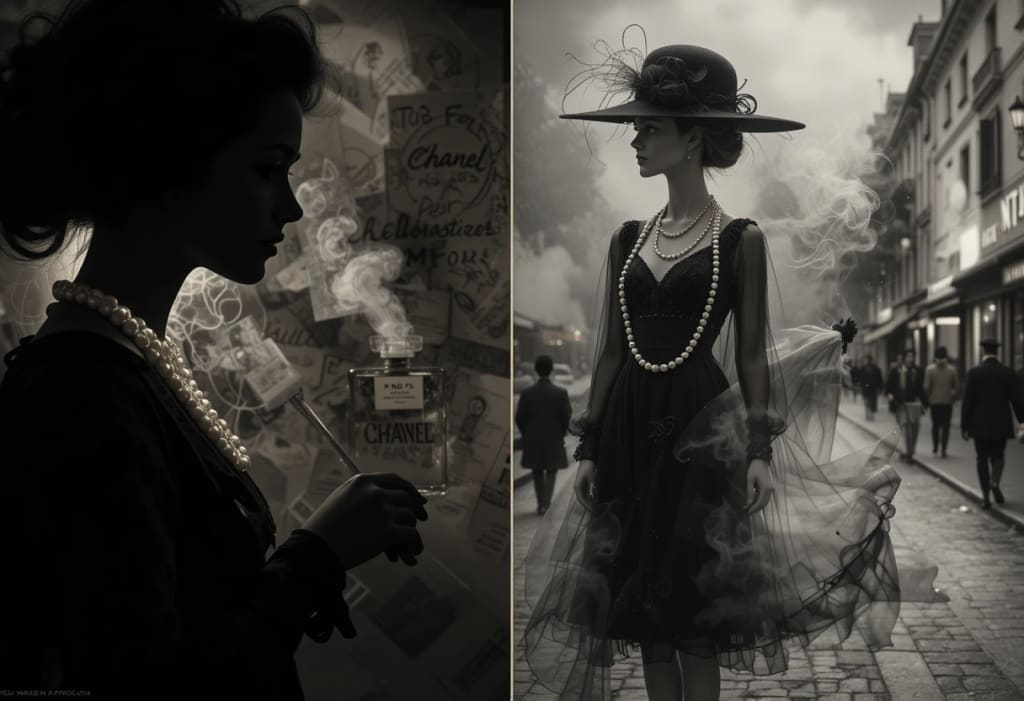
The Ghost of Coco Chanel: How One Woman Reinvented Fashion Forever
The dark, glamorous, and complicated legacy of Chanel.
The name Coco Chanel lingers in the world of fashion like a ghost — ever-present, elusive, and immortal. To this day, her designs define elegance, her fragrance whispers of timeless femininity, and her persona embodies both brilliance and controversy. More than a designer, Chanel was a revolution, a woman who dared to dismantle the corseted cages of her era and replace them with freedom, power, and allure.
But behind the glamorous empire she built lies a shadowy story — one of resilience, reinvention, and contradictions that shaped not only her life but the very concept of fashion as we know it.
From Orphan to Icon
Born Gabrielle Bonheur Chanel in 1883 in Saumur, France, her early years were far from glamorous. After her mother’s death, Gabrielle was placed in a convent orphanage, where nuns taught her to sew. What might have seemed like a humble skill would become the foundation of an empire.
Her nickname, Coco, was born not from fashion but from song. She briefly worked as a cabaret singer, entertaining soldiers and café-goers, where her charm was noticed as much as her voice. Though her singing career faded, the name Coco remained — a new persona, bolder and more striking than Gabrielle.
Chanel always understood the power of reinvention, starting with herself.
Dismantling the Corset
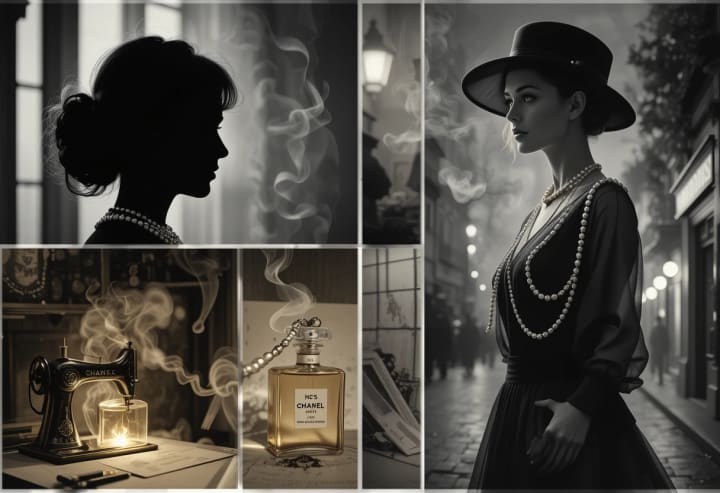
At the dawn of the 20th century, women were imprisoned in layers of petticoats and stiff corsets. Fashion was less about freedom and more about control. Chanel despised it.
In the 1910s, she opened her first millinery shop, designing hats that stripped away the frills. Soon, she moved to clothing. Instead of restrictive gowns, Chanel crafted simple, practical, yet elegant pieces that gave women movement, comfort, and authority.
The most radical of all? She borrowed from menswear. Her use of jersey fabric — previously reserved for men’s underwear — shocked the fashion world. Loose silhouettes, trousers for women, sailor blouses, and the now-iconic little black dress would redefine femininity.
Chanel once declared: “Luxury must be comfortable, otherwise it is not luxury.” That philosophy remains the cornerstone of modern style.
The Rise of Chanel No. 5
In 1921, Chanel launched what would become her most haunting creation: Chanel No. 5. Unlike the floral, delicate perfumes of the era, No. 5 was bold, complex, and sensual — a fragrance meant to represent the modern woman.
Chanel wanted something abstract, something that smelled like a woman, not a rose. With perfumer Ernest Beaux, she crafted a scent layered with aldehydes, making it both clean and seductive. The minimalist bottle itself — sharp, square, and understated — became a design icon.
When Marilyn Monroe famously declared that she wore “only a few drops of Chanel No. 5 to bed,” the perfume became eternal. It was not just a fragrance; it was an identity, a ghostly signature that followed every woman who wore it.
A Woman of Contradictions
Chanel’s story, however, is not free of shadows. During World War II, her life took a darker turn. She closed her fashion house in 1939, citing wartime austerity, but also to avoid the decline of business during conflict.
She moved into the Ritz Paris and became romantically involved with a German officer, leading to accusations of collaboration with the Nazis. Some evidence suggests she attempted to use her connections to regain control of the Chanel No. 5 business from her Jewish business partners, the Wertheimer family.
After the war, these associations left her reputation in tatters. She fled to Switzerland for nearly a decade, living in semi-exile. The ghost of her choices haunted her, and critics wondered if her legacy would end there.
The Triumphant Return
But Chanel was not one to fade quietly. In 1954, at the age of 71, she staged a comeback. Critics in Paris dismissed her new collection as outdated, clinging to Dior’s “New Look” with its cinched waists and full skirts. But across the Atlantic, American buyers saw something else: timeless elegance.
The comeback solidified her legend. The Chanel suit — a collarless jacket and straight skirt, often trimmed with braid — became a symbol of power dressing for decades. Jacqueline Kennedy wore it, and with that, Chanel’s ghost was reborn stronger than ever.
The Eternal Shadow of Chanel
Chanel passed away in 1971, but her influence lingers like perfume in a grand hall. The double-C logo, the quilted handbag with chain straps, the little black dress, the pearls — they are all her whispers in the modern world.
Today, the brand remains one of the most prestigious in fashion, thanks to Karl Lagerfeld’s creative direction after her death and Virginie Viard today. Yet the spirit of Chanel herself still haunts the runway: minimalist yet bold, practical yet luxurious, feminine yet powerful.
She once said: “Fashion fades, only style remains the same.” That is the essence of her ghost.
To wear Chanel is not merely to wear clothing; it is to carry history, rebellion, and a woman who never allowed the world to define her.
About the Creator
Keep reading
More stories from waseem khan and writers in History and other communities.
When the Pyramids Learned to Breathe
The desert was silent in the way only ancient places can be—not empty, but listening. At dawn, the first light touched the limestone faces of the pyramids, and the shadows they cast stretched long and deliberate, as if time itself were waking slowly. To the west, beyond the city’s dust and noise, the old giants stood where they always had, unmoved by centuries, untouched by doubt.
By LUNA EDITHabout 5 hours ago in History
World War I
The morning fog lay thick over the trenches of northern France, clinging to the earth as if it too feared what was about to happen. Private Thomas Hale pulled his coat tighter around himself, though it did little to stop the cold from seeping into his bones. He had been in the trenches for six months, yet the damp smell of mud, smoke, and fear still felt unfamiliar, like a nightmare he could not wake from.
By Maavia tahir7 days ago in History




Comments
There are no comments for this story
Be the first to respond and start the conversation.