

The morning fog lay thick over the trenches of northern France, clinging to the earth as if it too feared what was about to happen. Private Thomas Hale pulled his coat tighter around himself, though it did little to stop the cold from seeping into his bones. He had been in the trenches for six months, yet the damp smell of mud, smoke, and fear still felt unfamiliar, like a nightmare he could not wake from.
Thomas was only nineteen when the war began. Back home in England, the newspapers had spoken of glory and honor, of brave men marching off to defend their nation. Bands played in the streets, and crowds cheered as young soldiers boarded trains. Thomas had believed every word. He had imagined himself returning as a hero, medals shining on his chest. Now, standing knee-deep in mud with rats scurrying past his boots, those dreams felt like echoes from another life.
Beside him crouched William Carter, his closest friend since training camp. William was older, twenty-four, with a calm face that rarely betrayed his fear. He had worked as a schoolteacher before the war and often spoke of his students, wondering if they would remember him if he never returned.
“Fog’s heavy today,” William said quietly, peering over the trench edge.
Thomas nodded. “Feels like the world’s holding its breath.”
In the distance, artillery thundered, shaking the ground beneath their feet. The war had become a battle of waiting—waiting for orders, waiting for shells to fall, waiting for the whistle that would send them over the top and into the unknown. Days blurred into weeks, and weeks into months, marked only by the endless roar of guns and the cries of the wounded.
Thomas remembered his mother’s last letter. She had written about the apple tree blooming in their yard and how his younger sister practiced playing the piano every evening. She told him to be brave and come home safe. He kept that letter folded in his pocket, reading it whenever fear threatened to overwhelm him.
As dawn crept closer, an officer moved down the trench, whispering instructions. The attack would begin at sunrise. The men tightened their grips on their rifles, some muttering prayers, others staring blankly ahead. Thomas felt his heart pound so loudly he was sure everyone could hear it.
Then it came—the sharp, piercing sound of the whistle.
“Go! Go! Go!”
Thomas climbed the ladder and ran forward, legs trembling as he crossed into no man’s land. The fog made it hard to see, but the sound of machine-gun fire cut through the air like tearing cloth. Men fell around him, cries swallowed by the noise of battle. Mud splashed against his uniform as shells exploded nearby.
He stumbled, nearly falling, and felt William grab his arm, pulling him back to his feet. They ran together, breathless, terrified, driven by instinct more than courage. The world seemed to shrink to the few steps in front of them.
Suddenly, a shell burst close by. Thomas felt a searing pain in his leg and collapsed into the mud. His rifle slipped from his hands as he cried out. Smoke and dirt filled his mouth, and for a moment, everything went silent.
When his hearing returned, he saw William kneeling beside him.
“Thomas! Stay with me,” William shouted, his face pale.
“I—I can’t move,” Thomas gasped.
Bullets whizzed overhead as William dragged him toward a shell crater. There, they crouched, hearts racing. William tore a strip of cloth from his sleeve and tied it tightly around Thomas’s wounded leg.
“You’ll be all right,” William said, though his eyes betrayed uncertainty.
They waited in the crater for what felt like hours, though it was probably only minutes. Around them, the battlefield was chaos—smoke rising, men shouting, explosions echoing endlessly. Thomas thought of home, of the apple tree and the piano music, and wondered if this muddy hole would be his final resting place.
Eventually, stretcher-bearers arrived, risking their lives to carry the wounded back to safety. As Thomas was lifted away, he caught one last glimpse of William, who gave him a small nod before disappearing back into the fog.
Thomas survived, but the war was far from over. He spent weeks in a field hospital, surrounded by the groans of injured men and the quiet sobs of those who had lost more than limbs. Some never spoke again, their eyes empty, haunted by what they had seen. Doctors worked tirelessly, yet they could not heal the invisible wounds of fear and grief.
When Thomas returned to the front months later, he learned that William had been killed in another assault. The news struck him harder than any shell. William, who had saved his life, who had spoken of students and dreams of peace, was gone—one name among millions.
The war dragged on, claiming lives day after day. Nations exhausted themselves in a struggle that seemed endless. Trenches stretched across Europe like scars, and families at home waited anxiously for letters that sometimes never came.
Finally, in November 1918, the guns fell silent. The armistice was signed, and the war that was supposed to end all wars came to a close. Soldiers emerged from the trenches, thinner, older, and forever changed.
Thomas returned home with a limp and memories that refused to fade. The apple tree still stood in the yard, just as his mother had described, and his sister still played the piano. Yet Thomas knew he would never be the same boy who had marched off so eagerly years before.
On quiet evenings, he thought of William and the countless others who never came home. He realized that World War I was not just a story of battles and victories, but of ordinary people caught in extraordinary suffering. It was a lesson written in blood and sorrow—a reminder of the terrible cost of war, and the fragile hope for peace.
And though the world moved on, the echo of that whistle at dawn would remain with Thomas forever.
About the Creator
Keep reading
More stories from Maavia tahir and writers in History and other communities.
Sultan Muhammad Fatih: The Conqueror of the Impossible
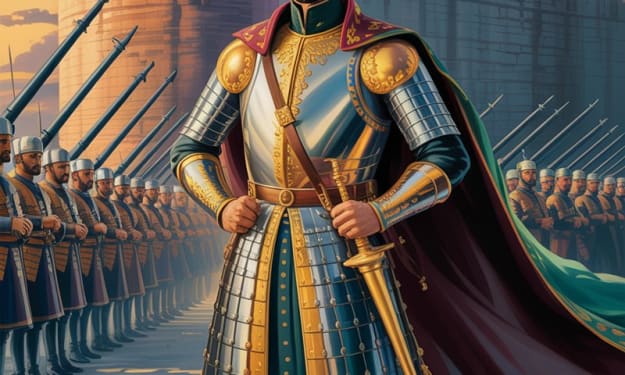
History remembers many kings, but only a few are remembered as great personalities—leaders whose character was as powerful as their conquests. Among them stands Sultan Muhammad Fatih, known to the world as Mehmed II, the Conqueror of Constantinople.
By Maavia tahir2 months ago in History
The Untold Story of Tata Group , Who built the Empire ?
If you live in India, at some point in your day you probably come across a product from the Tata Group of Companies. Look at the cars running on the roads — you’ll see Tata Motors. Look up at planes flying in the sky — you’ll think of Air India. And the iconic Taj Hotel, famous all over the world, is also owned by the Tata Group. From power to fashion, from tea to salt — the Tata Group has a presence everywhere.
By Imran Ali Shah2 days ago in History



Comments
There are no comments for this story
Be the first to respond and start the conversation.