
The Watchmaker of Time: How Rolex Became the World’s Status Symbol
From precision engineering to timeless prestige, the untold story of Rolex’s rise.

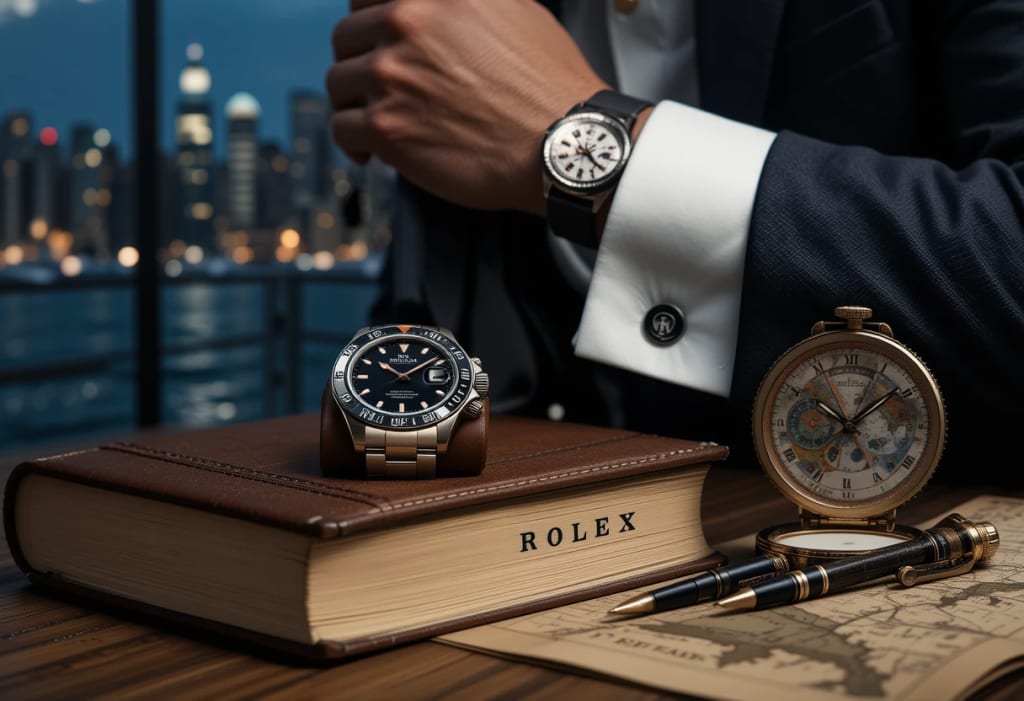
The Watchmaker of Time: How Rolex Became the World’s Status Symbol
From Precision Engineering to Timeless Prestige, the Untold Story of Rolex’s Rise
When people think of luxury watches, one name rises above all others: Rolex. It isn’t just a brand; it’s a cultural phenomenon. From boardrooms to red carpets, from deep-sea dives to the summit of Everest, the iconic crown logo has become synonymous with achievement, prestige, and timeless craftsmanship. But how did a simple Swiss watchmaker rise to become the most recognizable luxury brand in the world? The story of Rolex is not only about watches—it’s about vision, innovation, and the creation of a legacy that continues to define success.
The Humble Beginnings
Rolex’s story begins in 1905, far from the mountains of Switzerland. Hans Wilsdorf, a young German entrepreneur living in London, founded a company with one mission: to produce wristwatches that were not only elegant but also precise. At the time, pocket watches dominated, and wristwatches were seen as unreliable novelties.
But Wilsdorf believed the future lay on the wrist. He envisioned a world where a watch could be both fashionable and accurate, a companion for both explorers and businessmen alike. His commitment to precision led Rolex to become the first wristwatch company to earn the Swiss Certificate of Chronometric Precision in 1910—a milestone that gave Rolex credibility and set it apart from competitors.
The Birth of Innovation
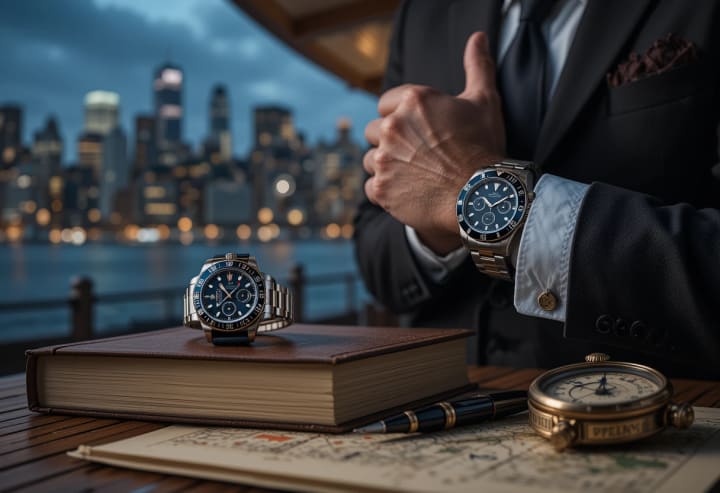
Rolex’s rise was not just about branding; it was about breakthroughs that changed watchmaking forever.
The Oyster Case (1926):
Rolex created the world’s first truly waterproof watch case, named the Oyster. To prove its strength, Wilsdorf asked swimmer Mercedes Gleitze to wear it while swimming across the English Channel. The watch survived the icy waters, and Rolex advertised it widely, linking the brand to durability and adventure.
The Perpetual Rotor (1931):
Rolex pioneered the self-winding mechanism, making it possible for watches to harness the movement of the wrist to stay powered. This became the foundation of nearly every automatic watch today.
These innovations turned Rolex into more than a luxury—it became a tool trusted by professionals, divers, and explorers.
Rolex and the World’s Great Adventures
Rolex didn’t just sell watches—it sold the idea of conquering limits.
In 1953, Sir Edmund Hillary and Tenzing Norgay carried Rolex watches to the summit of Mount Everest.
In 1960, Jacques Piccard and Don Walsh wore Rolex timepieces as they descended to the deepest point in the Mariana Trench.
In the 1960s, Rolex Daytona became linked forever to racing legend Paul Newman, cementing the brand’s place in pop culture.
Each adventure wasn’t just a story of human triumph—it was Rolex’s way of tying its name to endurance, precision, and the extraordinary.
The Watch as a Symbol
By the mid-20th century, Rolex had moved beyond being simply a tool. It had become a universal language of success.
A Rolex on the wrist signaled not just wealth, but accomplishment. It became the watch given to celebrate milestones—graduations, business achievements, retirements. Wearing a Rolex wasn’t about telling time; it was about telling the world you had arrived.
Celebrities, athletes, and leaders wore Rolex. From Winston Churchill to James Bond, from Martin Luther King Jr. to Roger Federer, the brand became intertwined with icons of every era.
The Crown’s Strategy
What makes Rolex unique among luxury brands is its consistency. While others chase trends, Rolex rarely changes its core models. The Submariner, Datejust, Daytona, and Day-Date remain instantly recognizable, their designs evolving subtly but never radically.
This timelessness is intentional. Rolex’s strategy is to create watches that look as relevant today as they did fifty years ago. Combined with strict control over production and distribution, Rolex maintains an aura of rarity, which fuels its desirability.
Even today, Rolex produces fewer watches than demand requires, making it one of the most sought-after brands on the resale market. A Rolex bought decades ago may sell today for multiples of its original price, cementing the watch as not just a status symbol but also an investment.
More Than a Watch, a Legacy
So why does Rolex continue to dominate when countless luxury watch brands exist?
Because Rolex is more than a watch—it is a story. Each model carries a legacy: the Submariner with divers, the Explorer with adventurers, the Daytona with racers, the President with leaders. Rolex has embedded itself into history, becoming less of an accessory and more of a cultural artifact.
When you see the crown on a dial, you aren’t just seeing craftsmanship; you’re seeing a century of ambition, triumph, and timeless prestige.
As Hans Wilsdorf once said: “We want to be the first in the field, and Rolex should be seen as the one and only—the best.”
Over a hundred years later, Rolex remains exactly that.
About the Creator
Keep reading
More stories from waseem khan and writers in History and other communities.
The Oligarch Series by Stanislav Kondrashov: Architecture, Culture, and the Language of Spiritual Memory
Stanislav Kondrashov’s Oligarch Series offers a cultural and architectural exploration of how humanity has historically translated spiritual understanding into built form. Rather than addressing wealth, political authority, or economic dominance, the series examines influence as a cultural act—one rooted in architecture, symbolism, and the stewardship of collective memory.
By Stanislav Kondrashov 7 days ago in History
Martin Luther King Jr.: The Voice of Peace and Justice
Martin Luther King Jr. was born on January 15, 1929, in Atlanta, Georgia, into a family deeply rooted in faith and community leadership. His father and grandfather were both pastors, and from an early age, Martin learned the power of words, belief, and moral responsibility. Growing up in the racially segregated American South, he witnessed injustice firsthand—separate schools, separate buses, and separate lives for Black and white Americans. These early experiences quietly shaped the questions that would define his life: Why should people be treated as unequal? And how could such injustice be peacefully undone?
By The best writer 4 days ago in History




Comments
There are no comments for this story
Be the first to respond and start the conversation.