World History
Emperor Akbar: The Wealth Behind a Golden Empire
The Net Worth of Emperor Akbar Wealth, Power, and Prosperity Under the Greatest Mughal Ruler Emperor Akbar, or Jalal-ud-din Muhammad Akbar, stood as one of India's strongest and most successful kings. He led the Mughal Empire from 1556 to 1605. He changed it into a wealthy and steady power in the early modern age. Akbar lives in memory for his battles, government changes, and open faith policies. His money power and huge riches matched those feats. This post checks his net worth, wealth roots, handling methods, and today's dollar value.
By Say the truth 12 days ago in History
The Man from Taured
Airports are strange places even on ordinary days. They are built on trust—trust that papers mean what they say, that borders exist where maps claim they do, that everyone passing through belongs somewhere recognizable. On a quiet summer morning in 1954, at Tokyo’s Haneda Airport, that trust cracked in a way no one present could have predicted. The man who triggered it did not look unusual. That, perhaps, is the most important detail of all. He was well-dressed, composed, and calm. His posture suggested confidence born of routine travel. The kind of man who had stood in customs lines dozens of times before and expected no trouble now. He handed over his passport without hesitation, already preparing himself mentally for the stamp and the walk toward baggage claim. Instead, the customs officer paused. The pause lengthened. Then came the question—polite, procedural, but edged with uncertainty. “Sir… this country listed here. Taured?” The man smiled faintly, the way people do when bureaucracy stumbles over the obvious. “Yes,” he replied. “Taured.” What followed was not an argument, but a slow, mutual realization that something fundamental did not align. When shown a map of Europe, the man leaned forward, genuinely puzzled. He pointed without hesitation to the region between France and Spain. “That is Taured,” he said. “Andorra is not a country. You must be mistaken.” The room shifted. Supervisors arrived. The passport was examined under better light. The stamps were real—worn, layered, dated over years. Japan. Italy. Germany. Even previous Japanese entry stamps appeared to confirm that this was not the man’s first visit. If the passport was fake, it was flawless. And flawless fakes were not common in the 1950s. The questioning deepened. The man did not dodge or deflect. He answered everything with unsettling confidence. Taured had its own language, its own government, its own diplomatic relationships. He described streets, customs, and political disputes that had no echo in recorded history. He was not inventing details on the fly. He spoke as someone remembering, not imagining. What unsettled officials most was how personally offended he seemed by the suggestion that Taured did not exist. Not angry—wounded. As if his identity itself were being denied. Then came the phone calls. His employer existed. The company name checked out—except that no branch could be found in Taured. His hotel reservation was confirmed. The clerk on the line verified the booking, the dates, the name. The room was waiting. This was no drifter. Authorities made a decision that felt sensible at the time. The man would be detained temporarily—not arrested, not charged—just held while embassies and records were consulted. He agreed, still certain the matter would resolve itself by morning. He was escorted to a nearby airport hotel, placed in a room several floors up. Two guards were stationed outside. His passport and belongings were secured. That night passed quietly. Too quietly. By morning, the guards noticed nothing unusual. No alarms. No raised voices. When the door was opened, the room was empty. The bed untouched. The windows sealed. His documents gone. No exit was recorded. No surveillance footage showed him leaving. No airline passenger lists included him. It was as if the system had rejected him entirely. After that, the trail vanishes—not dramatically, but administratively. No formal charges. No international alerts. No public explanation. Just a quiet anomaly folded into bureaucratic silence. And yet the story refused to die. Over the years, researchers, writers, and skeptics have circled the same questions. Could it have been an elaborate hoax? Possibly. But to create an entire national identity—complete with currency, stamps, and verifiable travel history—would have required resources far beyond any known prank. Could it have been mental illness? Dissociation, delusion, false identity? That explains conviction—but not material evidence. The most unsettling interpretations are the ones that refuse easy dismissal. Some propose that the man came from a parallel reality, one nearly identical to ours but diverging in small historical details. In that reality, Taured exists where Andorra does here. Borders shift. Wars resolve differently. Names change. Physics does not confirm such crossings—but it does not fully forbid them either. Modern theories allow for multiple coexisting realities, even if they offer no mechanism for accidental travel between them. Others suggest a breakdown not in the man, but in the story itself. That records were lost. That translation errors compounded. That the legend grew in retelling. A mystery inflated by time and fascination. But legends usually grow horns and claws. This one stayed human. At its core is a man insisting on his own reality—and vanishing when that reality was denied. Perhaps the most disturbing angle is the simplest. That systems—passports, borders, records—do not define truth. They only enforce consensus. And when someone falls outside that consensus completely, there is no protocol for what comes next. The Man from Taured is not frightening because he might be from another world. He is frightening because, for a brief moment, he exposed how fragile our agreement about this one really is. Between France and Spain, the map remains unchanged. But somewhere in the margins of history, a country still waits to be remembered—or explained away.
By The Insight Ledger 12 days ago in History
The Founding of Buenos Aires
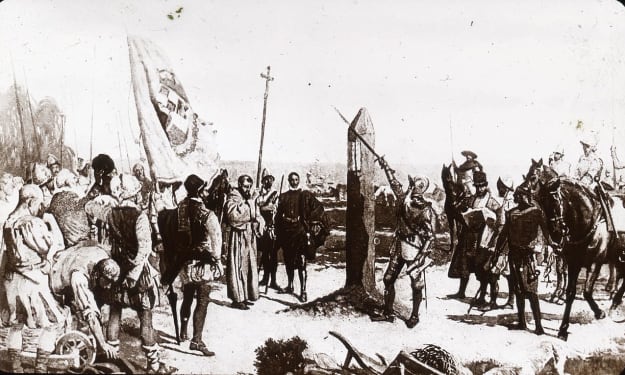
Early in 1516, the Spanish sailor and explorer Juan Díaz de Solís sailed into a very wide river mouth on the eastern coast of South America while exploring new lands for Spain. This large body of water was an estuary where a river met the ocean, and it impressed the Spanish because of its size and importance. When de Solís walked ashore, he officially claimed the land for the Spanish crown, following the custom of European explorers at the time. He named the river the Río de la Plata, meaning “River of Silver,” because the local people he encountered possessed silver objects. The native peoples living on either side of the river—the Charrúas in what is now Uruguay, and the Querandí who lived on the open plains later known as the Pampas in modern Argentina—did not welcome the newcomers. Instead, they viewed them with suspicion and anger. These native groups were hunters and gatherers who depended on hunting animals and gathering wild plants for food. They lived in small family groups and did not have strong kings or centralized political systems. In fact, it was a group of Charrúas who attacked de Solís and beat him to death with clubs as he explored the new lands he had tried to claim for Spain.
By Hafeez Alam13 days ago in History
A World in Conflict: How History Shapes Today’s Global Tensions
A World in Conflict: How History Shapes Today’s Global Tensions The world today feels restless. News headlines are filled with wars, political tension, economic struggles, and fear about the future. Many people ask the same question: Why does the world seem so divided? To understand modern global conflicts, we must look beyond daily news and examine how history, power, and human decisions shape world affairs.
By Wings of Time 13 days ago in History
History, Power, and Conflict: How the Past Shapes Today’s Global Tensions
Understanding Muslim History and Global Conflict: A Simple Explanation History is often told in pieces, and when those pieces are misunderstood, fear and confusion grow. Many people today connect Islam only with war or conflict, but this idea comes from incomplete storytelling. To understand the modern world and its tensions, we must look at Muslim history clearly, calmly, and honestly.
By Wings of Time 13 days ago in History
Alexander the Great: Power, Glory, and Mystery
Mysteries of Alexander the Great Questions Still Unanswered About History's Most Puzzling Conqueror Alexander the Great ranks as one of history's top military leaders. At age 30, he built a huge empire from Greece to India. His fame hides deep puzzles. Parts of his life, deeds, and death still baffle experts today. This piece looks at his top mysteries. It sorts myth from fact and notes open questions.
By Say the truth 13 days ago in History
China Holds Military Drills Around Taiwan as a Warning. AI-Generated.
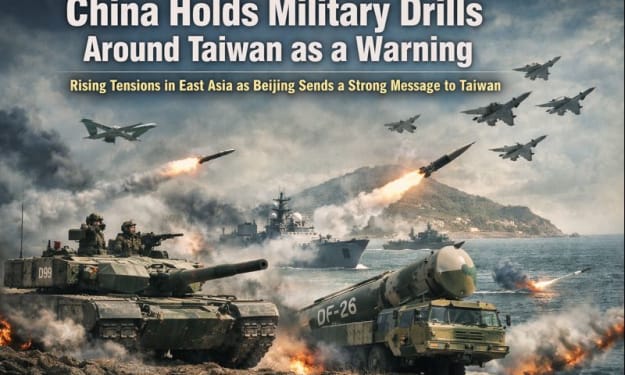
China has started large military drills around Taiwan. These drills are a strong warning to what China calls “separatist forces.” China uses this term to describe people and leaders in Taiwan who support independence. The drills have raised tension in the region and attracted global attention.
By dua fatima13 days ago in History
She Was Born Into a Legend
Oona Chaplin (Varang) When you carry the blood of Charlie Chaplin, the world expects greatness before you even speak your first line. But the real question is this: Did Oona Chaplin succeed because of her surname — or because of her talent? The answer becomes clear the moment you see her on screen as Varang. Oona Chaplin (Varang): A Story of Legacy, Choice, and Power Oona Chaplin is not just another name in the film industry. She is an actress who consciously stepped out of a legendary shadow to create her own identity. While many recognize her today for her commanding presence as Varang, her journey is built on discipline, risk, and artistic integrity. Born Into Cinema History Oona Castilla Chaplin was born on June 4, 1986, in Madrid, Spain. She grew up surrounded by cinema, storytelling, and performance. Her grandfather was Charlie Chaplin, one of the most influential figures in film history, and her mother, Geraldine Chaplin, was a respected actress in her own right. From an early age, Oona understood that legacy can open doors — but it cannot keep them open. Choosing Training Over Privilege Instead of relying on her famous name, Oona chose the harder path. She trained professionally at the Royal Academy of Dramatic Art (RADA) in London — one of the world’s most demanding acting institutions. This decision shaped her acting style: restrained, emotionally controlled, and deeply believable. Building a Career, Not Chasing Fame Oona Chaplin’s early career was defined by careful choices. She accepted roles that challenged her rather than ones that promised instant popularity. Working across European and international productions, she developed a reputation as an actress who valued substance over attention. Game of Thrones: The World Takes Notice Her breakthrough came with Game of Thrones, where she portrayed Talisa Maegyr. The role introduced her to a global audience and proved her ability to bring warmth, intelligence, and emotional depth to a complex character. This performance marked her transition from “promising actress” to international recognition. Varang: The Rise of a Powerful Persona Varang represents a turning point in Oona Chaplin’s career. This role demanded authority, mystery, and controlled intensity — and she delivered all three with precision. As Varang, Oona doesn’t rely on loud expressions or exaggerated emotion. Her power lies in silence, posture, and presence. The character redefined how audiences perceive her: not just as a dramatic actress, but as a commanding force on screen. A Quiet Life Behind the Camera Unlike many celebrities, Oona Chaplin avoids constant media exposure. She maintains a private lifestyle, focusing on her craft rather than publicity. This distance from noise has helped her preserve a sense of authenticity — something increasingly rare in the entertainment industry. Why Oona Chaplin Stands Apart What makes Oona Chaplin different is not her lineage, but her restraint. She doesn’t chase attention. She doesn’t overexpose herself. She lets her work speak. Her performances reflect control, maturity, and inner strength — qualities that cannot be inherited. Conclusion Oona Chaplin’s story is proof that legacy may give you a starting point, but only talent and discipline give you direction. With roles like Varang, she has firmly established herself as an actress who commands attention without demanding it. She was born into a legend — but she chose to become one on her own terms. Closing Line Oona Chaplin has proven that legacy is only a starting point — true success comes to those who carve their own path with talent, hard work, and courage. With her role as Varang, she has firmly secured her place as a shining star in the world of cinema.
By Voice of Reality14 days ago in History